
To train your cat to sleep at night, start with a consistent bedtime routine involving playtime and a small meal. Create a comfy sleep environment with heated beds and comforting scents. Engage your cat in daytime activities to prevent restlessness. Address any health issues affecting sleep patterns. Limit disturbances by keeping bedtime quiet and consistent. Maintaining a structured routine and seeking professional advice if needed are also essential. These steps can lead to a peaceful night's sleep for your feline companion and yourself. Explore further ways to enhance your cat's sleep quality for harmonious nights together.
Establishing a Consistent Bedtime Routine
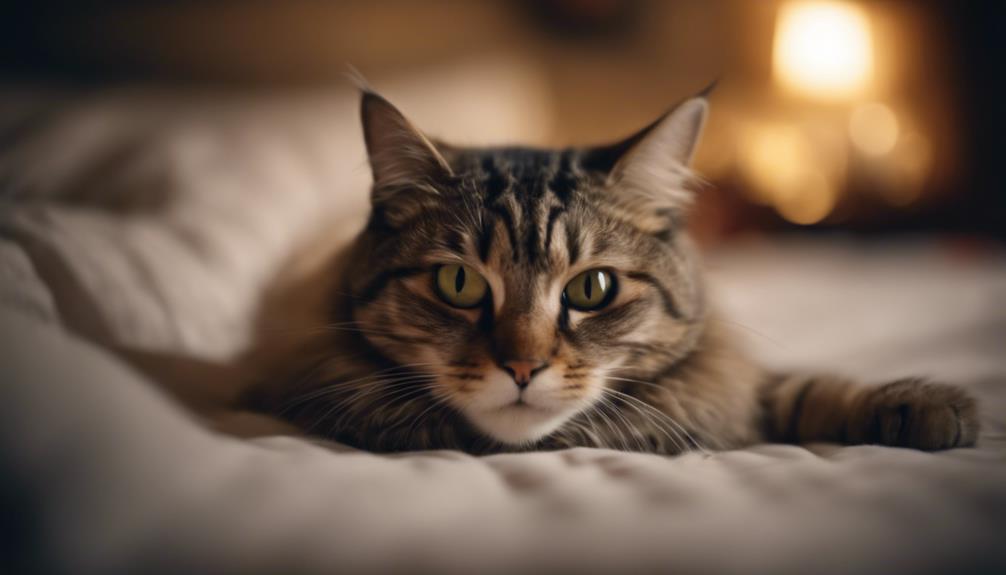
Establishing a consistent bedtime routine for your cat is essential in promoting healthy sleep patterns and ensuring a peaceful night for both you and your feline companion. Cats thrive on routine, so incorporate activities like playtime and a small meal before bedtime to signal it's time to rest.
Consistency in feeding times and bedtime rituals helps regulate your cat's sleep-wake cycle, leading to better rest at night.
Creating a Comfortable Sleep Environment
Creating a comfortable sleep environment for your cat is essential to guarantee a restful and peaceful night's sleep for both you and your feline companion. Consider providing elevated bedding areas away from litter boxes.
Heated beds can help regulate your cat's body temperature during sleep. Using feline synthetic pheromones can create a secure and calming sleep environment. Additionally, scattering dried catnip in bedding areas can attract your cat to sleep there.
Remember to keep the bedroom door closed for uninterrupted rest.
Engaging in Daytime Activities
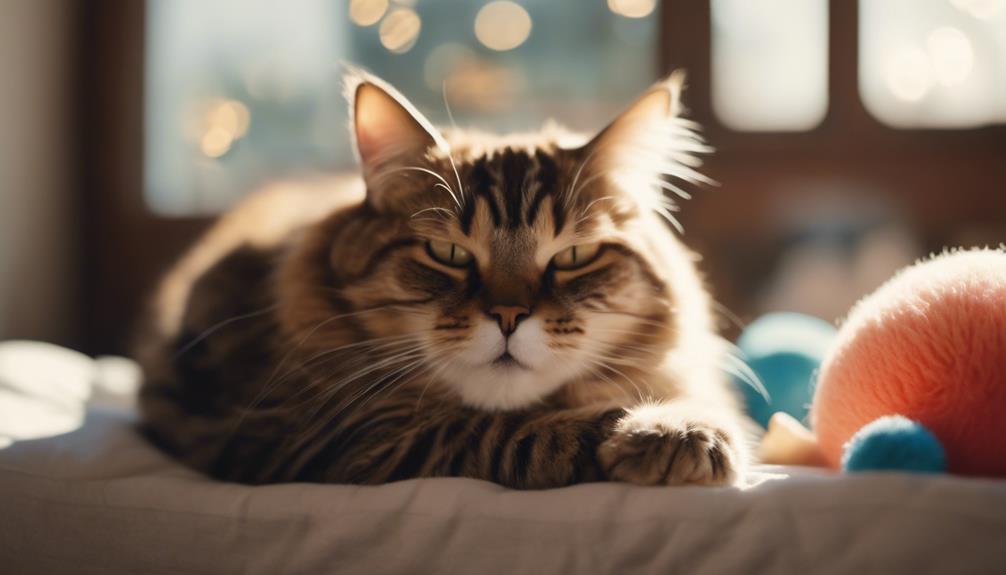
To guarantee your cat sleeps well at night, engaging in daytime activities is essential. By providing interactive play sessions, using feeding toys, and maintaining a structured routine, you can keep your feline friend mentally and physically stimulated throughout the day.
Creating a stimulating environment with toys and play opportunities will help your cat expend energy, leading to a more restful night's sleep.
Daytime Play Sessions
Engaging in interactive play sessions during the day is crucial to tiring out your cat and promoting better sleep at night.
- Use toys that mimic hunting behaviors for mental stimulation.
- Incorporate laser pointers, feather wands, or interactive puzzle toys.
- Rotate toys regularly to prevent boredom and maintain interest.
- Set aside dedicated playtime sessions to make sure your cat expends energy for a restful night's sleep.
Interactive Toys Usage
Utilizing interactive toys throughout the day can effectively engage your cat in mental and physical activities, promoting both stimulation and energy expenditure.
Engaging in interactive play helps cats expend energy, reducing restlessness at night. Toys that mimic hunting behaviors, like feathered toys or laser pointers, keep cats entertained and active.
Providing a variety of toys and rotating them daily prevents boredom and stimulates natural behaviors in cats.
Regular play sessions with interactive toys before bedtime can help cats relax and prepare for sleep.
Structured Feeding Schedule
Implementing a structured feeding schedule for your cat, with three meals spaced no more than 6-8 hours apart, is essential in regulating energy levels and promoting a consistent routine for best daytime activities.
- Regulate Energy Levels: Maintain your cat's health by preventing energy spikes and crashes.
- Promote Consistency: Establish a routine for feeding and activities to keep your cat active.
- Prevent Overeating: Avoid free feeding to maintain a healthy diet.
- Mental Stimulation: Use food puzzles to engage your cat and promote an active lifestyle.
Addressing Potential Health Issues
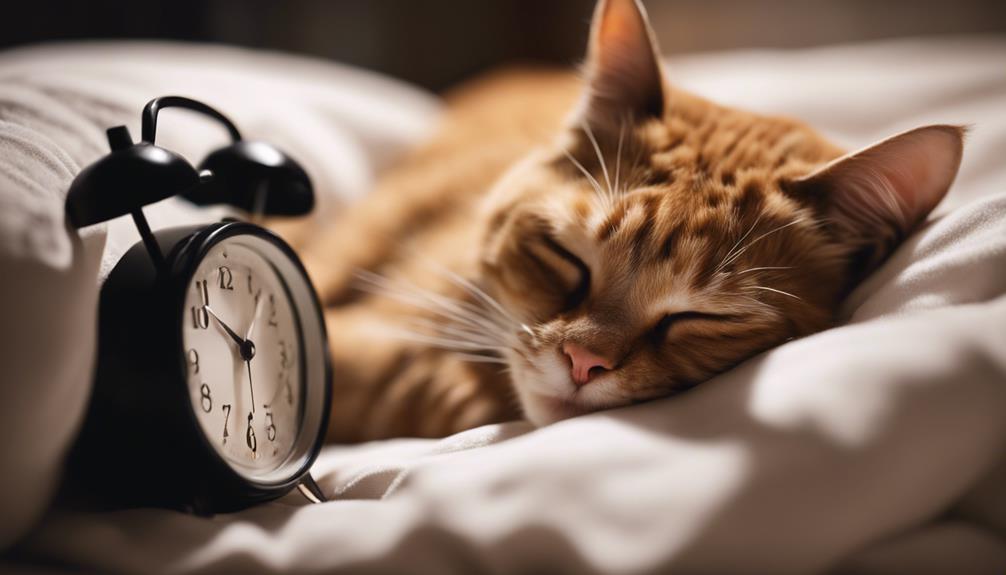
Addressing potential health issues is essential before starting to train a cat to sleep at night. Infections, diseases, pain, chronic stress, boredom, and cognitive dysfunction can greatly affect their sleep patterns. Infections, diseases, and pain may disrupt a cat's rest, while chronic stress and cognitive issues can lead to sleep disturbances.
Ensuring your cat is healthy is vital for successful training in promoting better sleep at night.
Limiting Nighttime Disturbances
When managing your cat's nighttime disturbances, focus on establishing a quiet bedtime routine that signals it's time to sleep.
Guarantee your cat has a comfortable sleeping environment away from potential disruptions to promote restful sleep.
Quiet Bedtime Routine
Establishing a peaceful bedtime routine plays a crucial role in limiting nighttime disturbances and promoting a restful night's sleep for your feline companion.
- Dim the lights and reduce noise levels to create a calming atmosphere.
- Avoid engaging in active play or feeding right before bedtime.
- Provide a comfortable sleeping area away from disturbances.
- Maintain consistency in your bedtime routine to help your cat understand when it's time to sleep.
Comfortable Sleeping Environment
To facilitate a peaceful night's rest for your cat and minimize nighttime disturbances, ensuring a comfortable sleeping environment is paramount.
Providing elevated bedding areas can satisfy their preference for high spots, while varied bed locations away from litter boxes encourage restful sleep.
Heated beds help regulate body temperature, aiding in a cozy sleep environment.
Using feline synthetic pheromones promotes a sense of security for nocturnal activity alignment with your cat's sleep cycle.
Implementing Interactive Play Sessions
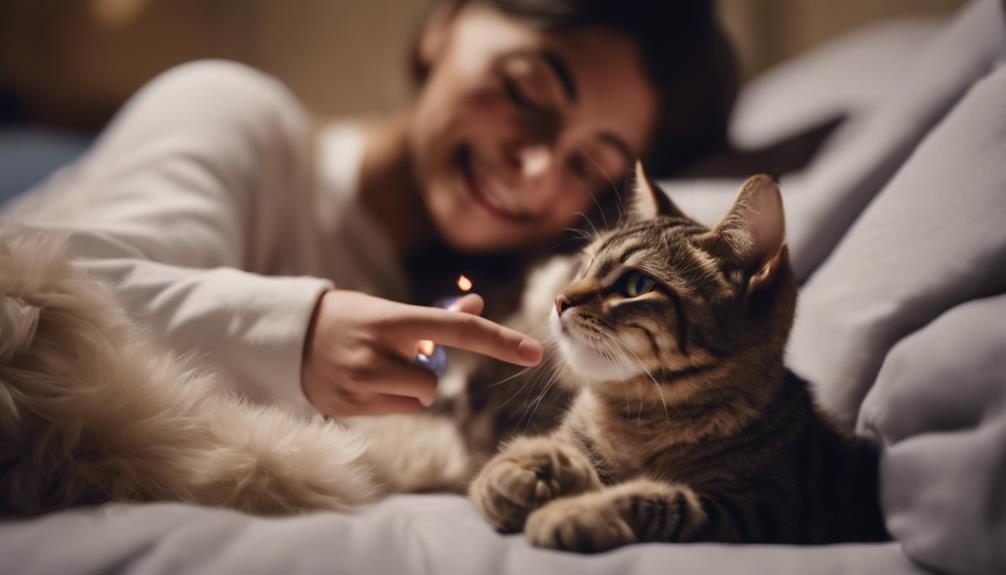
By incorporating interactive play sessions into your cat's daily routine, you can effectively encourage healthy sleep patterns and provide essential mental and physical stimulation.
- Engage in hunting games during playtime to stimulate natural instincts.
- Play before bedtime to release excess energy for relaxation.
- Use a variety of toys and activities to keep your cat entertained.
- Enhance mental and physical stimulation with interactive play sessions.
Providing Mental Stimulation
To keep your cat mentally engaged and prevent boredom, incorporate food puzzles into their daily routine.
Engage in interactive play sessions to stimulate your cat's mind and prevent behavioral issues. Offer toys that encourage natural hunting behaviors, such as feathered or jingling toys.
Rotate toys regularly to maintain your cat's interest. Additionally, consider using an automatic feeder to provide mental stimulation by dispensing small meals throughout the day, promoting animal health.
Can I Use the Same Training Techniques to Teach My Cat to Sleep at Night?
When it comes to cat training tips and tricks, teaching your cat to sleep at night may require a different approach. Utilize calming bedtime rituals, provide a comfortable sleeping area, and establish a consistent schedule. Avoid using the same techniques as you would for training them for other behaviors.
Seeking Professional Help if Needed

If your cat's nighttime behavior persists despite your training efforts, seeking professional help from a veterinarian or behaviorist may be necessary to address the underlying causes and establish healthy sleep habits.
- Consult a veterinarian to rule out any health problems contributing to your cat's sleep disturbances.
- A professional behaviorist can offer tailored strategies to address your cat's specific nighttime issues.
- Behavioral therapy sessions can uncover the root causes of your cat's restlessness at night.
- Veterinary behaviorists can create a thorough plan to help your cat develop better sleep patterns.