
To train a cat to stay off counters, understand their natural instincts and provide alternatives like cat trees and scratching posts. Use deterrents such as sticky tape or citrus sprays. Manage food temptations by placing food strategically and using repellents. Enrichment tools like catnip toys and puzzle feeders can distract them. Be patient and consistent with positive reinforcement. Redirect them to designated feeding areas and build a strong bond through training. By following these steps, you can effectively discourage your cat from climbing counters. More helpful techniques are available in the detailed guidelines. Additionally, understanding your cat’s behavior is key to addressing other issues, such as learning how to stop cat biting. Offering appropriate chew toys and engaging in interactive play can redirect undesirable behavior while reinforcing positive habits. With consistent training and a focus on your cat’s needs, you can foster a well-behaved and happy feline companion.
Reasons Cats Climb Counters

Cats exhibit a natural tendency to climb counters for various reasons rooted in their instinctual behaviors and environmental stimuli.
The elevated position mimics their natural habitat of climbing trees, offering safety from potential threats. Additionally, the allure of food scraps and running water sources commonly found on counters entices cats to explore these elevated surfaces.
The height grants them a strategic vantage point to monitor their surroundings closely.
Importance of Providing Alternatives
When addressing the issue of cats climbing counters, it is essential to emphasize the significance of providing suitable alternatives within the living environment.
- Offering cat trees, shelves, or designated perching areas can divert their attention from counters.
- Creating comfortable and appealing elevated spaces can encourage your cat to choose those spots over counters.
- Providing vertical scratching posts or cat towers can fulfill a cat's need for height and territory marking.
- Offering interactive toys and puzzles in alternative areas can redirect a cat's focus and keep them off counters.
Using Environmental Deterrents Effectively

Utilizing environmental deterrents effectively can play an essential role in dissuading feline companions from accessing kitchen counters. Sticky tape, aluminum foil, and citrus sprays are commonly used methods. Sticky pads or motion-activated devices offer remote correction. Products like Sticky Paws on a Roll or CLAWGUARD Cat Training Tape can be beneficial. Positive reinforcement and environmental modifications are key to training cats to stay off counters successfully.
| Environmental Deterrents | Examples |
|---|---|
| Sticky Tape | Sticky Paws on a Roll |
| Aluminum Foil | CLAWGUARD Cat Training Tape |
| Citrus Sprays | Motion-Activated Devices |
Managing Food Temptations
To prevent cats from being tempted by food on counters, it is essential to strategically place food out of their reach.
Distraction techniques can also be employed to redirect their focus away from the counters.
Additionally, using repellents in training can help deter cats from seeking out food in forbidden areas.
Food Placement Strategies
Implementing proper food placement strategies is essential in managing food temptations and discouraging cats from jumping onto kitchen counters.
- Store food in airtight containers or the refrigerator to prevent odors.
- Use covered trash cans to dispose of food scraps.
- Avoid leaving dirty dishes or food residue on counters.
- Keep pet food in sealed containers and away from the kitchen counters.
Distraction Techniques
When addressing food temptations with cats, redirecting their attention to designated feeding areas is a key distraction technique in training them to stay off counters.
By keeping food off countertops and securely stored away, you can eliminate counter-surfing behaviors. Prepare and serve meals in a specific location to deter counter exploration.
Managing food sources is essential as cats are drawn to food smells, making it necessary for effective training.
Training With Repellents
Utilizing citrus-scented sprays or double-sided tape on counters can effectively deter cats from succumbing to food temptations and jumping up onto surfaces. Implement these tactics to keep cats off counters:
- Use citrus-scented sprays.
- Place double-sided tape on counters.
- Employ aluminum foil for an unpleasant texture.
- Make sure food is stored properly and counters are clean to eliminate attractive smells.
Enrichment Tools for Distraction
Enrichment tools such as catnip toys for diversion, puzzle feeders for engagement, and interactive laser pointers can all serve as effective distractions to keep cats off counters. These tools provide mental and physical stimulation, redirecting the cat's focus and energy away from undesirable behaviors like counter-surfing.
Catnip Toys for Diversion
To effectively divert a cat's attention away from counters, incorporating catnip toys into their environment can be a beneficial strategy. Catnip contains nepetalactone, inducing playful responses. Providing such toys promotes positive play behaviors, reducing interest in counters.
These toys come in various forms like balls, plush toys, and interactive puzzles for mental stimulation. Regularly rotating catnip toys keeps cats engaged, discouraging counter-surfing behavior.
Puzzle Feeders for Engagement
Incorporating puzzle feeders into a cat's environment enhances engagement and mental stimulation. These tools like the Catit Senses 2.0 Cat Digger Slow Feeder simulate hunting, encouraging interactive play.
They provide a natural outlet for a cat's hunting instincts, promoting problem-solving skills. Cats enjoy the challenge of extracting food from compartments, reducing boredom.
Puzzle feeders redirect a cat's focus, helping prevent countertop jumps and improving overall behavior and well-being.
Interactive Laser Pointers
Interactive laser pointers are effective tools for redirecting a cat's attention away from countertops. They provide mental and physical stimulation, engaging their natural hunting instincts.
- Mimics prey movement to appeal to cat's hunting instincts.
- Encourages active play and exercise.
- Offers a safe and engaging activity for cats.
- Can be a valuable tool in training cats to stay off counters.
Seeking Expert Guidance
When facing challenging behaviors in your cat, consulting with a Certified Animal Behaviorist can provide invaluable personalized guidance on effective training techniques.
Experts like Samantha Bell offer valuable advice on modifying cat behavior. Professional guidance can help address specific issues and tailor training approaches to individual cats.
Seeking expert help guarantees effective training methods and enhances the human-cat bond, leading to successful behavior modification and improved interactions with your cat.
Implementing Remote Correction Methods

To address challenging behaviors in your cat, consider implementing remote correction methods as a practical approach to discourage counter-surfing behavior.
- Use motion-activated deterrent devices to prevent jumping.
- Try products like Sticky Paws on a Roll or CLAWGUARD Cat Training Tape.
- Employ water-filled cookie trays or aluminum foil as passive deterrents.
- Utilize double-sided tape to create an unpleasant surface for your cat.
Consistency in Positive Reinforcement
Consistency in positive reinforcement is key to training a cat to stay off counters. By rewarding good behavior, using clear cues, and maintaining patience and consistency, you can effectively teach your cat to avoid this unwanted behavior.
Establishing a routine that reinforces the desired behavior will help your cat understand what is expected and form lasting habits.
Reward Good Behavior
Rewarding your cat with treats, praise, or play when they stay off counters establishes a positive association with desired behavior.
Immediate rewards reinforce the connection between desired behavior and positive outcomes.
Positive reinforcement creates a favorable association with staying off counters.
Consistent rewards establish clear expectations for your cat.
Encourages your cat to choose alternative spots over time.
Use Clear Cues
Employing consistent cues in positive reinforcement training is essential for effectively shaping your cat's behavior and encouraging them to stay off counters. Clear cues help your cat understand which behaviors are rewarded, reinforcing the association between the desired action and the positive outcome.
Be Patient and Consistent
To effectively train a cat to stay off counters, maintaining patience and unwavering consistency in positive reinforcement is paramount.
- Consistency in positive reinforcement involves rewarding desired behaviors every time they occur.
- Cats respond well to consistent training methods that offer rewards for staying off counters.
- By consistently rewarding cats for staying off counters, they learn to associate the behavior with positive outcomes.
- Positive reinforcement should be immediate and consistent to effectively train cats to avoid countertops.
Redirection to Designated Feeding Areas
Designating a specific feeding area for your cat away from the counters is an important strategy for redirecting their attention. Choose a quiet and secluded spot to encourage consistent feeding.
Utilize food puzzles or interactive feeders in this designated area to engage your cat during meals. Shift gradually by introducing small amounts of their favorite food.
Consistency in training your cat to eat in the designated area rather than on the counters is essential.
Is Training a Savannah Cat Different from Training a Regular Cat to Stay Off Counters?
Training a savannah cat to stay off counters can be more challenging than training a regular cat, as they are known to be more active and curious. Using deterrents, positive reinforcement, and providing alternative climbing spaces can help in training a savannah cat to stay off counters.
Building a Strong Bond Through Training
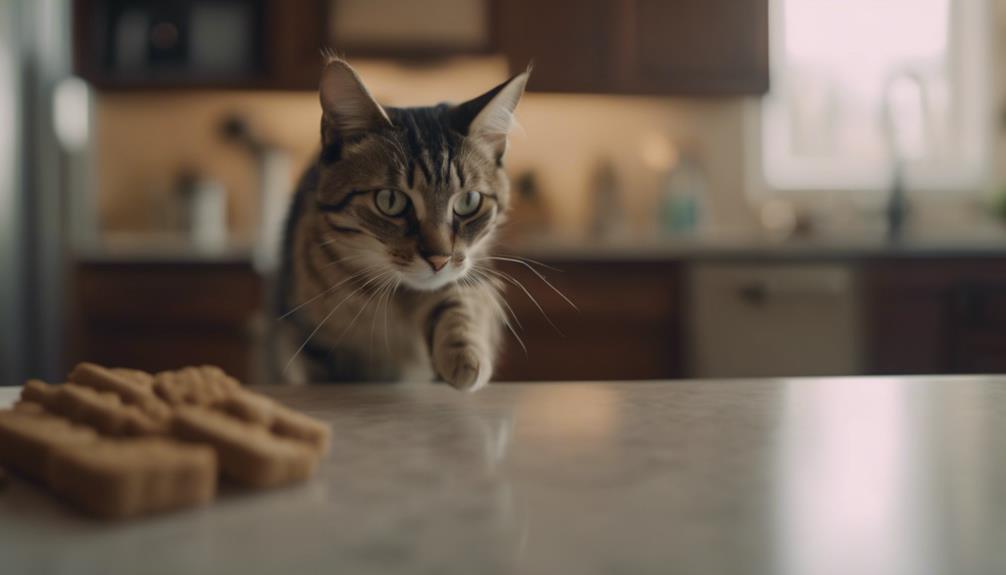
To strengthen your connection with your feline companion, instilling positive training habits that discourage counter-surfing behavior is pivotal.
- Positive reinforcement techniques create a rewarding experience.
- Consistency in training efforts reinforces the message.
- Redirecting your cat to appropriate alternatives is essential.
- Building a strong bond through training enhances communication and understanding.