
To train a Siamese cat, focus on litter box training, basic obedience commands, and positive reinforcement with treats. Use rewards to encourage good behavior and strengthen the bond with your pet. Establish clear training goals, keep sessions short, and be patient. Understand Siamese cat behavior, communicate effectively, and incorporate enriching tricks for mental stimulation. Utilize essential equipment like a litter box, clicker device, leash, and harness. Consistent training fosters trust and obedience. Mastering these techniques guarantees a happy, well-behaved cat.
Siamese Cat Training Basics
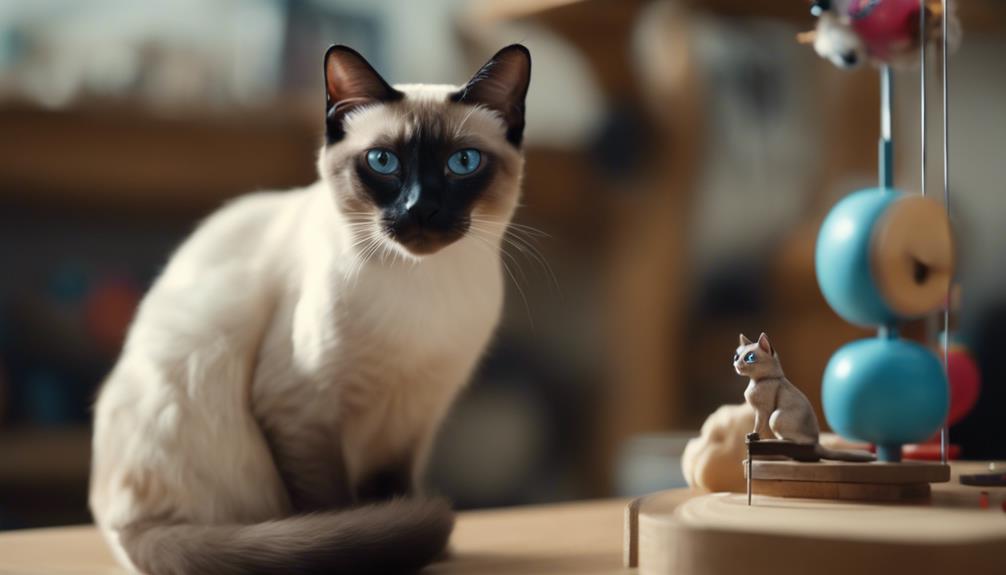
When starting to train Siamese cats, mastering the basics is essential for successful and harmonious interactions. Siamese cat training involves litter box training, obedience training, and teaching tricks like high-five and fetch.
Consistent training sessions using positive rewards like treats reinforce good behavior. Starting early with patience and immediate responses to actions are key. Introducing scratching posts and teaching recall commands also play vital roles in Siamese cat training.
Importance of Positive Reinforcement
Positive reinforcement is an essential aspect of training Siamese cats. It rewards good behavior, helps build trust through rewards, and encourages desirable actions. By offering treats or praise when the cat exhibits desired behaviors, positive reinforcement establishes a positive association with training sessions.
This method not only enhances the training experience but also fosters voluntary obedience in Siamese cats. It creates a harmonious training environment.
Rewarding Good Behavior
Encouraging desirable behaviors through the use of positive reinforcement is a key aspect of fostering a strong and harmonious relationship between Siamese cats and their owners. Positive reinforcement rewards desired behaviors, promoting voluntary obedience and cooperation in training sessions.
Treats or praise can make learning enjoyable for Siamese cats, strengthening the bond with their owners. Consistent use of positive reinforcement builds mutual trust, creating a positive training experience for both parties.
Building Trust Through Rewards
Fostering trust through the strategic use of rewards is a fundamental aspect of cultivating a strong bond with your Siamese cat.
- Rewards like treats, praise, or playtime reinforce desired behaviors.
- Positive reinforcement encourages voluntary obedience.
- It enhances the training experience for both you and your Siamese cat.
- Positive reinforcement is more effective and humane than harsh training methods.
Encouraging Desirable Actions
How can owners effectively nurture desired behaviors in Siamese cats while strengthening the bond between pet and caregiver? Positive reinforcement is key. Rewards such as treats or praises create a positive association with good actions, encouraging the cat to repeat them. Siamese cats respond well to this method during training, helping maintain a positive relationship. Using positive reinforcement builds trust and motivates the cat to display desirable behaviors.
| Benefits of Positive Reinforcement |
|---|
| Strengthens desired behaviors |
| Creates positive association |
| Builds a strong bond |
| Encourages good actions |
| Maintains positive relationship |
Essential Training Equipment for Siamese Cats
Training Siamese cats effectively requires the utilization of specialized equipment tailored to their unique needs and behaviors. To guarantee successful training, essential items include:
- Litter box: Crucial for housebreaking Siamese cats.
- Clicker device: Helpful for clicker training desirable behaviors.
- Leash and harness: Ensures safety during outdoor activities.
- Lightweight leash: Recommended for Siamese cats to facilitate training.
Teaching Obedience Commands
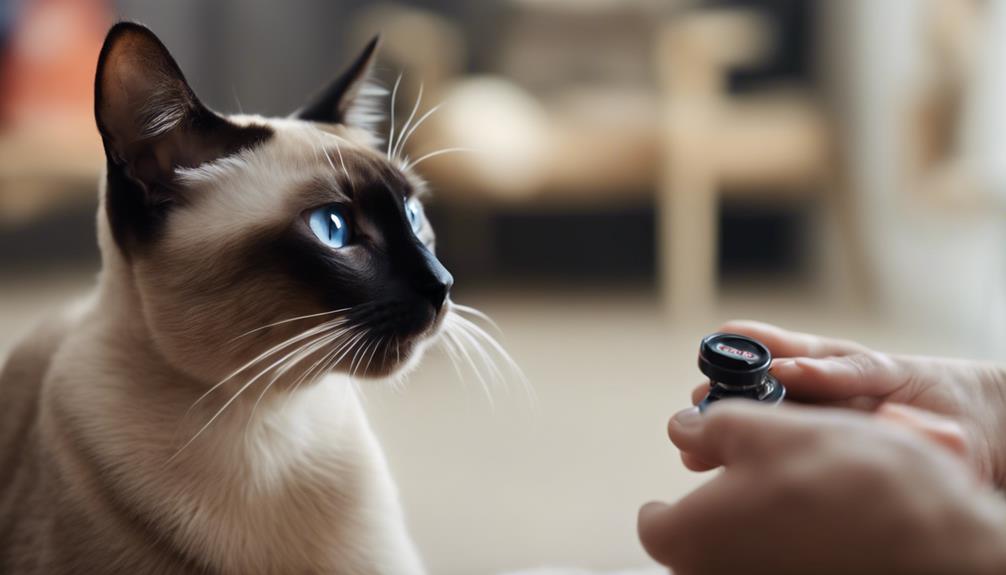
To effectively instill obedience commands in Siamese cats, it is imperative to establish a structured training routine that emphasizes consistency and positive reinforcement. Siamese cats can be taught basic obedience commands like sit, stay, and come.
Begin training sessions in a quiet environment to minimize distractions. Use treats or rewards that motivate your Siamese cat. Keep sessions short and engaging to maintain interest and progress in obedience training.
Understanding Siamese Cat Behavior
Siamese Cat Behavior unfolds as a rich tapestry of vocal expressions and interactive tendencies, offering insight into their unique personality traits.
- Siamese cats communicate through distinct sounds and behaviors.
- They form strong bonds with owners and enjoy household activities.
- Siamese cats are intelligent and trainable during training sessions.
- They exhibit curiosity, observing surroundings and human interactions.
Mastering Litter Box Training
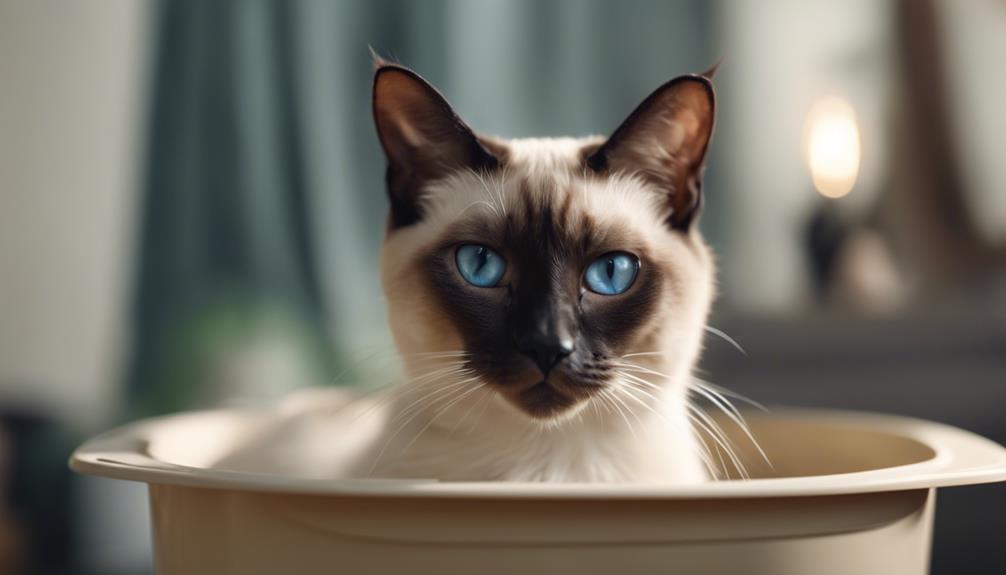
Mastering the art of litter box training plays a crucial role in fostering proper hygiene habits for your Siamese cat. Begin training as soon as you bring your cat home to establish good habits.
Use a litter box with low sides and keep it clean to encourage regular use. Place the box in a quiet, accessible location. Avoid scented litter or liners that may deter your Siamese cat.
Reward correct litter box use with treats or praise.
Incorporating Enriching Tricks
Enriching tricks for Siamese cats, such as high-five and rollover, are not only entertaining but also mentally stimulating for your feline companion.
By incorporating fun trick training into your sessions, you can strengthen the bond between you and your Siamese cat while enhancing their obedience and responsiveness.
Utilizing interactive toy play and positive reinforcement techniques can make the training process enjoyable and rewarding for both you and your pet.
Fun Trick Training
Engaging in fun trick training sessions with your feline companion can provide mental stimulation and strengthen your bond.
- Siamese cats enjoy learning and performing tricks.
- Teaching tricks like high-five, rollover, and fetch strengthens the bond.
- Enriching tricks offer a positive outlet for their intelligence.
- Incorporating trick training prevents boredom and unwanted behaviors.
Interactive Toy Play
Incorporating interactive toy play into your routine with your Siamese cat can provide mental stimulation and strengthen the bond between you.
Use toys like feather wands, puzzle feeders, and laser pointers to keep your Siamese cat active and entertained.
Teaching your cat to chase, pounce, and hunt during interactive play sessions mimics their natural instincts.
Rotate toys regularly to prevent boredom and guarantee ongoing mental stimulation for your Siamese cat.
Positive Reinforcement Techniques
Utilizing positive reinforcement techniques is a highly effective method for teaching enriching tricks to your Siamese cat and fostering a strong bond through consistent training sessions.
- Reward desired behaviors with treats, praise, or playtime.
- Teach tricks like high-five, rollover, and fetch to keep your Siamese cat engaged.
- Utilize clicker training for effective positive reinforcement.
- Consistent use of positive reinforcement strengthens the bond and promotes learning.
Establishing Communication With Hand Signals
When training Siamese cats, establishing clear and consistent hand signals is vital for effective communication during training sessions. Hand signals can be used to communicate commands and cues, as cats are visual learners and can easily understand and respond to them.
Consistent hand signals help reinforce behaviors and shape responses. It is essential that hand signals are clear, distinct, and used alongside verbal cues to enhance your cat's understanding and response to commands.
Tips for Short and Effective Sessions
When training your Siamese cat, it is essential to set clear goals, utilize positive reinforcement, and keep sessions brief.
By establishing specific objectives for each session, rewarding desired behaviors, and maintaining short training periods, you can effectively engage your cat and achieve best results.
These strategies help maintain focus, motivation, and progress during training sessions with your Siamese cat.
Set Clear Goals
To guarantee successful training sessions with your Siamese cat, it is essential to establish clear and specific goals that align with desired behaviors or skills.
- Define specific training goals such as litter box use or obedience commands.
- Break down sessions into short intervals of 5-10 minutes for focus.
- Use positive reinforcement like treats or praise to reward achievements.
- Monitor progress and adjust techniques as needed for effective learning.
Use Positive Reinforcement
Employing positive reinforcement techniques, especially through the use of treats and praise, is essential for achieving success in training Siamese cats effectively within short sessions of 5-10 minutes.
| Reward Type | Purpose |
|---|---|
| Treats | Motivate the cat |
| Praise | Reinforce good behavior |
Keep Sessions Brief
To optimize training outcomes for Siamese cats, adhering to short and engaging sessions is fundamental in maintaining their attention and facilitating effective learning.
- Prevents boredom and frustration.
- Guarantees retention of learned behaviors.
- Matches their short attention spans.
- Makes training more enjoyable for both the cat and the owner.
Can the Training Techniques for Using a Cat Door Also be Applied to Training a Siamese Cat?
Training your cat for cat door is a versatile skill that can be applied to any cat breed, including the intelligent and active Siamese cat. With patience and consistency, the same training techniques can be used to teach a Siamese cat how to use a cat door, allowing them the freedom to come and go as they please.
Fostering a Strong Bond Through Training
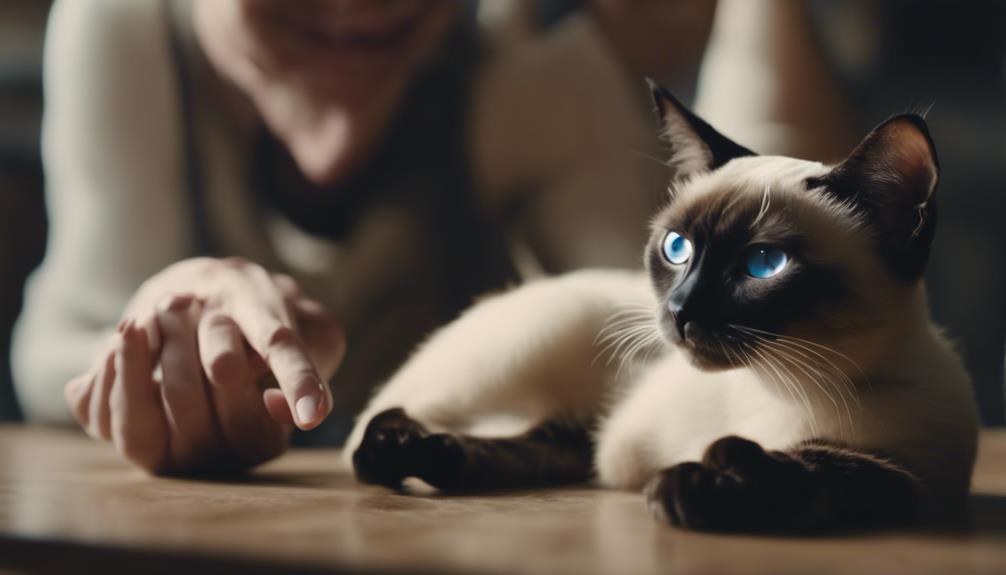
By fostering a strong bond through training, Siamese cat owners can establish a deep connection based on positive interactions and effective communication. Consistent training sessions help build trust and understanding between you and your Siamese cat.
Using rewards and positive reinforcement enhances the bond and creates a positive learning environment. Understanding your Siamese cat's behavior and preferences strengthens the connection during training sessions, resulting in a happy, well-behaved, and responsive cat.