
Cat owners typically experience higher levels of happiness due to the emotional benefits associated with feline companionship. Cats can reduce anxiety, lower rates of depression, and provide emotional support, creating a sense of well-being. Interacting with cats releases oxytocin, enhancing bonding and contentment. Cat ownership also instills routine, purpose, and responsibility, positively impacting mental health. Compared to people without cats, cat owners often exhibit increased levels of happiness. Understanding the unique bond between cats and their owners can shed more light on the emotional benefits of having a feline companion.
The Link Between Cat Ownership and Happiness

Cat ownership has been increasingly associated with higher levels of happiness among individuals, although establishing a direct causal relationship remains a complex challenge. Studies indicate that cat owners possess specific personality traits such as being more open to new experiences, introverted, and sensitive in social situations compared to dog owners. These differences suggest that the type of pet one chooses may reflect underlying personality characteristics.
The calming presence of cats can reduce anxiety, promote relaxation, and instill a sense of purpose and responsibility in owners, contributing to their overall happiness. While the emotional benefits of cat ownership are apparent, the exact mechanisms by which cats enhance happiness are still under investigation, with ongoing research focusing on the unique bond between cats and their owners.
Psychological Benefits of Having a Cat
Owning a cat can offer various psychological benefits to individuals. Research suggests that cat owners often experience lower levels of neuroticism and higher levels of openness compared to those without pets.
Interacting with cats can also lead to the release of oxytocin, a hormone linked to feelings of happiness and relaxation.
Cat Owners Mental Health
Having a cat as a companion can positively impact an individual's mental health by fostering characteristics such as lower neuroticism and increased openness. Cat owners may experience reduced levels of neuroticism and higher levels of openness compared to non-pet owners.
The calming presence of cats can help decrease anxiety and promote relaxation, contributing to overall well-being. Studies have shown that cat ownership is associated with lower rates of depression and loneliness, enhancing mental health.
Interacting with cats can release oxytocin, known as the 'love hormone,' which promotes feelings of happiness and emotional bonding. Additionally, caring for a cat can instill a sense of routine, purpose, and responsibility, further enhancing the mental health benefits for cat owners.
Cat Companionship Benefits
Possessing a companion that exhibits a calming presence and offers emotional support has been associated with various psychological benefits for individuals. Pet ownership, particularly having a cat, can have a substantial impact on mental well-being. Here are some psychological benefits of cat companionship:
- Cat ownership has been linked to lower rates of depression and loneliness, promoting mental well-being.
- Interacting with cats can release oxytocin, the 'love hormone,' enhancing feelings of happiness and connection.
- The calming presence of cats can help reduce anxiety and stress levels in their owners.
- Caring for a cat can instill a sense of routine and purpose, contributing to overall happiness.
- Cat companionship provides a sense of comfort, connection, and emotional support to their owners.
Factors Influencing Cat Owners Well-being

Cat owners experience various factors that positively influence their well-being. The bond formed with cats provides emotional support and companionship, enhancing mental health.
Additionally, the stress-reducing effects of interacting with cats contribute to increased feelings of happiness and relaxation in cat owners.
Cat Bonding Benefits
The emotional bond between individuals and their feline companions greatly contributes to the well-being and happiness of cat owners.
- Cat owners may experience reduced health complaints like back pain due to the calming presence of cats.
- The companionship of cats can lower stress levels and provide a sense of connection and comfort.
- Interacting with cats can release oxytocin, promoting feelings of happiness and relaxation.
- Cat ownership has been linked to lower rates of depression and loneliness.
- The routine and purpose instilled by caring for a cat can contribute to the overall happiness of pet owners.
Mental Health Support
The mental well-being of individuals who have formed strong emotional bonds with their feline companions is greatly influenced by various factors related to cat ownership. Cat owners often experience higher self-esteem due to the sense of purpose and responsibility that caring for a cat brings.
The companionship and affection provided by cats can help reduce feelings of loneliness and depression, contributing to overall emotional wellness. Additionally, the calming presence of cats and the release of oxytocin during interactions can promote relaxation and happiness, playing a significant role in supporting mental health.
The routine established through cat care also instills a sense of structure in owners' lives, further enhancing their well-being and overall satisfaction.
Stress Reduction Effects
Amid the demands of modern life, individuals who share their homes with feline companions often benefit from the stress-reducing effects of cat ownership. The presence of cats can have a profound impact on the well-being of cat owners, including:
- Cat ownership has been linked to lower stress levels and reduced health complaints like back pain.
- Interacting with cats can provide a sense of connection, comfort, and relaxation for their owners.
- The calming presence of cats can help reduce anxiety and promote overall well-being.
- Caring for cats can instill a sense of routine, purpose, and responsibility in cat owners' lives.
- The bond between cat owners and their feline companions can enhance feelings of happiness and fulfillment.
Comparing the Happiness Levels of Cat Owners

Comparing the happiness levels of cat owners reveals a notable trend towards increased well-being and contentment compared to non-pet owners, as supported by various research studies.
Studies suggest that cat owners may exhibit lower levels of neuroticism, one of the Five personality traits, contributing to their overall happiness.
The calming presence of cats can help reduce anxiety and promote relaxation in cat owners. Additionally, interacting with cats can trigger the release of oxytocin, known as the 'love hormone,' which promotes feelings of happiness and bonding.
Cat ownership has also been linked to lower rates of depression and loneliness, further enhancing the overall well-being of individuals who choose to share their lives with feline companions.
Understanding the Feline-Human Bond
Understanding the bond between humans and cats sheds light on the intricate dynamics that contribute to the increased well-being and contentment experienced by cat owners.
- Cat owners' openness to new experiences and introverted nature enhances sensitivity and trust in social settings.
- Studies indicate that cat owners exhibit lower levels of neuroticism, portraying independence and introspection.
- Cats' calming presence reduces anxiety, promoting relaxation and instilling a sense of purpose and responsibility.
- Lower rates of depression and loneliness are linked to cat ownership, with cats' playful nature bringing joy and entertainment.
- The bond between cats and owners fosters happiness by providing companionship without constant attention.
Exploring Cat Ownership and Mental Health
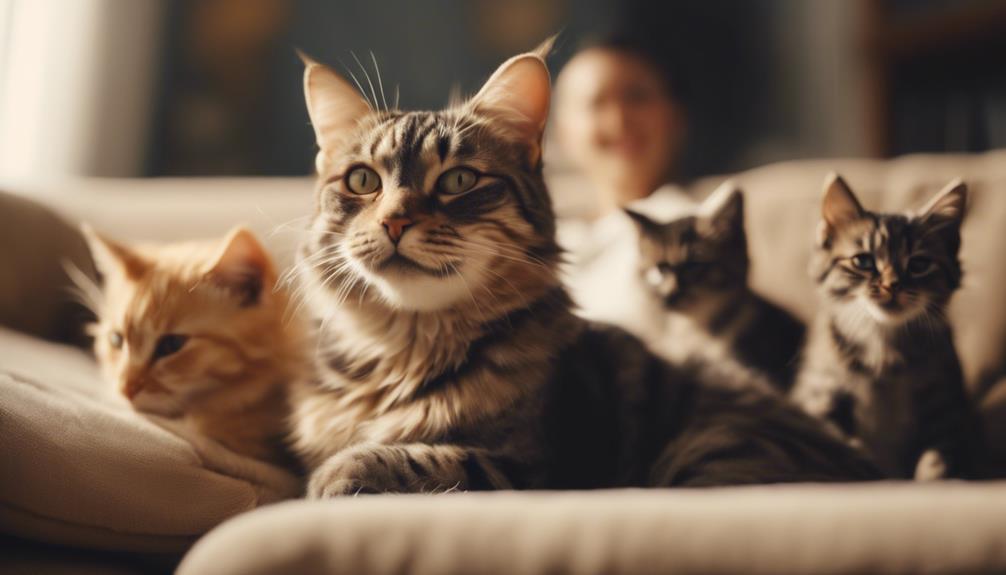
Cat ownership has been associated with various positive effects on mental health, including reduced anxiety and feelings of loneliness. Studies have shown that interacting with cats can have a calming effect on individuals, leading to lower rates of depression and feelings of isolation. In comparison to non-pet owners, cat owners tend to exhibit traits such as openness to new experiences and introversion. Additionally, research suggests that cat owners may have lower levels of neuroticism and higher levels of trust in social situations. The release of oxytocin, known as the 'love hormone,' when interacting with cats can promote feelings of happiness and overall well-being. Notably, a study found that dog owners also experience similar mental health benefits, indicating the positive impact of pet ownership on psychological wellness.
| Cat Owners | Dog Owners |
|---|---|
| Reduced anxiety | Improved mental health |
| Lower levels of depression | Enhanced well-being |
| Decreased feelings of loneliness | Increased social trust |
| Calming effect | Oxytocin release |
Do Cat Owners Have a Higher Level of Happiness Than Dog Owners?
Numerous studies have examined the rivalry between cat owners vs dog people when it comes to happiness. Surprisingly, research suggests that cat owners may have a higher level of happiness than dog owners. This could be due to the independent nature of cats, allowing their owners to have more freedom and flexibility.
Tips for Enhancing Happiness as a Cat Owner
Exploring strategies to enhance the happiness and well-being of cat owners involves implementing practical tips that maximize the positive impacts of feline companionship on mental health.
Here are some tips to make their owners happier:
- Spend Quality Time: Allocate dedicated time each day to interact, play, and bond with your cat.
- Create a Comfortable Environment: Guarantee your cat has a cozy and stimulating living space to thrive in.
- Practice Mindfulness: Use moments with your cat to be present, focusing on the here and now.
- Seek Veterinary Care: Regular check-ups and preventive care can alleviate worries about your cat's health.
- Join Cat Communities: Connect with other cat owners for support, advice, and shared experiences.