
Dracaena plants can be toxic to cats as they contain saponins. Symptoms of poisoning include vomiting, lethargy, lack of appetite, drooling, and dilated pupils. Immediate veterinary care is essential if ingestion is suspected. Treatment may involve inducing vomiting and providing IV fluids to counter the harmful effects of saponins on feline health. Cat owners should take preventive measures like keeping Dracaena out of reach, using high shelves, and monitoring their pets closely. Understanding the risks and acting promptly can prevent severe consequences. Learn more about Dracaena toxicity and how to protect your feline companions.
Overview of Dracaena Toxicity
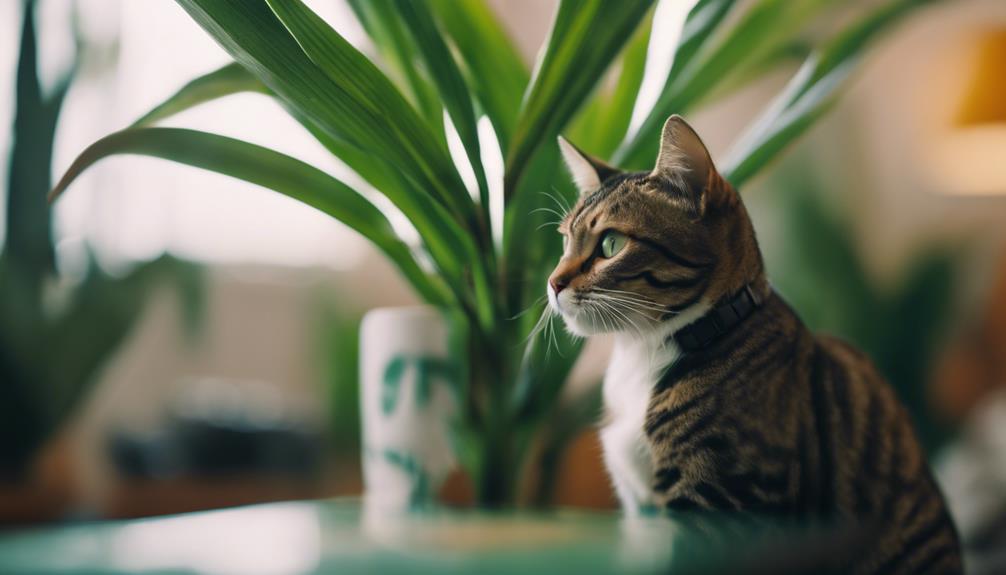
Dracaena toxicity in cats is primarily attributed to the presence of saponins in the plant, leading to a range of adverse symptoms upon ingestion. These symptoms include vomiting, lethargy, lack of appetite, drooling, dilated pupils, and abdominal pain.
Immediate veterinary care is essential if a cat ingests Dracaena leaves. Treatment for Dracaena toxicity may involve inducing vomiting, using activated charcoal, and providing IV fluids to affected cats.
Saponins and Their Harmful Effects
Saponins, toxic chemicals present in Dracaena plants, pose a significant risk to cats when ingested due to their potential to induce various harmful effects on feline health. These compounds can lead to symptoms such as vomiting, lethargy, lack of appetite, drooling, dilated pupils, and abdominal pain in cats. Educating pet owners about the toxic nature of saponins in Dracaena is vital for preventing harm to their feline companions.
| Harmful Effects of Saponins in Cats | |
|---|---|
| Vomiting | Drooling |
| Lethargy | Dilated Pupils |
| Lack of Appetite | Abdominal Pain |
Symptoms of Poisoning in Cats

When a cat is poisoned by Dracaena, common symptoms to watch for include vomiting, lethargy, and loss of appetite.
It is essential to seek immediate veterinary attention if you suspect your cat has ingested any part of the Dracaena plant.
Neglecting these symptoms could lead to potential long-term effects on your feline companion's health.
Common Poisoning Signs
Experiencing symptoms such as vomiting, lethargy, and lack of appetite are common indicators of potential Dracaena poisoning in cats.
- Vomiting can lead to dehydration.
- Lethargy may indicate weakness and distress.
- Lack of appetite could result in malnutrition.
- Drooling and dilated pupils suggest neurological effects.
These signs necessitate immediate veterinary attention to guarantee the well-being of the cat.
Immediate Veterinary Attention
Upon detecting symptoms of poisoning in cats such as vomiting, lethargy, and lack of appetite, immediate veterinary attention becomes essential to address potential Dracaena toxicity. Other signs like drooling, dilated pupils, and abdominal pain may indicate ingestion of Dracaena.
Treatment typically involves inducing vomiting, administering activated charcoal, and providing IV fluids. Timely intervention is vital to help cats recover and prevent severe consequences from Dracaena poisoning.
Potential Long-Term Effects
Chronic exposure to Dracaena in cats can result in long-term effects such as kidney failure and severe dehydration if left untreated.
- Kidney failure is a severe consequence of Dracaena toxicity in cats.
- Severe dehydration can occur in cats due to ingestion of Dracaena.
- Gastrointestinal issues may develop from chronic exposure to Dracaena.
- Delayed treatment for Dracaena poisoning can lead to serious organ damage in cats.
Immediate Veterinary Care Importance
Immediate veterinary care is essential when a cat ingests Dracaena due to its toxic effects. Without prompt intervention, the cat may experience worsening symptoms and complications.
Quick action by a veterinarian can help mitigate potential health risks associated with Dracaena poisoning in cats.
Urgency of Treatment
Prompt veterinary intervention is imperative when a cat ingests Dracaena due to its toxic saponins, as timely treatment greatly influences the outcome of poisoning cases in felines.
- Witnessing a pet in distress is heart-wrenching.
- The urgency of seeking immediate help cannot be overstated.
- Knowing the signs of poisoning can save a beloved companion.
- Quick action can make a significant difference in your pet's recovery.
Potential Health Risks
Upon ingestion of Dracaena, cats may manifest symptoms such as vomiting, lethargy, and lack of appetite, necessitating immediate veterinary intervention to address potential health risks.
| Potential Health Risks of Dracaena Poisoning in Cats |
|---|
| Drooling |
| Dilated pupils |
| Abdominal pain |
| Vomiting |
| Lethargy |
Preventive Measures for Cat Owners
To safeguard your feline companions from potential harm, cat owners should implement strategic preventive measures when it comes to the presence of Dracaena plants in their homes.
- Place Dracaena plants out of reach.
- Use hanging baskets or high shelves.
- Monitor cat behavior closely.
- Opt for non-toxic plant alternatives.
Treating Dracaena Poisoning in Cats
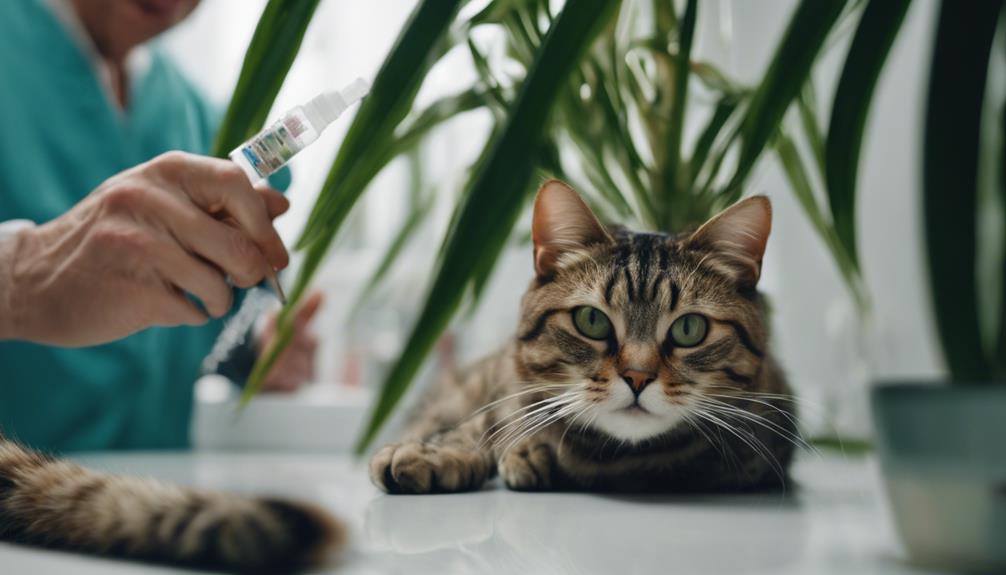
In cases of Dracaena poisoning in cats, immediate veterinary attention is crucial to address the potential risks associated with ingestion of the plant's toxic saponins. Treatment may involve inducing vomiting, administering activated charcoal, and providing intravenous fluids. Pet owners should be cautious and seek professional help promptly if their cat shows symptoms of poisoning. Below is a simple table illustrating treatment options for Dracaena poisoning in cats:
| Treatment | Description |
|---|---|
| Inducing Vomiting | Helps remove the plant material from the cat's system. |
| Activated Charcoal | Binds to toxins in the stomach, preventing absorption. |
| Intravenous Fluids | Helps maintain hydration and support organ function during recovery. |
Recovery Process for Affected Cats
The recovery process for cats affected by Dracaena toxicity necessitates diligent administration of intensive fluids to mitigate dehydration.
- Immediate care is essential to prevent severe complications.
- Monitoring by a veterinarian guarantees timely intervention.
- Supportive therapy aids in the elimination of toxins.
- Patience and a calm environment promote the cat's recovery.
Are There any Safe Plants for Cats to be Around in the Home, if Dracaena and Celosia Are Toxic?
Yes, there are safe plants for cats to be around in the home, even if dracaena and celosia are toxic. Some safe options include spider plants, Boston ferns, and African violets. It’s important to be mindful of celosia toxicity in cats and choose pet-friendly plants accordingly.
Keeping Cats Safe From Plant Poisoning
Taking proactive steps to safeguard your feline companions from potential plant poisoning is paramount for responsible pet ownership. Cats and dogs can be at risk of ingesting toxic plants like Dracaena, leading to harmful effects.
Keeping such plants out of reach, identifying safe alternatives, and being vigilant about the greenery in your home can help prevent plant-related poisoning incidents in pets. Regularly educating yourself on plant toxicity is essential for maintaining a safe environment for your beloved animals.