
Cats' presence on beaches depends on regulations; some allow while others restrict access. Check local rules before taking your cat. Health concerns like toxins in sand and hot temperatures require caution. Cats can disturb ecosystems and wildlife on beaches. Private beach policies vary; understand and follow them. Vaccinations are important for beach safety and may differ by location. Supplying water, shade, and a carrier is essential for beach trips. Supervise cats closely and use leashes to prevent issues. Hazards like sand toxins and burns need attention. Learning more about beach cat care guarantees a safe and enjoyable experience.
Overview of Beach Cat Regulations
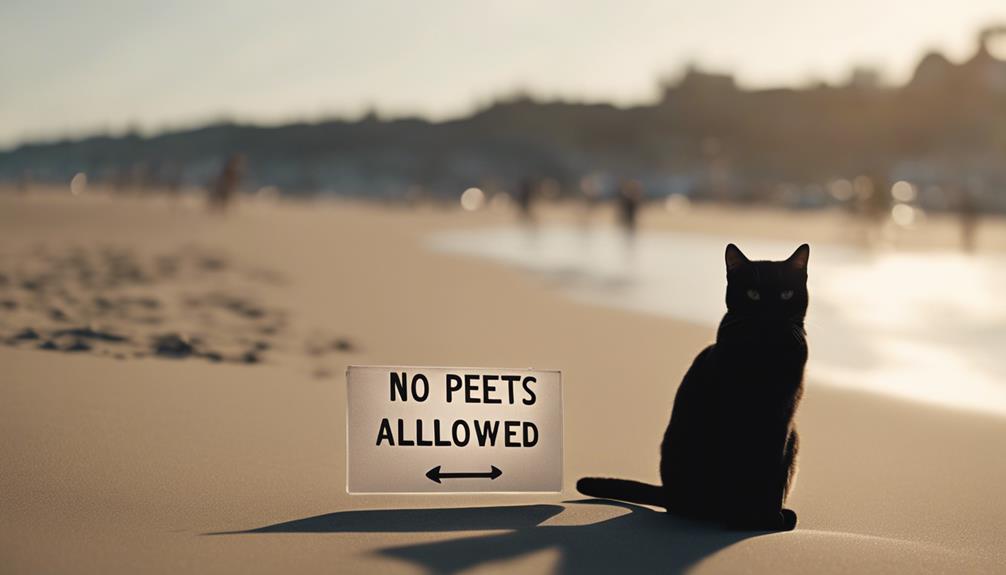
When planning a trip to the beach with your feline companion, understanding the regulations surrounding cats on the beach is essential for a hassle-free experience. Some beaches have specific rules allowing or prohibiting cats on the beach, so it's important to check local beach regulations before bringing your cat along.
Not all beaches permit cats, making research beforehand imperative. Pet-friendly beaches may have designated areas or restrictions for cats, guaranteeing a safe and pleasant experience for all beachgoers.
Health and Safety Concerns for Cats
Understanding the importance of safeguarding your cat's well-being at the beach entails being mindful of various health and safety concerns that can arise in this environment. Here are key considerations:
- Cats should be vaccinated before going to the beach to prevent diseases and infections.
- Sand on the beach can contain toxins harmful to cats if ingested.
- High sand temperatures can cause burns on cat paw pads.
- Proper disposal of cat feces is essential to avoid health risks on the beach.
Disturbances Caused by Cats on Beaches

Cats on beaches can greatly disrupt local ecosystems and pose various threats to wildlife and the environment. Their presence can lead to disturbances such as nesting bird interference, sand erosion from digging, and contamination from feces. Here is a table summarizing the disturbances caused by cats on beaches:
| Disturbances | Effects | Consequences |
|---|---|---|
| Nesting Bird Interference | Disrupts nesting habits of birds | Endangers bird populations |
| Sand Erosion from Digging | Causes erosion and habitat disruption | Alters beach landscape |
| Contamination from Feces | Spreads diseases and harms the environment | Health risks for wildlife and beach users |
Private Beach Exceptions for Cats
Private beach exceptions for cats are subject to specific rules and permissions set by beach owners. These exceptions vary based on the regulations and guidelines established by each private beach.
Understanding the policies regarding cats on private beaches is essential for pet owners seeking to enjoy the beach with their feline companions.
Private Beach Permits
Permit regulations on private beaches regarding cats may include specific guidelines and allowances. Private beach permits for cats may vary, but common considerations include:
- Leashing Requirements: Some beaches may allow cats if they are leashed or under close supervision to make sure they do not disturb other beach visitors or wildlife.
- Additional Fees: Certain private beach owners might require cat owners to pay extra fees or sign agreements to bring their feline friends along.
- Time Restrictions: Cats may be permitted only during specific hours to prevent overcrowding or conflicts with other beach activities.
- Health and Safety Regulations: Private beaches may enforce rules such as requiring up-to-date vaccinations for cats to protect both the animals and other beachgoers.
Local Regulations Overview
While public beaches commonly enforce restrictions on feline presence, local regulations governing cats on private beaches exhibit a more nuanced approach. Some private beaches may allow cats with specific rules such as leashing, waste cleanup, and time restrictions.
Local regulations vary widely, so it's important to check with beach authorities before bringing your cat along for a beach vacation. Private beach owners have the discretion to permit or prohibit cats based on their own policies.
Understanding and adhering to these local regulations is vital to guarantee a positive beach experience for both cats and beachgoers. If you're looking for a pet-friendly beach option, exploring private beaches that allow cats with certain guidelines can be a suitable choice for your furry companion.
Alternative Pet-Friendly Options
Exploring exclusive coastal retreats that cater to feline companions can provide a tranquil and secure environment for pet owners seeking alternative pet-friendly options. When considering private beach options for cats, it's important to inquire about policies beforehand to guarantee a smooth visit. Here are some key points to keep in mind:
- Some private beaches may allow cats with specific permissions or restrictions in place.
- Private beach owners often have rules for pets, including cats, to maintain safety and cleanliness.
- Private beach exceptions for cats may require prior approval or additional fees.
- Opting for private beach options can offer a more controlled and secluded environment for both pets and their owners.
Specific Beach Rules for Cats
Adherence to designated beach regulations for cats is essential to guarantee a safe and harmonious environment for all beachgoers. Some beaches allow cats, while others may not permit them at all. It is important to check local regulations regarding cats to make sure compliance and avoid any issues.
Certain beaches may have specific areas where cats are allowed, but there could be restrictions in place. Understanding and following these beach rules for cats can help ensure a pleasant experience for both the cat and the owner.
Always respect and adhere to any posted signs or guidelines related to cats on the beach to maintain a positive relationship with beach authorities.
Safety Tips for Beach Visits With Cats

When taking cats to the beach, it is crucial to prioritize their safety by following essential guidelines and precautions.
- Keep Cats Restrained: Cats should be kept on a leash with a secure harness to prevent them from wandering off or getting into dangerous situations.
- Avoid Peak Heat: Schedule beach visits with your pet during cooler times of the day to reduce the risk of overheating.
- Provide Essential Supplies: Guarantee access to shade, water, and ventilation to keep your cat comfortable and hydrated.
- Transport Safely: Use secure carriers or crates when transporting your pet to and from the beach to safeguard their safety throughout the journey.
Vaccination Requirements for Beach Cats
Before taking your cat to the beach, it's essential to confirm they are vaccinated against common diseases such as rabies, feline viral rhinotracheitis, and calicivirus.
Vaccination not only protects your cat but also prevents the spread of diseases to other animals they may encounter.
Make sure your cat's vaccinations are up to date at least two weeks before beach visits to allow for proper immunity development.
Required Cat Vaccinations
How essential are vaccinations for ensuring the safety of beach cats? Vaccinations play an important role in protecting your feline friend's health in beach environments. Here are some key points to contemplate regarding required cat vaccinations for beach outings:
- Core Vaccinations: Make sure your cat is up to date on essential vaccines like rabies and distemper before heading to the beach.
- Proof of Vaccination: Some beaches may require proof of vaccination to prevent the spread of diseases and guarantee the safety of all animals and people.
- Disease Prevention: Vaccinations help shield your cat from potential health risks and diseases commonly found in outdoor settings like the beach.
- Overall Well-being: Regular vaccinations are crucial for maintaining your cat's health, especially in public spaces where they may interact with other animals.
Health and Safety
Vaccination requirements for beach cats play a vital role in safeguarding feline health and well-being in coastal environments. Before heading to the beach, cats should be vaccinated against common diseases to prevent infections and guarantee their safety. These vaccinations protect cats from potential risks at the beach, such as exposure to other animals, parasites, and environmental hazards.
Common vaccines for cats include those for rabies, feline leukemia virus, and core vaccines like feline herpesvirus and calicivirus. It's important to keep up to date with vaccinations to protect both your cat and other animals they may encounter at the beach. Remember that vaccination requirements for beach cats may vary by location and local regulations, so consulting with a veterinarian is essential to ensure your cat's health and safety.
Essential Supplies for Beach Cats
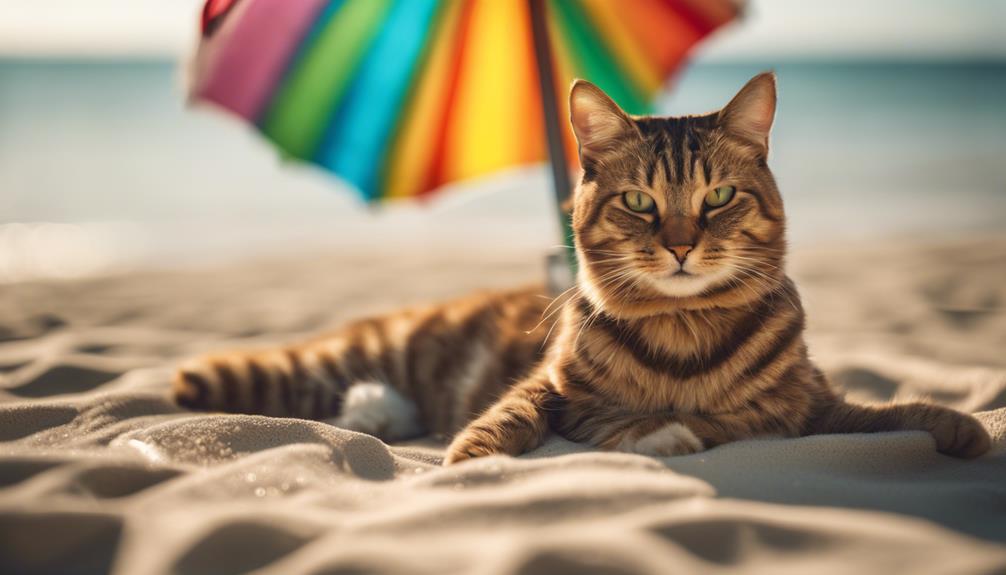
When preparing for a beach outing with your feline companion, it is important to gather essential supplies to guarantee their well-being and comfort. Here are some key items to bring along:
- Fresh Water: Keep your beach cat hydrated under the sun.
- Portable Shade: Provide a shelter for your cat to rest and cool off.
- Secure Cat Carrier: Ensure a safe and comfortable carrier for beach trips.
- Essential Supplies: Pack cat food, treats, and a litter box for their needs.
Supervision and Control of Beach Cats
Supervision and control of beach cats are crucial for their safety and the well-being of others. Using a leash and setting boundaries can prevent cats from wandering off or causing disturbances.
Checking and respecting beach regulations guarantees a harmonious coexistence with other beach visitors and wildlife.
Leash for Beach Cats
In order to guarantee the safety and security of beach cats in unfamiliar environments, the use of a leash for supervision and control is essential. When taking your cat to the beach, consider the following:
- Leash Training: Prior to visiting the beach, make sure your cat is comfortable with wearing a harness and walking on a leash to prevent them from escaping.
- Constant Supervision: Keep a close eye on your beach cat at all times to prevent them from wandering off or getting into potentially dangerous situations.
- Secure Harness: Choose a well-fitting and secure harness to prevent your cat from slipping out and ensure they remain safely tethered to you.
- Preventing Escapes: Utilize a leash to prevent your cat from running away, helping you enjoy your beach outing while keeping your furry friend safe.
Boundaries for Beach Cats
Establishing clear boundaries for beach cats is essential to guarantee their safety and well-being in unfamiliar outdoor settings. Cats should be supervised at all times on the beach to prevent escapes or injuries.
Using a leash with a secure harness is vital for effective control of beach cats. Prior leash training and outdoor experience are necessary before taking cats to the beach. Fear or overstimulation can lead to cats running away, underscoring the importance of supervision.
Introducing cats to common beach stimuli like noise, people, and other animals beforehand can help prevent stress-related escapes. By implementing these strategies, cat owners can ensure a safe and enjoyable beach experience for their feline companions.
Can I Take My Cat to the Beach if Petsmart Doesn’t Allow Them Inside?
Petsmart is known for its pet-friendly policy; however, cats in Petsmart policy are not allowed inside. If you plan to take your cat to the beach, it is best to leave them at home or find a pet-friendly beach where they can enjoy the sand and waves alongside you.
Hazards to Watch Out for With Beach Cats

Exploring the beach environment with cats poses potential hazards that demand careful consideration to guarantee their safety and well-being. To make sure a safe beach outing for your feline friend, it's vital to be aware of the following hazards:
- Toxins in Sand: Sand on the beach can contain toxins harmful to cats if ingested.
- Hot Sand: Cats' paw pads can burn from high sand temperatures.
- Fecal Disposal: Proper disposal of cat feces is essential to avoid health risks at the beach.
- Sun Protection: Cats should be protected from sunburn and dehydration while on the beach.