
Yes, all cats have eyebrow whiskers, which are scientifically called superciliary vibrissae. These whiskers are essential for protecting their eyes, aiding in sensory perception, and triggering a protective blink reflex. They play an important role in maintaining close distance vision protection and contribute to overall feline well-being. Cat eyebrow whiskers provide tactile feedback about surroundings, warn of potential threats near the eyes, and enable cats to see things in their environment. Understanding the significance of these whiskers is essential for cat owners to guarantee the well-being of their feline companions. Explore further to uncover more about these fascinating sensory tools.
Importance of Cat Eyebrow Whiskers
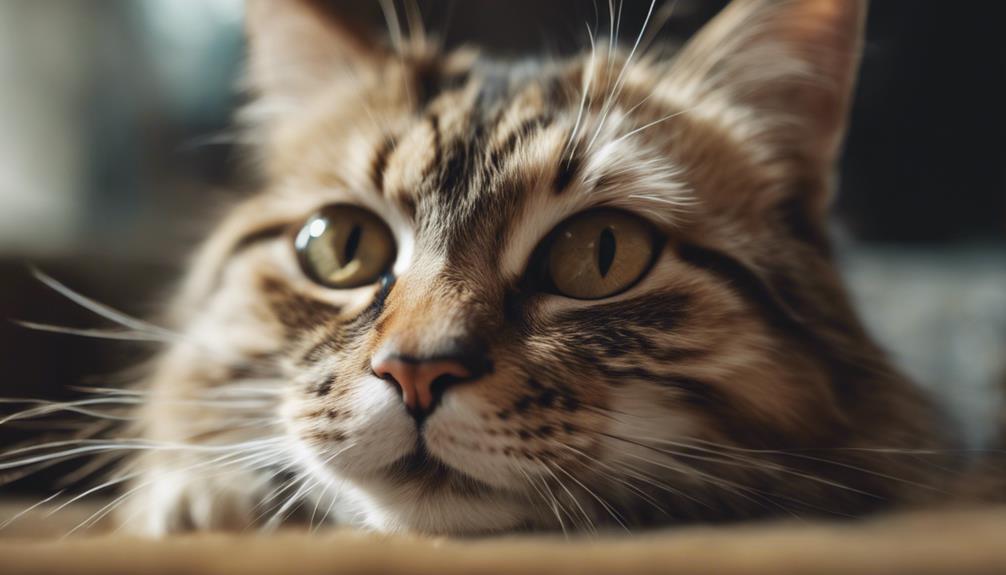
Cat eyebrow whiskers play an essential role in protecting feline eyes from potential harm and aiding in their sensory perception. These whiskers serve as important sensory organs, helping cats navigate their surroundings and interpret body language cues.
Additionally, they trigger a protective blink reflex when touched, safeguarding the eyes from debris. Whiskers in the brow region are vital for maintaining close distance vision protection and overall feline well-being.
Functions of Eyebrow Whiskers
Playing a pivotal role in feline sensory perception and eye protection, eyebrow whiskers function as sensitive tactile organs that alert cats to potential dangers in their immediate surroundings. These whiskers are so sensitive that they help protect your cat’s eyes by triggering a blink reflex when touched. They enable cats to see things in their surrounding environment and play a significant role in safeguarding their vision. These sensory whiskers also serve as a communication tool among cats, as they can convey information about the cat’s mood and intentions to other felines. In addition, they aid in proprioception, which is the awareness of one’s body in space and in relation to other objects. This is why cats lick hair, as it helps them to maintain the cleanliness and functionality of their whiskers, ensuring they can continue to serve their important functions.
| Function | Description |
|---|---|
| Eye Protection | Trigger blink reflex when touched |
| Sensory Perception | Provide tactile feedback about surroundings |
| Alerting to Dangers | Warn of potential threats near the eyes |
Eyebrow Whiskers in Cat Behavior
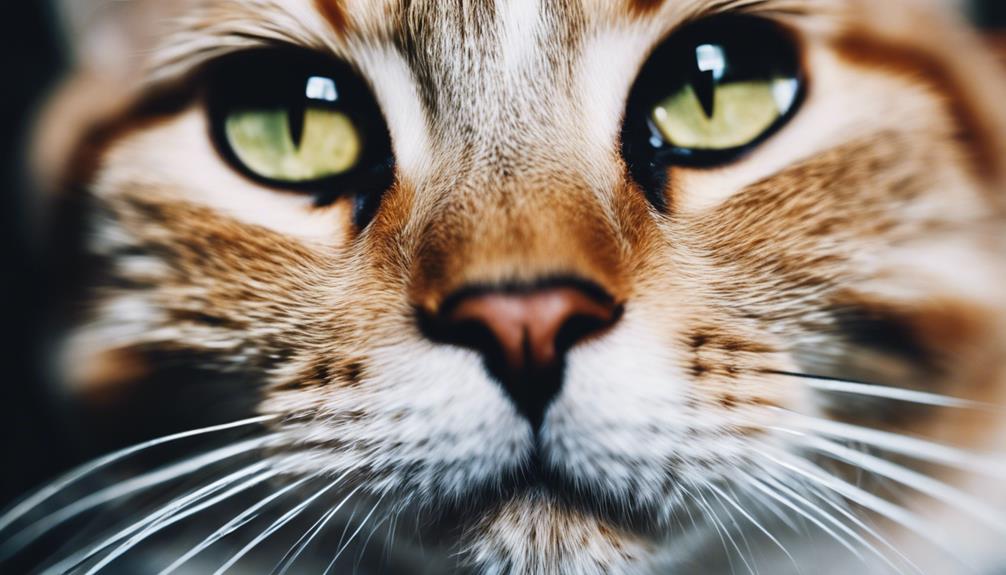
In the domain of feline behavior, the presence and function of eyebrow whiskers, also known as superciliary whiskers, hold significant importance. These sensitive whiskers, located on the upper lip and side of the face, help cats navigate their surroundings.
When cats move their whiskers, including carpal, cheek, and superciliary whiskers, they receive tactile feedback essential for their sensory abilities and overall well-being.
Care Tips for Eyebrow Whiskers
The importance of maintaining the well-being and sensory acuity of a cat extends to the careful attention required for the care of their eyebrow whiskers. Cat owners should make certain that food and water bowls are not too narrow, as cats use their whiskers to sense the width. When a cat is losing whiskers or not moving them forward, it may indicate a problem. Notice that your cat's whiskers are intact and functional for their health.
| Care Tips for Eyebrow Whiskers |
|---|
| 1. Guarantee wide food and water bowls |
| 2. Monitor whisker movement |
| 3. Check for whisker loss |
| 4. Regularly inspect whiskers |
| 5. Consult a vet if issues arise |
Are White Whiskers a Common Trait Among All Cat Breeds?
Yes, the cats’ white whiskers hypothesis suggests that all cat breeds may have white whiskers as a common trait. However, this is not necessarily the case. Some breeds, such as the Siamese or Sphinx, may have darker whiskers. It ultimately depends on the genetics and coloration of the individual cat.
Myths About Cat Eyebrow Whiskers

Misconceptions surround the presence and significance of eyebrow whiskers in cats, leading to various myths that need clarification.
These whiskers, which are also known as vibrissae, are an essential part of a cat's daily life. They should never be cut, as they serve a protective function for the eyes and aid in close-distance vision. In addition to helping cats navigate their surroundings, whiskers are highly sensitive and can detect even the slightest changes in air currents, which is especially useful in low-light conditions. Cats born without whiskers may face significant challenges in performing these tasks, often relying on alternative sensory inputs to compensate. This underscores the importance of whiskers in a cat’s ability to move confidently and safely in their environment.
If accidentally trimmed, they will naturally fall out and grow back, sometimes turning darker.