
While all cats have the potential to spray, not all will exhibit this behavior. Cat spraying is common in intact males as a way to communicate and mark territory. Neutering before 6 months can greatly reduce spraying, with about 95% of cases resolving post-neutering. Factors like stress, anxiety, and territorial issues can trigger spraying, especially in multi-cat households. Understanding the reasons behind cat spraying and implementing targeted strategies are essential for managing this behavior effectively. Neutering, maintaining a harmonious environment, and addressing environmental triggers play key roles in preventing and resolving cat spraying issues.
Understanding Cat Spraying Behavior

Understanding the phenomena of cat spraying behavior sheds light on the intricacies of feline communication and territorial instincts.
Male cats spray urine to mark their territory, a behavior more common in intact males.
Neutering before 6 months of age can reduce this behavior to a great extent, with about 95% of cases resolved post-neutering.
In multi-cat households, territorial issues may arise, making spraying more likely, especially among intact males.
Reasons Behind Cat Spraying
Male cats exhibit spraying behavior primarily as a means of communicating with other cats and marking their territory through scent. This territorial marking can be triggered by stress, anxiety, or conflict with other cats.
Neutering male cats, especially before 6 months of age, can greatly reduce the likelihood of spraying. Understanding these reasons behind cat spraying can help cat owners address the behavior effectively and create a harmonious environment for their pets.
Factors Influencing Cat Spraying
Factors influencing cat spraying range from biological predispositions to environmental triggers that can prompt this territorial behavior in felines. Unneutered male cats are more likely to engage in spraying to mark their territory. Neutering can reduce but not always eliminate this behavior. Stress from conflicts with outdoor cats or within the household can also trigger spraying. Using pheromone diffusers can help alleviate anxiety and reduce urine marking.
| Factors | Influence | Examples |
|---|---|---|
| Gender | Does not determine | Male, Female |
| Neutered | Decreases spraying | Neutered cats |
| Stress | Triggers spraying | Conflicts |
| Outdoor Cats | Can cause stress | Encounters |
| Pheromones | Reduce anxiety | Diffusers |
Managing and Preventing Cat Spraying
To effectively manage and prevent cat spraying behavior, it is essential to implement proactive strategies that address the underlying causes and triggers of this territorial marking. Neutering resolves spraying in 95% of cases. Maintaining a reasonable cat population at home can help.
Environmental changes often rectify spraying. Cat medication can prevent spraying, and various cat supplies aid in urine cleanup.
Can Allergies in Cats Lead to Spraying Behavior?
Yes, common cat allergies symptoms can lead to spraying behavior. Cats may exhibit this behavior when they are stressed or experiencing discomfort from allergic reactions. It’s essential to address the underlying allergy symptoms to help prevent spraying behavior in cats.
Addressing Cat Spraying Issues
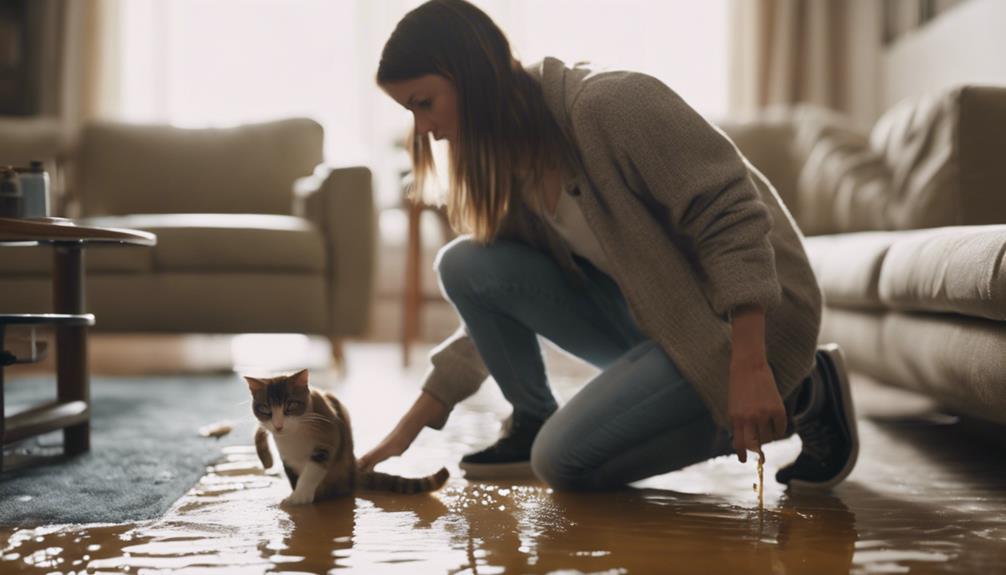
When faced with cat spraying issues, it is important to implement targeted strategies to address and resolve this behavior effectively.
Neutering male cats before 6 months greatly reduces spraying. About 95% of cats stop spraying after being spayed or neutered.
Stress, territorial behavior, and the urge to mate are common reasons for feline urine marking, particularly in multi-cat households or when there are changes in the environment.