
Cats are known for their independence, shown through territorial marking, hunting ability, and solitary preferences. They thrive in quiet, exploring spaces, maintaining cleanliness through grooming. When left alone, cats do not seek constant human contact, vocalizing more out of frustration than separation anxiety. This behavior stems from their self-reliant nature, often misunderstood as distress. Cats handle solitude well, relying on their instincts for coping. Further insight into feline behavior sheds light on their unique social dynamics and interaction patterns, impacting how they are cared for. Understanding their self-sufficient traits enhances their well-being and enriches their lives.
Signs of Feline Independence

Cats exhibit various discernible signs of independence through their behavior and actions. They display territorial behavior by marking their territory with scent glands and using scratching posts.
Cats are self-sufficient hunters, capable of catching prey to meet their nutritional needs. They enjoy alone time, seeking solitude in quiet areas within the home. Cats demonstrate independence by exploring their surroundings, climbing to high places, and roaming freely.
Additionally, cats prioritize personal hygiene, grooming themselves regularly. This combination of territorial behavior, hunting skills, alone time, and self-maintenance showcases the independent nature of cats. By engaging in these activities, cats establish their self-reliance and ability to thrive in their environment.
Cat Behavior When Left Alone
When left alone, cats often display behaviors that suggest they are comfortable with solitude and do not require constant human interaction for reassurance.
These independent felines typically do not exhibit distress or seek proximity when separated from their owners, indicating a self-reliant nature in coping with being alone.
Research shows that cats tend to vocalize more out of frustration rather than attachment when left to their own devices, highlighting their unique approach to solitude.
Solitude and Cats
Exhibiting vocalization patterns and signs of frustration, cats demonstrate distinct behaviors in response to solitude when left alone. Unlike dogs, cats do not typically show secure attachment behaviors like seeking proximity or distress when separated from their owners.
Research indicates that cats' independence in coping with solitude may stem from their solitary hunting nature. While cats may enjoy interaction with their owners, they do not rely on them for reassurance in unfamiliar settings.
Owners who perceive high levels of attachment in their cats may misinterpret signs of frustration as separation anxiety. Understanding these behaviors can help owners provide appropriate care and support for their feline companions when they are left alone.
Feline Independence Traits
In response to solitude, felines demonstrate a distinct behavior pattern that highlights their self-reliance and autonomy. When left alone, cats exhibit traits of independence, coping with separation without distress similar to dogs.
Research indicates that cats do not heavily rely on their owners for security and safety needs when in unfamiliar environments. Rather than seeking reassurance, cats display self-sufficiency and a preference for handling situations independently.
In instances of separation, cats may show signs of frustration rather than attachment, emphasizing their self-reliant nature. This behavior showcases their autonomy and ability to navigate unfamiliar settings with minimal reliance on external reassurance, indicating a strong inclination towards self-reliance in coping mechanisms.
Frustration Vs Separation Anxiety
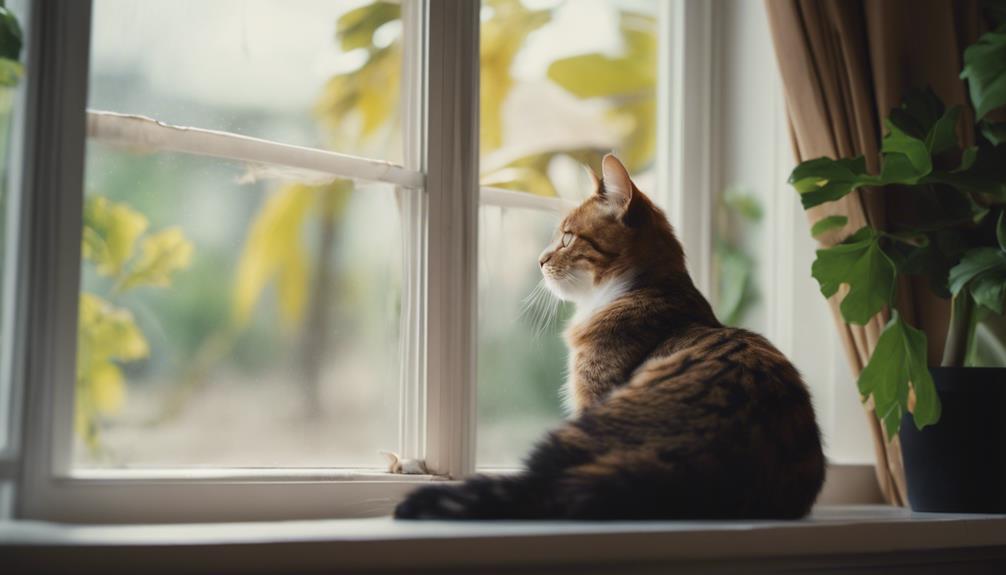
Feline behavior researchers have observed distinct differences between cats' responses to being left alone, with frustration being a prevalent emotion over separation anxiety. Cats exhibit signs of frustration rather than separation anxiety when left alone, showing independence in coping with solitude. Research suggests that cats do not seek reassurance from owners in unfamiliar settings, vocalizing more as a response to frustration. This contrasts with dogs, which often rely on a safe base for comfort.
Owners may misinterpret cats' vocalizations and behaviors as separation anxiety when, in reality, they are displaying frustration. Understanding these distinctions can help owners provide appropriate support for their feline companions.
- Cats show signs of frustration when left alone
- Cats do not rely on owners for reassurance in unfamiliar settings
- Owners may misinterpret cats' vocalization and behavior as separation anxiety
Social Preferences in Cats
Cats' social preferences are influenced by various factors that differ from the typical secure attachment behaviors often seen in dogs. While domestic cats may form close bonds with their owners, these relationships do not necessarily stem from a need for safety and security. Cats do not exhibit signs of distress or seek reassurance from their owners in unfamiliar environments.
Research indicates that cats' social preferences are distinct from the secure attachment commonly observed in dogs. When separated from their owners, cats may display signs of frustration or learned responses, challenging the traditional concept of separation anxiety in felines. Understanding these independent behaviors and social preferences in cats is essential for interpreting their interactions with humans and other animals.
Secure Attachment Behaviors in Cats
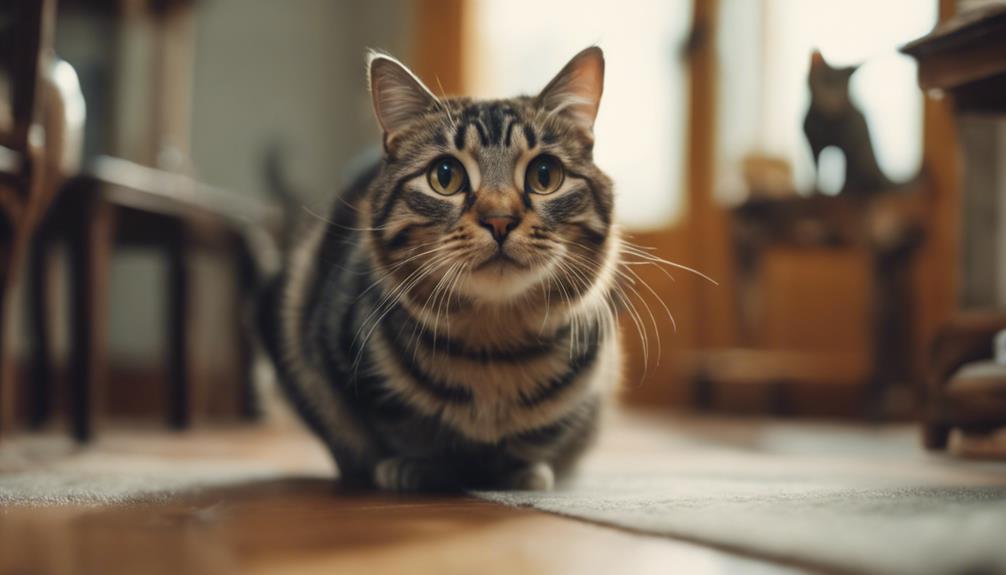
The behavior of domestic cats when it comes to forming secure attachments with their human caregivers differs greatly from the typical patterns observed in other companion animals. Cats do not exhibit secure attachment behaviors like seeking proximity or showing distress upon separation from owners.
Research suggests that cats' independence in unfamiliar situations stems from their solitary hunting nature. They do not rely on owners for safety and security needs in unfamiliar environments.
Owners' perception of high attachment in cats does not align with observed behaviors in unfamiliar settings. Cats may display signs of frustration or learned responses when separated from owners, challenging the notion of secure attachment.
Understanding Cats Self-Reliance
Understanding the self-reliance of domestic cats is essential for comprehending their behavior and interactions with humans. Cats are natural hunters, ingrained with instincts that drive their independence and self-sufficiency. From a young age, they develop and refine their hunting skills, showcasing their self-reliance in providing for themselves. Cats have a unique way of domesticating themselves, forming companionship-based relationships with humans.
Ancient humans recognized their value for pest control, which played a significant role in their domestication. Throughout history, cats have been admired for their graceful demeanor and self-sufficiency, traits that continue to shape their interactions with humans today. This blend of independence and grace makes cats intriguing companions with a rich history of self-reliance.
Do Social Cats Still Need Independence?
Yes, cats are social animals to some extent, but they still need independence. While they may enjoy interaction with humans and other animals, they also need time alone to relax and recharge. Providing a balance of social interaction and alone time is essential for the well-being of your feline friend.
Improving Cat Welfare and Care
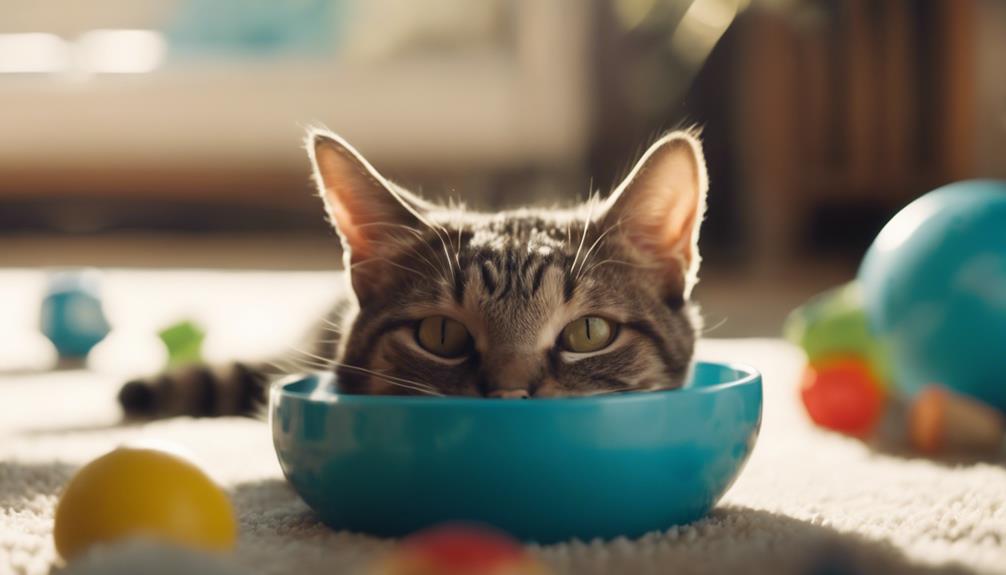
With a focus on enhancing cat welfare and care, it is important to recognize and address the specific needs of these independent and self-reliant animals. Cats, known for their independence, require tailored care practices to guarantee their well-being.
To improve cat welfare, consider the following:
- Providing enriching environments that stimulate their natural behaviors.
- Offering secure spaces where they can retreat and feel safe.
- Implementing interactive play sessions to prevent boredom and frustration.
Understanding cats' behaviors, such as signs of frustration rather than separation anxiety, is vital in enhancing their overall welfare. By focusing on improvement strategies that cater to their self-reliant nature, we can make sure that cats lead happy and healthy lives.