
Lysol can be toxic to cats if ingested or exposed to mist, primarily due to harmful ingredients like quaternary ammonium disinfectants. Ethanol content in some products raises ingestion risks, especially if cats come into contact with wet surfaces. Symptoms of poisoning include nausea, vomiting, and diarrhea, requiring immediate veterinary care. Safe alternatives like vinegar and baking soda are recommended for cleaning around cats. Prevent toxicity by keeping Lysol out of their reach, using pet-safe products, and ventilating well during cleaning. Prioritize feline safety when choosing cleaning solutions due to the serious risks Lysol poses to cats.
Understanding Lysol's Toxicity to Cats
Understanding the potential dangers of Lysol to cats is essential for pet owners to ensure their feline companions' safety and well-being.
Lysol can be toxic to cats if ingested or exposed to Lysol mist due to its quaternary ammonium disinfectants and ethanol content. While normal use poses minimal risk, ingestion remains the primary concern.
Keeping cats away from wet Lysol surfaces is vital to prevent harm.
Harmful Ingredients in Lysol Products
Lysol products contain quaternary ammonium disinfectants and ethanol as active ingredients, which can pose potential risks to cats if ingested or exposed to.
- Quaternary ammonium disinfectants can lead to respiratory issues if inhaled by cats.
- Ethanol is more toxic and evaporates quickly, increasing ingestion risks.
- Other Lysol ingredients may include water and scent-related components.
- Cats should be kept away from wet Lysol surfaces to prevent harm.
Symptoms of Lysol Poisoning in Cats
Symptoms of Lysol poisoning in cats can manifest as:
- Nausea
- Loss of appetite
- Vomiting
- Diarrhea
Immediate veterinary care is essential if a cat shows signs of Lysol poisoning, as gastrointestinal issues and respiratory symptoms can occur.
Monitoring for potential long-term effects like weight loss, jaundice, or persistent symptoms is vital for the well-being of the feline companion.
Common Signs of Poisoning
Exhibiting various alarming signs, cats may display distinct indications of poisoning upon exposure to Lysol. These signs include:
- Drooling excessively.
- Experiencing difficulty breathing.
- Vomiting frequently.
- Showing neurological symptoms like tremors, seizures, and weakness.
If you observe any of these symptoms in your cat after Lysol exposure, seeking immediate veterinary care is essential to prevent further complications.
Immediate Veterinary Care
Upon detecting signs of poisoning in a cat exposed to Lysol, immediate veterinary care is essential to address potential health risks and guarantee prompt treatment. Symptoms like nausea, vomiting, diarrhea, coughing, and rapid respiration in cats exposed to Lysol necessitate urgent medical attention.
Monitoring for signs such as excessive drinking, weight loss, or jaundice is important post-exposure to ensure early intervention and the well-being of affected cats.
Potential Long-Term Effects
In considering the aftermath of Lysol exposure in cats, it is important to recognize the potential long-term effects that can arise from such incidents.
- Excessive drinking
- Vomiting
- Weight loss
- Jaundice
These symptoms can indicate chronic toxicity resulting from cleaning with Lysol. Regular veterinary check-ups and monitoring of kidney and liver enzymes in older cats are essential to detect and address any long-term effects promptly.
Immediate Actions for Lysol Exposure in Cats
When a cat is exposed to Lysol, prompt actions are vital. Begin by rinsing the affected area with water to eliminate any residue.
Contact a veterinarian promptly if ingestion or signs of poisoning occur to guarantee proper care and treatment.
Symptoms of Lysol Exposure
Observing and recognizing the symptoms of Lysol exposure in cats is crucial for prompt and appropriate intervention.
- Nausea
- Loss of appetite
- Vomiting
- Diarrhea
These signs may indicate potential Lysol exposure in your cat. If you notice any of these symptoms, contact a veterinarian immediately for guidance on the next steps to safeguard your cat's well-being.
Veterinary Care Needed
Immediate veterinary attention is vital for cats exposed to Lysol, especially if they exhibit symptoms like vomiting, drooling, or difficulty breathing.
Providing the vet with details on the Lysol amount ingested or inhaled can aid in treatment. Veterinary care may involve decontamination, supportive measures, and monitoring for complications.
Prompt action is essential as some Lysol ingredients can be toxic, necessitating proper assessment and management by cat medicine experts.
Prevent Future Incidents
To minimize the risk of Lysol exposure in cats, promptly remove them from the contaminated area and take precautionary measures to prevent further contact with the disinfectant.
- Store Lysol and other cleaning products securely out of reach of pets.
- Rinse your cat's paws or fur with water if they walked through Lysol mist.
- Watch for symptoms of poisoning like drooling, vomiting, lethargy, or difficulty breathing.
- Contact a veterinarian if signs of Lysol poisoning appear.
Preventing Lysol Exposure in Cats
To minimize the risk of Lysol exposure in cats, proactive measures should be taken to restrict their access to areas where the disinfectant is used.
Make sure cats are not present during the application of Lysol and do not walk on recently misted floors.
Safe Cleaning Alternatives for Cat Owners
Cat owners can opt for pet-safe cleaning alternatives such as vinegar, baking soda, and hydrogen peroxide solutions. These options effectively disinfect surfaces and eliminate odors without harming cats.
Using natural ingredients like lemon juice and essential oils can help create safe and cat-friendly cleaning solutions.
Cat-Friendly Cleaning Products
When looking for cleaning products safe for use around cats, it is essential to prioritize those free from harmful chemicals such as phenols and ammonia. Consider these cat-friendly cleaning alternatives:
- Natural cleaners with plant-based ingredients.
- Pet-safe cleaning sprays and wipes.
- Non-toxic enzymatic cleaners.
- Certified pet-friendly cleaning products.
Homemade Cleaning Solutions
Homemade cleaning solutions provide cat owners with a safe and effective alternative to commercial products like Lysol, which may pose toxicity risks to feline companions.
Simple mixtures like vinegar and water can serve as safe household cleaners. Baking soda is excellent for scrubbing and deodorizing surfaces without harming cats.
Lemon juice diluted in water acts as a natural disinfectant. However, caution should be exercised with essential oils like tea tree oil, which can be toxic to cats.
Risks of Lysol Fumes to Cats
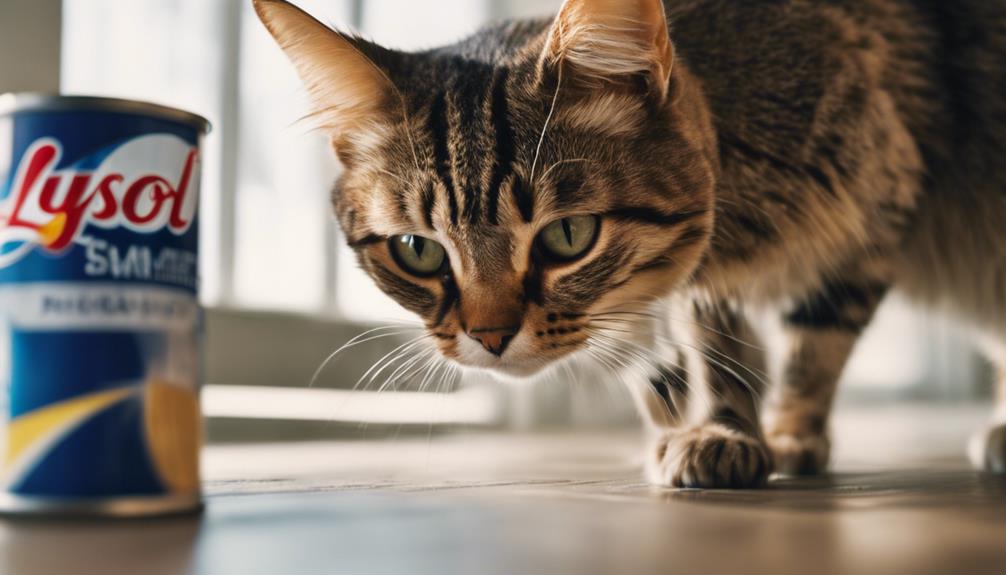
In the presence of Lysol fumes, cats may experience respiratory irritation, manifesting as coughing and increased respiration rates if these vapors are inhaled.
- Keep cats away from areas where Lysol is being used.
- Lysol affects cats primarily through inhalation.
- Look out for signs of respiratory distress post-exposure.
- Ventilate well and minimize direct contact during cleaning to reduce risks.
Guidelines for Using Lysol Safely Around Cats
To guarantee the safety of cats when using Lysol, it is essential to follow specific guidelines for minimizing their exposure to potential risks.
Keep cats away from areas where Lysol is used to prevent inhalation of fumes. Proper ventilation after using Lysol can help minimize respiratory exposure for cats.
Store Lysol securely out of reach of pets, especially near cat litter, to prevent accidental ingestion.
Choose pet-safe or natural alternatives for cleaning around small animals to avoid potential risks.
Importance of Pet-Friendly Cleaning Products
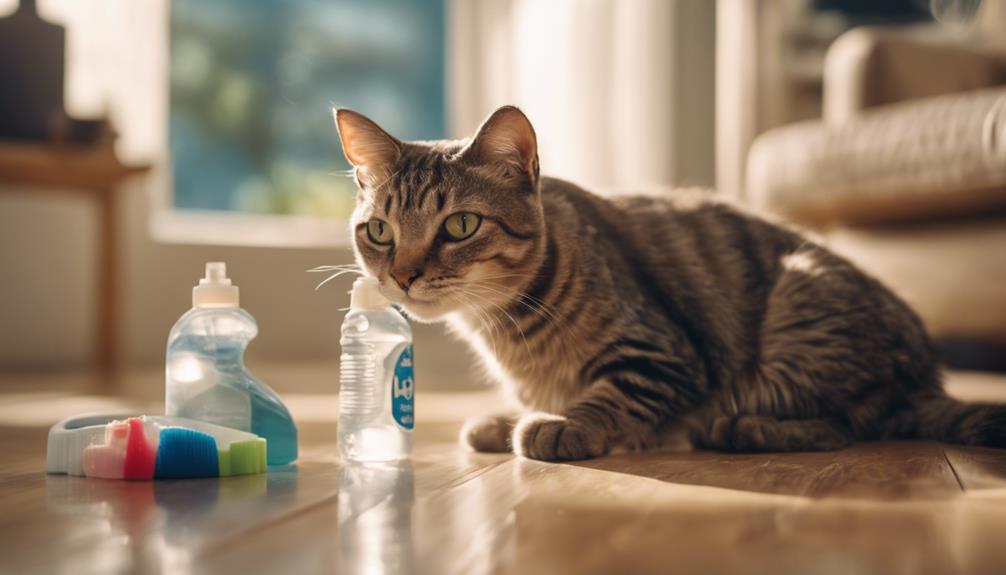
When considering the well-being of cats, the use of pet-friendly cleaning products becomes paramount to safeguarding their health and minimizing exposure to harmful chemicals.
- Pet-friendly cleaners reduce poisoning risks.
- Non-toxic products are gentle on cats' respiratory systems.
- Opting for cat-safe alternatives promotes a safer environment.
- Choosing these products shows responsible pet ownership.
Can Lysol and Litter Deodorizer Harm Cats if Consumed?
When considering litter deodorizer safety for cats, it is important to choose products that are non-toxic and safe for feline consumption. Lysol and some litter deodorizers can contain harmful chemicals that may pose a risk if ingested by cats. It’s essential to carefully read labels and research potential hazards before using these products around pets.
Conclusion: Prioritizing Cat Safety With Cleaning Choices
Ensuring the safety of cats through conscious cleaning product choices is an essential aspect of responsible pet care. Avoiding Lysol Spray and opting for pet-safe alternatives can prevent potential toxicity risks.
Essential oils and natural cleaning solutions offer effective, cat-friendly options. Monitoring cats for any signs of illness post-cleaning is vital.