
Neem oil is generally not toxic to cats, but misuse can lead to adverse reactions. Proper dilution is important to prevent harm. Symptoms of poisoning include vomiting, drooling, and disorientation. Cats may groom neem oil, ingesting it and causing potential toxicity. Immediate veterinary care is essential for serious symptoms. Skin contact can trigger irritation and allergic reactions. Consult a veterinarian before use, especially if your cat is on medication. Understanding symptoms and prevention measures is essential for your feline's safety. Remember, caution is key to keeping your pet safe from neem oil risks.
Neem Oil Toxicity in Cats
Neem oil toxicity in cats is a topic of concern for pet owners and veterinarians alike. While not inherently toxic, adverse reactions can occur if not used properly.
The ASPCA does not classify neem oil as toxic to cats, but caution is advised. Neem oil may interact with medications like insulin and thyroid hormones.
Overdosing can lead to illness, emphasizing the need for proper dilution and veterinary supervision.
Symptoms of Neem Oil Poisoning
Detection of neem oil poisoning in cats can be facilitated by recognizing specific symptoms indicative of toxicity. Symptoms may include:
- Vomiting
- Gagging
- Excessive drooling
- Disorientation
- Pawing at the mouth
- Difficulty breathing
- Changes in heartbeat
- Potential kidney issues with long-term exposure
Vigilance is crucial in identifying these signs early to guarantee prompt and effective treatment for neem oil poisoning in cats.
Risks of Neem Oil Exposure
Exposure to neem oil poses risks to cats, potentially leading to toxicity and adverse reactions, especially when not properly diluted or when interacting with medications like insulin or thyroid supplements.
Symptoms of neem oil poisoning in cats range from vomiting and drooling to disorientation and difficulty breathing.
Immediate steps upon neem oil exposure in cats include washing off the oil, monitoring for distress, and promptly seeking veterinary assistance if any symptoms manifest.
Cat Toxicity Concerns
Cat owners should be aware of potential risks associated with the use of neem oil on their feline companions, particularly considering the possibility of adverse effects due to improper dilution.
- Neem oil, if properly diluted, is not toxic to cats.
- Risks of neem oil interacting with insulin, diabetic medication, and thyroid supplements exist.
- Overdosing can lead to illness, emphasizing proper dilution.
- Caution is advised without veterinary guidance.
- Cats may experience adverse effects with undiluted neem oil.
Symptoms of Exposure
After being exposed to neem oil, cats may exhibit symptoms such as vomiting, gagging, excessive drooling, and disorientation. Additional signs can include pawing at their mouths and difficulty breathing.
Long-term effects of neem oil exposure may lead to kidney problems and subtle changes in heartbeat. It is important to be vigilant for early detection of adverse reactions in cats following neem oil exposure.
Treatment Options Available
Upon encountering neem oil exposure in felines, prompt and necessary treatment measures are essential to mitigate the associated risks and safeguard the well-being of the affected animals.
- Isolate the cat immediately.
- Wash off residue with mild soap and water.
- Monitor for distress symptoms.
- Seek veterinary care for physical exams and decontamination treatments.
- Supportive care with IV fluids and potential hospitalization may be necessary in severe cases.
Neem Oil Ingestion in Cats
Neem oil ingestion in cats can lead to a range of symptoms such as vomiting, gagging, and excessive drooling. If a cat shows signs of disorientation or difficulty breathing after ingesting neem oil, it is important to seek urgent veterinary care.
Understanding the symptoms, treatment options, and prevention measures for neem oil ingestion in cats is essential for ensuring their well-being.
Neem Oil Toxicity Symptoms
Exhibiting symptoms such as vomiting, gagging, excessive drooling, and disorientation, cats that have ingested neem oil may show signs of toxicity.
- Vomiting
- Gagging
- Excessive drooling
- Pawing at the mouth
- Disorientation
In case of any of these symptoms, it is important to seek immediate veterinary attention for proper diagnosis and treatment.
Treatment for Ingestion
In cases where cats have ingested neem oil, immediate steps should be taken to address the situation promptly and effectively. Veterinary interventions may include a thorough physical exam, decontamination treatments like activated charcoal, and supportive care with IV fluids.
Symptoms of neem oil ingestion in cats, such as vomiting, excessive drooling, disorientation, or difficulty breathing, require immediate veterinary attention to guarantee the cat's well-being.
Prevention Measures for Cats
To safeguard the well-being of cats, conscientious pet owners should diligently implement preventive measures to avert potential neem oil ingestion incidents.
- Keep neem oil products containing azadirachtin away from cats.
- Make sure indoor plants and outdoor neem trees are out of reach for cats.
- Monitor cats closely after applying neem oil products.
- Use alternative pet-safe pest control methods.
- Seek immediate veterinary help if a cat shows symptoms of neem oil poisoning.
Neem Oil Topical Effects
When applied to cats' skin, neem oil can trigger skin irritation and allergic reactions. Cats may inadvertently ingest neem oil while grooming, leading to potential toxicity.
Symptoms of topical neem oil exposure in cats include drooling, vomiting, or disorientation. Immediate washing with mild soap and water is recommended if contact occurs.
Monitoring for distress signs and prompt veterinary care are essential after neem oil exposure in cats.
Neem Oil Toxicity Signs
Neem oil toxicity in cats manifests through a range of immediate and long-term symptoms that necessitate prompt recognition and veterinary intervention.
- Vomiting, gagging, and excessive drooling
- Pawing at mouth or signs of disorientation
- Difficulty breathing
- Kidney issues
- Changes in heartbeat
Immediate Actions for Neem Exposure
Upon discovering neem oil exposure in a cat, immediate actions should be taken to mitigate potential harm and safeguard the feline's well-being.
Isolate the cat to prevent further exposure, then wash off any neem oil residue with water and mild soap to reduce ingestion risk.
Monitor closely for adverse reactions like vomiting, excessive drooling, or disorientation.
Contact a veterinarian promptly if distress or poisoning symptoms arise.
Veterinary Care for Neem Poisoning
In cases of neem poisoning in cats, prompt veterinary care is essential to address potential risks and safeguard the cat's well-being.
- Veterinary care for neem poisoning in cats may involve isolating the cat to prevent further exposure.
- Neem oil residue should be washed off the cat with water and mild soap as a first response.
- Monitoring the cat for signs of distress is vital after neem exposure.
- Contacting a veterinarian is recommended if any symptoms of neem poisoning appear in the cat.
- Veterinary interventions for neem poisoning may include a thorough physical exam, decontamination treatments, supportive care, and possible hospitalization in severe cases.
Safe Alternatives to Neem
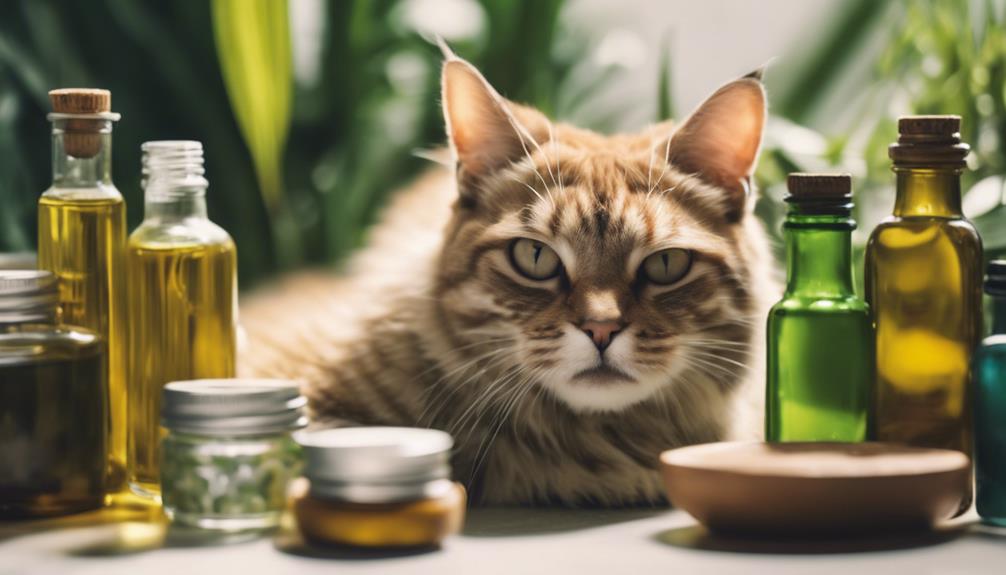
When seeking safe alternatives to neem oil for cats, options like diatomaceous earth for pest control, cat grass as a natural alternative, and certain flea treatments without neem oil can be considered.
Cat-proofing green spaces by keeping plants out of reach and using pet deterrent sprays with citrus scents are additional measures to guarantee neem oil exposure in feline companions.
Exploring cat-safe pest control methods, natural flea remedies, and pet-friendly plant care can help secure the well-being of cats without the risks associated with neem oil.
Cat-Safe Pest Control
Cat-friendly pest control methods offer viable alternatives to neem oil for ensuring a safe environment for your feline companions. Some effective alternatives include:
- Diatomaceous earth
- Cat grass
- Flea treatments without neem oil
- Elevating plants out of reach
- Using pet deterrent sprays
These alternatives can help in managing pests while keeping your cats safe from harmful substances like neem oil.
Natural Flea Remedies
Natural flea remedies offer safe and effective alternatives to neem oil for controlling pests on cats.
Diatomaceous earth, cat grass, and pet deterrent sprays with citrus scents can help repel fleas and ticks without the risks associated with neem oil.
Some flea treatments without neem oil can effectively control parasites on cats.
Maintaining a clean litter box also deters pests, reducing the need for potentially harmful neem oil on cats.
Pet-Friendly Plant Care
For those seeking safe alternatives to neem oil in plant care, exploring options like diatomaceous earth can provide effective pest control without posing risks to pets like cats.
- Elevate plants to prevent ingestion by cats.
- Consider using cat grass indoors for safe nibbling.
- Use citrus-scented pet deterrent sprays to discourage cats from treated plants.
- Opt for flea treatments without neem oil for parasite control.
- Safeguard plants from pets by choosing pet-friendly care alternatives.
Can Neem Oil and Sedum Both Be Harmful to Cats?
Yes, both neem oil and sedum can be harmful to cats. Neem oil contains components that can be toxic to cats if ingested or applied to their skin. Sedum plants are also toxic to cats if ingested. It is important to be cautious and prioritize cat safety when using these products around pets.
Preventing Neem Oil Harm
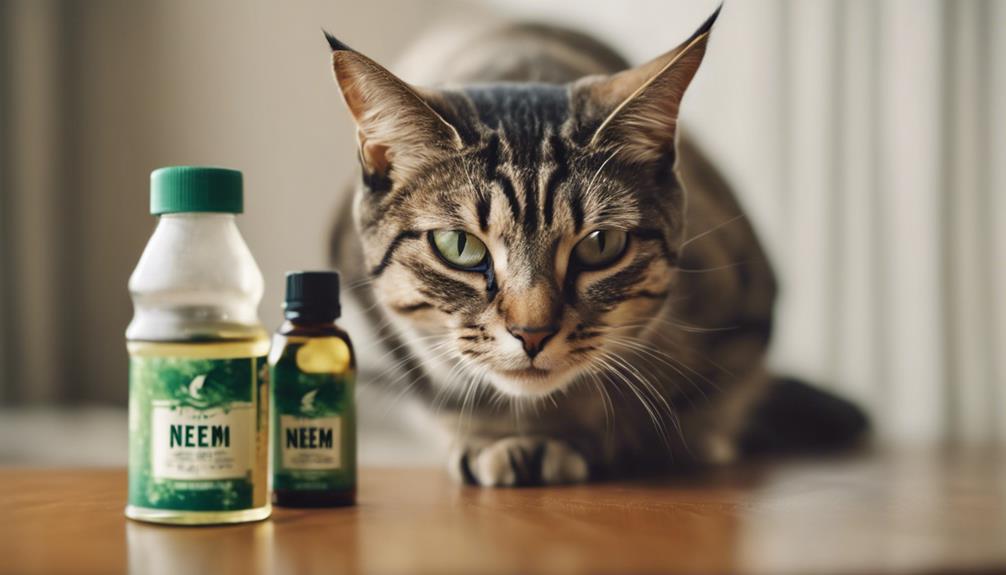
To prevent potential harm when using neem oil on cats, it is essential to exercise caution and consult a veterinarian beforehand. Proper dilution of neem oil is pivotal to avoid toxicity in cats, as it may interact with certain medications.
Monitoring cats for any signs of distress after neem oil application is vital. Always prioritize the safety and well-being of your feline companion when considering neem oil use.