
Neosporin is unsafe for cats due to harmful ingredients like neomycin, zinc, and Polymyxin B, causing allergic reactions and toxicity if ingested. Cats may show symptoms like vomiting, diarrhea, red blood cell damage, and severe allergic reactions after exposure. Immediate veterinary care is essential for allergic reactions and toxic effects. Exploring safer wound treatment alternatives for cats is important. Hydrocortisone, under veterinary guidance, can help with inflammation and itching. Monitor closely for adverse reactions. Discovering proper wound care methods is necessary for maintaining feline health and well-being.
Neosporin Ingredients Harmful to Cats

Neosporin, commonly used for minor wounds in humans, contains ingredients that can be harmful to cats. Neomycin, an active ingredient in Neosporin, may induce vomiting and diarrhea in cats.
Additionally, zinc present in Neosporin is toxic to cats, potentially leading to red blood cell damage. Polymyxin B, another component, can trigger severe allergic reactions in cats.
Ingesting Neosporin can manifest symptoms like excessive drooling and loss of appetite in cats.
Allergic Reactions in Cats
When cats are exposed to Neosporin, they may develop allergic reactions, which can manifest as symptoms like itching, redness, or swelling of the skin.
If a cat shows signs of an allergic reaction to Neosporin, it is important to seek prompt veterinary care to address the issue.
Understanding the symptoms, available treatment options, and preventive measures can help cat owners safeguard their pets from adverse reactions to Neosporin.
Cat Allergy Symptoms
While uncommon, cats can display allergic reactions to various substances, including Neosporin, resulting in symptoms such as itching, redness, and swelling. Allergic reactions in cats may also manifest as skin lesions, hives, or excessive scratching.
In severe cases, anaphylactic shock can occur. Cat owners should closely monitor for these symptoms after applying Neosporin and seek immediate veterinary care if allergic reactions are suspected.
Treatment Options Available
Treatment options for allergic reactions in cats include topical corticosteroids prescribed by veterinarians to alleviate symptoms such as itching and redness.
Neosporin, though commonly used for wounds, is not safe to use on cats due to potential allergic reactions.
It is essential to consult a veterinarian for safe and effective treatment options tailored to feline companions to avoid any adverse effects.
Prevention Measures for Cats
To prevent allergic reactions in cats, it is essential for pet owners to be mindful of the products they use on their feline companions, avoiding substances like Neosporin that can potentially trigger adverse effects.
Ingestion of Neosporin by cats can lead to serious health issues, as certain ingredients, such as Polymyxin B and pain-relief chemicals, can cause life-threatening allergic reactions and toxic effects when licked off by the cat.
Toxic Effects of Neosporin Ingestion
Neosporin ingestion in cats can result in a range of toxic effects, including vomiting, diarrhea, and appetite loss, primarily attributed to the adverse reactions caused by its active ingredient neomycin and the toxicity of zinc present in the product.
These symptoms can vary in severity depending on the amount ingested, with zinc posing a risk of damaging red blood cells. Gastrointestinal blockages may occur if the cat ingests the Neosporin tube.
Zinc Toxicity in Cats
Zinc toxicity in cats is a significant concern when it comes to Neosporin ingestion due to its harmful effects on red blood cells. Symptoms of zinc toxicity in cats include vomiting, diarrhea, and potential organ damage, emphasizing the importance of being aware of this substance.
Understanding the risks, symptoms, and treatment options for zinc toxicity in cats is essential to safeguarding their health and well-being.
Zinc Dangers for Cats
Exposure to high levels of zinc poses a significant risk to feline health, potentially leading to severe consequences for cats.
- Ingesting zinc-containing products like Neosporin can trigger toxicity.
- Symptoms include vomiting, diarrhea, lethargy, and red urine.
- Severe cases may result in kidney and liver damage.
- Pet owners must seek immediate veterinary attention if signs of zinc toxicity manifest in their cats.
Symptoms of Toxicity
Detecting toxicity symptoms in cats due to zinc exposure requires essential observation and timely intervention to safeguard their well-being.
Symptoms of zinc toxicity in cats may manifest as weakness, lethargy, and pale gums. Severe cases can lead to jaundice, presenting as yellowing of the skin and eyes.
It is vital to seek prompt veterinary care if a cat displays any signs of zinc toxicity after ingesting Neosporin.
Treatment Options for Zinc
Ensuring the prompt administration of appropriate veterinary care is essential for mitigating the harmful effects of zinc toxicity in cats.
Treatment options for zinc toxicity include:
- Supportive Care: Providing intravenous fluids to maintain hydration.
- Medications: Administering drugs to protect the liver.
- Monitoring: Regularly checking red blood cell counts.
- Prevention: Avoiding access to items containing zinc, such as Neosporin, to prevent toxicity in cats.
Polymyxin B Risks for Cats
When evaluating the safety of Neosporin for cats, it is important to recognize the significant risks associated with the presence of polymyxin B in this medication. Polymyxin B can lead to life-threatening allergic reactions in cats, with over half of cases resulting in anaphylaxis. Allergic reactions may manifest as severe respiratory distress. It is essential to avoid using Neosporin with polymyxin B and opt for safer alternatives recommended by a vet.
| Polymyxin B Risks for Cats | |
|---|---|
| Allergic Reactions | Life-threatening |
| Safer Alternatives | Vet-recommended |
Consulting a Veterinarian for Cats
Seeking guidance from a qualified veterinarian is paramount when considering the appropriate wound care for cats, particularly in cases where Neosporin usage is in question.
- Vets can advise on safe wound care alternatives.
- Consulting a vet is critical for addressing skin irritations.
- They offer tailored treatments based on your cat's health.
- Professional veterinary advice guarantees proper wound healing.
Safer Alternatives to Neosporin

Antimicrobial sprays and topical creams provide safer alternatives to Neosporin for treating minor wounds in cats. Consulting a vet for proper wound care guidance guarantees the selection of cat-specific products. Vet-recommended options available in the market can effectively treat cat wounds.
Prevent cats from licking off medications by using effective wound coverage or an e-collar. Quick vet consultation is essential for safe wound care and cat well-being.
Proper Wound Care for Cats
In order to guarantee the best healing of their wounds, cat owners must carefully follow appropriate wound care guidelines recommended by veterinary professionals.
- Clean the wound gently with a mild antiseptic solution.
- Apply a safe topical cream or antimicrobial spray recommended by a vet.
- Ensure effective wound coverage to prevent cats from licking harmful substances.
- Seek professional veterinary advice for the best wound care specific to cats.
Vaseline Vs. Neosporin for Cats
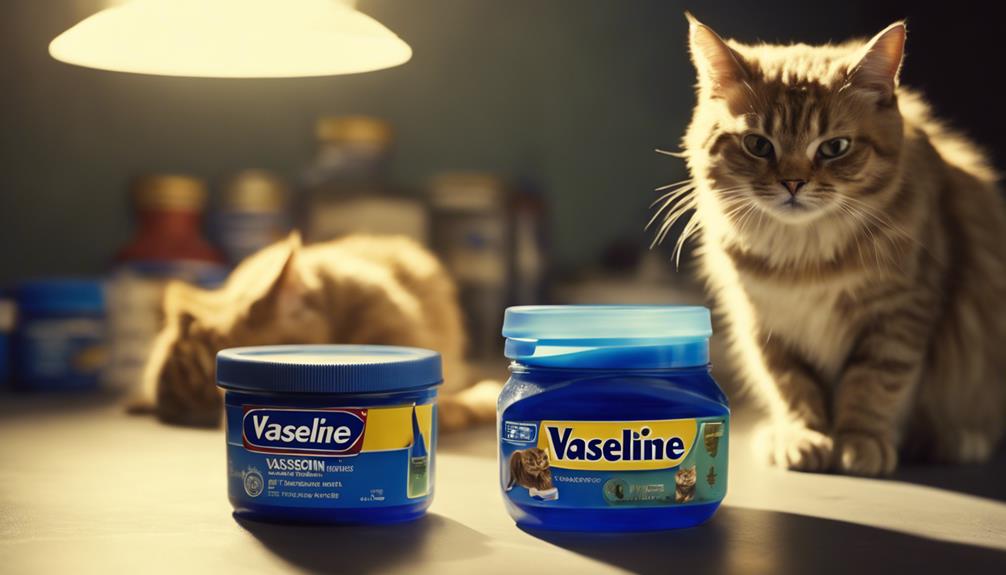
When considering Vaseline versus Neosporin for cats, it's important to understand that Vaseline is suitable for moisturizing dry skin but not recommended for treating wounds.
On the other hand, Neosporin contains antibiotics that may trigger adverse reactions in cats, including the risk of severe side effects like anaphylactic shock.
To guarantee your cat's safety and wellbeing, consulting a veterinarian for guidance on the appropriate ointments for wound care is vital.
Vaseline Benefits for Cats
While Vaseline is a safe option for addressing dry skin in cats, it is essential to avoid using it on open wounds due to potential complications.
- Apply Vaseline to soothe dry paw pads.
- Use it to protect against harsh weather conditions.
- Prevent nose dryness by applying a thin layer.
- Include Vaseline in your cat's first-aid kit for minor skin issues.
Neosporin Safety Considerations
Considering the potential risks associated with Neosporin for cats, it is important to explore safer alternatives for treating minor wounds in felines.
While Vaseline is safe for dry skin, it is not suitable for open wounds in cats.
Neosporin, a topical ointment, can have side effects like allergic reactions and skin irritation, potentially harmful due to ingredients like neomycin and zinc.
Polymyxin B in Neosporin could trigger severe allergic reactions in cats, emphasizing the need for vet consultation on safe options.
Can Waterless Shampoo, Like Neosporin, Be Safe for Cats?
Yes, waterless shampoo for cats, like Neosporin, can be safe if used correctly. It’s important to choose a product specifically formulated for cats and follow the instructions carefully. Some cats may be sensitive to certain ingredients, so it’s best to test a small area first and consult with a veterinarian if there are any concerns.
Hydrocortisone Use on Cats
Under veterinary guidance, hydrocortisone may be used on cats to alleviate inflammation and itching associated with certain skin conditions.
- Follow vet instructions precisely.
- Monitor for adverse reactions diligently.
- Avoid prolonged or excessive use.
- Check for improvement and consult vet if issues persist.