
If your cat isn't interested in playing, consider possible health issues, routine changes, or stress as underlying causes. Playing is vital for fostering bonding, enhancing overall wellbeing, and promoting brain activity. Young cats are more active, while older ones may prefer relaxed activities. Tailoring play to your cat's age is essential. Health issues can affect willingness to play, so monitor their wellbeing closely. Create a stress-free environment, notice stress triggers, and provide predictable routines. Combat boredom with a variety of engaging toys and activities. Encouraging your cat's energy levels positively impacts their overall health and happiness.
Possible Reasons for Lack of Interest

What could be causing a cat's lack of interest in playing, and how can it be addressed effectively?
Cats may lose interest in play due to underlying health issues, changes in routine, or stress. To reignite their enthusiasm, try introducing new toys and activities. Observing their behavior can help identify what they enjoy. Ensuring a healthy environment and addressing any potential health concerns are vital in encouraging play.
Importance of Play for Cats
Engaging in regular play sessions with your cat is essential for fostering a strong bond and promoting their overall wellbeing. Play promotes healthy brain activity and physical health in cats, reducing stress and anxiety.
Lack of play can lead to depression and obesity, impacting their mental health. Providing engaging toys enhances playtime, making it more fulfilling for your cat and contributing to their overall happiness and well-being.
Understanding Age and Play Behavior
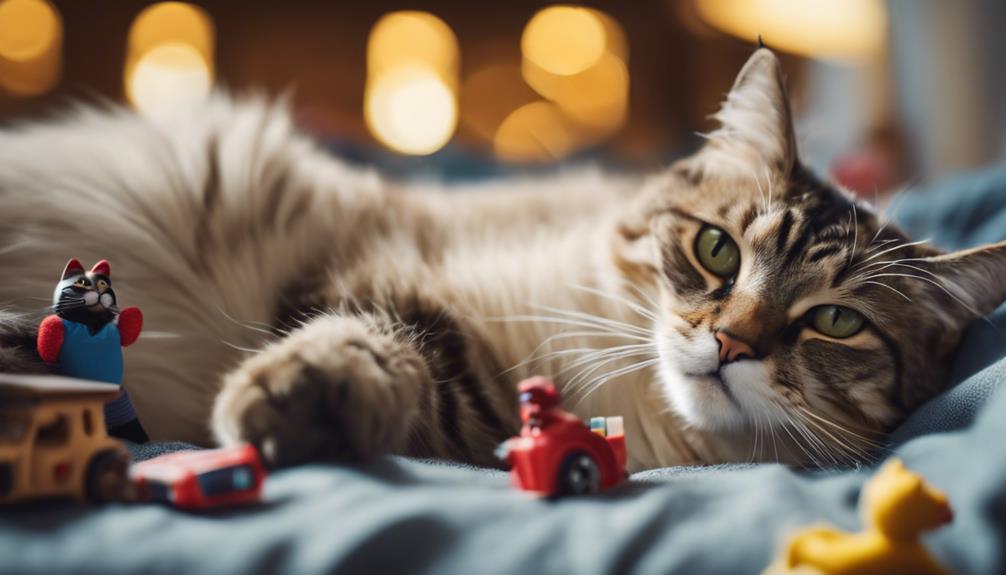
Understanding the correlation between a cat's age and its play behavior is essential for tailoring appropriate playtime activities to meet their evolving needs and preferences.
- Young cats are typically more active and enthusiastic during play.
- Older cats may prefer more relaxed activities.
- Age influences a cat's play behavior greatly.
- Tailoring playtime activities based on age is vital.
- Adjusting playtime routines can maintain physical and mental well-being.
Assessing Your Cat's Health
Evaluating your cat's health is essential for detecting any underlying issues that may be impacting their play behavior. Changes in behavior, such as sudden disinterest in play, could signal stress or health problems.
Overweight cats might struggle with engaging in play. Regular vet check-ups are important to address any health concerns affecting play.
Monitoring your cat's well-being closely is crucial as health issues can affect their willingness to play, emphasizing the importance of play.
Managing Stress and Anxiety

In managing stress and anxiety in cats, creating a calm and secure home environment is essential for promoting playfulness and well-being.
Evaluate the home environment to identify stress triggers.
Changes in routine can lead to anxiety in cats.
Provide predictability for a calm space.
Use interactive play sessions and enrichment activities.
Understand stress signals for effective stress management.
Combatting Boredom in Cats
To combat boredom in cats, it is crucial to provide stimulating play options like interactive puzzle feeders and rotating toys to keep them engaged.
Introducing enrichment activities such as hiding treats or setting up obstacle courses can promote exploration and mental stimulation.
Additionally, incorporating catnip-infused toys, window perches near bird feeders, and new textures can help prevent boredom and provide sensory and visual stimulation for your feline companion.
Stimulating Play Options
Implementing various stimulating play options is essential for combating boredom in cats and promoting their physical and mental well-being.
- Introduce interactive puzzle feeders for mental engagement.
- Rotate toys to keep play sessions interesting.
- Use catnip or silvervine toys to spark interest.
- Provide vertical spaces like cat trees for climbing.
- Play YouTube videos of birds or fish to stimulate hunting instincts.
Interactive Toy Ideas
To actively engage and eliminate boredom in cats, exploring interactive toy options is key to providing mental and physical stimulation.
Interactive toys like laser pointers and feather wands tap into the cat's natural hunting instincts.
Puzzle feeders and treat-dispensing toys offer mental stimulation during playtime.
Catnip-filled toys can attract cats to play.
Automated toys keep cats engaged when owners are occupied, while rotating toys maintain playtime excitement.
Enriching Environment Activities
Cats benefit greatly from a stimulating environment that includes interactive toys, vertical spaces for climbing, and varied play options to combat boredom effectively.
- Provide puzzle feeders: Engage cats' hunting instincts.
- Introduce new play options: Keep activities fresh and exciting.
- Offer vertical spaces: Allow cats to explore and feel secure.
- Rotate toys: Prevent monotony and encourage exploration.
- Use scratching posts: Fulfill natural scratching behaviors.
Encouraging Energy Levels
Boosting feline energy can be achieved through incorporating stimulating activities and interactive play sessions into your cat's routine. Engage your cat with new toys, create a stimulating environment with climbing structures, and use treats as rewards during playtime. Consistency in play routines and offering a variety of activities can help maintain your cat's energy levels. Check the table below for more ideas:
| Toys | Stimulating Environment | Treats |
|---|---|---|
| Feather wands | Cat trees and shelves | Catnip |
| Interactive balls | Hiding spots | Freeze-dried chicken |
| Laser pointers | Scratching posts | Tuna flakes |
Is Panting After Playing Normal for Cats Who Aren’t Usually Interested in Playing?
Yes, cat panting after playing is fairly normal, especially for cats who aren’t usually interested in playing. This behavior can be a sign that your cat got more exercise than they’re used to. However, if the panting is excessive or lasts a long time, it’s best to seek advice from a veterinarian.
Tips for Enhancing Playtime
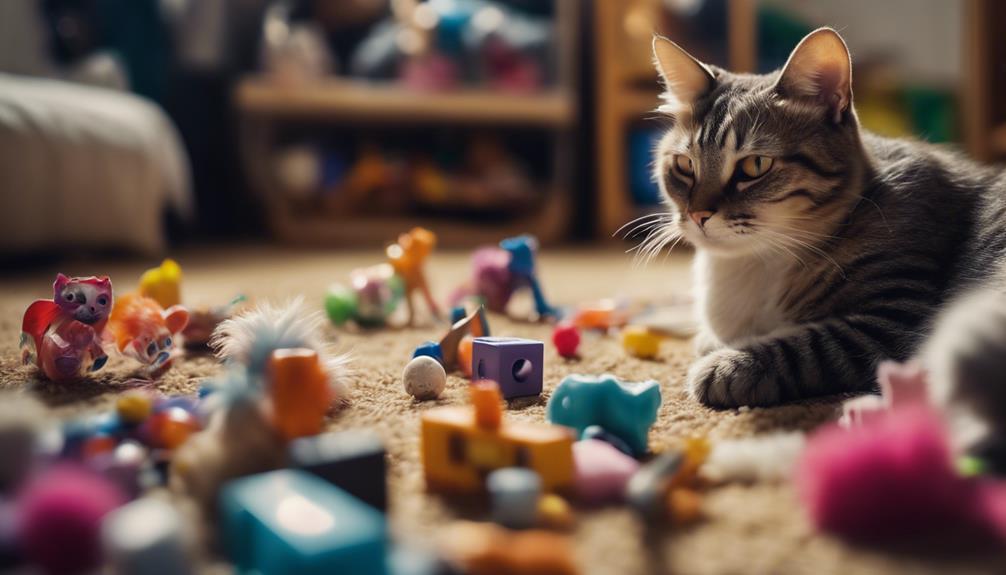
Introducing a variety of interactive toys that stimulate natural hunting instincts can greatly enhance your cat's playtime experience.
- Establish a consistent playtime routine to help your cat anticipate and enjoy play sessions.
- Use healthy treats as positive reinforcement to motivate your cat.
- Guarantee a safe play environment by supervising and storing toys properly.
- Offer a variety of enrichment activities like scratching, climbing, and hiding to make playtime engaging.