
After your cat gives birth, provide a warm, quiet spot for her and watch for any health issues. Set up a secure area away from other pets, ensuring necessities are within reach. Feed your cat high-quality food, monitor the kittens' health, handle them gently, and keep them warm. Look out for any signs of illness in the mother cat and promptly seek veterinary care if needed. Remember, essential care and attention are vital for ensuring the well-being of both the mother and her kittens. Taking these steps will help you navigate the early stages of caring for newborn kittens effectively.
Immediate Care for Mother Cat
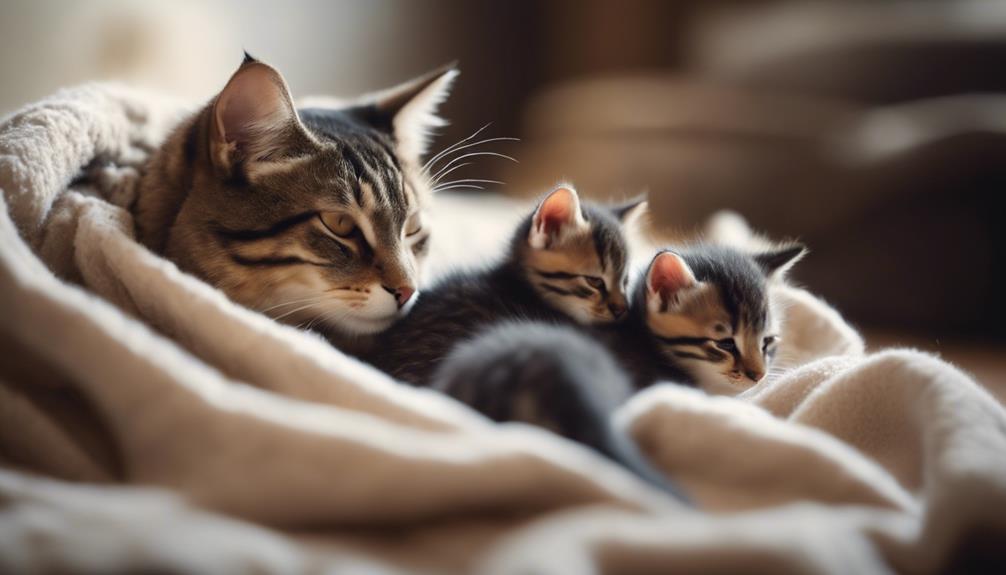
The immediate care of the mother cat after giving birth is vital for guaranteeing the health and well-being of both the mother and her kittens.
Providing a quiet, warm, and secluded nesting area is essential. Monitoring the mother cat for any signs of distress or health issues post-birth is important.
Seek immediate veterinary care if the mother cat shows signs of illness or complications to secure the best outcome for all.
Setting Up a Safe Environment
Creating a secure sanctuary for the mother cat and her newborn kittens is essential to guarantee their safety and well-being in the initial days after birth.
Use a mesh dog crate as a nesting box to provide a safe and cozy space. Keep other animals away, provide food, water, and a litter box nearby.
Make sure the area is baby-proofed to prevent hazards and maintain a secure environment for the mother and kittens.
Providing Essential Resources
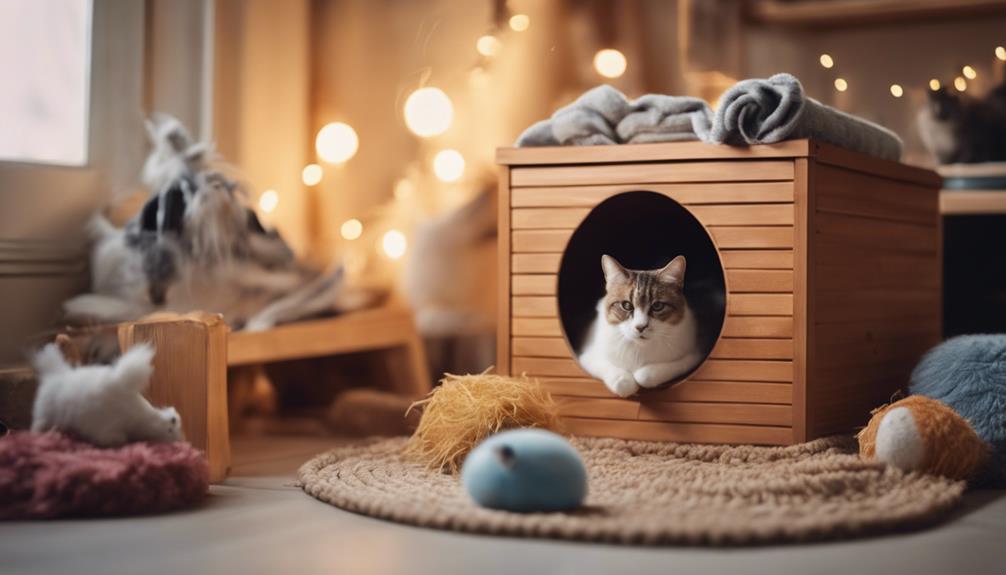
When caring for a cat and her kittens, it's essential to provide important resources like high-quality kitten food and fresh water for the nursing mother cat.
Creating a warm, quiet, and safe nesting area will help the mother cat feel secure and comfortable while caring for her newborn kittens.
Regularly monitoring the health of the kittens and seeking veterinary assistance if any health issues arise are crucial steps in ensuring the well-being of the mother cat and her litter.
Food for Nursing Mother
Nourishing a nursing mother cat with high-quality kitten food is essential to meet her increased nutritional requirements and support the best milk production for her kittens' growth.
Kitten food, rich in protein, aids in the mother cat's milk production. Adequate hydration is vital, so fresh water should always be available.
Feeding the mother cat kitten food helps maintain her health and support her kittens' growth, ensuring proper care for the newborns.
Safe Nesting Area
To guarantee the well-being of the mother cat and her kittens, establishing a safe nesting area with essential resources is crucial during the postpartum period.
Use a mesh dog crate as a nesting box, providing a secure and cozy space. Make sure food, water, and a litter box are easily accessible for the mother cat's care of her newborns.
Baby-proof the area to avoid hazards and keep other animals away to prevent stress.
Monitoring Kitten Health
Establishing a secure nesting area for the mother cat and her kittens sets the foundation for closely monitoring the health of the newborns during the postpartum period.
- Monitor kittens' weight gain and growth daily.
- Check for signs of illness like lethargy, diarrhea, or vomiting.
- Confirm kittens are nursing regularly.
Regular observation and prompt veterinary attention for any health concerns are essential for the well-being of the kittens.
Monitoring Mother Cat's Health
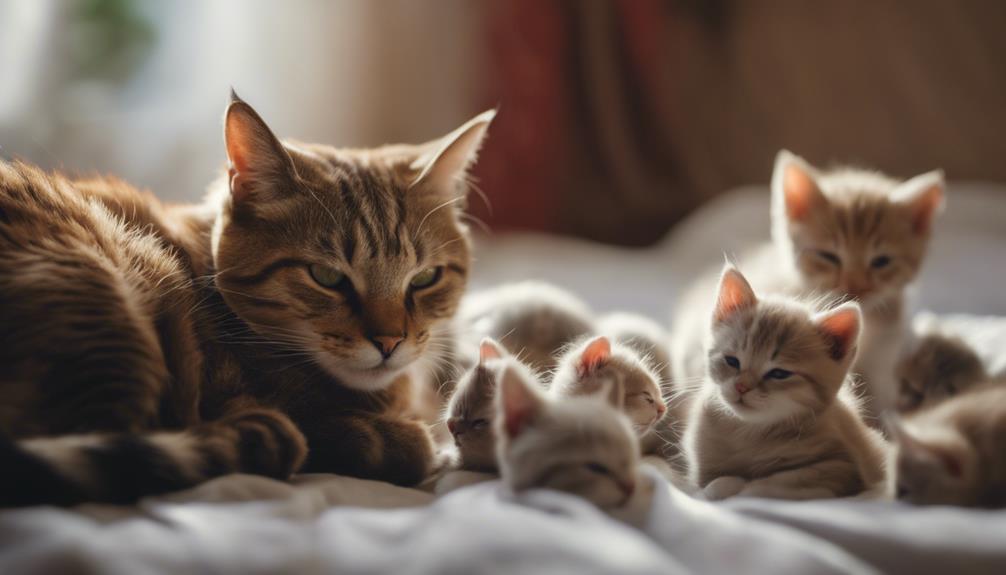
When monitoring the health of the mother cat after giving birth, it is crucial to schedule a well-check appointment with a veterinarian within the first week. Keep an eye out for any signs of health issues such as abnormal behaviors or physical changes. Promptly seek veterinary assistance if any concerns arise. Vaccinating the mother cat if not done previously and treating her for roundworms can help safeguard against diseases and guarantee the well-being of both the mother cat and her newborn kittens.
| Aspect | Action | Importance |
|---|---|---|
| Vet Check-up | Schedule within the first week | Ensures health monitoring |
| Vaccination | Consider if not done previously | Prevents diseases |
| Roundworm Treatment | Protects mother cat and kittens from infections | Guarantees well-being |
Handling Newborn Kittens
When handling newborn kittens, it is important to be gentle to prevent any harm.
Supporting the natural bonding process between the kittens and their mother is vital for their well-being.
Avoid excessive handling to make sure the mother cat doesn't reject her litter.
Feeding Newborn Kittens
In caring for newborn kittens, maintaining a feeding schedule every 2-4 hours, including overnight, is crucial for their health and development.
- Use a kitten milk replacer (KMR) if the mother cat is unable to nurse adequately.
- Avoid feeding cow's milk to kittens to prevent digestive issues.
- Monitor the kittens' weight gain to make sure they are receiving sufficient nutrition.
Keeping Kittens Warm
Maintaining a favorable environment for newborn kittens includes ensuring they are kept warm to compensate for their inability to regulate body temperature. Use a heating pad or heat lamp on low to keep the babies warm.
Monitor the nesting area temperature at 85-90 degrees Fahrenheit. Prevent burns by avoiding direct contact between kittens and heating sources.
Keeping kittens warm is crucial for their good health and survival in the early weeks of life.
Recognizing Health Concerns
Signs of potential health issues in the mother cat after giving birth include monitoring for mastitis, hypocalcemia, and uterine metritis, as well as observing any behavior changes indicating postpartum complications.
- Mastitis: Swollen, red, or painful mammary glands.
- Hypocalcemia: Muscle tremors, weakness, or seizures.
- Uterine Metritis: Fever, foul-smelling discharge, or lethargy.
Contacting Veterinary Assistance
Contact a veterinarian specializing in feline care for expert guidance on ensuring the health and well-being of both the mother cat and her kittens.
If the mother cat shows signs of distress during labor or exhibits symptoms of postpartum health issues like fever or discharge, urgent medical care is needed.
Promptly contact a vet if any abnormal behaviors or health concerns arise in the cat and her kittens.
>Can Ingesting a Dryer Sheet Affect My Cat’s Ability to care for her Kittens?
If your cat ingested dryer sheet, help from a vet is crucial. Ingesting a dryer sheet can affect your cat’s ability to care for her kittens. Seek immediate assistance if you suspect your cat has consumed a dryer sheet to ensure the safety and wellbeing of both your cat and her kittens.
Ensuring Proper Care and Development
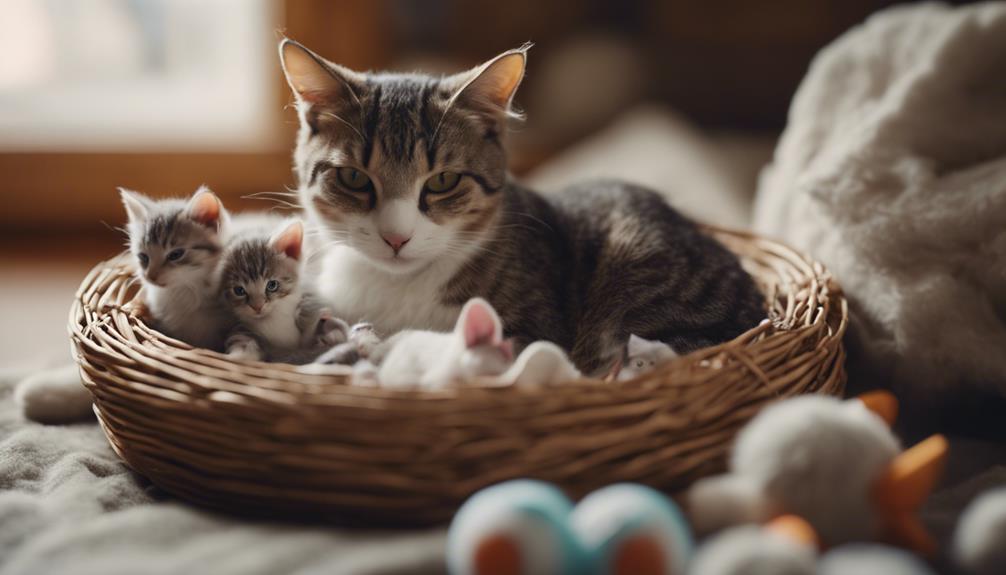
To promote the essential health and growth of both the mother cat and her kittens, it is important to provide diligent care and attention during the postpartum period.
- Monitor for health problems and abnormalities regularly.
- Offer a quiet, warm space with blankets for comfort.
- Feed the mother cat high-quality canned kitten food supplemented with KMR for proper nutrition.