
When a cat loses a claw, it can be important due to the shedding process every 2-3 months. Normal signs include no bleeding or infection. If there is sudden bleeding, redness, or limping, it may be abnormal. Keeping claws trimmed and monitoring their length is vital for paw health. Using specialized clippers and seeking guidance can help. Exploring claw cap options can prevent scratching damage. Understanding these aspects can guide you in determining if your cat's claw loss is within the normal range of feline behavior. Additional insights are available to assist in caring for your cat's claws effectively.
Understanding Cat Claws

Cat claws, composed of keratin, serve important functions in a feline's daily activities such as hunting, climbing, and self-defense. Claw sheaths protect the sharp claws, shedding every two to three months for maintenance.
Nail care is crucial for preventing issues. In cases where a cat lost a claw due to trauma or infection, prompt veterinary care is necessary to guarantee the cat's well-being. Regular monitoring and trimming help maintain healthy claws.
Normal Claw Shedding Process
During the natural shedding process of their claws, felines routinely renew the outer layers every two to three months.
| Cat Claw Shedding Process | |
|---|---|
| Frequency | Every 2-3 months |
| Importance | Maintains claw health |
| Prevents | Overgrowth |
Signs of Abnormal Claw Loss

Indications of abnormal claw loss in felines may include sudden, excessive bleeding from the claw bed. Signs of infection like redness, swelling, or discharge around the claw area may also suggest abnormal claw loss. Persistent limping, excessive grooming of the affected paw, or signs of discomfort could indicate abnormality.
If your cat exhibits distress, lethargy, or reluctance to bear weight on the affected paw, prompt veterinary attention is recommended.
Trimming Cat Claws Safely
When it comes to trimming cat claws safely, it's important to use specialized pet nail clippers made for cats. Avoiding the quick, which contains blood vessels, is vital to prevent bleeding and discomfort.
Regularly trimming your cat's claws can help maintain their health and prevent potential injuries.
Proper Nail Trimming
To ensure the safe and effective trimming of a cat's claws, it is vital to cut the tip of the claw without penetrating the quick, which contains blood vessels and nerves. Caution is essential, especially with dark-colored claws where the quick is harder to see.
Trimming at a 45-degree angle helps prevent splintering. Always use specialized cat nail clippers or scissors to avoid causing harm. Seek guidance from a veterinarian or professional groomer if unsure.
Tools for Trimming
Specialized cat nail clippers or scissors specifically designed for pet nail trimming are essential tools for safely and accurately cutting a cat's claws. Avoid human nail clippers to prevent splintering or crushing, which can cause pain.
Keep styptic powder or cornstarch on hand to quickly stop any bleeding if the quick is accidentally cut. Trim the nail tip at a 45-degree angle to prevent pain and bleeding during nail trims.
Monitoring Claw Length Regularly
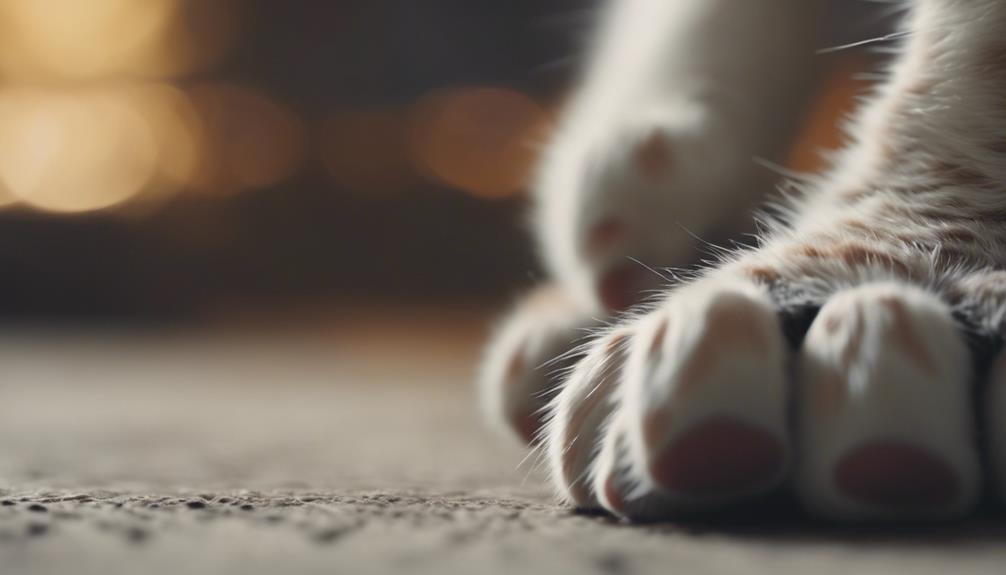
Regularly monitoring your cat's claw length is vital for maintaining their paw health and preventing potential complications. Keeping an eye on their nails is important as claws grow continuously, and trimming may be necessary to prevent them from extending beyond the paw pads.
If left unchecked, long claws can cause discomfort for your cat, potentially leading to issues such as ingrown nails. Stay vigilant and address any length concerns promptly.
Exploring Claw Cap Options
Claw caps offer a humane solution to prevent scratching damage by providing a protective covering for your cat's nails.
These caps come in various sizes and colors, catering to different cats and their owners' preferences.
Proper application following the manufacturer's instructions is essential for the cat's safety and comfort.
Claw Cap Benefits
Exploring the benefits of claw caps for cats reveals a practical and safe solution to prevent scratching damage while avoiding the need for declawing procedures. Claw caps help protect furniture and skin from scratches, are non-toxic, and last around 4-6 weeks. They come in various sizes and colors, offering a convenient way to maintain normal and healthy claws without the need for constant trimming.
| Claw Cap Benefits |
|---|
| Prevents scratching damage |
| Safe alternative to declawing |
| Protects furniture and skin |
| Lasts 4-6 weeks |
| Various sizes and colors available |
Applying Claw Caps
When considering options for applying claw caps to your cat's nails, it is important to select the correct size and color to guarantee a proper fit and comfortable wear. Remember that claw caps come in various sizes and colors to suit your cat's needs.
As your house cat's claw grows, these caps will shed naturally. Make sure you trim your cat's nails before applying claw caps to prevent any discomfort and consider using scratching posts to help maintain their claws.
Could a Broken Jaw Cause a Cat to Lose a Claw?
When diagnosing a broken cat jaw, it’s important to consider the potential impact on other areas of the body. A broken jaw may lead to a cat favoring one side of the mouth, which could affect the way they groom themselves. This might result in a claw being lost due to decreased grooming habits.
Seeking Veterinary Advice
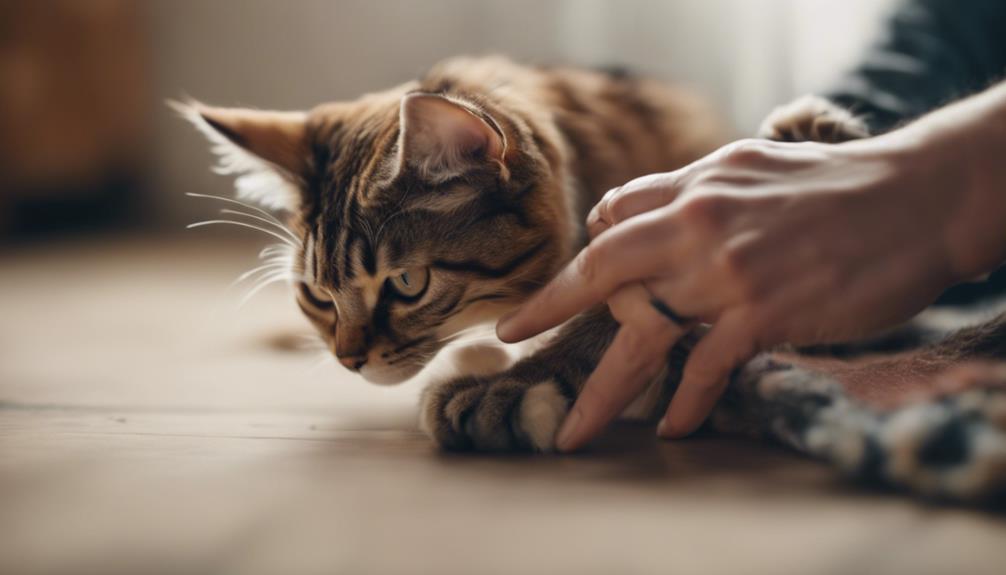
Why is seeking veterinary advice essential if your cat loses a claw?
Veterinary advice is vital for proper treatment of claw injuries. Veterinarians can assess the injury, provide pain management, and recommend necessary treatments. Professional guidance helps prevent infections and promotes healing.
Monitoring healing under veterinary supervision guarantees the best outcome. Veterinarians offer expertise in wound care, infection prevention, and pain management for claw injuries.