
If your cat has stopped grooming, it could indicate health issues like hyperthyroidism, arthritis, or emotional stress. Look for signs such as dirt, matted fur, or a foul odor. Stress from changes in routines can disrupt grooming behaviors. Health conditions like hyperthyroidism or dental problems may also affect grooming. Regular vet check-ups, weight management, and addressing underlying causes can help. Understanding the challenges elderly cats face with grooming is important. Behavioral factors could also play a role in grooming changes. Professional grooming assistance and monitoring progress are essential steps. Discover more about your cat's grooming needs to safeguard their well-being.
Reasons for Cat's Lack of Grooming
There are several underlying reasons why a cat may exhibit a lack of grooming behavior, ranging from medical conditions such as hyperthyroidism and arthritis to age-related physical limitations and emotional factors like depression.
Elderly cats, especially those with underlying medical issues like skin irritation or oral pain, may struggle to maintain regular grooming habits.
Ensuring regular grooming can help keep elderly cats' skin healthy, identify oral pain, and improve their overall well-being.
Signs of Cat's Grooming Issue
A cat's grooming issue can manifest through visible dirt, matted fur, foul odor, excessive shedding, and paw staining, indicating potential underlying health concerns that require attention.
| Signs of Cat's Grooming Issue | |
|---|---|
| Visible dirt | Matted fur |
| Foul odor | Excessive shedding |
| Paw staining |
Impact of Stress on Grooming
Stress can have a substantial impact on a cat's grooming behavior, leading to a decline in their usual cleanliness routines. Changes in the environment, routine alterations, or the addition of new pets can all contribute to heightened stress levels in felines, affecting their grooming habits.
When stressed, cats may exhibit signs of avoidance behaviors, such as neglecting their grooming, which can result in visible issues like matted fur, dirt buildup, and unpleasant odors.
Stress and Grooming Behavior
The impact of stress on a cat's grooming behavior is a vital aspect of their overall well-being and hygiene. Changes in routine or environment can trigger stress-related grooming issues, causing cats to neglect grooming habits. This can lead to visible signs like dirty fur or matting. Addressing stressors and maintaining a stable, comforting environment are essential to alleviate grooming problems caused by stress.
| Stress-Related Grooming Issues | Signs of Stress in Cats | Addressing Stressors |
|---|---|---|
| Decreased grooming habits | Changes in behavior | Maintain stable environment |
| Dirty fur or matting | Lack of appetite | Seek advice from veterinarian |
| Unkempt appearance | Increased hiding | Provide calming measures |
Signs of Grooming Decline
Grooming decline in cats, especially triggered by stress, manifests through various visible indicators such as dirty fur, matted coats, foul odors, excessive shedding, and paw staining. Changes in routine or new stressors can disrupt cats' grooming habits, leading to discomfort and abandonment of grooming routines.
To address this, reducing stress factors and maintaining a stable routine are essential to encourage cats to resume their regular grooming behavior.
Health Conditions Affecting Grooming
Certain health conditions can greatly impact a cat's grooming habits. Illnesses like Hyperthyroidism or Feline Leukemia can cause discomfort, leading to a decrease in grooming activity.
Arthritis, dental problems, and even depression can all play a role in affecting a cat's grooming routine.
Grooming and Illness
When health conditions such as hyperthyroidism or feline leukemia arise, cats may exhibit a decline in their grooming behavior. Underlying issues like arthritis can cause pain, making grooming uncomfortable.
Dental disease can lead to oral pain, affecting grooming habits. Skin conditions, such as allergies, may also impact a cat's willingness to groom. Additionally, obesity can limit a cat's ability to groom properly, resulting in hygiene issues.
Stress and Grooming
Stress in cats can greatly impact their grooming behavior, potentially leading to a decline in their overall hygiene and coat condition.
- Health conditions like arthritis, dental pain, and skin issues can cause discomfort during grooming.
- Cats experiencing stress may neglect grooming habits, resulting in a decline in their self-care routine.
- Changes in routine or new stressors can impact a cat's grooming behavior, indicating the need for intervention.
- Seeking veterinary advice is essential to identify and manage health conditions affecting grooming.
Solutions for Cat's Grooming Problem
To address a cat's grooming problem effectively, it is important to prioritize regular wellness exams and seek advice from a veterinarian promptly. Cat owners can help stop grooming issues by focusing on underlying causes such as weight management. The table below outlines key solutions for improving a cat's grooming habits:
| Solutions | Description |
|---|---|
| Regular Wellness Exams | Monitor health and detect grooming problems early |
| Veterinary Consultation | Determine underlying causes for grooming issues |
| Weight Management | Address weight concerns to enhance grooming |
Understanding Elderly Cat Grooming Challenges
Elderly cats often face grooming challenges due to physical limitations, such as arthritis and reduced flexibility, which can impact their ability to maintain proper grooming habits.
- Health issues like dental problems or pain can deter elderly cats from grooming.
- Regular grooming helps detect skin infections and reduces pain from matting.
- Lack of grooming may indicate oral pain, highlighting the need for dental check-ups.
- De-matting procedures with mild sedation can alleviate pain and enhance grooming habits.
Behavioral Causes of Grooming Changes
Behavioral changes in cats can greatly impact their grooming habits and overall cleanliness. Cats may stop grooming due to stress, anxiety, arthritis, dental issues, skin conditions, or obesity.
Older cats may groom less due to pain or discomfort. These causes can lead to a decline in grooming behavior, affecting the cat's skin health and coat condition.
Understanding these reasons why cats stop grooming can help address and improve their grooming habits.
Professional Grooming Assistance
With over 20 years of experience in salon and mobile grooming services for cats, Lucky Dawg Pet Services excels in providing expert care and efficient grooming sessions.
- Lucky Dawg Pet Services guarantees grooming sessions are completed in two hours or less.
- Various grooming packages such as bath, bath with tidy up, and bath with haircut are available.
- The experienced staff can identify grooming issues during the service.
- Conveniently located at 2923 Rolling Hills Road, Torrance, CA 90505.
Is a Cat Holding Their Paw Up a Sign of Grooming or Health Issues?
If you notice your cat holding paw sitting, it could be a sign of either grooming or health issues. Cats may hold their paw up to groom themselves, but it could also indicate discomfort or pain in their paw or leg. It’s important to observe their behavior and consult with a vet if necessary.
Monitoring Cat's Grooming Progress
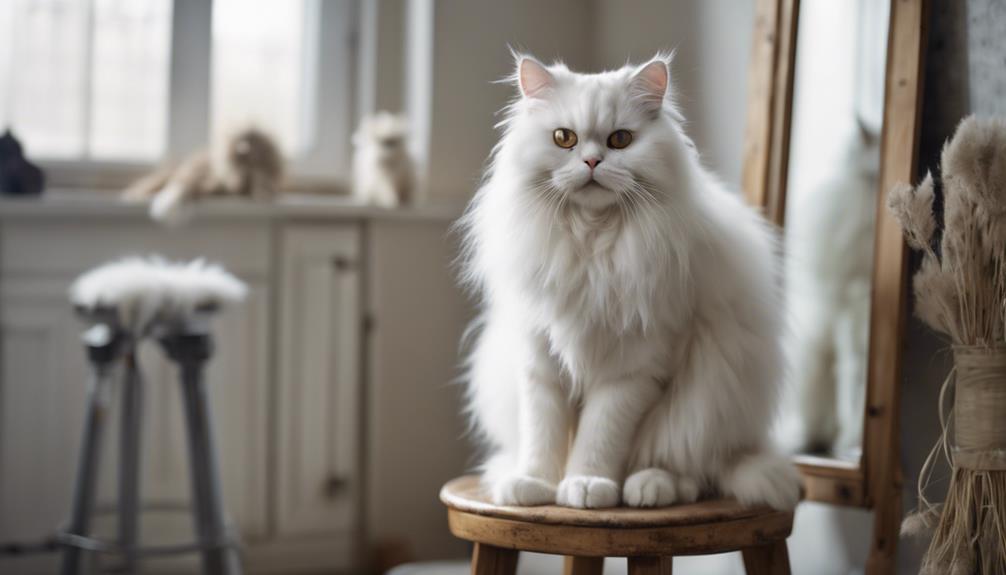
To monitor your cat's grooming progress effectively, observe any changes in grooming behavior indicative of potential health issues. Look for under-grooming signs like dirty or matted fur, foul odors, excessive shedding, or paw staining.
Regularly check your cat's coat, skin, and overall cleanliness for abnormalities. If you notice persistent under-grooming or significant changes, consult a veterinarian promptly for proper evaluation and treatment.