
Feral cats are crucial due to their impact on wildlife, public health, and ecosystems. They hunt billions of animals yearly, leading to wildlife population declines and ecosystem disruptions. Feral cats spread diseases like rabies and toxoplasmosis, posing risks to humans and animals. Toxoplasmosis, from cat feces, causes severe health issues. Managing feral cat populations is vital to prevent disease transmission. Trap-neuter-return programs help control cat populations and reduce health threats. Understanding these dangers is essential to address the risks posed by feral cats.
Feral Cats Impact on Wildlife
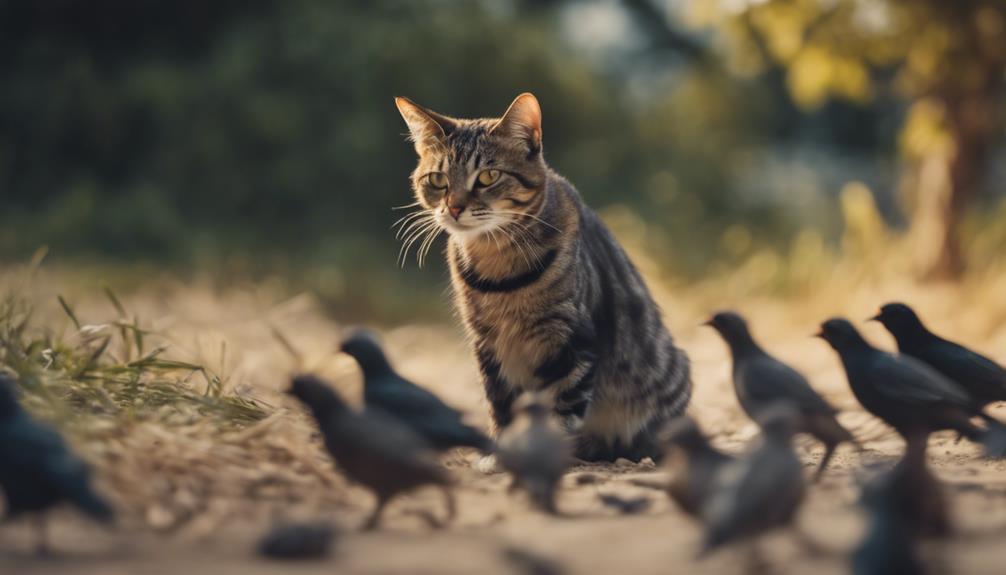
Feral cats' predatory behavior poses a significant threat to wildlife populations globally, with billions of animals falling victim to their hunting instincts each year. This relentless hunting by feral cats has a detrimental impact on various wildlife populations, leading to a decline in species like songbirds, mammals, bats, reptiles, and amphibians.
The unchecked hunting of feral cats disrupts the natural balance of ecosystems, affecting the populations of insect consumers and causing cascading effects on the food chain. Additionally, feral cats can serve as vectors for diseases like rabies, which poses risks to public health.
The spread of diseases through interactions between feral cats and other wildlife further exacerbates the already significant ecosystem impact caused by these predatory felines.
Health Risks Posed by Feral Cats
To address public health concerns effectively, it is essential to understand the significant health risks associated with feral cats. Feral cats in the United States pose serious health threats, being top carriers of rabies among domestic animals.
Additionally, these cats spread toxoplasmosis, a dangerous disease caused by the Toxoplasma gondii parasite found in their feces. Toxoplasmosis is linked to severe health issues such as schizophrenia and Alzheimer's disease.
Efforts to control feral cat populations are critical in preventing the transmission of rabies and toxoplasmosis to humans and other animals.
Zoonotic Diseases From Feral Cats

Zoonotic diseases transmitted by feral cats present a significant public health concern due to their potential impact on human health. Feral cats can carry diseases such as rabies and toxoplasmosis, posing health risks to humans.
While rabies transmission from feral cats is less common compared to dogs and wildlife, it remains a possibility. Toxoplasmosis, prevalent in 75% of outdoor cats, is caused by the Toxoplasma gondii parasite found in cat feces. This disease can lead to severe health issues like schizophrenia and Alzheimer's, emphasizing the importance of managing feral cat populations.
Preventing the spread of these zoonotic diseases requires awareness of transmission routes and proactive measures to safeguard public health.
Public Health Concerns With Feral Cats
Public health officials are increasingly concerned about the risks associated with unmanaged populations of cats roaming freely in urban and rural environments. Feral cats are key carriers of rabies, posing a significant public health threat.
Additionally, the parasite Toxoplasma gondii, commonly found in these cats, can lead to serious health issues like schizophrenia and Alzheimer's in humans. With 3 out of 4 outdoor cats carrying T. gondii, there is a heightened risk of transmission to humans.
Disease control efforts are essential to mitigate the spread of rabies and toxoplasmosis. The environmental persistence of T. gondii oocysts in cat feces further complicates public health concerns, underscoring the importance of managing feral cat populations for the well-being of both humans and animals.
Managing Feral Cat Populations

Effectively managing feral cat populations is essential for maintaining public health and reducing the risks associated with uncontrolled cat colonies. Trap-neuter-return (TNR) programs play an important role in managing feral cat populations by spaying/neutering and vaccinating them against diseases like rabies.
These programs not only help control the spread of diseases among feral cats but also protect public health by reducing the number of unchecked cat populations. Feral cats, when provided with humane care and support from caregivers, can coexist outdoors, minimizing their impact on the environment.
Additionally, removing feral cats for adoption through TNR programs can aid in decreasing the threat of diseases like toxoplasmosis within cat populations. Effective management of feral cat populations through TNR programs is essential for improving public health and mitigating the risks associated with free-roaming cats.
Is My Cat’s Aggression a Sign of Feral Behavior?
If your cat attacks you for no apparent reason, it may not necessarily indicate feral behavior. Cats can become aggressive due to fear, stress, or underlying medical issues. It’s important to assess the situation and seek advice from a veterinarian to better understand and address your cat’s behavior.
Importance of Feral Cat Control
Feral cat control is essential due to the significant impact these populations can have on both public health and the environment.
By managing feral cat populations effectively, we can reduce the spread of diseases such as rabies and toxoplasmosis.
Additionally, controlling feral cats helps protect biodiversity and prevent ecological imbalances that can harm native species.
Feral Cat Population
The staggering estimates of feral cat populations in the U.S. underscore the critical importance of implementing effective feral cat control measures to mitigate their impact on wildlife and ecosystems.
- Feral cats in the U.S. range from 60-160 million, posing a significant threat to biodiversity.
- They engage in surplus killing behavior, depleting food supplies and impacting other species.
- Responsible for killing billions of animals annually, leading to species decline.
- Particularly detrimental to songbird and mammal populations, with billions of songbirds and 6.9 billion mammals falling victim each year.
- Cats are considered a major wildlife threat, causing extinctions and disrupting ecosystems.
Health Risks
Mitigating the health risks associated with feral cat populations is essential for safeguarding public and animal well-being. Feral cats are significant carriers of rabies, posing a considerable risk to public health.
Toxoplasmosis, another concern linked to feral cats, is transmitted through their feces and can lead to severe health issues like schizophrenia and Alzheimer's. Infection rates for diseases like rabies are higher in feral cats than in dogs, emphasizing the need for effective disease control measures.
With 3 out of 4 outdoor cats carrying the Toxoplasma gondii parasite, the health risks associated with feral cat populations are significant. Implementing feral cat control strategies is vital for preventing the spread of diseases like rabies and toxoplasmosis, ultimately safeguarding both human and animal health.
Environmental Impact
Considering the detrimental effects on biodiversity and ecosystem stability, addressing the environmental impact of feral cat populations is imperative.
- Feral cats pose a significant threat to biodiversity by contributing to the decline of various species.
- Cats kill billions of animals annually, impacting food security and disease control in ecosystems.
- Surplus killing behavior of feral cats depletes the food supply and benefits scavenger species.
- Feral cats are a major threat to songbird populations, with billions of songbirds killed yearly.
- Feral cats target at least 6.9 billion mammals annually, affecting various mammal species and populations.