
In California, wild cat species include mountain lions, known as cougars or pumas, essential top predators with territories up to 100 square miles. Bobcats, identified by muscular shoulders and distinctive ear tufts, are skilled stalkers and ambush predators with tawny gray fur. Servals are agile hunters with climbing abilities, known for their tawny coat with black spots. Conservation efforts prioritize bobcat management to maintain biodiversity. These cats occupy diverse habitats from chaparral to deserts, using dense brush cover for denning. The California Statewide Bobcat Population Monitoring Project aims to enhance understanding of human-wildlife interactions.
Mountain Lions in California
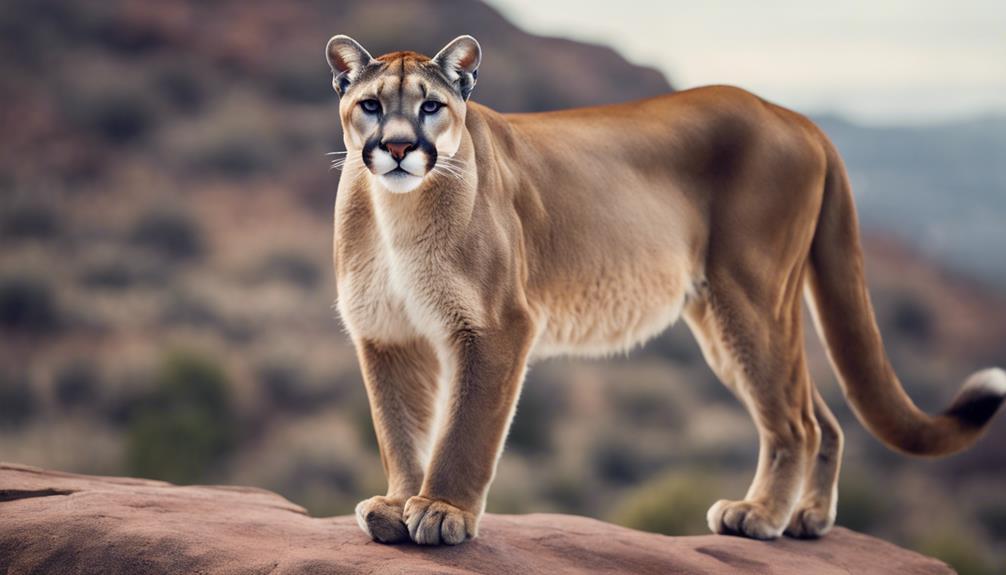
Mountain lions, also known as cougars or pumas, are significant predators that inhabit various elevations across California, ranging from sea level to 10,000 feet.
These wild species play an important role in the ecosystem as top predators, helping maintain balance in the wildlife populations.
With territories covering up to 100 square miles in California's diverse landscapes, mountain lions are essential for the health of the environment.
Bobcats: Characteristics and Behavior
Bobcats are easily identified by their muscular shoulders, ear tufts, and short bobbed tail with a black tip. Their tawny gray fur coat showcases occasional faint markings, blending well with their preferred habitats of dense vegetation.
Bobcats are skilled stalkers, often ambushing their prey rather than engaging in long chases.
Bobcat Physical Traits
With their muscular shoulders, distinctive ear tufts, and a short bobbed tail tipped in black, bobcats exhibit unique physical traits that set them apart in the wild. Their fur coat is tawny gray with occasional faint markings.
Bobcats' physical features, such as their ear tufts and tail, play an essential role in their camouflage and hunting strategies. These characteristics aid them in blending into their natural habitat while stalking prey effectively.
Bobcat Hunting Behavior
How do bobcats exhibit their unique hunting behavior in the wild?
Bobcats are skilled predators that rely on stalking and ambushing their prey rather than engaging in prolonged chases. Their diet includes small mammals like mice, hares, rabbits, squirrels, and birds.
Bobcats are agile and quick to defend their territory against competitors, making them elusive creatures that prefer sheltering in rock crevices or hollow trees.
Servals: Unique Wild Cats
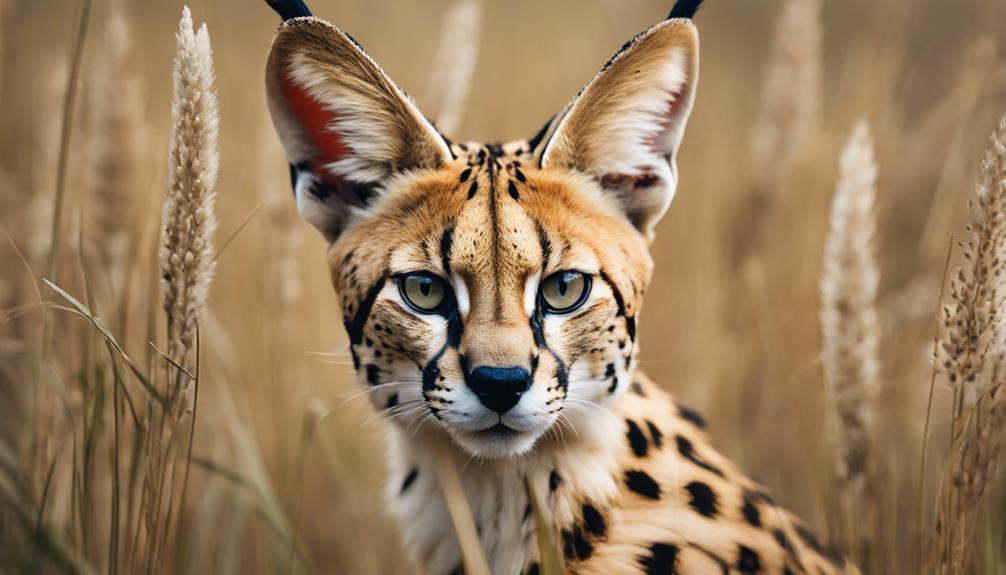
African servals, known for their distinctive tawny coat with black lines and spots, possess unique physical characteristics that make them stand out among wild cats. These agile hunters showcase impressive abilities in climbing, leaping, and hunting prey up to their own weight.
Preferring areas near thickly planted streams and rivers, servals exhibit behaviors that highlight their adaptability to their natural habitat.
Servals' Physical Characteristics
Servals, unique wild cats renowned for their slender physique and distinct coat patterns, exhibit remarkable agility and a preference for habitats near streams and rivers.
These cat species feature a short bobbed tail and are adorned with tawny coats marked by black lines and spots, providing them with excellent camouflage in their environment.
Servals, with their long legs and small heads, are well-adapted for climbing, leaping, and playing in water.
Servals' Hunting Abilities
Renowned for their exceptional hunting abilities, servals, small and agile wild cats native to Africa, excel in stealth and precision in capturing prey near densely vegetated waterways.
- Servals are adept at ambushing their prey.
- They use their mountain cat agility to pounce with accuracy.
- Servals leverage their keen senses to track down prey efficiently.
- Their hunting strategy involves swift movements and calculated strikes.
Servals' Habitat Preferences
Servals seek out habitats near densely planted streams and rivers in Africa, where they can take advantage of their agility in climbing and their love for playing in water. These unique wild cats face competition from caracals for prey and predators like leopards and hyenas in their environment.
Servals, with their small heads, long legs, and tawny coat, are well adapted to these habitats, making them well suited to thrive in these areas.
Conservation Efforts for Wild Cats
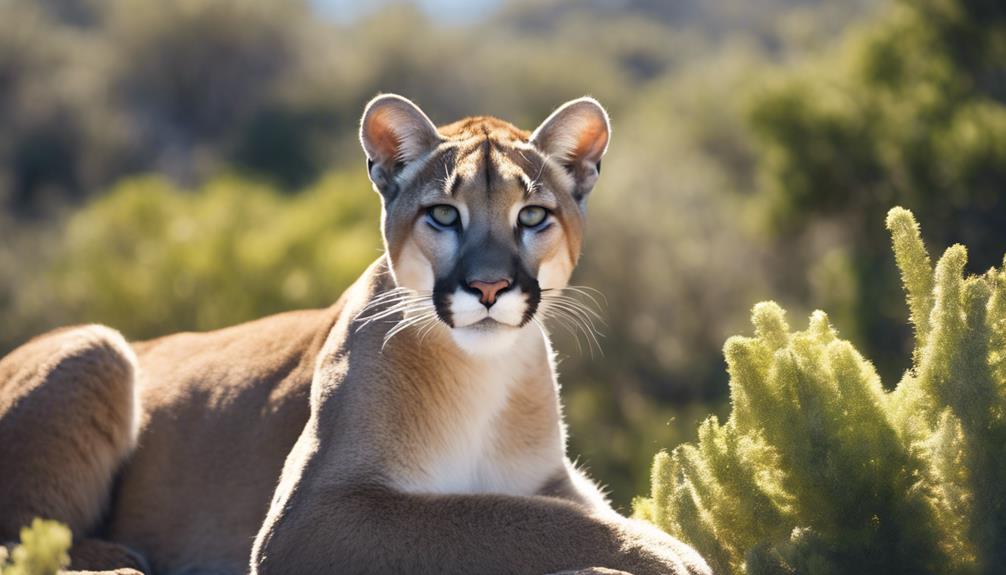
Conservation initiatives for wild cats in California, particularly focusing on bobcats, are essential for maintaining biodiversity and ecosystem health in the region.
- California Department of Fish and Wildlife (CDFW) prioritizes bobcat management
- CDFW conducts population monitoring
- Statewide bobcat population estimated at 70,000-100,000
- Thorough bobcat management plan to be developed by January 2025
Habitat and Range of California Cats
Bobcats in California occupy a variety of habitats ranging from chaparral to deserts, showcasing their adaptability to diverse environments.
These wild cats prefer habitats with dense brush cover for denning and shelter, utilizing natural features like rocks and logs for protection.
Their home range can vary based on food availability and habitat quality, reflecting their wide distribution within California.
Research on Wild Cats in California
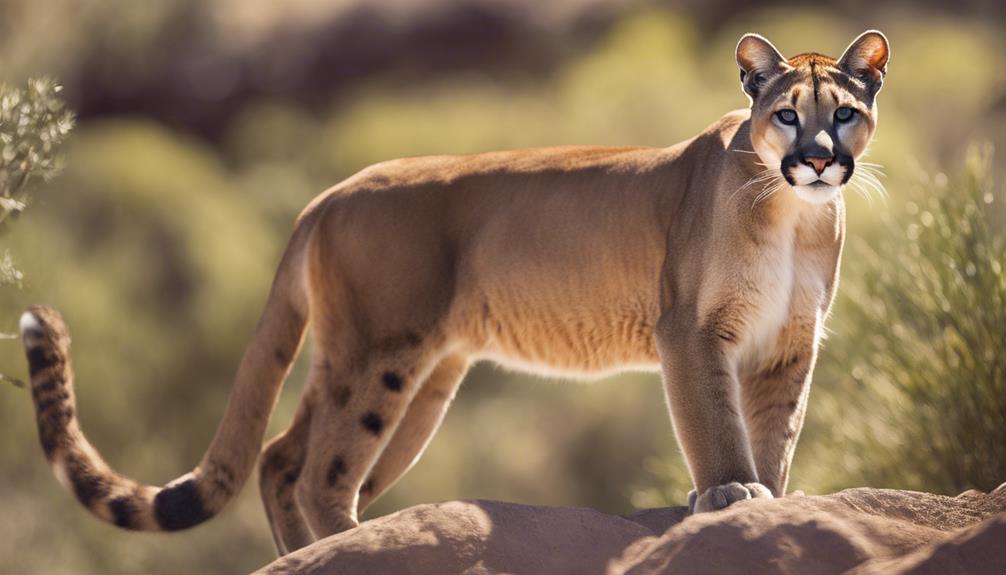
With ongoing efforts by the California Department of Fish and Wildlife to conduct a population assessment of bobcats in the state, research on wild cats in California is focused on enhancing our understanding for adaptive population management strategies.
The California Statewide Bobcat Population Monitoring Project will end on June 30, 2022.
A statewide bobcat management plan is set to be developed by January 2025.
The plan will cover demographic information, population health, conservation needs, and human-wildlife interactions.
Are the Types of Wild Cats in New Mexico the Same as in California?
Yes, the types of wild cats in New Mexico are similar to those in California. Both states are home to the same types of wild cats such as mountain lions, bobcats, and ocelots. These majestic creatures can be found in various habitats throughout both states, from the desert to the mountains.
Laws and Regulations on Wild Cats
In California, stringent laws and regulations govern the hunting and trapping of wild cats, specifically bobcats, with the aim of protecting these animals and minimizing conflicts between humans and wildlife. Bobcat hunting and trapping have been prohibited since January 2020, but depredation permits are available for instances where bobcats cause harm to pets or livestock.
The California Fish and Game Code (FGC) and California Code of Regulations (CCR) outline specific laws for bobcat management.