
Frosty ferns, like Selaginella kraussiana, are safe for cats as they are non-toxic. Botanists confirm they pose no harm to cats or other pets. Symptoms of toxicity are uncommon, aligning with ASPCA data. Gastrointestinal upset may occur rarely but can be monitored. In case of symptoms, veterinary consultation is advised. Frosty ferns are a worry-free choice for cat-friendly homes, adding beauty without risks. For more details on the safety of frosty ferns around cats, keep exploring the information available.
Are Frosty Ferns Harmful to Cats?
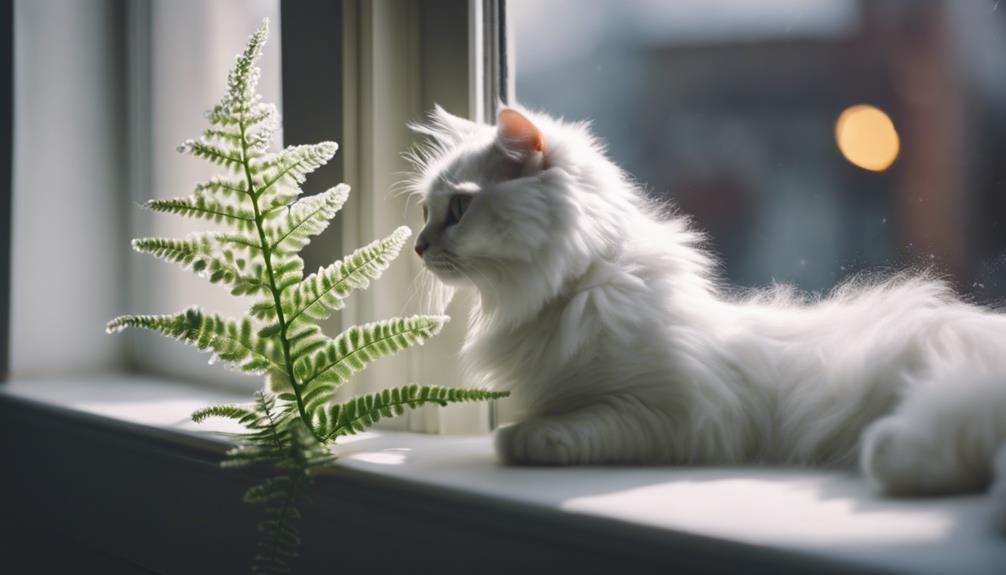
Frosty ferns, scientifically known as Selaginella kraussiana, do not pose a toxicity risk to cats, making them a safe choice for pet owners seeking decorative greenery. These ferns, classified as spike moss rather than true ferns, are popular for holiday decorations in pet-friendly homes.
The ASPCA confirms that frosty ferns are not harmful to cats, dogs, or horses, providing reassurance to those who share their space with furry companions. Originating from Africa and typically found in rainforests, frosty ferns reproduce using spores akin to true ferns, contributing to their unique appeal.
Enjoy the beauty of frosty ferns worry-free around cats, as they do not present any toxic threat to pets, ensuring a harmonious environment for both plant and animal.
Toxicity of Frosty Ferns to Cats
Frosty ferns pose no toxicity risk to cats, offering a safe environment for feline companions. In case of ingestion, common symptoms may include gastrointestinal upset or mild irritation, but no severe toxicity is expected.
Pet owners can rest assured that treatment options are available and that frosty ferns are generally safe for their beloved cats.
Cat Safety Concerns
When considering the safety of cats around plants, it is essential to be aware of any potential toxicity risks that certain varieties may pose. Fortunately, frosty ferns, also known as Selaginella kraussiana, are non-toxic to cats, making them a safe choice for households with feline companions.
Here are some key points regarding cat safety concerns when it comes to frosty ferns:
- Frosty ferns are classified as spike moss, not true ferns, and are safe for cats to be around.
- Botanists confirm that frosty ferns do not contain any harmful components for cats.
- Enjoying the beauty of frosty ferns in your home during the holidays is non-toxic for your feline friends.
- Frosty ferns provide a worry-free option for cat owners concerned about plant toxicity.
Symptoms of Ingestion
When it comes to ingestion of frosty ferns by cats, they typically do not exhibit any symptoms of toxicity. Frosty ferns, also known as spike moss, are considered safe for cats and are not known to cause harm if consumed.
Unlike many other plants that can be toxic to cats, frosty ferns do not pose a threat in relation to toxicity. This lack of reported toxicity symptoms in cats after ingesting frosty ferns aligns with the ASPCA's confirmation of their safety for feline companions.
As a result, cat owners can enjoy having frosty ferns in their homes without worrying about the potential harm to their pets, as these plants are non-toxic and present a worry-free option for cat-friendly households.
Treatment Options Available
Treatment options for cats exposed to frosty ferns focus on supportive care and monitoring for any potential gastrointestinal upset or allergic reactions. If a cat ingests frosty ferns, follow these steps to guarantee their well-being:
- Monitor for Symptoms: Keep an eye out for any signs of gastrointestinal upset or allergic reactions.
- Provide Water: Make sure your cat has access to fresh water to stay hydrated.
- Consult a Veterinarian: If you notice any concerning symptoms, seek professional advice.
- United States Resources: In the United States, contact the ASPCA Animal Poison Control Center at (888) 426-4435 for guidance.
Frosty Ferns and Cat Safety
What precautions should cat owners take when considering the presence of Frosty Ferns in their homes to guarantee the safety of their feline companions?
Frosty ferns, scientifically known as Selaginella kraussiana, are entirely safe for cats. The American Society for the Prevention of Cruelty to Animals (ASPCA) confirms that these plants pose no toxicity risk to cats, ensuring pet owners can confidently adorn their homes with frosty ferns without endangering their furry friends.
Classified as spike moss, frosty ferns are harmless not only to cats but also to dogs and horses, making them an excellent choice for households with various pets. Cat owners can enjoy the festive beauty of frosty ferns worry-free, knowing that these plants are non-toxic and safe for their beloved companions.
Potential Dangers of Frosty Ferns for Cats
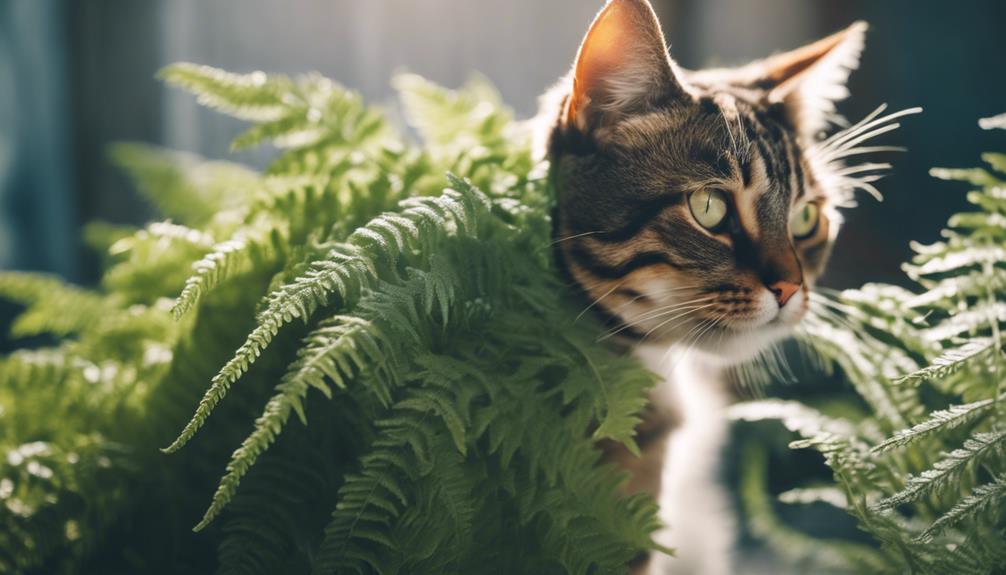
While frosty ferns are generally non-toxic to cats, it's important to be aware of potential dangers. Ingestion of large amounts can still lead to gastrointestinal upset in felines.
If your cat shows symptoms like vomiting or diarrhea after contact with frosty ferns, seeking veterinary care promptly is recommended.
Toxicity to Felines
Frosty ferns pose no toxicity risks to felines, ensuring a safe environment for cat owners who choose to include these plants in their indoor spaces. Here are some key points to take into account:
- Non-Toxicity: Frosty ferns, part of the Selaginella genus, are not harmful to cats or other pets.
- Plant Origin: These plants, often confused for true ferns, are actually spike moss from Africa.
- Reproduction: Frosty ferns reproduce through spores and can spread horizontally, resembling true ferns.
- Botanical Safety: Botanists confirm that frosty ferns are safe for cats, dogs, and horses, with no reported cases of toxicity, making them worry-free additions to your home.
Symptoms of Ingestion
Symptoms of ingestion of frosty ferns by cats are typically mild and rarely result in any harmful effects or toxicity. Cats may exhibit minor symptoms such as mild stomach upset, vomiting, or diarrhea if they nibble on frosty ferns. However, these signs are usually self-limiting and resolve on their own without the need for intervention.
Unlike many other common houseplants that can be toxic to cats, frosty ferns are considered safe for feline companions. The ASPCA confirms that frosty ferns are non-toxic to cats, providing pet owners with peace of mind. Enjoy having the beauty of frosty ferns in your home decor without worrying about potential dangers to your beloved furry friends.
Veterinary Care Necessary
Considering the non-toxic nature of frosty ferns and the minimal risks they pose to cats, veterinary care is typically unnecessary for feline exposure to these plants. Cats can safely interact with frosty ferns without immediate concern, making them a suitable choice for households with pets. Here are some key points to note:
- Frosty ferns are not poisonous to cats and do not contain harmful toxins.
- Ingesting small amounts of frosty ferns is unlikely to cause any adverse effects in cats.
- Monitoring the cat for any unusual behavior or symptoms after exposure to frosty ferns is advisable.
- Contacting a veterinarian may be recommended if the cat shows signs of distress or unusual symptoms, although this is rare with frosty ferns.
Impact of Frosty Ferns on Cats
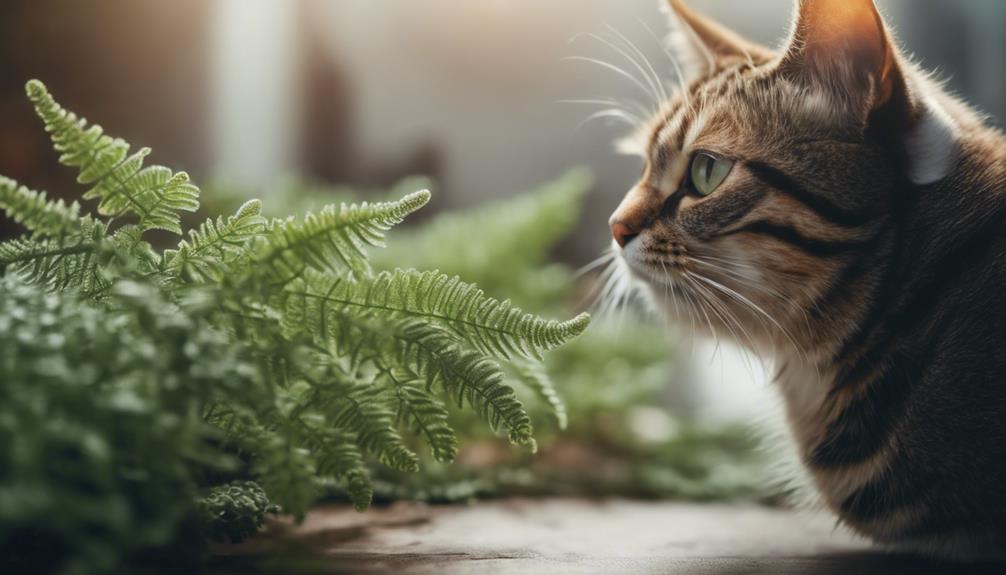
When introducing frosty ferns to a household with cats, it is important to understand their impact on feline companions. The good news is that frosty ferns are not toxic to cats, according to the ASPCA. This means that pet owners can enjoy the beauty of these plants without worrying about any harm to their beloved pets.
Frosty ferns are considered non-poisonous to cats, making them a safe and worry-free choice for cat-friendly homes. There have been no reported cases of toxicity related to frosty ferns, providing peace of mind for those looking to incorporate these plants into their living spaces.
Understanding Frosty Fern Toxicity in Cats
Frosty ferns pose no toxicity risks to cats, ensuring a safe environment for feline friends.
Symptoms of fern poisoning in cats include gastrointestinal upset, vomiting, and potential lethargy.
Treatment for fern toxicity involves supportive care to alleviate symptoms and monitoring for any complications that may arise.
Cat Safety Around Ferns
In feline households, guaranteeing cat safety around ferns involves understanding the non-toxic nature of frosty ferns in the Selaginella genus, as confirmed by the ASPCA. These ferns, resembling moss, offer a safe environment for cats while adding aesthetic appeal to homes. To secure cat safety around ferns, consider the following:
- Frosty ferns, such as the asparagus fern, are non-toxic to cats, dogs, and horses.
- These plants, often seen during the holidays, provide a worry-free option for pet owners.
- With no reported cases of toxicity in pets, frosty ferns are a safe choice for cat-friendly households.
- Choosing non-toxic plants like frosty ferns helps prevent potential harm to pets, making them a suitable addition to homes with feline companions.
Symptoms of Fern Poisoning
Understanding the potential symptoms of fern poisoning in cats is crucial for pet owners to ensure the well-being of their feline companions. Fortunately, with frosty ferns, including Selaginella varieties, not being toxic to cats, the concern of symptoms of fern poisoning is eliminated.
Symptoms of fern poisoning in cats typically include gastrointestinal upset, such as vomiting and diarrhea, along with potential lethargy. However, since frosty ferns are safe for cats and do not pose a poisoning risk, these symptoms are not a concern when having these plants around your home.
Pet owners can rest assured that enjoying the beauty of frosty ferns poses no threat to their beloved feline friends, allowing for a harmonious environment for both pets and plants.
Treatment for Fern Toxicity
When addressing fern toxicity in cats, prompt veterinary assessment is essential to initiate appropriate treatment measures for any potential complications that may arise.
Treatment for fern toxicity in cats may involve:
- Supportive care: Providing the cat with necessary support such as fluids and monitoring vital signs.
- Monitoring for dehydration: Ensuring the cat is adequately hydrated during the recovery process.
- Symptomatic relief: Addressing symptoms like gastrointestinal upset and drooling to make the cat more comfortable.
- Follow-up care: Continuing to observe the cat's progress post-treatment to ensure full recovery and prevent any relapses.
Risks of Frosty Ferns for Cats
Although commonly mistaken for toxic plants, frosty ferns, also known as Selaginella, pose no risks to cats and are safe to have in homes with feline companions. These plants, classified as spike moss, are non-toxic to pets, including cats, according to the ASPCA. There is no danger of poisoning or harm if cats ingest or interact with frosty ferns.
Pet owners can enjoy the beauty of these plants worry-free, knowing that they are harmless if nibbled on or explored by curious pets. With frosty ferns being confirmed as safe for cats, there is no need to be concerned about any potential risks associated with having these plants around feline friends.
Safety of Frosty Ferns Around Cats
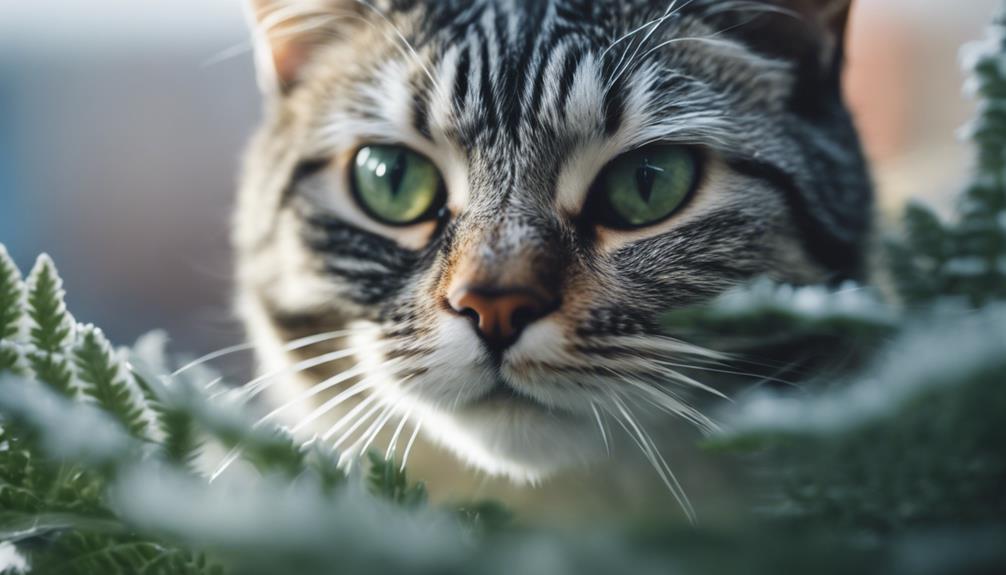
Moving forward from the reassurance that frosty ferns are safe for cats, it is essential to understand the specific factors contributing to their non-toxic nature in more detail. When considering the safety of frosty ferns around cats, several key points come into play:
- Natural Classification: Frosty ferns are botanically classified as spike moss, ensuring their non-toxic nature for feline companions.
- Holiday Appeal: These plants are a popular choice as gifts during the holidays, making them a visually appealing and safe option to have around cats.
- Toxicity Risk: Enjoy the beauty of frosty ferns worry-free in homes with cats, as they do not pose a toxicity risk.
- Cat-Friendly Feature: With their non-toxic classification, frosty ferns make an excellent plant choice for cat-friendly households.
Cat-Friendly Nature of Frosty Ferns
Frosty ferns, known scientifically as Selaginella kraussiana, exhibit a cat-friendly nature due to their non-toxic classification, making them a safe and attractive choice for households with feline companions. These plants, classified as spike mosses rather than true ferns, pose no harm to cats, dogs, or horses.
Originating from Africa and commonly found in rainforests, frosty ferns reproduce through spores similar to true ferns. With proper care, they can thrive for years, offering a durable and secure plant option for homes with cats. To maintain their health indoors, displaying frosty ferns in a terrarium setting or on a tray with water and pebbles can help meet their high humidity requirements.
Are Frosty Ferns Safe for Cats if I Choose to Use a Fake Christmas Tree?
Yes, fake Christmas trees safety for cats is a valid concern for pet owners. Frosty ferns, however, are safe to use as decorations around fake Christmas trees, as they are non-toxic to cats. It’s important to ensure that any plants or decorations used in the home during the holiday season are pet-friendly.
Ensuring Cat Wellness With Frosty Ferns
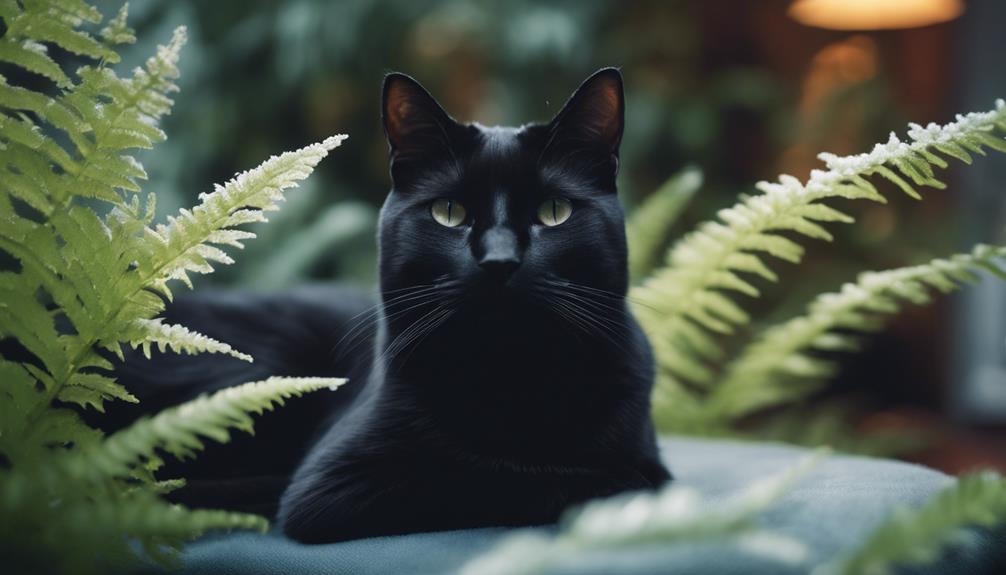
With a focus on maintaining a harmonious environment for feline companions, guaranteeing cat wellness with frosty ferns involves understanding their non-toxic nature and implementing proper care practices.
When gifting a frosty fern to a cat owner, consider the following:
- Placement: Guarantee the fern is in a location accessible to the cat but out of reach for nibbling.
- Watering: Keep the soil consistently moist but not waterlogged to prevent root rot.
- Light: Provide indirect light for the fern to thrive without exposing it to direct sunlight.
- Monitoring: Regularly check the fern for any signs of distress or damage, ensuring a healthy environment for both the plant and the cat.