
To guarantee cats use scratching posts, place them strategically in active areas or near favorite resting spots. Use enticing scents like catnip or pheromones for attraction. Implement positive reinforcement by praising and offering treats for post use. Discourage furniture scratching with deterrents and redirection to posts. Provide diverse scratching options with varying textures and locations. Reward desired behavior consistently. Cater to cat preferences for effective results. Seeking advice from professionals like veterinarians or behaviorists can address deeper issues. Establishing these practices encourages cats to embrace scratching posts naturally. Further insights await for a successful post-training experience.
Proper Placement of Scratching Post

Proper placement of a scratching post is essential in encouraging cats to engage in appropriate scratching behavior. Place the scratching posts in high-traffic areas where your cat spends time.
Position them near your cat's favorite sleeping spots to encourage use. If your cat is already scratching furniture, put the posts in those locations to redirect the behavior.
Consider using multiple scratching posts in different areas for variety and to prevent furniture damage.
Utilizing Catnip or Scent Attraction
To attract your cat to the scratching post, consider sprinkling catnip on it or using scents that appeal to them, such as their own pheromones or products like Feliway. Catnip is a natural attractant for cats and can help in getting them to use the scratching post. Incorporating scents that cats find appealing can greatly increase their interest in the post, making it more likely for them to use it effectively. Scent attraction plays an essential role in encouraging cats to engage with scratching posts and fulfill their natural scratching instincts.
Having a designated scratching post for your cat is crucial to prevent them from scratching furniture or other inappropriate surfaces. By making the scratching post appealing through scents and catnip, you can redirect your cat's scratching behavior to the appropriate location. It's important to observe your cat's preferences and adjust the scents or attractants accordingly to ensure they are enticed to use the scratching post consistently.
Catnip for Post
When encouraging cats to use scratching posts, utilizing catnip can be a highly effective method. Catnip is a natural attractant containing nepetalactone, which triggers a response in cats' brains, making them more interested in the post.
Scent Attraction Tips
Utilizing catnip or other scent attraction methods can greatly enhance your cat's interest in utilizing scratching posts. By sprinkling catnip on the base and fabric of the post, you can attract your cat to interact with it.
Spend time near the post, encouraging interaction to familiarize your cat with it. Incorporate the scratching post into playtime to show it can be enjoyable.
Reward positive behavior with treats to reinforce the use of the scratching post.
Positive Reinforcement Techniques
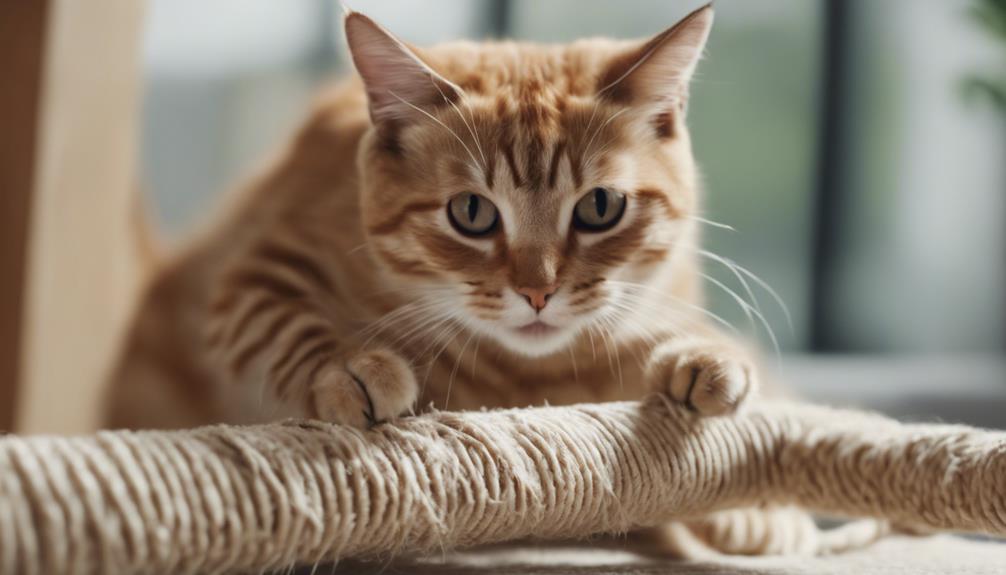
Encouraging cats to use scratching posts effectively involves implementing positive reinforcement techniques to reinforce desirable behavior.
Praise your cat immediately when they use the scratching post, offering treats and back rubs as additional rewards.
Express excitement in your voice to create a positive association with the post.
Consistent positive reinforcement helps cats understand the desired behavior, strengthening their connection to the scratching post through rewards for each interaction.
Discouraging Furniture Scratching
To deter cats from scratching furniture, one effective strategy is to cover the surfaces with materials such as double-sided tape or aluminum foil to make them unappealing.
Using deterrents like a firm 'no' or a loud clap can also discourage cats from scratching furniture. Avoid using the cat's name when correcting this behavior.
Redirect the cat to the scratching post for positive reinforcement whenever they attempt to scratch furniture.
Providing Multiple Scratching Options
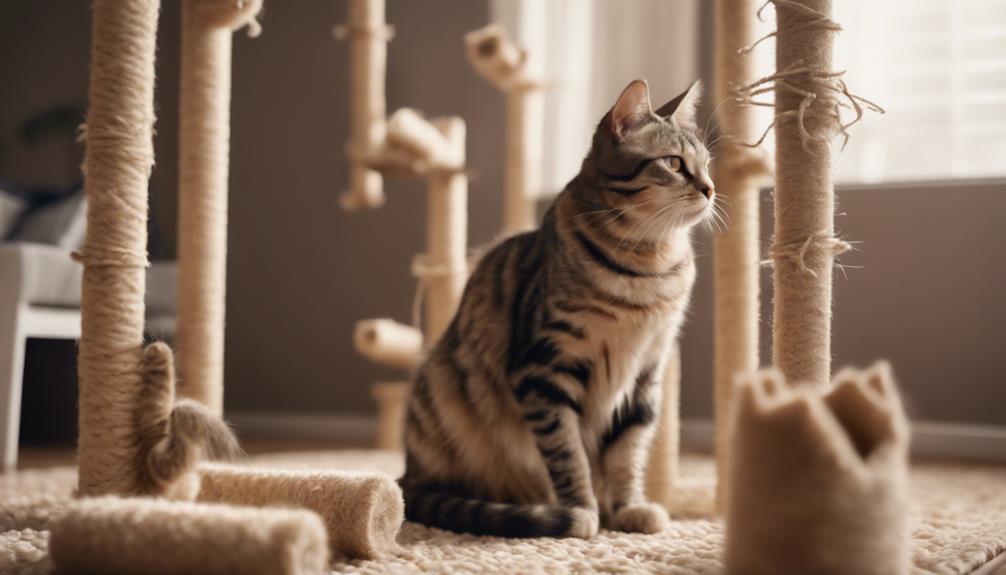
Cats benefit from having a variety of scratching options available to them to cater to their natural instincts and preferences. Providing multiple options such as scratching posts with diverse textures and materials throughout the house is essential.
Strategic placement of these scratching posts near sunny spots and resting areas can encourage regular use by cats, allowing them to express their natural behavior effectively.
Understanding Cat Scratching Behavior
Scratching behavior in cats serves various essential purposes beyond just sharpening their claws.
- Cats use scratching to communicate through scent glands in their paws.
- Scratching serves as a crucial stretching exercise for cats to maintain muscle health.
- Cats have preferences for different textures when it comes to scratching surfaces.
- Providing alternative scratchers can redirect cat behavior away from furniture.
- Understanding the purpose of scratching helps in encouraging cats to use appropriate posts.
Consistency in Training Approach
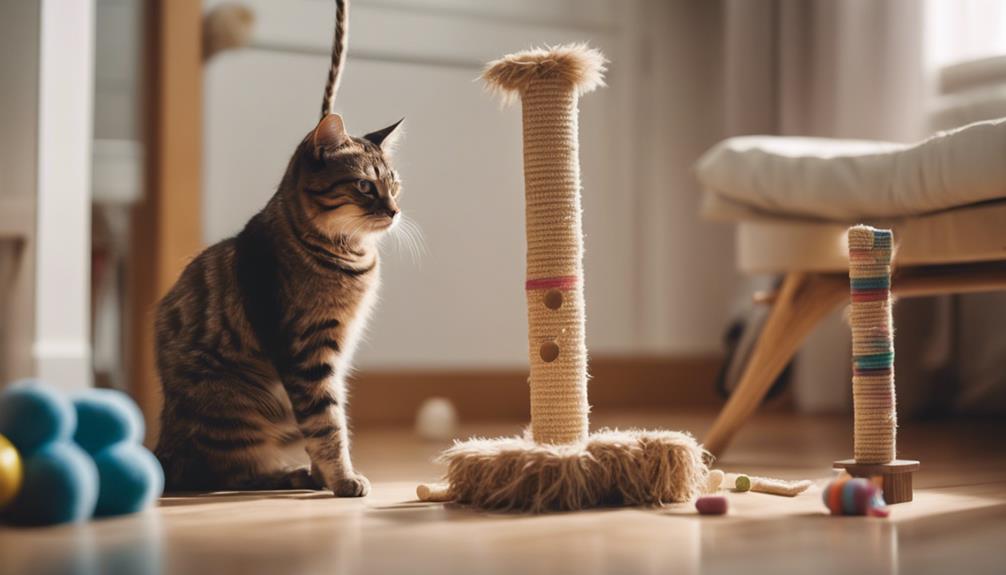
Consistency in training approach is vital when encouraging cats to use scratching posts.
By consistently using positive reinforcement methods such as treats or praise, you reinforce the desired behavior effectively.
Mixing negative and positive reinforcement can lead to confusion, so it's important to maintain a clear and consistent training approach.
Clear Training Instructions
Maintaining a consistent and structured training approach is essential when teaching your feline companion to utilize scratching posts effectively.
- Use the same training methods each time to reinforce desired behavior.
- Avoid mixing different training techniques that may confuse your cat.
- Consistent positive reinforcement helps your cat understand the desired action.
- Stick to a clear and structured training approach for best results.
Reward Good Behavior
To effectively reinforce the desired behavior of using scratching posts, consistently rewarding good behavior is essential in training cats. Positive reinforcement, such as treats, praise, and pets, creates a positive association with the scratching post.
Rewarding good behavior consistently helps cats understand the connection between their actions and the rewards they receive. By praising and rewarding cats for using the scratching post, owners can effectively train them to prefer it over furniture.
Patience and Persistence
Exercising patience and persistence in training your cat to use a scratching post is crucial for achieving successful results.
- Consistently guide your cat towards the scratching post.
- Allow time for your cat to adjust to the new post.
- Reward positive behavior to reinforce the desired action.
- Stay persistent in training efforts.
- Remain calm and avoid frustration during the training process.
Addressing Cat's Preferences
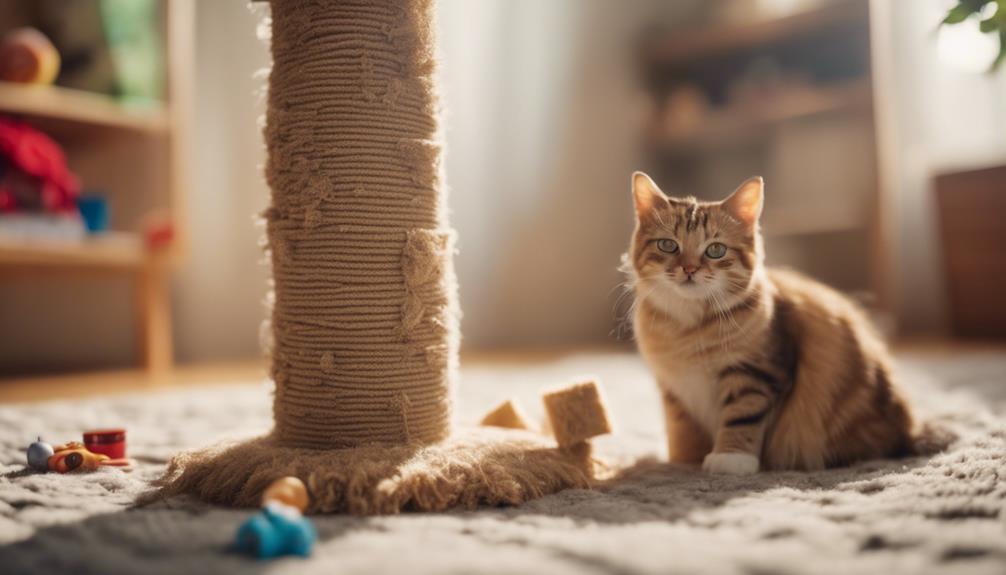
Understanding the varied scratching material preferences of cats is essential in encouraging them to use scratching posts effectively. Cats may favor materials like sisal, cardboard, or wood. Some cats prefer vertical scratching posts for stretching, while others may like horizontal options.
Observing where your cat naturally scratches can guide you in placing the scratching post effectively. Offering a variety of scratching posts in different textures and orientations can cater to diverse cat preferences.
Monitoring and Adjusting Strategy
To effectively encourage your cat to use a scratching post, it is essential to monitor their scratching behavior regularly. By observing when and where your cat prefers to scratch, you can adjust the placement of the scratching post accordingly.
Additionally, offering rewards for using the post and providing enticing alternatives can help reinforce positive scratching habits.
Observe Scratching Behavior
By closely monitoring your cat's scratching behavior on furniture, you can strategically determine the ideal placement for the scratching post.
- Note the areas your cat is scratching the most.
- Observe if your cat prefers vertical or horizontal surfaces.
- Consider the texture of the surfaces your cat likes to scratch.
- Look for patterns in the timing of your cat's scratching behavior.
- Use this information to position the scratching post effectively.
Offer Rewards for Using
Regularly rewarding your cat with treats for using the scratching post is a crucial method to positively reinforce this behavior.
By offering treats each time your cat uses the scratching post, you can effectively discourage them from scratching furniture. Positive reinforcement through rewards helps establish a strong association between the scratching post and a pleasant experience for your cat.
Monitoring and adjusting the reward system guarantees its continued effectiveness in encouraging desired behavior.
Provide Enticing Alternatives
Providing enticing alternatives for scratching posts involves monitoring your cat's scratching behavior to identify the most appealing scratching post material.
- Observe where your cat prefers to scratch
- Place scratching posts in those locations
- Offer various scratching post options
- Watch how your cat interacts with different textures
- Adjust based on your cat's response to encourage scratching on vertical surfaces
Can Loneliness Cause My Cat to Avoid Using a Scratching Post?
If you’re wondering about ways to tell if your cat is lonely, their behavior around a scratching post can be a clue. Cats often avoid scratching posts when feeling lonely or stressed. Providing extra attention, interactive toys, and a comfortable environment can help alleviate their loneliness and encourage them to use the scratching post.
Seeking Professional Advice if Needed
When faced with a persistent disinterest from your cat in using the scratching post, seeking professional advice from a veterinarian or animal behaviorist is essential for personalized solutions and a thorough approach.
A veterinarian can offer insights into your cat's behavior and recommend tailored solutions, while an animal behaviorist can provide specialized advice on training techniques to encourage scratching post use.
Professional guidance can help address underlying issues causing reluctance to use the post.