
Goldfish plants are not poisonous to cats, making them safe for feline companions. These plants lack toxic alkaloids that are harmful if ingested. While minor stomach upset is possible if consumed, they are generally considered safe. It's advisable to seek veterinary care for persistent symptoms. To guarantee a cat-friendly environment, place the plant out of reach and monitor the cat's interaction. Recognizing symptoms of ingestion, like vomiting or diarrhea, is essential for prompt veterinary treatment. For more information on plant alternatives and toxicity risks, further details are available in the research provided.
Goldfish Plant Toxicity for Cats
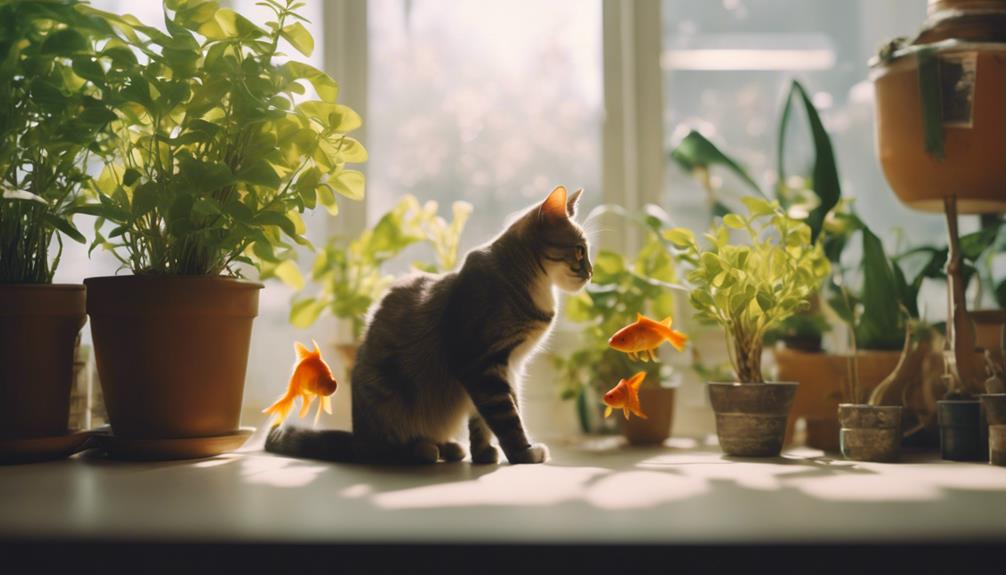
Goldfish Plants pose no toxicity risk to cats and are considered safe for feline companions. These plants lack toxic alkaloids that could harm cats if ingested. While cats may exhibit curiosity towards Goldfish Plants, they do not pose a threat to their well-being.
In cases where a cat consumes these plants, minor stomach upset may occur due to digestion issues. If a cat excessively consumes Goldfish Plants, leading to persistent symptoms or concerns, seeking veterinary care for evaluation and potential treatment is advisable.
Cat-Friendly Goldfish Plant Care
How can cat owners guarantee the health and well-being of their feline companions in the presence of goldfish plants? Cat-friendly goldfish plant care involves ensuring a safe environment for both plants and cats to coexist harmoniously. Here are some essential tips:
- Place the goldfish plant out of reach: Position the plant in areas where cats cannot access it easily to prevent them from nibbling on the leaves or flowers.
- Monitor your cat's interaction: Keep an eye on your cat's behavior around the plant to make sure they are not consuming it excessively.
- Create a cat-friendly home: Provide alternative safe plants or toys for your cat to explore and interact with, diverting their attention from the goldfish plant.
Symptoms of Goldfish Plant Ingestion
Ingesting goldfish plants can lead to symptoms like vomiting and diarrhea in cats. These signs of discomfort may indicate toxicity from the plant.
If a cat shows any of these symptoms after consuming a goldfish plant, seeking veterinary treatment promptly is essential.
Cat Poisoning Signs
When cats ingest the goldfish plant, they may exhibit various signs of poisoning, ranging from gastrointestinal distress to more severe symptoms.
- Vomiting, diarrhea, and lethargy are common early signs of goldfish plant ingestion in cats.
- Severe cases might present with symptoms such as tremors, seizures, or organ issues.
- Look out for behavioral changes like hiding or oral irritation, as they can also indicate poisoning.
It is vital to take immediate action if a cat shows any of these signs, as timely identification and treatment of goldfish plant poisoning in cats can greatly improve their prognosis.
Goldfish Plant Toxicity
Goldfish plants pose minimal risk of toxicity to cats, typically resulting in mild stomach upset when ingested. While these plants are non-toxic, cats may experience symptoms such as vomiting and mild digestive issues if they consume parts of the goldfish plant. Cats' curiosity towards plants may lead them to nibble on the leaves or flowers, but serious harm is unlikely to occur.
In most cases of goldfish plant ingestion, immediate veterinary care is not needed, as the symptoms are generally mild and self-limiting. However, if a cat shows severe symptoms or if there are concerns about the amount ingested, consulting a veterinarian for guidance on monitoring the cat's condition is recommended.
Veterinary Treatment Options
Given the potential symptoms that may arise from cats consuming goldfish plants, it is important to understand the veterinary treatment options available to address any resulting issues promptly and effectively.
- Immediate Veterinary Care: If a cat shows symptoms of goldfish plant ingestion such as lethargy, oral irritation, tremors, or seizures, seek immediate veterinary attention.
- Diagnostic Procedures: Veterinarians may conduct tests to assess the cat's condition and determine the extent of toxicity.
- Treatment Plan: Treatment may involve supportive care, such as fluid therapy, medication to control symptoms, and monitoring for any complications.
Prompt intervention and professional care are essential in ensuring the well-being of cats that have ingested goldfish plants.
Emergency Steps for Plant Consumption
When a cat ingests a potentially poisonous plant like a goldfish plant, act swiftly by removing any remaining plant material from its mouth.
Contact a vet or pet poison control center immediately for guidance on the next steps.
It is important to seek professional assistance promptly to guarantee the best possible outcome for your feline companion.
Cat-Safe Plant Alternatives
For pet owners seeking safe alternatives to goldfish plants, consider incorporating cat-friendly options like African violets, aluminum plants, or true ferns such as Boston ferns. These alternatives provide greenery without posing a toxicity risk to cats.
In case of emergency plant consumption, it is important to induce rinsing of the mouth and seek immediate veterinary help. Educating children and pets to avoid unknown plants is essential for their safety. Consulting a vet or nursery for recommendations on safe plants can help prevent accidental poisoning incidents.
- African violets
- Aluminum plants
- Boston ferns
Vet Consultation Recommended
In cases of plant consumption by cats, immediate vet consultation is strongly recommended to assess and address any potential risks or toxicity effects.
If a cat ingests a Goldfish Plant, prompt action is vital. Contacting a vet promptly allows for the evaluation of the situation and the determination of the necessary treatment. Providing details about the ingested plant aids in understanding the toxicity levels involved.
Vet consultation is essential to manage any potential adverse effects on the cat's health. Following emergency steps for plant ingestion ensures the cat receives appropriate care promptly. Being proactive in seeking veterinary guidance can help mitigate the impact of plant toxicity on your feline companion.
It is important to prioritize your cat's well-being by acting promptly in such situations.
Risks of Unverified Plant Toxicity
Careless mislabeling of plants can pose significant risks to pets, potentially leading to minor symptoms or more severe consequences. When it comes to pet safety and plant toxicity, assumptions about a plant's safety can be risky.
It is vital to distinguish between plants that may only cause mild irritants and those that are truly hazardous to pets. To guarantee accurate information, it is advisable to seek guidance from credible sources like the ASPCA or Pet Poison Helpline.
Remember that the impact of a plant on pets can vary depending on the ingested amount and the size of the pet. Verify plant toxicity before exposing your furry friends to any potential risks.
Safe Plant Alternatives for Cats
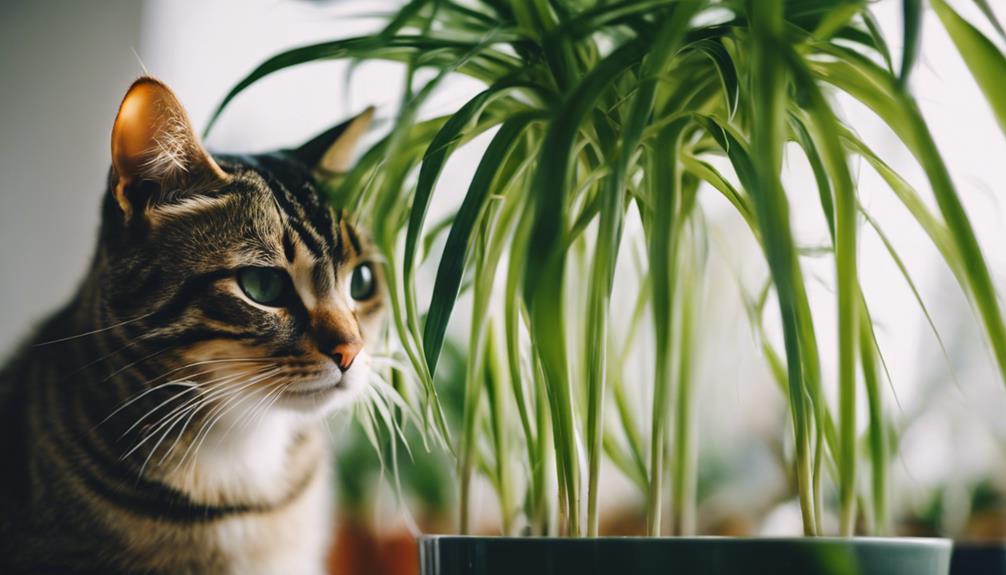
What are some safe plant alternatives that cat owners can consider to provide a pet-friendly environment for their feline companions?
Spider plants, cat grass, catnip, and moth orchids are excellent choices. Spider plants are non-toxic, making them safe for cats to interact with. Cat grass can satisfy cats' plant-eating instincts in a safe way. Catnip is a popular favorite among cats and poses no toxic risks. Moth orchids offer a worry-free green haven for cats to explore.
These plant options guarantee a cat-friendly environment where owners can relax knowing their pets are not in danger. By incorporating these safe alternatives, cat owners can create a harmonious living space for both themselves and their beloved feline friends.
Can Goldfish Plants and Ferns Pose a Risk to Cats if Ingested?
Yes, goldfish plants and ferns can pose a risk to cats if ingested. Certain varieties of ferns and cats toxicity can cause stomach upset, vomiting, and diarrhea in cats. It is important to keep these plants out of reach of cats or opt for pet-safe alternatives to keep your furry friends safe.
Understanding Goldfish Plant Toxicity
Cat owners can rest assured that Goldfish Plants are non-toxic to feline companions, as confirmed by the ASPCA, though cautious measures should be taken to prevent overconsumption.
If a cat might ingest a Goldfish Plant, it is important to keep an eye out for signs of plant consumption. While nibbling on these plants may cause a stomach ache, immediate veterinary care is not typically necessary.
However, excessive consumption can lead to digestive issues, necessitating a vet visit. It's vital to place Goldfish Plants out of reach to avoid potential ingestion by pets.