
Cats put things in their water bowls due to their hunting instincts. They see toys as prey, mimicking hunting habits. Putting items in the water bowl may be a way of playing or hiding "prey." The water bowl offers a safe zone for secure proximity to toys, providing comfort. Cats engage in water play out of curiosity and mental stimulation, satisfying their hunting drive. Positive reinforcement from owners strengthens bonds. It's essential to monitor water intake for health. Understanding cat behavior and hygiene importance are key. Strategies involve engaging play, varied toys, and clean water sources. Implementing interventions may modify this behavior.
Hunting Instincts
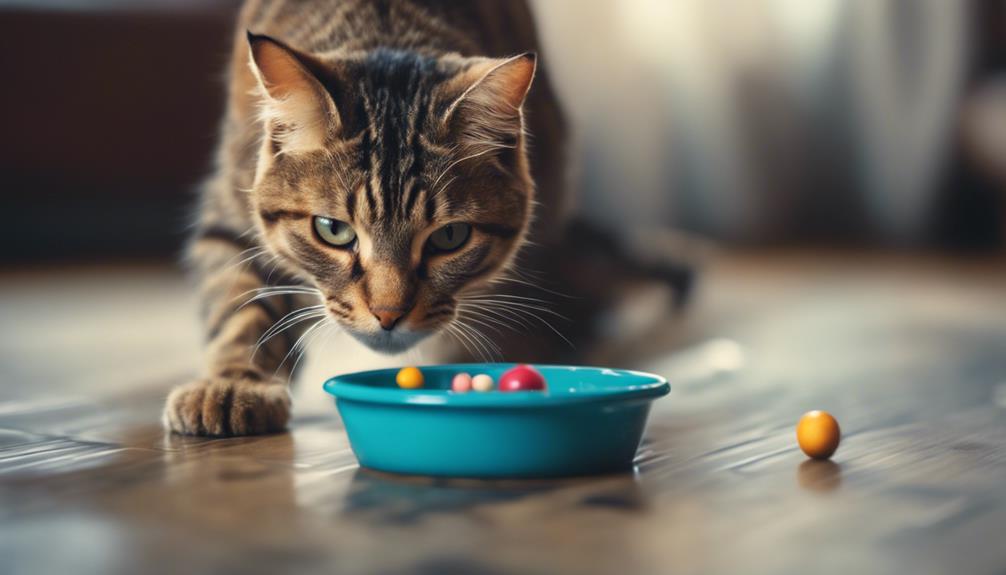
When observing cats' behavior of placing objects in their water bowls, one can attribute this action to their innate hunting instincts. Cats view toys as prey items, mimicking the experience of hunting and catching prey by dropping them in water bowls.
This behavior is linked to their natural instinct to play with and hide prey in safe spots. Cats with a strong prey drive often engage in hunting-like behaviors, using the water bowl as part of their play.
Safe Zone Proximity
Cat behavior of placing objects in their water bowl can be understood as a way for them to establish a secure zone in proximity to their food and water sources.
- Cats feel secure with toys near water source.
- Proximity of toys to water bowl provides comfort.
- Cats seek security by keeping items close to water.
- Toys in water bowl help cats feel safe.
- Easy access to toys in familiar area enhances comfort.
Stimulating Water Play
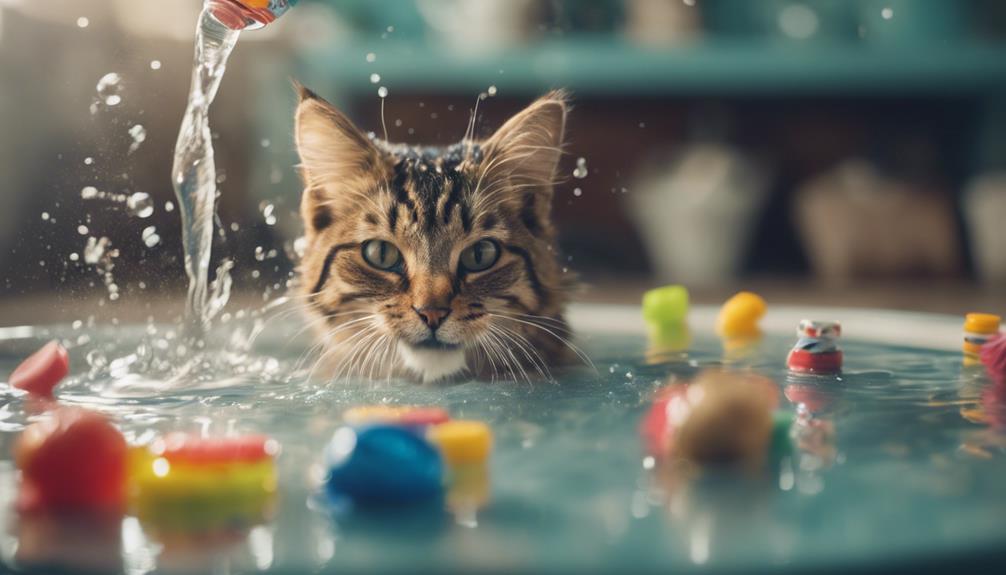
Stimulating water play in cats involves various aspects such as curiosity and exploration, playful water behavior, and natural hunting instincts.
Cats may drop toys in their water bowls as a way to engage in interactive play and mimic hunting scenarios.
Understanding these points can help cat owners provide enriching experiences for their feline companions.
Curiosity and Exploration
Through their innate sense of curiosity and penchant for exploration, feline companions may exhibit a fascination with engaging in water play by dropping toys into their water bowl.
- Cats enjoy exploring new sensations.
- Water play provides mental stimulation.
- Curiosity drives cats to interact with objects.
- Playing in water can be a fun activity.
- Dropping toys into water engages cats in playful behavior.
Playful Water Behavior
A fascination with water play often manifests in feline companions through playful behaviors such as pawing at water, splashing around, and engaging with interactive water toys. Cats may find the sound and movement of water enticing, leading to fun experiences. Water play can help cats stay hydrated and mentally stimulated. Some cats enjoy dropping toys into water, combining play with their natural curiosity.
| Water and Food | Dropping Toys |
|---|---|
| Hydration | Stimulation |
| Playful behavior | Curiosity |
| Interactive toys | Water sounds |
| Mental stimulation | Fun experience |
Natural Hunting Instincts
Exhibiting their innate hunting instincts, cats often engage in stimulating water play by dropping toys into their water bowl as a form of playful mimicry.
- Cats view toys as prey and may drop them in the water bowl as part of their natural hunting instincts.
- Stimulating water play mimics hunting behavior for cats, making it a fun and engaging activity.
- Water adds an element of challenge and excitement to playtime for cats.
- Toys in the water bowl can serve as a way for cats to practice their hunting skills in a safe environment.
- Engaging in water play helps satisfy cats' instinctual drive to hunt and catch prey.
Positive Owner Reinforcement
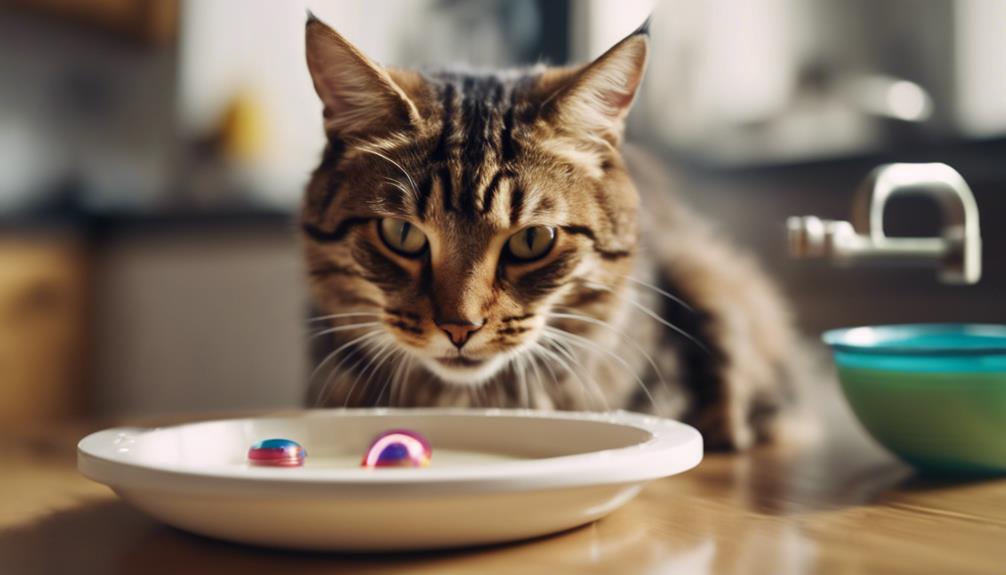
When owners positively reinforce their cats for placing items in their water bowl, they inadvertently encourage this behavior to continue. Cats may drop toys in their water bowl to seek attention and interaction.
Owners' reactions to finding toys in the water bowl can reinforce the behavior, as cats perceive positive attention when this happens. Encouraging and acknowledging this behavior can strengthen the bond between cats and their owners.
Monitoring Water Intake
Monitoring a cat's water intake is essential for maintaining their hydration levels and overall health.
Changes in water intake could indicate health issues.
Tracking daily water consumption helps detect problems early.
Cats may adjust water intake due to illness or stress.
Consulting a vet for guidance provides valuable insights.
Understanding a cat's drinking habits aids in promoting their well-being.
Non-Prey-Like Toy Options
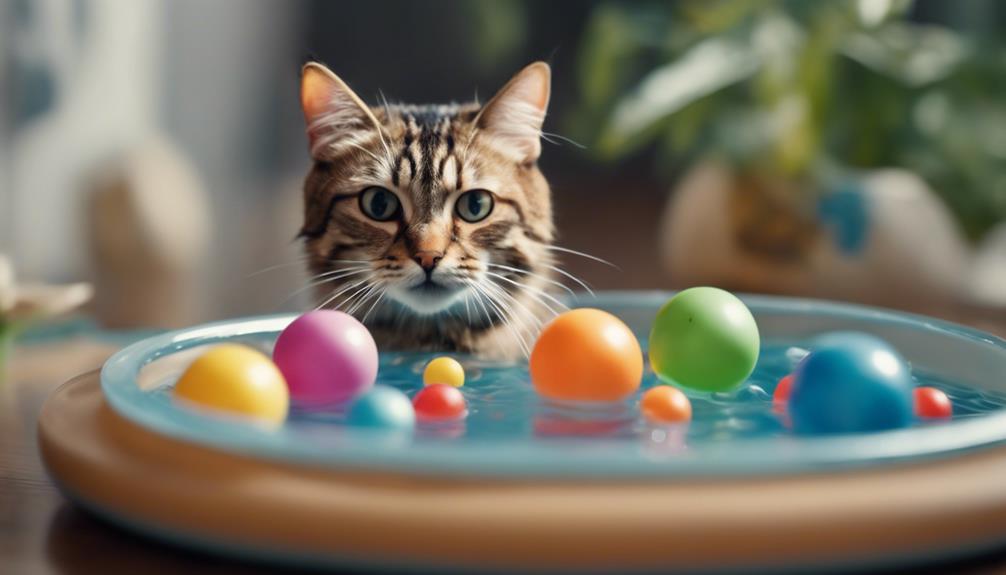
When choosing toys for your cat, opt for items like rubber balls, soft fabric toys, or plastic rings to provide non-prey-like options that still engage their playful nature.
Interactive puzzle toys, crinkle balls, and feather wands can also be great choices to keep your feline friend entertained without resembling traditional prey objects.
Toy Preferences for Cats
To cater to cats' preferences and minimize confusion with real prey items, providing a variety of non-prey-like toys can enrich their play experiences.
- Balls
- Soft stuffed toys
- Feather wands
- Crinkle balls
- Laser pointers
Water Bowl Exploration
In addressing cats' exploratory behaviors around their water bowl, incorporating non-prey-like toy options can enhance their interactive experiences and mental stimulation.
Floating toys such as rubber ducks or balls, ice cubes for play, water-safe puzzle toys, catnip-infused toys, ping pong balls, or squeaky toys can provide engaging interactions.
These toys around the water bowl offer cats opportunities to play and explore in a non-prey-like manner, enriching their environment.
Switching to Water Fountain
Given the advantages of increased water intake and interaction for cats, switching to a water fountain can offer a beneficial solution for cat owners looking to enhance their feline companions' well-being.
- Water fountains can encourage cats to drink more water.
- Cats are instinctively drawn to moving water.
- Running water in fountains helps keep cats hydrated.
- Fountains engage cats' curiosity.
- Fountains address cats' preference for running water and reduce toy dropping.
Maintaining Water Cleanliness
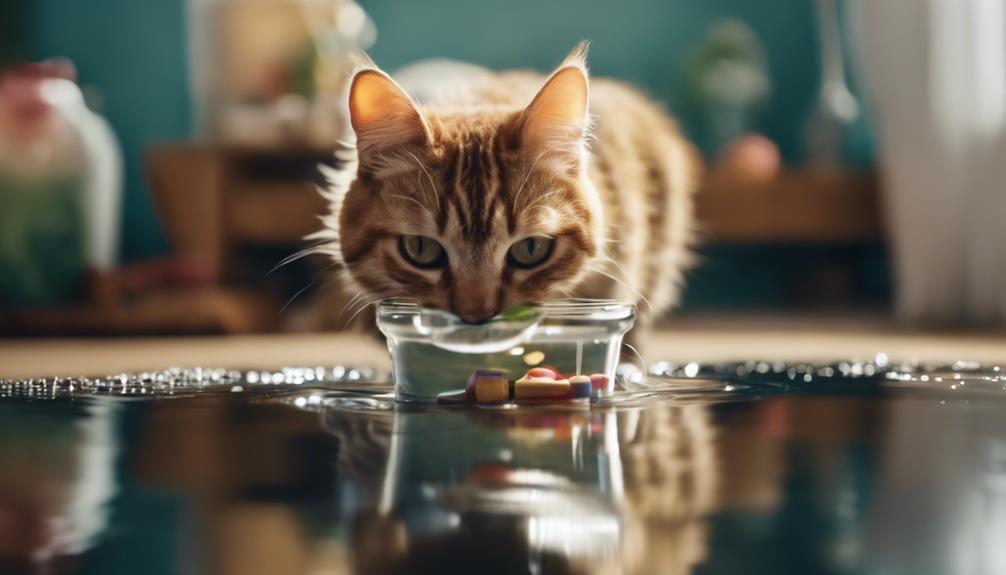
To maintain water cleanliness for your cat, it is essential to regularly change the water in the bowl to prevent bacterial growth.
Cleaning the bowl with mild soap and water can remove dirt and potential contaminants, ensuring the water remains fresh and safe for your feline friend.
Using stainless steel or ceramic bowls can also minimize the risk of bacterial buildup compared to plastic alternatives.
Preventing Debris Contamination
To maintain excellent water cleanliness and prevent debris contamination in a cat's water bowl, ensuring regular cleaning is crucial.
- Use mild soap and water for cleaning.
- Scrub the bowl thoroughly to remove any residue.
- Rinse the bowl well to guarantee no soap remains.
- Change the water daily to keep it fresh.
- Keep the water bowl in a clean, debris-free area.
Ensuring Water Quality
Maintaining water cleanliness in a cat's bowl is crucial to safeguarding your pet's health and well-being. Regularly clean the bowl to prevent bacterial growth and contamination. Use stainless steel or ceramic bowls for easy cleaning. Change water frequently to guarantee freshness. Water fountains can help keep water oxygenated. Monitor water level and cleanliness daily to address any issues promptly for a healthy water source.
| Tips for Ensuring Water Quality | |||
|---|---|---|---|
| Regularly clean the water bowl | Use stainless steel or ceramic bowls | Change water frequently | Consider water fountains |
Preventing Health Complications
When considering the behavior of cats dropping items in their water bowl, it becomes evident that addressing and preventing potential health complications is essential.
- Regular veterinary check-ups can help identify any underlying health issues early.
- Providing appropriate dental care can reduce oral pain and discomfort.
- Monitoring changes in water intake can help detect health conditions promptly.
- Promptly addressing signs of lethargy, reduced appetite, or confusion is crucial.
- Ensuring the water bowl remains clean and free from contamination is essential.
Do Cats Wet Their Noses to Put Things in Their Water Bowl?
Cats wet their noses for a few reasons. Keeping their noses moist helps them process scent particles, and they may lick their noses before drinking to test the water for safety. Additionally, wetting their noses can help them breathe more easily, especially in dry environments.
Intervention Strategies
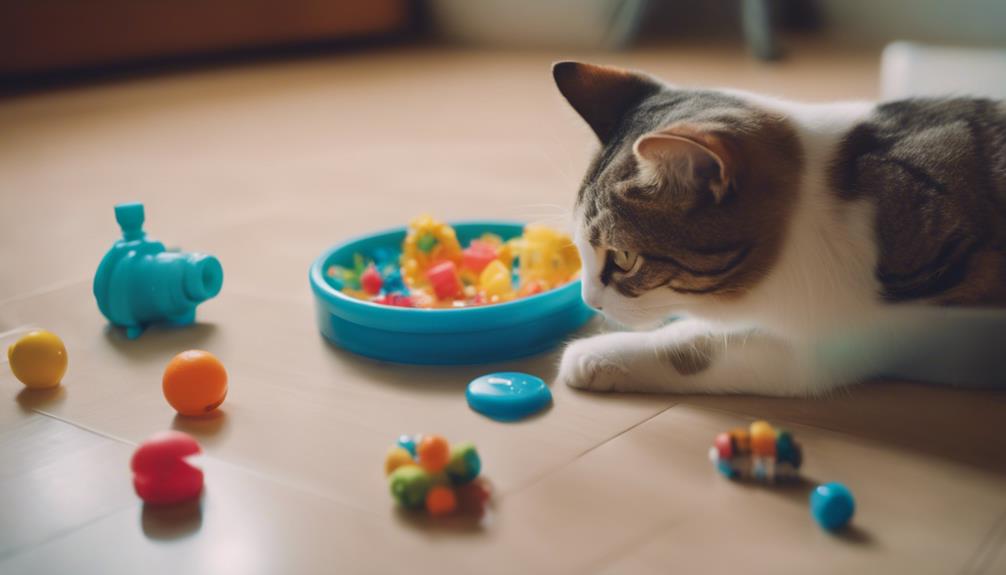
Implementing effective intervention strategies is essential for modifying the behavior of cats putting items in their water bowl. Engage cats in play with appropriate toys to redirect their focus from dropping objects in the bowl. Maybe they're batting around a toy instead.
Consider using water fountains to entice cats to drink from a separate source. Leaving a few toys in the water bowl intentionally could deter cats from continuously putting items in it.