
Cats stick their tongues out for reasons like grooming, regulating body temperature, and showing relaxation. This behavior, called "blepping," is common during grooming, play, or when excited. The rough texture of a cat's tongue assists in cleaning fur and transferring scents for analysis. Some breeds, especially brachycephalic like Persians, may stick out their tongues due to genetic predispositions or certain facial features. Persistent tongue protrusion could indicate underlying health issues, necessitating veterinary attention. Understanding why cats blep helps in recognizing normal behavior and potential concerns. Discover more about the various reasons behind cats sticking their tongues out.
Reasons for Cat Tongue Protrusion
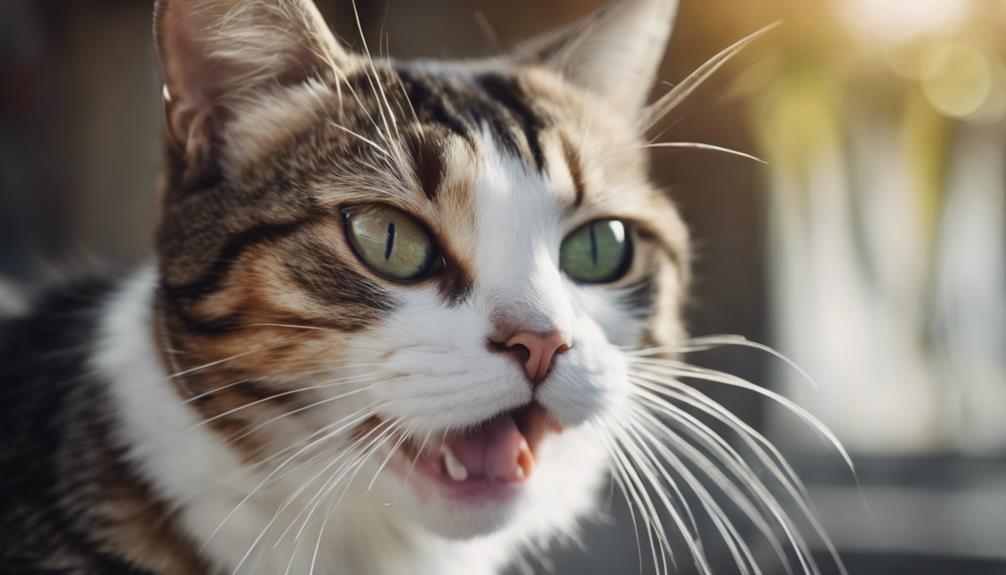
Cat tongue protrusion, also known as blepping, can be attributed to a variety of natural and instinctual behaviors exhibited by felines. When cats are relaxed, their tongue may stick out slightly as facial muscles loosen. This phenomenon is common during grooming sessions where the tongue is essential for cleaning.
Additionally, playful activities can also lead to cats sticking out their tongue, especially when they are excited.
Understanding Cat Tongue Behavior
Understanding cat tongue behavior involves knowledge of their unique anatomy. Reasons for their tongues sticking out are also important to consider. The importance of cat tongue hygiene is another crucial aspect to explore.
Cat Tongue Anatomy
The intricate anatomy of a cat's tongue plays a crucial role in their grooming behavior and sensory perception. Cat tongues feature tiny, hooked papillae that assist in grooming by eliminating loose fur and debris. The rough texture aids in cleaning their fur.
Cats also use their tongues to transfer scent molecules to the vomeronasal organ during the Flehmen Response, allowing them to analyze pheromones in the environment and identify potential prey.
Reasons for Tongue Out
Have you ever noticed your feline companion's tongue peeking out unexpectedly? Cats may stick their tongue out when relaxed, sleeping, or to transfer scents to their vomeronasal organ.
It can also be a reaction to environmental scents or a way to cool off in hot weather. However, if this behavior seems unusual or persistent, consulting a vet is important to rule out any underlying health issues.
Cat Tongue Hygiene
An integral aspect of feline self-care involves the meticulous grooming behavior facilitated by the unique structure of a cat's tongue. Cat tongues, equipped with tiny barbs, play a vital role in maintaining hygiene through self-grooming. These barbs aid in removing loose hair and debris from the fur, contributing to the rough texture that helps cats keep their fur clean.
Cats sticking out their tongues while grooming is a normal behavior that allows them to relax during grooming sessions.
Cat Breeds and Tongue Sticking
Certain cat breeds, such as Persians and Burmese, exhibit unique tongue characteristics that may lead to frequent tongue protrusion. Understanding the specific behaviors and genetic traits associated with different cat breeds can shed light on why some cats stick their tongues out more than others.
Additionally, certain health implications, such as dental issues or jaw structures, can also contribute to tongue sticking in specific cat breeds.
Breed Tongue Characteristics
Among various cat breeds, the structure of the face plays a significant role in the likelihood of tongue protrusion, particularly in brachycephalic breeds like Persians and Himalayans. Genetic predispositions and specific facial features can result in tongue protrusion being more common in certain breeds.
Cats with distinct jaw structures may also exhibit tongue protrusion more frequently, making it a breed-specific characteristic influenced by their genetic makeup and physical attributes.
Behavior and Breeds
Behavior and breeds play a crucial role in understanding the frequency and reasons behind cats sticking their tongues out. Certain breeds exhibit this behavior more than others due to their unique genetic makeup and physical attributes. Brachycephalic cat breeds like Persians and Himalayans, along with genetic factors like missing teeth or specific jaw structures, contribute to tongue protrusion.
Breed characteristics heavily influence this common behavior trait.
Health Implications
Brachycephalic cat breeds, such as Persians and Himalayans, are more susceptible to displaying the behavior of sticking their tongues out due to distinctive facial features that impact tongue retraction. This can lead to various health implications, including dental problems, respiratory disease, and neurological conditions. The tongue protrusion in these breeds, particularly in instances of missing canine teeth, may signal underlying health issues that require veterinary attention.
- Brachycephalic cat breeds
- Dental problems
- Respiratory disease
- Neurological conditions
Medical Issues and Tongue Protrusion
The presence of tongue protrusion in cats serves as an important indicator of potential underlying medical issues, encompassing conditions ranging from dental disease and respiratory infections to neurological problems.
| Medical Issue | Symptoms | Action Needed |
|---|---|---|
| Dental Disease | Bad breath, drooling | Dental check-ups |
| Respiratory Infections | Panting, loss of appetite | Veterinary attention |
| Neurological Problems | Persistent tongue protrusion | Medical evaluation |
Cat Tongue Behavior in Play
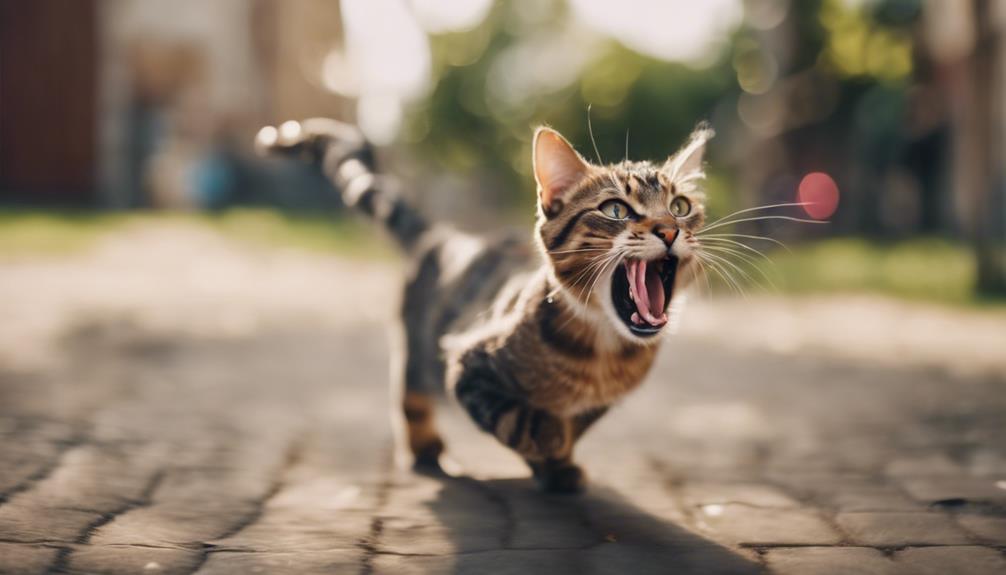
The behavior of sticking their tongue out during play in cats can often be attributed to excitement and engagement, reflecting their heightened level of enthusiasm and interaction.
- Playful behavior can lead to cats sticking out their tongue as they chase toys or interact with their owners.
- Positive reactions from cat parents, such as praise or play, can reinforce the behavior of sticking out their tongue during play.
- Adrenaline surges during play can result in cats poking out their tongue, adding to the fun and energy of the moment.
- Continuous positive reinforcement can encourage cats to repeat the behavior of sticking out their tongue during playful interactions.
Flehman Response and Blepping
Frequently observed in felines, the Flehman Response and blepping are intriguing behaviors that showcase unique aspects of cat communication and expression. The Flehman Response involves cats opening their mouths to transfer scents to the vomeronasal organ, while blepping refers to the cute act of sticking out their tongues. This behavior is distinct from panting or licking, with the tongue typically staying motionless.
| Behavior | Description |
|---|---|
| Flehman Response | Involves transferring scents to the vomeronasal organ through open mouths. |
| Blepping | Refers to sticking out the tongue, often seen in relaxed or distracted cats. |
Heat Regulation and Tongue Out
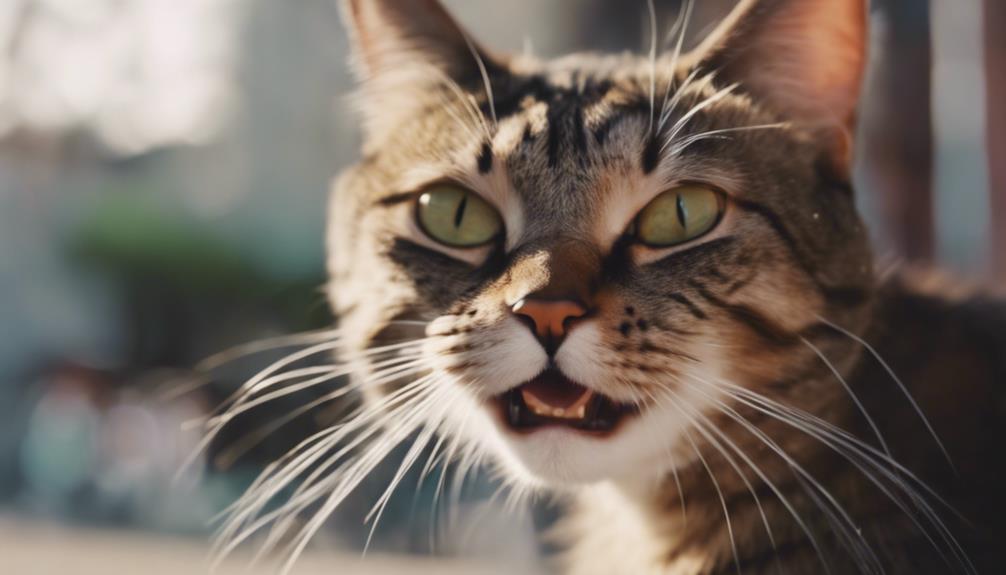
During periods of heat distress, cats exhibit the behavior of sticking out their tongues as an essential mechanism for regulating their body temperature efficiently.
- Panting and keeping the mouth open help release excess heat.
- Tongue protrusion maintains thermal balance.
- Cats lack sweat glands, relying on this behavior to dissipate heat.
- Heat regulation through tongue protrusion is crucial to prevent overheating.
Dental Health and Tongue Protrusion
Dental health greatly influences the behavior of cats sticking their tongues out. Periodontitis or missing teeth can cause discomfort, leading to this issue.
Tongue protrusion may signal dental problems like abscesses. Regular check-ups and oral hygiene are essential. Watch for signs such as bad breath or excessive drooling, indicating a need for veterinary care.
Proper dental care and attention can prevent such problems, ensuring your cat's well-being.
Tongue Protrusion in Relaxation
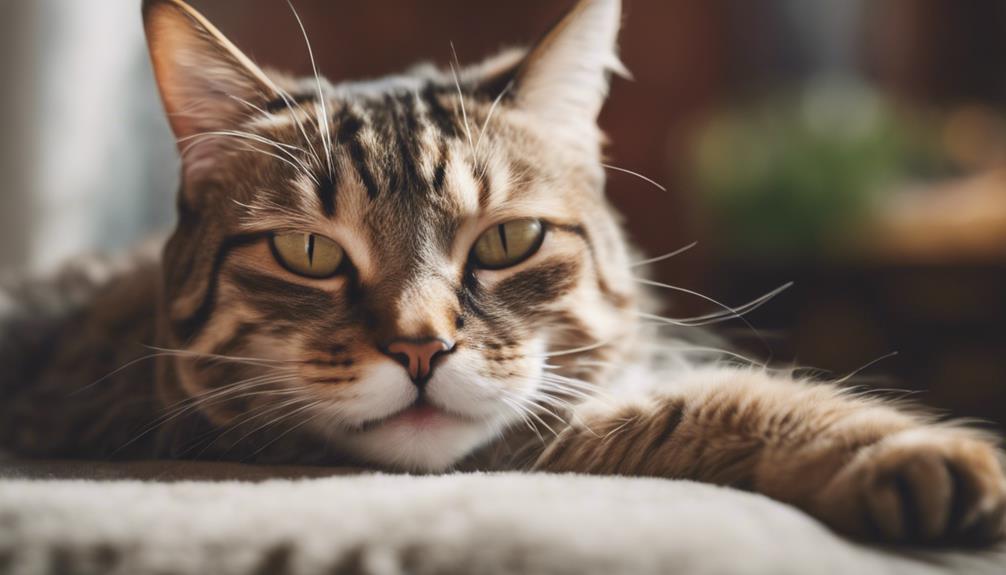
Tongue protrusion in relaxation is a common behavior seen in cats. When cats are at ease, their tongue may naturally hang out as a sign of comfort.
It serves purposes such as heat regulation, assisting in cooling, and aiding in grooming routines.
Tongue as Heat Regulator
In maintaining their body temperature, cats exhibit a fascinating behavior by protruding their tongues as a natural cooling mechanism during relaxation.
- Cats stick their tongues out to regulate heat.
- Tongue protrusion helps dissipate excess body heat.
- Panting and tongue hanging out signal heat distress.
- Cats lack sweat glands, relying on panting to cool down.
- Tongue sticking out is a natural cooling mechanism for cats.
Tongue Helps Cool
During moments of relaxation, cats may exhibit a natural cooling mechanism by protruding their tongues slightly, aiding in the regulation of their body temperature.
This cooling behavior helps dissipate heat, allowing cats to release excess body heat and cool down.
Tongue protrusion while relaxed is a normal behavior that assists cats in maintaining a comfortable body temperature, making it a beneficial and common practice among felines.
Tongue Aids in Grooming
Cats further utilize their tongue's unique structure and functionality not only for cooling purposes but also as a valuable grooming tool to maintain cleanliness and hygiene.
- Cat tongues have tiny barbs that aid in grooming by removing loose hair and debris from fur.
- Cats may stick out their tongue when taking a grooming break to relax their muscles.
- The rough texture of a cat's tongue is an important tool for maintaining clean fur.
- Tongue protrusion during relaxation is a normal behavior that indicates comfort and ease.
- Cats exhibit tongue hanging out while sleeping as a sign of relaxation and comfort.
Can a Cat Losing Its Voice Cause It to Stick Its Tongue Out?
When a cat experiences the reason for cat’s voice loss, it may stick its tongue out as a response. This behavior can be a result of discomfort or irritation in the throat. If your cat is displaying this symptom, it’s important to consult with a veterinarian to identify and address the underlying cause.
Addressing Concerns: Vet Visit

When addressing concerns about a cat sticking its tongue out, it is imperative to prioritize a vet visit for thorough evaluation and potential treatment.
| Signs | Underlying Health Issues | Vet Visit |
|---|---|---|
| Drooling | Oral discomfort | Immediate attention |
| Bad breath | Respiratory problems | Urgent veterinary visit |
| Changes in eating habits | Overall well-being | Regular observation for abnormalities requiring veterinary care |