
House cats are not nocturnal but crepuscular, most active at dawn and dusk. This behavior stems from their evolutionary past as desert hunters. Cats' preference for low light conditions influences their activity cycles. Contrary to popular belief, they are not active primarily at night. Understanding their crepuscular nature can aid in better care and interaction with them. Their unique sleep patterns and hunting instincts play a significant role in their behavior. Further insights into cats' sleep cycles and hunting strategies can enhance our understanding of these fascinating animals.
Cats Crepuscular Nature

Cats exhibit a crepuscular nature, displaying peak activity levels during the periods of twilight and nightfall. This crepuscular schedule is ingrained in their biology, stemming from their evolution as desert hunters. Due to their internal clocks being attuned to low light conditions, cats are most active at dusk and dawn. This behavior allows them to strike a balance between avoiding the intense daytime heat and utilizing the semi-darkness for hunting.
Misconception About Cat Nocturnality
Contrary to popular belief, house cats are not nocturnal creatures but rather exhibit a crepuscular nature. This means they are most active during the periods of dusk and dawn. This behavior stems from their ancestral hunting patterns, as their prey, like small rodents, are also most active during these twilight hours. Understanding their crepuscular tendencies can help pet owners create a more stimulating environment that aligns with their natural rhythms. For example, incorporating “cat proofing your home tips” can ensure a safe and engaging space for cats to explore during their peak activity times.
The misconception about cats being nocturnal arises from their playful behavior at night and their tendency to wake owners up in the early morning. Cats' crepuscular behavior is a result of their evolutionary adaptation to hunting during low light conditions. Their preference for dim light levels during twilight hours influences their activity patterns.
Understanding this aspect of a cat's nature can help owners appreciate and accommodate their feline companions' behavior better. By recognizing that cats are crepuscular rather than nocturnal, we can make sure they have the appropriate environment to thrive.
Cats Nighttime Activity
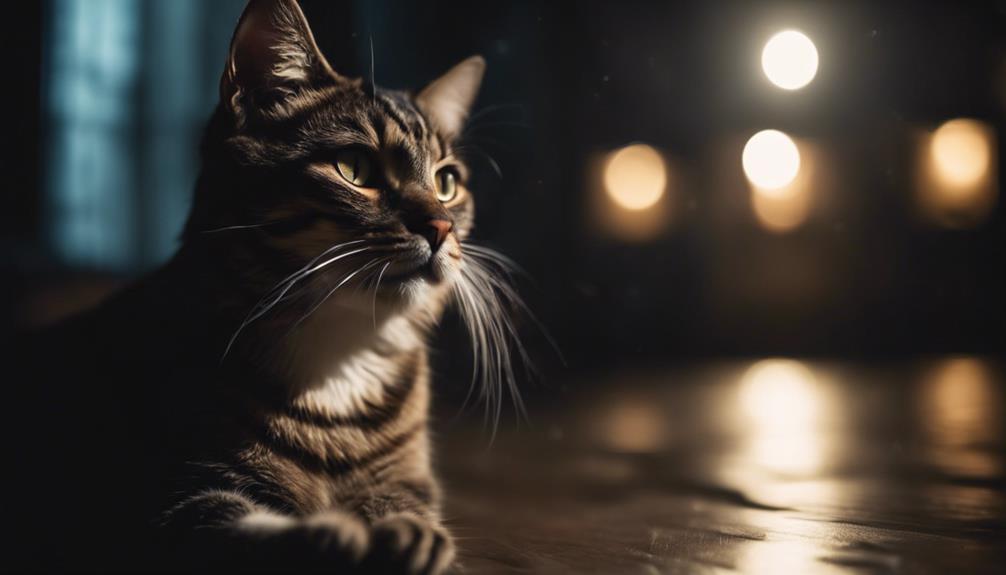
With their evolutionary adaptation to hunting during low light conditions, house cats exhibit heightened activity levels during the early mornings and evenings, emphasizing their crepuscular nature. This behavior aligns with their ancestors' hunting patterns at dusk and dawn. Cats are naturally more active during these times, displaying their preference for dim light levels to stalk prey effectively.
While cats may seem more active at night, it is their crepuscular instincts that drive their behavior, not true nocturnality. This misconception is further fueled by their tendency to seek attention during the night, leading some to believe they are nocturnal creatures.
Understanding cats' nighttime activity as part of their crepuscular nature sheds light on their behavior and helps dispel common misunderstandings about their daily rhythms.
Understanding Cat Sleep Patterns
Cats are polyphasic sleepers, meaning they take multiple naps throughout the day to maintain alertness. Their sleep consists of both REM and non-REM phases, with a significant amount of time spent in the non-REM stage.
Understanding these sleep patterns is essential in comprehending their behaviors and instincts.
Cat Sleep Cycles
Understanding the sleep patterns of house cats reveals their unique polyphasic nature, characterized by multiple naps taken throughout a 24-hour period. Cats are polyphasic sleepers, which means they take short naps multiple times a day. Their sleep cycles consist of both REM and non-REM sleep, with a focus on restorative non-REM sleep.
During deep sleep phases, cats may exhibit twitching in their whiskers and paws, indicating dreaming activity. They can be challenging to wake during these periods, highlighting their need for uninterrupted rest.
Engaging in a full predation cycle before bedtime, involving play followed by a meal, can help induce sleep in cats. This complex sleep pattern allows cats to stay alert for potential threats while balancing their need for rest.
Nighttime Cat Behavior
Household felines, known for their crepuscular nature, exhibit distinct behaviors during nighttime hours that align with their evolutionary hunting instincts. Domestic cats, being crepuscular creatures, are most active at twilight and dawn, mirroring their natural prey's activity patterns. This behavior stems from their internal clocks, finely tuned to these times for peak hunting success. Owners may notice behaviors like patting or vocalizations in the early morning, as cats try to rouse them closer to dawn, a leftover instinct from their wild ancestors.
Understanding these nighttime behaviors can help owners manage their cats' activity levels during the night, ensuring a more restful environment for both feline companions and humans. Domestic cats often adapt their sleep schedules to match those of their owners, showcasing their flexibility in domestic settings.
Domestic Cat Vs. Big Cats
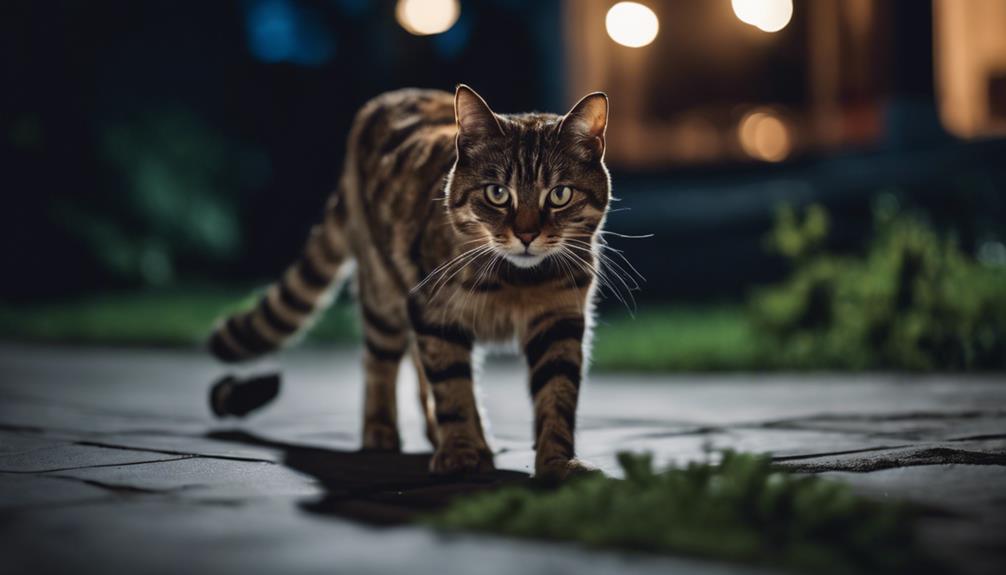
In comparing the sleep habits of domestic cats with those of big cats like tigers and pumas, notable distinctions arise, shedding light on their varied hunting strategies and behaviors.
Big cats like tigers are generally nocturnal hunters, while domestic cats exhibit crepuscular behavior. Pumas, a type of big cat, are more active during twilight hours, aligning with crepuscular habits like domestic cats.
The hunting patterns of big cats in the wild differ from domestic cats' crepuscular tendencies, influenced by their evolutionary roles. Both domestic and big cats display sleep patterns linked to their hunting instincts, with some big cats being more nocturnal than others.
Understanding these distinctions can provide insights into the diverse hunting strategies and behaviors of domestic and big cats.
Cat Nap Importance
Cat naps play an essential role in house cats' daily routines by allowing them to recharge and stay alert for potential threats. These short bursts of rest help maintain their energy levels and agility, mimicking the behavior of their wild ancestors during hunting sessions.
Understanding the benefits, timing, and duration of cat naps is important for ensuring that house cats are well-equipped for their crepuscular activities.
Benefits of Catnaps
Essential for maintaining feline vitality and responsiveness, catnaps play a pivotal role in the energy conservation and readiness of domestic cats. Cats' short, frequent naps during daytime hours aid in regulating their sleep-wake cycle, ensuring they stay alert and responsive to their surroundings.
The strategic use of catnaps allows cats to rest and recharge, preparing them for sudden hunting opportunities and play sessions. These brief periods of rest not only help in conserving energy but also enable cats to swiftly shift between states of rest and activity.
Overall, catnapping is critical for domestic cats to remain agile, attentive, and ready for their daily adventures.
- Regulates sleep-wake cycle
- Prepares for hunting opportunities
- Swift shift between rest and activity
Timing for Catnaps
Catnaps are strategically timed rest periods that play an essential role in maintaining the alertness and readiness of domestic cats throughout the day. Cats' sleeping patterns are adapted to the hours of daylight, with their crepuscular nature making dawn and dusk prime times for activity. These catnaps help cats conserve energy and stay prepared for their hunting instincts during these active periods. Cats spend most of their time in light sleep stages, allowing them to quickly respond to any changes in their environment. To highlight the significance of timing in catnaps, the table below illustrates the approximate distribution of a cat's nap durations throughout a 24-hour period.
| Time of Day | Duration of Nap |
|---|---|
| Morning | 20 minutes |
| Afternoon | 2 hours |
| Evening | 40 minutes |
| Night | 6 hours |
| Total | 9 hours |
Catnap Duration Tips
Strategically timing short rest periods throughout the day is essential for maintaining the alertness and readiness of domestic cats. Cats typically take multiple short naps, amounting to around 12 to 15 hours of sleep in a day. These catnaps play a vital role in helping cats stay prepared for potential predators and aiding in quick escapes. By ensuring that cats get enough rest during the day, they can remain active at night, utilizing their natural instincts for hunting and survival. It is important to provide a conducive environment for cats to sleep during the day, allowing them to recharge and be at their best when they are most active during nighttime hours.
- Cats require around 12 to 15 hours of sleep a day.
- Catnaps help cats stay alert and ready for potential threats.
- Adequate rest during the day enables cats to be active and efficient hunters at night.
Training Cats to Sleep at Night
To promote healthier sleeping habits in house cats, implementing a structured bedtime routine can be beneficial in training them to sleep at night. Engage in interactive play sessions with your cat before bedtime to encourage physical activity and tire them out, aligning with their natural nocturnal instincts.
Establishing a consistent sleep schedule helps regulate their internal clock, signaling that it's time to rest. Provide a comfortable and quiet sleeping area away from disturbances to encourage uninterrupted sleep. Avoid reinforcing nighttime wake-up calls by ignoring attention-seeking behaviors during the night, promoting self-soothing and independence.
Additionally, feeding your cat a small meal before bedtime can promote relaxation and aid in a restful night's sleep. By following these strategies, you can help your cat adjust to a healthier sleep routine.
Cat Sleep Cycles Explained
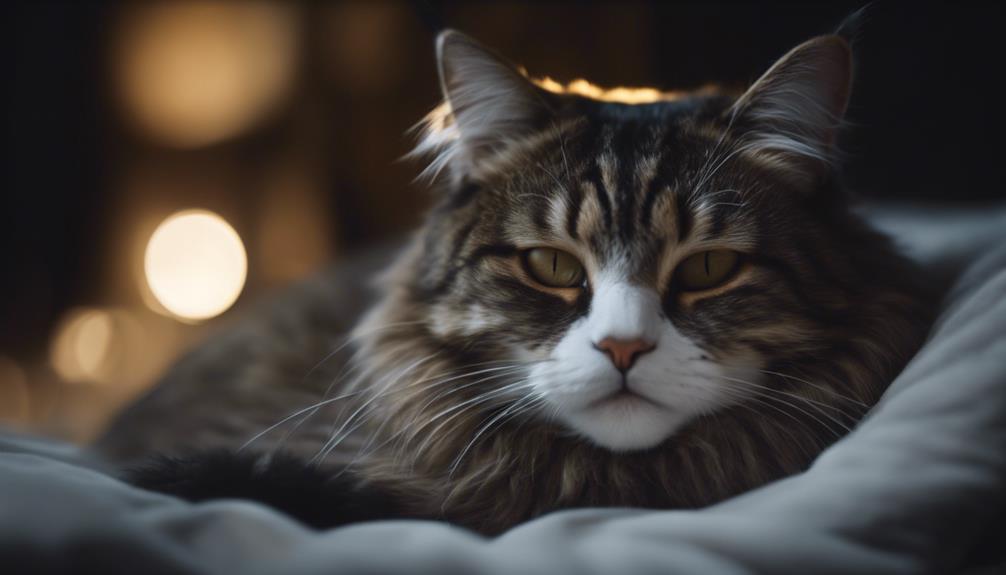
Exploring the intricate sleep cycles of house cats reveals their unique adaptation as polyphasic sleepers, strategically incorporating multiple rest periods within a 24-hour timeframe. Cats are known to nap for several hours throughout the day and night, adjusting their sleep cycles based on environmental factors.
They often experience deep sleep phases where they may dream, indicated by twitching whiskers and paws. Cats' ability to switch between light and deep sleep quickly allows them to stay alert, especially during dawn and dusk when they are naturally more active. This evolutionary trait guarantees they are prepared to hunt efficiently and remain vigilant against potential threats at all times.
- Cats nap for several hours throughout the day and night.
- They experience deep sleep phases where they may dream.
- Cats are naturally more active around dawn and dusk.
Are Nocturnal House Cats Happy and Fulfilled in an Indoor Environment?
Many people wonder about indoor cats happiness and fulfillment. While some nocturnal house cats may miss the outdoor environment, they can still find happiness and fulfillment indoors. Providing stimulating toys, interactive playtime, and a comfortable environment can help indoor cats lead happy and fulfilled lives.
Managing Life With Crepuscular Cats
Crepuscular cats require a structured routine to manage their unique activity patterns effectively. Engage in a play session throughout the day to keep your cat active and prevent excessive energy buildup before bedtime. It's essential to establish boundaries, such as keeping your cat out of the bedroom at night to avoid disturbances while you rest. Feeding your cat a meal before bedtime can help shift their focus towards digestion, promoting relaxation for sleep. Ignoring attention-seeking behavior, like early morning wake-up calls, can discourage your cat from staying awake at night. Providing access to essentials in a separate area of the house at bedtime can create a nighttime routine conducive to rest.
| Play Session Throughout the Day | Establish Boundaries at Night | Feed a Meal Before Bedtime |
|---|---|---|
| Keep your cat active during the day to prevent excessive energy buildup. | Avoid disturbances during the night by keeping your cat out of the bedroom. | Shift your cat's focus towards digestion and relaxation before sleep. |