
Yes, hyacinths are toxic to cats due to alkaloids like lycorine and oxalate crystals in the bulbs. Ingestion can lead to mouth and digestive irritation. Symptoms include vomiting, diarrhea, and oral discomfort, requiring immediate veterinary care. Prevent access by keeping them out of reach and promptly removing any fallen parts. Consider cat-safe plants as alternatives to guarantee a safe environment. If concerned about feline well-being and plant toxicity, understanding prevention methods is essential. Understanding the risks of toxic plants like hyacinths is important for cat owners.
Toxicity of Hyacinths to Cats
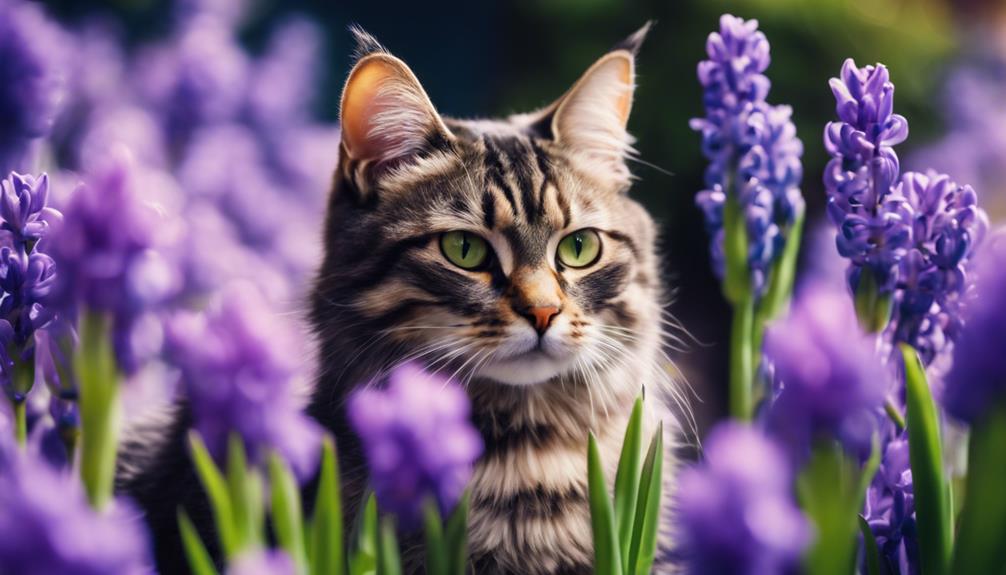
The significance of hyacinths to cats stems from the presence of alkaloids, particularly lycorine found in their bulbs and sap. These toxic plants contain insoluble oxalate crystals in their bulbs' brown outer layers, posing a risk to felines if ingested.
When a cat consumes hyacinths, the oxalate crystals can cause pain and irritation in the mouth, throat, and digestive tract. It is important to contact a veterinarian as soon as possible if a cat has ingested hyacinths to receive prompt treatment. Veterinarians can provide the necessary care to alleviate symptoms and prevent further complications from hyacinth poisoning.
Immediate attention is vital to ensure the well-being and health of the affected cat.
Symptoms of Hyacinth Poisoning
Symptoms of hyacinth poisoning in cats manifest as nausea, vomiting, diarrhea, and oral irritation. Immediate veterinary care is vital if these signs appear, especially if tremors or breathing difficulties develop.
To prevent poisoning, make sure cats cannot access hyacinths or other toxic plants in the household.
Common Poisoning Signs
Characterized by vomiting, diarrhea (sometimes bloody), depression, and tremors, common signs of hyacinth poisoning in cats indicate the presence of toxic principles within these flowers. These symptoms are triggered by the ingestion of parts of the hyacinth plant, containing toxic substances harmful to cats. The table below summarizes the common signs of hyacinth poisoning in cats:
| Common Signs | Description |
|---|---|
| Vomiting | Forceful expulsion of stomach contents |
| Diarrhea (sometimes bloody) | Loose, watery stool with blood traces |
| Depression | Lethargy, lack of interest in surroundings |
| Tremors | Involuntary trembling or shaking movements |
Understanding these signs can help cat owners identify potential hyacinth poisoning in their pets promptly, enabling them to seek immediate veterinary care.
Immediate Veterinary Care
Upon observing symptoms such as nausea, vomiting, and excessive drooling in cats exposed to hyacinth plants, immediate veterinary care is essential to address potential poisoning issues effectively. Skin irritation can also occur if a cat comes into contact with hyacinth plants.
If a cat ingests or chews on hyacinth plants, they may exhibit symptoms of poisoning. The bulbs of hyacinth plants are the most toxic parts. Immediate veterinary care is vital if severe symptoms like breathing and heart rate issues develop after hyacinth ingestion.
Recognizing these signs promptly and seeking professional help can make a significant difference in the cat's recovery from hyacinth poisoning. Veterinary intervention is necessary in managing symptoms and preventing further complications.
Preventing Access to Hyacinths
To effectively safeguard your feline companion from the potential dangers of hyacinth poisoning, proactive measures must be taken to restrict their access to these toxic plants. Keep hyacinths outside if your cat is strictly indoors to prevent access.
Avoid having hyacinths indoors where cats can easily reach them. Place the plant in an inaccessible location or hang it in containers from the ceiling in areas the cat cannot reach. It is essential to pick up fallen blooms or bulbs to prevent accidental ingestion by curious cats.
Consider alternative plants like Gloxinia, African Violet, Orchids, Boston Fern, and Polka Dot Plant that are safe for cats. By implementing these strategies, you can create a safer environment for your beloved feline friend.
Treatment for Hyacinth Toxicity
In cases of hyacinth toxicity in cats, immediate treatment focuses on stabilizing the animal and providing supportive care to address the ingestion of the toxic plant. This may involve removing plant material from the cat's mouth, inducing vomiting using hydrogen peroxide if necessary, and administering activated charcoal to help absorb toxins in the stomach. Supportive care includes monitoring the cat's essential signs such as heart rate and breathing, as well as providing medications as needed. Severe cases may require hospitalization for more intensive treatment. Below is a table summarizing the key aspects of treatment for hyacinth toxicity in cats:
| Treatment for Hyacinth Toxicity |
|---|
| Removal of plant material and induction of vomiting |
| Administration of activated charcoal |
| Monitoring essential signs and possible hospitalization |
Prevention Tips for Cat Owners
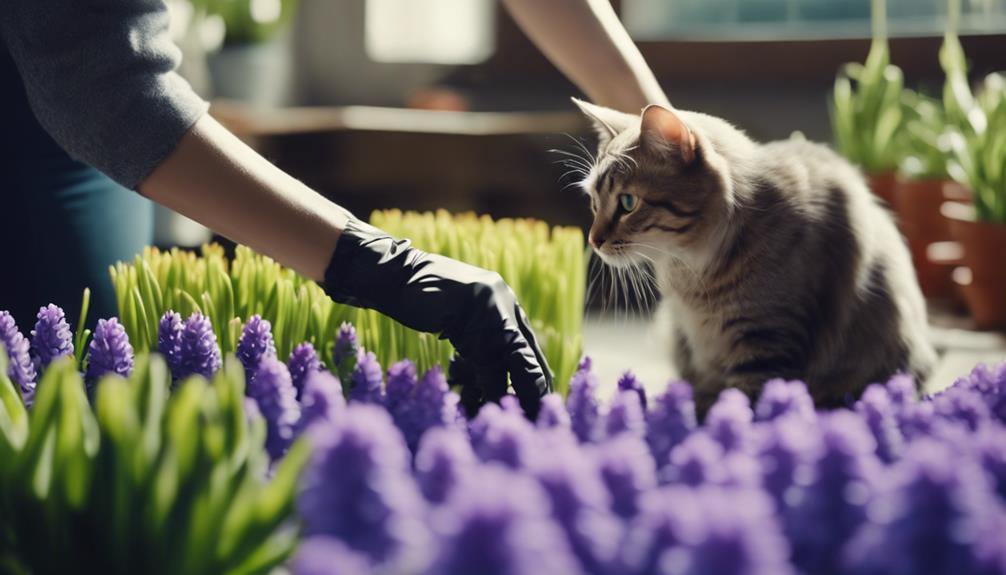
To prevent hyacinth toxicity in cats, it is vital for cat owners to explore plant-safe alternatives like Gloxinia, African Violet, Orchids, Boston Fern, and Polka Dot Plant.
Supervise outdoor access to make sure cats do not come into contact with potentially harmful plants.
Additionally, keep emergency contact information for a veterinarian handy in case of accidental ingestion.
Plant-Safe Alternatives
Considering the safety of your cat is crucial when selecting plant-safe alternatives like Gloxinia, African Violets, Orchids, Boston Ferns, and Polka Dot Plants to prevent potential poisoning incidents. These safe plants are non-toxic to cats, unlike Hyacinths that can lead to severe issues like kidney failure if ingested. By opting for these cat-friendly options, you can create a secure and pleasant environment for your pet, reducing the risk of accidental poisoning.
Prioritizing your pet's well-being by choosing non-toxic plants demonstrates responsible pet ownership and helps maintain a safe indoor or outdoor space for your feline companion. Researching and investing in safe alternatives ensures that your cat can enjoy a lush and green environment without compromising their health and safety.
Supervise Outdoor Access
For cat owners, guaranteeing the safety of their pets extends to supervising outdoor access to prevent potential encounters with toxic plants, such as hyacinths. It is vital to monitor cats closely while they are outdoors to make sure they do not ingest any harmful plant materials. Creating a safe outdoor environment for cats involves removing or keeping toxic plants out of reach.
Educating yourself about common toxic plants in your area can better protect your cat from accidental ingestion. Additionally, using deterrents like citrus sprays or barriers can help prevent cats from accessing potentially toxic plants while outdoors. By taking these preventive measures and supervising outdoor access, cat owners can reduce the risk of their feline companions coming into contact with substances that could be poisonous to cats.
Emergency Contact Information
In case of suspected hyacinth ingestion by a cat, immediate assistance can be sought by contacting the Animal Poison Control Center at (888) 426-4435.
It is important to act swiftly and contact your local veterinarian if you suspect your cat has ingested hyacinths. Keep in mind that there may be a consultation fee for advice on hyacinth poisoning in cats.
It's advisable to refer to a Toxic Plant Gallery List for further information on plants that are toxic to cats, such as hyacinths.
Raising awareness about toxic plants like hyacinths can greatly contribute to the safety and well-being of pets. Remember, quick action is crucial in cases of potential toxicity, so don't hesitate to seek emergency assistance if needed.
Safe Alternatives to Hyacinths
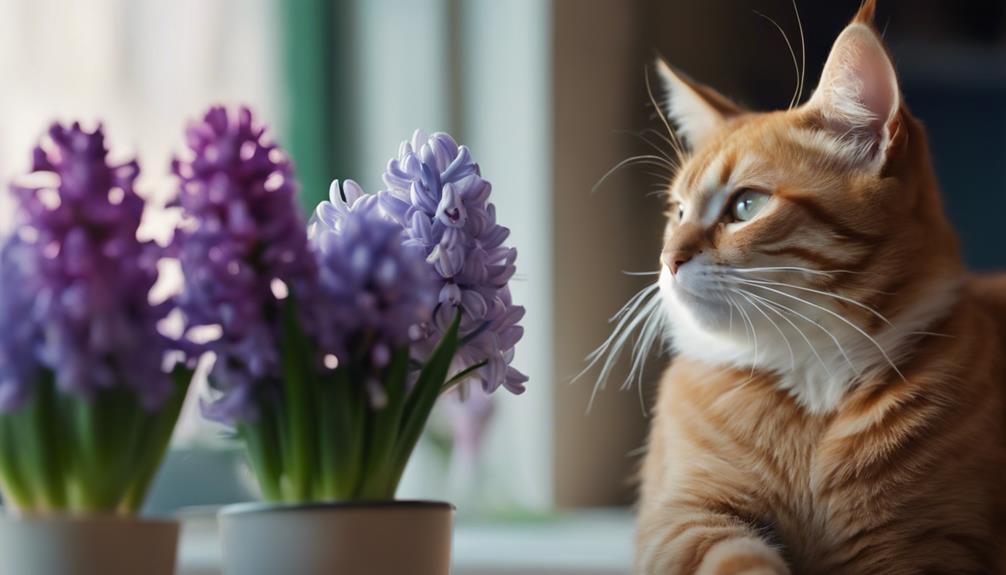
When searching for safe alternatives to hyacinths for cats, it is important to explore plants such as Gloxinia, African Violet, Orchids, Boston Fern, and Polka Dot Plant.
These options are considered safe, non-toxic, and pet-friendly, making them ideal choices for cat owners looking to create a cat-friendly environment.
By opting for these non-toxic alternatives, you can guarantee your feline companion's well-being and avoid the risks associated with toxic plants like hyacinths.
Selecting safe plants is vital in preventing accidental poisoning and health issues in cats, thereby promoting a healthy and secure living space for your pet.
Researching and choosing these safe alternatives will help you maintain a harmonious and safe environment for your beloved feline friend.
Can Hyacinths Harm My Cat if I Don’t Cat-Proof My House?
It’s important to consider tips for cat proofing house to keep your pets safe. Hyacinths are toxic to cats if ingested, so it’s crucial to keep them out of reach. Place plants in high, inaccessible areas and secure any toxic substances to prevent accidents.
Conclusion and Final Recommendations
Considering the risks associated with toxic plants like hyacinths, prioritizing the well-being of your feline companion becomes essential when making choices for your indoor garden.
To keep your cat safe from hyacinth poisoning, it is important to understand the potential dangers associated with different parts of the plant and take necessary precautions.
In severe cases of ingestion, hyacinths can lead to life-threatening symptoms, highlighting the importance of proactive measures in ensuring your cat's safety. Remember that immediate veterinary attention is essential if your cat shows any signs of poisoning.
Implementing preventive strategies, such as avoiding toxic plants like hyacinths and opting for cat-safe alternatives, can greatly reduce the risk of harm to your beloved pet.