
Jade plants are toxic to cats. Ingestion can lead to severe symptoms and even be fatal. The harmful compounds in the plant are unidentified. Even minimal consumption, like chewing on leaves, can cause poisoning. Symptoms include oral irritation, drooling, vomiting, and more. Immediate veterinary care is essential. Preventing access to jade plants is vital to cat safety. Understanding the risks and symptoms can help protect your pet's health. Further information on diagnosis, treatment, and prevention can provide valuable insights for cat owners.
Toxicity of Jade Plants to Cats
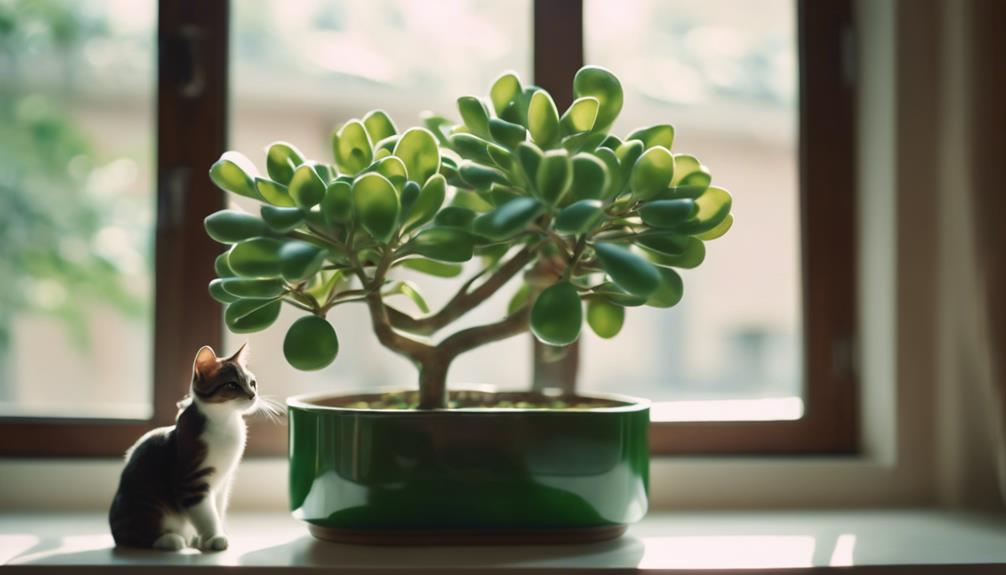
Jade plants pose a significant risk of toxicity to cats, potentially leading to severe symptoms and even fatal consequences if ingested. The toxic principles in jade plants responsible for harming cats remain unknown, underscoring the importance of preventing feline exposure to any part of the plant.
Even minimal ingestion, such as chewing on the leaves, can result in poisoning, as the highest levels of toxicity are concentrated in the leaves. Swift veterinary intervention is vital when jade plant poisoning is suspected in cats, as untreated cases can prove fatal.
Prompt diagnosis and appropriate treatment greatly improve the prognosis for cats affected by jade plant toxicity, highlighting the critical role of quick action in mitigating the dangers associated with this toxic plant.
Symptoms of Jade Plant Poisoning
When cats are exposed to jade plants, the symptoms of poisoning can manifest in various ways, indicating the potential seriousness of the toxicity. Cats that have ingested the leaves of the jade plant may experience oral irritation, leading to symptoms such as excessive drooling. Other common signs of jade plant poisoning in cats include vomiting, loss of muscle function, slow heart rate, depression (such as lack of grooming and lethargy), increased aggression, and hiding behavior. Immediate veterinary attention is essential if jade plant ingestion is suspected in cats to prevent serious health issues. Below is a table summarizing some symptoms of jade plant poisoning in cats:
| Symptom | Description |
|---|---|
| Oral Irritation | Irritation in the mouth leading to discomfort |
| Excessive Drooling | Uncontrolled drooling beyond normal amounts |
| Vomiting | Forceful expulsion of stomach contents |
Causes of Jade Plant Toxicity in Cats
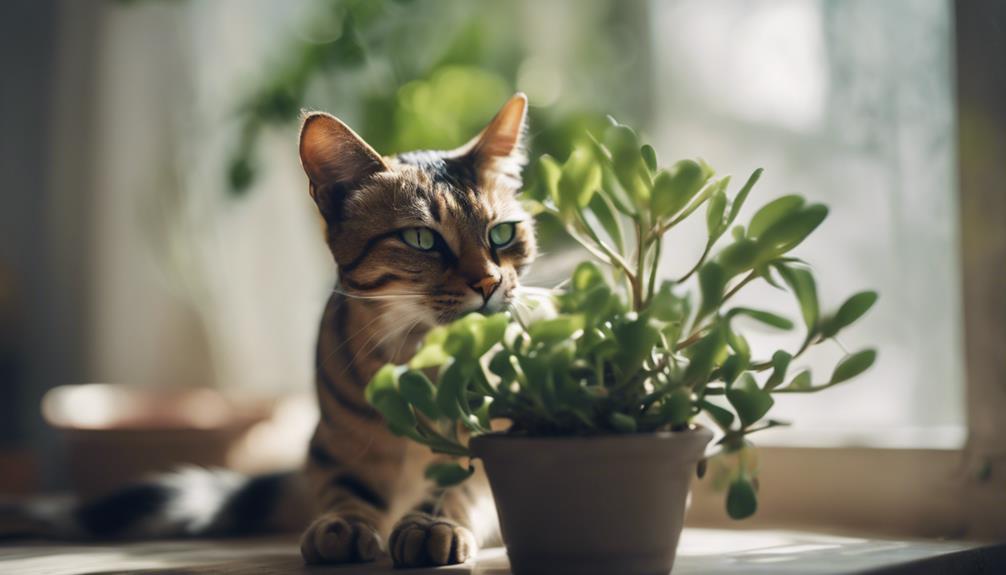
Toxicity in cats caused by jade plants is attributed to unidentified toxic compounds present within the plant. When cats ingest any part of the jade plant, they are at risk of poisoning, with the leaves containing the highest levels of toxicity.
Even chewing on the leaves can lead to poisoning in cats, and the exact quantity of plant ingestion needed for toxicity is unknown. If a cat is suspected of ingesting a jade plant, immediate veterinary attention is vital to prevent serious health complications.
Understanding the potential dangers of jade plants to cats and being vigilant about keeping these plants out of reach can help protect feline companions from accidental ingestion and poisoning.
Diagnosis and Treatment for Cats
Diagnosis and treatment for cats affected by jade plant poisoning involve immediate veterinary intervention and targeted therapeutic measures to mitigate potential health risks. Upon suspecting jade plant ingestion, informing the vet promptly is essential. Providing plant samples, detailing ingestion amounts, and describing symptoms aid in diagnosis. Standard diagnostic tests such as blood and urine analysis help assess the poisoning. Additional testing may be necessary based on specific symptoms exhibited.
Treatment may include inducing vomiting, administering activated charcoal, and providing IV fluid therapy for dehydration. Prompt diagnosis and treatment are critical for a better prognosis and recovery from jade plant poisoning in cats. Veterinarians play a crucial role in identifying and addressing toxic plant exposures to safeguard the well-being of feline companions.
Are Jade Plants and Hostas Equally Harmful to Cats?
Yes, both jade plants and hostas can be harmful to cats if ingested. While jade plants contain a toxic substance that can cause vomiting, hostas contain saponins and other chemicals that can also be poisonous to cats. It’s important to keep both plants out of reach of feline friends. Are hostas poisonous to cats? The answer is yes.
Prevention of Jade Plant Poisoning
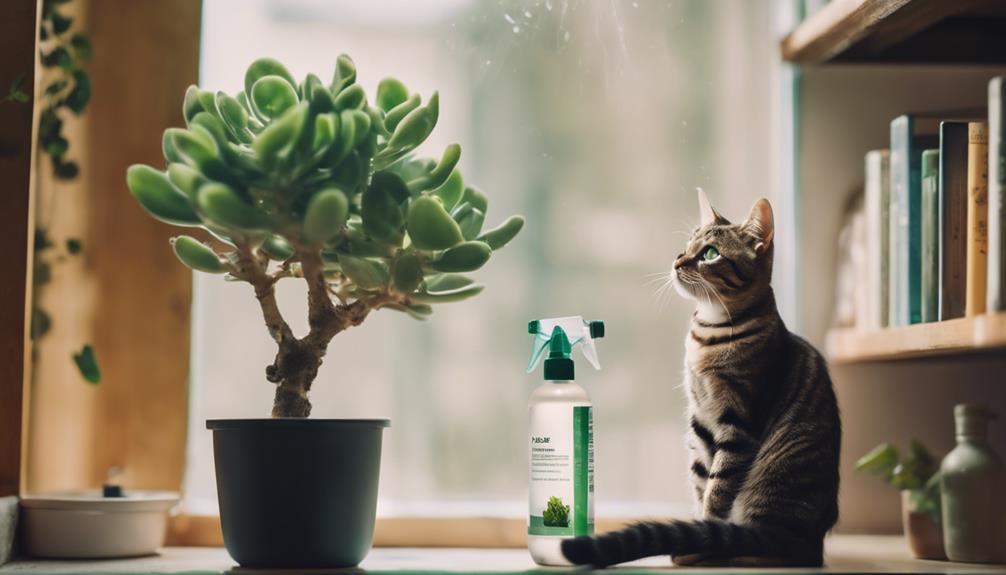
To safeguard cats from jade plant poisoning, proactive measures should be taken to prevent accidental ingestion. Place jade plants in areas inaccessible to cats, such as hanging them or putting them on elevated surfaces. Train cats to avoid house plants or use deterrents to prevent chewing. Monitoring cats closely around jade plants and intervening if they show interest in chewing is crucial.
Regularly inspect the environment to confirm that jade plants remain safely out of reach for cats. By implementing these preventive measures, the risk of jade plant poisoning can be greatly reduced, promoting a safe environment for both cats and house plants.