
Ladybugs are generally non-toxic to cats, but large quantities can cause mouth ulcers and stomach irritation. Asian lady beetles pose a higher risk if ingested. Symptoms of ladybug poisoning in cats include gastrointestinal discomfort, lethargy, and vomiting. Various ladybug species differ in toxicity levels, with orange ladybugs being most toxic. Ingestion may lead to mouth ulcers, gastrointestinal issues, and potential stomach problems. Pesticides on ladybugs can heighten the risk. Avoiding ladybug exposure and seeking veterinary help if ingestion occurs are essential. Understanding different ladybug species and their potential harm to cats is important for feline safety.
Potential Health Risks for Cats
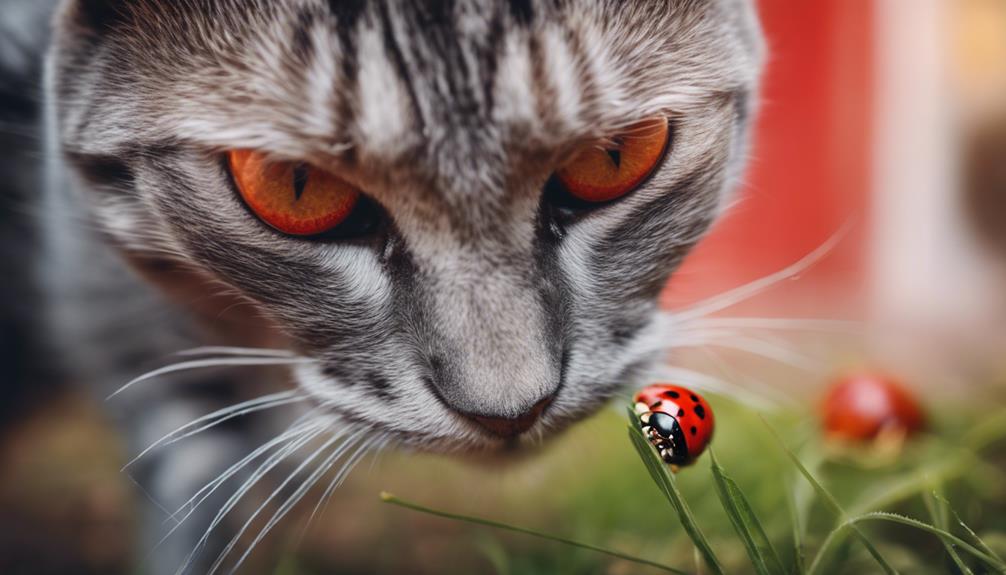
When considering the potential health risks for cats related to consuming ladybugs, it is important to note that while ladybugs are generally non-toxic to cats, ingestion in large quantities can lead to mouth ulcers and gastrointestinal irritation.
Asian lady beetles, often mistaken for ladybugs, pose a greater risk as they can be harmful to cats if ingested to a considerable extent. Symptoms of poisoning in cats from ladybugs may manifest as gastrointestinal discomfort, lethargy, and vomiting. Cats may develop an aversion to ladybugs due to their unpleasant taste, which could deter further consumption.
Although serious health risks from consuming ladybugs are rare in cats, it is advisable to monitor for any unusual symptoms and seek veterinary attention if needed to safeguard the well-being of the feline companions.
Signs of Ladybug Poisoning in Cats
Although ladybugs are generally considered non-toxic to cats, it is important to recognize the signs of potential poisoning in feline companions if they ingest these insects. Signs of ladybug poisoning in cats may manifest as follows:
- Drooling: Excessive drooling beyond normal levels could indicate that the cat has ingested something that is causing irritation in their mouth or digestive system.
- Vomiting: Cats may vomit after ingesting ladybugs as their bodies try to expel the foreign substance. Persistent vomiting warrants immediate attention.
- Behavioral Changes: Keep an eye out for any unusual behavior in your cat, such as lethargy, agitation, or disorientation, as these could be signs of poisoning.
If you observe any of these signs after your cat has ingested ladybugs, seek veterinary assistance promptly.
Ladybug Species Toxicity Levels

Different ladybug species vary in toxicity levels to cats. Orange ladybugs are the most toxic, followed by two-spotted red and pine ladybugs.
Understanding these toxicity levels is crucial for pet owners to guarantee the safety of their feline companions.
Ladybug Toxicity Levels
Among the various species of ladybugs, orange ladybugs are particularly the most toxic to cats. When it comes to toxicity levels in ladybugs affecting cats, the following species are worth noting:
- Two-Spotted Red Ladybugs: Known to have high toxicity levels for cats.
- Pine Ladybugs: These black ladybugs are also considered toxic to cats.
- Large Brown Ladybugs: Among the various ladybug species, these are the least toxic for cats.
Understanding the toxicity levels of different ladybug species can help pet owners take necessary precautions to protect their feline companions from potential harm. It is important to be aware of the risks associated with certain ladybugs when cats are around.
Harmful Effects on Cats
Orange ladybugs, two-spotted red ladybugs, and pine ladybugs pose varying levels of toxicity to cats, with orange ladybugs being the most harmful. When a cat eats one of these toxic ladybug species, it can experience harmful side effects. The ingestion of ladybugs can lead to mouth ulcers, gastrointestinal irritation, and potential stomach issues or cuts due to their tough exoskeleton. Additionally, pesticides on ladybugs further increase the risk, potentially causing symptoms like lethargy and vomiting if ingested. While allergic reactions in cats to ladybugs are rare, the fluids and pesticides present on ladybugs are more likely to cause illness than the ladybugs themselves. Here is a table illustrating the toxicity levels of different ladybug species to cats:
| Ladybug Species | Toxicity Level to Cats |
|---|---|
| Orange Ladybug | High |
| Two-Spotted Red Ladybug | Moderate |
| Pine Ladybug | Moderate |
| 14-Spot Yellow Ladybug | Low |
Safety Measures for Pets
When considering the safety of pets in relation to the varying toxicity levels of different ladybug species, it is essential to implement preventive measures to protect cats from potential harm.
Safety Measures for Pets:
- Avoid Exposure: Keep cats away from areas where ladybugs are prevalent to reduce the risk of ingestion.
- Regular Monitoring: Check surroundings for ladybugs, especially in gardens or areas treated with pesticides, to prevent accidental ingestion.
- Consult a Veterinarian: If a cat shows symptoms of ingesting ladybugs or is known to have done so, seek immediate veterinary attention for proper diagnosis and treatment.
Preventing Cat-Ladybug Interactions

To guarantee your cat's safety and minimize interactions with ladybugs, consider using cat-friendly ladybug deterrents such as natural repellents like lavender and chrysanthemums.
Creating a safe play environment for your cat by sealing exterior cracks, installing screens on roof vents, and repairing damaged window frames can effectively reduce the risk of cat-ladybug interactions.
Strategically using light traps to catch ladybugs and disposing of them safely can further diminish the chances of your cat ingesting these insects.
Cat-Friendly Ladybug Deterrents
How can cat owners effectively prevent interactions between their feline companions and ladybugs within their home environment? Here are some cat-friendly ladybug deterrents:
- Seal Exterior Cracks: Prevent Asian lady beetles from invading your home by sealing exterior cracks and entry points where they might enter. This simple step can help keep ladybugs out of your living space and away from your cat.
- Install Screens on Roof Vents: By adding screens to roof vents, you can create a barrier that keeps ladybugs out while still allowing ventilation. This method guarantees a safe environment for your cat while deterring ladybugs from entering your home.
- Use Light Traps: Strategically place light traps to catch ladybugs and remove them from areas accessible to your cat. This technique helps control ladybug populations indoors, reducing the chances of your cat encountering them.
Safe Play Environments
To enhance the safety of indoor play environments for cats and prevent potential interactions with ladybugs, proactive measures such as sealing exterior cracks and using natural repellents can effectively deter these insects from entering areas where felines engage in playful activities.
Sealing entry points and installing screens on roof vents are essential steps to keep ladybugs out of the house and away from cats. Regularly checking and repairing damaged vents and window frames further prevents ladybugs from gaining access to play areas.
Natural repellents like lavender and chrysanthemums can be strategically placed around cat play areas to deter ladybugs. Additionally, using light traps to catch and dispose of ladybugs helps minimize interactions with cats in safe play environments.
Managing Ladybug Infestations Safely
When addressing ladybug infestations in your home, prioritize the use of pet-friendly products to guarantee the safety of your cats.
Here are three key strategies to manage ladybug infestations safely:
- Seal off entry points: Prevent Asian ladybugs from entering your home by sealing off cracks and gaps where they could potentially infiltrate.
- Use natural deterrents: Consider planting lavender and chrysanthemums around your property, as these plants can act as natural repellents to keep ladybugs at bay.
- Dispose of traps carefully: If you use ladybug traps, make sure they are promptly disposed of to avoid any accidental ingestion by your feline companions.
Identifying Asian Lady Beetles

In light of the potential risks that Asian lady beetles pose to pets like cats, it is important to accurately identify these larger beetles with distinct features. These features include red or orange coloring, numerous black spots, and a characteristic white mark on their heads resembling an M shape. Asian lady beetles differ from traditional ladybugs by being more aggressive and capable of biting, making them harmful to pets.
Identifying Asian lady beetles becomes essential, especially during fall and winter when they can invade homes and potentially interact with cats. While ladybugs and Asian lady beetles share similarities in appearance, the distinguishing traits of larger size, increased black spots, and the unique white mark help in recognizing the harmful beetles. Awareness of these features aids in protecting pets from potential encounters.
Difference Between Ladybugs and Asian Lady Beetles
Having distinct features that set them apart, ladybugs and Asian lady beetles exhibit notable differences in behavior and physical characteristics. When considering the safety of cats and pets, understanding these disparates is essential for proper vigilance.
- Aggression: Asian lady beetles, unlike regular ladybugs, can be more aggressive and may bite, posing a potential danger to cats if provoked or threatened.
- Physical Appearance: Distinguishing features of Asian lady beetles include more black spots and a white mark resembling an M shape, making them easily confused with harmless ladybugs.
- Habitat: Asian lady beetles are known pests that can invade homes in fall and winter, increasing the likelihood of cat exposure to these potentially harmful insects.
Are Plants and Insects Poisonous to Cats?
When it comes to irises and cats safety, it’s important to be cautious. Some plants, like irises, can be toxic to cats if ingested. Similarly, some insects may also pose a threat to feline friends. It’s essential to keep a watchful eye on your cats and ensure they stay away from potentially harmful plants and insects.
Insecticides and Cat Safety
In order to ensure the safety and well-being of cats, it is essential to exercise caution and proper handling when using insecticides. Overuse of insecticides can be toxic to cats, leading to serious health issues. Toxic poisoning in cats can result from exposure to insecticides on their paws or through dog flea treatments. Signs of toxic poisoning from insecticides in cats include fever, vomiting, and respiratory problems. It is important to handle insecticides cautiously to prevent harm to cats. Immediate veterinary attention is necessary if a cat shows signs of toxic poisoning from insecticides.
| Insecticide Safety Tips for Cats | ||
|---|---|---|
| 1. Use cat-safe insecticides | 2. Keep cats indoors during spraying | 3. Store insecticides out of reach |
| 4. Follow instructions carefully | 5. Monitor cats for any unusual symptoms |