
Cats paw at their water bowls for several reasons. They might be mimicking flowing water, which is more appealing to them. Pawing can also help alleviate whisker fatigue, especially if the bowl is shallow. Additionally, this behavior can stem from stress or anxiety, where cats assert territorial boundaries. Sometimes, it's just playful behavior for mental stimulation. However, pawing can also indicate underlying illnesses, so monitoring their water intake is vital. Understanding these reasons can help you better care for your feline companion.
Mimicking Flowing Water
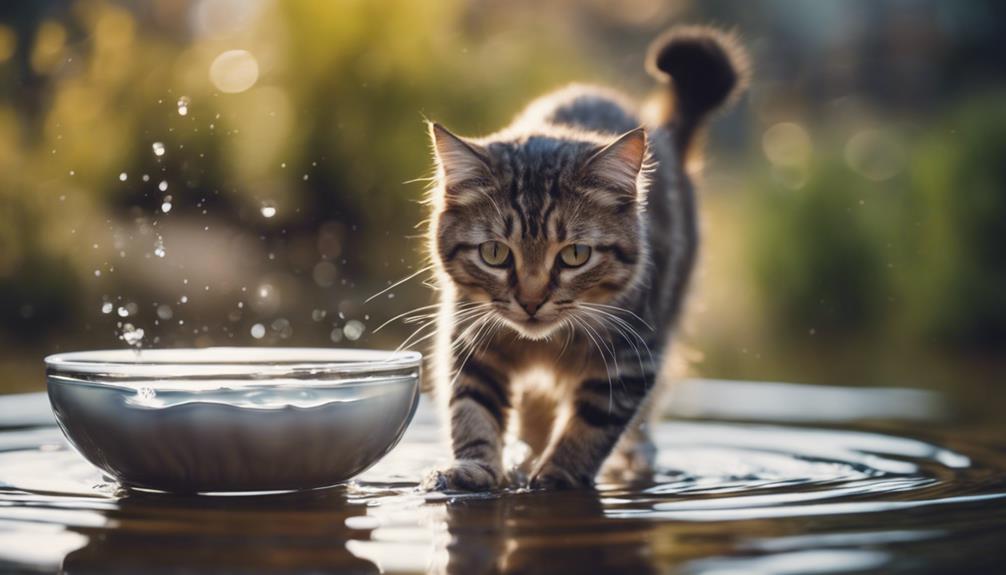
Have you ever wondered why cats seem to prefer running water over stagnant water in their bowls?
Cats have a natural inclination towards flowing water, as it mimics the fresh and moving water sources they encounter in the wild.
Providing a water fountain can cater to this preference, encouraging cats to drink more.
Mimicking flowing water helps reduce whisker discomfort and makes hydration a more enjoyable experience for felines.
Whisker Fatigue
Whisker fatigue in cats can lead to discomfort or pain due to their sensitive whiskers. Eating from deep, narrow bowls may exacerbate this issue by pushing their whiskers backward.
To prevent whisker fatigue, using shallow, wide bowls, like the Dr. Catsby's Whisker Relief Bowl, can offer relief to our feline friends.
Whisker Sensitivity Explanation
Sensitive nerve endings in a cat's whiskers play a crucial role in their spatial awareness and environmental perception. Deep or narrow water bowls can lead to discomfort and sensory overload, causing whisker fatigue.
Cats may paw at water to alleviate this discomfort. Using shallow, wide bowls like the Whisker Relief Bowl can help prevent whisker fatigue, providing a more comfortable drinking experience for felines.
Pawing Behavior Reasons
When cats experience whisker fatigue due to narrow or deep water bowl designs, they may exhibit pawing behavior as a coping mechanism to alleviate discomfort and sensory overload.
- Pawing at water helps avoid whisker overstimulation.
- Shallow, wide bowls can alleviate whisker discomfort.
- Specialized bowls like Dr. Catsby's Whisker Relief Bowl prevent whisker fatigue.
Preventing Whisker Fatigue
Experiencing discomfort or pain while eating can be a common issue for cats when using deep, narrow food or water bowls. To prevent whisker fatigue, consider using wider, shallow bowls for your cat's meals.
Stainless Steel bowls are a good choice as they are wide and shallow, reducing the chances of whisker discomfort.
Observing your cat's behavior around food and water bowls can help identify and address any whisker fatigue issues promptly.
Stress and Anxiety
Stress and anxiety are common issues that can affect cats, often leading to various behavioral changes. Symptoms of stress in cats may present as excessive grooming or aggression, while anxiety can manifest as territorial behaviors.
Managing these conditions may involve therapy and adjustments to the cat's environment to help alleviate their stress and reduce unwanted behaviors.
Causes of Stress
One of the primary indicators of stress in cats includes the manifestation of various behaviors such as excessive grooming, aggression, and dilated pupils.
Changes in environment and lack of mental stimulation, as well as medical conditions, can contribute to stress and anxiety in cats, leading to behaviors like pawing at the water bowl as a coping mechanism.
Understanding these causes is crucial in addressing and reducing stress-related behaviors in felines.
Managing Anxiety
Addressing and managing anxiety in cats involves implementing strategies to create a calming and secure environment conducive to their well-being. Stress and anxiety can lead to behaviors like pawing at water bowls, excessive grooming, or aggression.
Signs such as dilated pupils, aggression, and excessive meowing may indicate anxiety. Therapy, environmental changes, and providing a safe space are essential in managing feline stress and anxiety effectively.
OCD Behavior
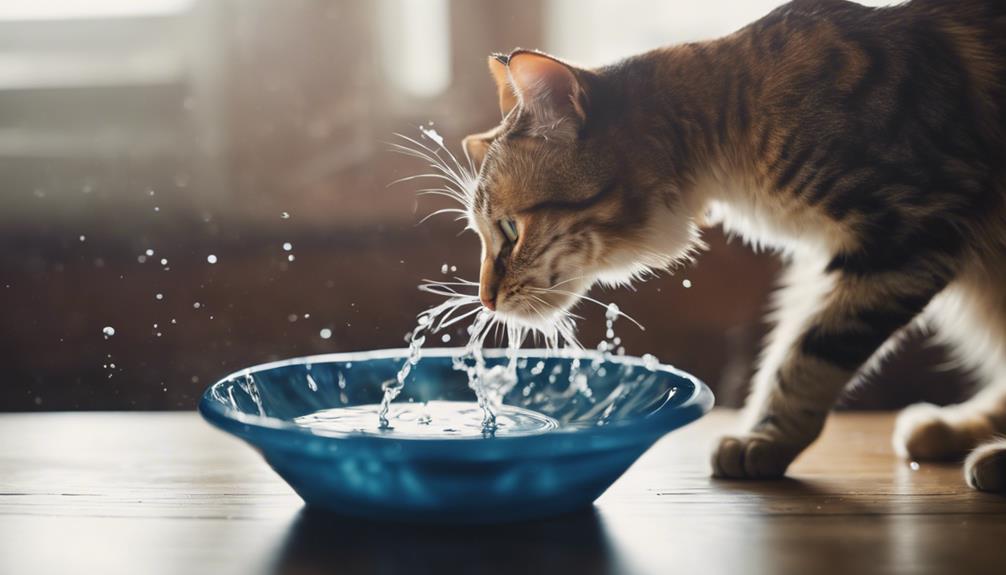
OCD behavior in cats, characterized by repetitive actions such as excessive pawing at the water bowl, is a condition that requires careful observation and management.
Key Points:
- Environmental stressors can trigger OCD behaviors.
- Consultation with a veterinarian is essential for proper diagnosis.
- Creating a calm and predictable environment can help reduce repetitive behaviors.
Territorial Instinct
In understanding feline behavior, it is important to recognize that cats may paw at their water bowls as a manifestation of their territorial instincts.
This behavior serves as a way for cats to mark their ownership and establish boundaries, especially in multi-cat households.
Providing separate food and water bowls can help address territorial issues and reduce conflicts related to pawing behavior, promoting harmony among feline companions.
Playful Behavior
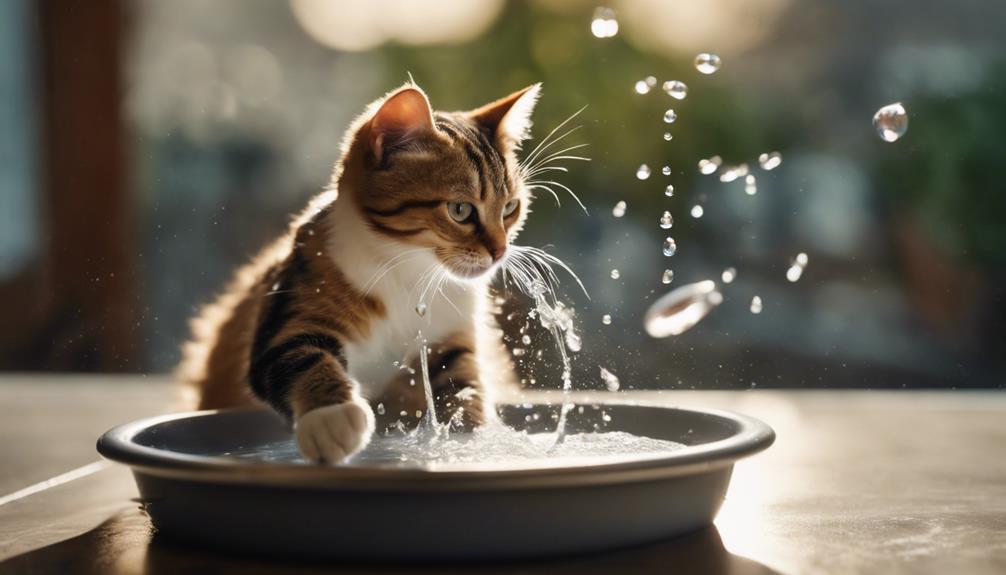
Engaging in playful antics, cats may exhibit a charming habit of pawing at their water bowls as a form of entertainment and enrichment. This behavior can be intriguing to observe and offers insight into a cat's playful nature. Additionally, this behavior might stem from their natural curiosity or an instinct to explore their environment in unique ways. While it can sometimes make a bit of a mess, understanding why cats move their water bowl can offer valuable clues about their preferences or even their need for mental stimulation. By observing these actions, pet owners can better cater to their feline’s desires and create an engaging, satisfying environment.
Some reasons why cats engage in such behavior include:
- Entertainment: Cats find joy in interacting with water.
- Engagement: Pawing at water provides mental stimulation.
- Enrichment: Playful activities contribute to a cat's overall well-being.
Illness Indication
One potential concern associated with cats pawing at their water bowls is the indication of underlying illnesses, such as Feline Diabetes. Monitoring water intake and abnormal behaviors is vital in detecting such underlying health concerns early.
Increased thirst and unusual actions around the water bowl should prompt a veterinary visit. Addressing medical issues promptly can greatly improve the overall health and well-being of the cat.
Checking Water Level
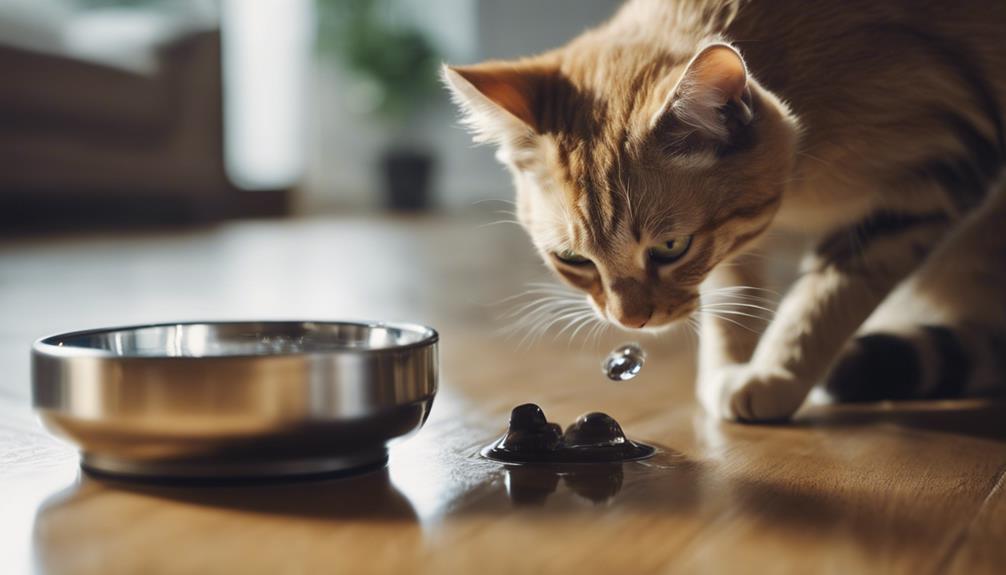
When observing cats pawing at their water bowls, it becomes evident that this behavior serves the purpose of verifying the water level to guarantee ideal drinking conditions.
- Cats paw to check the water depth.
- Pawing helps gauge movement and cleanliness.
- It may be a way for cats to interact with their water source.