
Cats may chew on fingers due to teething discomfort in kittens, learned comforting habits, or playful behavior. Teething starts around 9 weeks, leading to increased chewing. Behavioral causes include exploration, stress, boredom, and seeking attention. It could indicate dental problems, nutritional deficiencies, oral pain, gastrointestinal issues, or parasites. Offering chew toys, interactive play, and supervision can help. Redirecting through positive reinforcement and introducing stimulating toys is key. If you're puzzled by your cat's finger chewing, understanding these reasons can guide you in addressing this behavior effectively.
Reasons for Finger Chewing Behavior in Cats
Cats exhibit the behavior of chewing on fingers for various reasons, ranging from teething discomfort in kittens to learned comforting habits in adult cats.
Some cats chew on fingers as a playful behavior influenced by training and upbringing. Providing appropriate chew toys and interactive play can help redirect finger chewing in cats of all ages.
Training adult cats to refrain from finger chewing may require more patience and consistency compared to training kittens.
Teething in Kittens and Cats
Teething in kittens and cats is a natural process that typically begins around 9 weeks of age, as their adult teeth start to emerge. Signs of teething include increased chewing behavior and drooling as cats seek relief from gum discomfort.
Providing appropriate teething toys and consulting a vet for pain management can help kittens and cats navigate this developmental stage with comfort and care.
Teething Process in Kittens
During the early stages of a kitten's development, a noticeable shift in behavior may occur as they experience the natural teething process. Teething in kittens typically begins around 9 weeks of age.
Kittens may chew on fingers to alleviate discomfort from growing teeth. Providing soft rubber teething toys can help soothe kittens during this stage.
Consulting a vet for teething-related pain management is advised to guarantee the kitten's well-being.
Signs of Teething
Around 9 weeks of age, kittens may display signs of teething discomfort, such as drooling and increased chewing behavior. Teething in kittens is a natural process where their baby teeth start to emerge, causing irritation and pain.
To help alleviate this discomfort, providing appropriate chew toys made of soft rubber can be beneficial. Monitoring for signs of teething discomfort and offering suitable toys can assist in managing this phase effectively.
Managing Teething Behavior
To effectively address and manage teething behavior in kittens and cats, understanding the natural process of dental development is essential.
Teething in kittens typically starts around 9 weeks of age, causing discomfort and a need for chewing to alleviate pain. Providing soft rubber teething toys can help kittens relieve gum pain during this phase.
Signs of teething discomfort include drooling and increased chewing behavior, warranting a vet consultation for proper care.
Behavioral Causes of Finger Chewing
Chewing on fingers by cats can often stem from various behavioral reasons. These include teething discomfort, exploratory behavior, stress, boredom, and attention-seeking tendencies. Cats may chew fingers when teething, typically around 9 weeks old. It can also be a way for cats to explore their surroundings.
Stress, boredom, or seeking attention from their owners can also drive cats to chew on fingers. Providing suitable toys and enrichment can help curb this behavior.
Health Issues and Finger Chewing
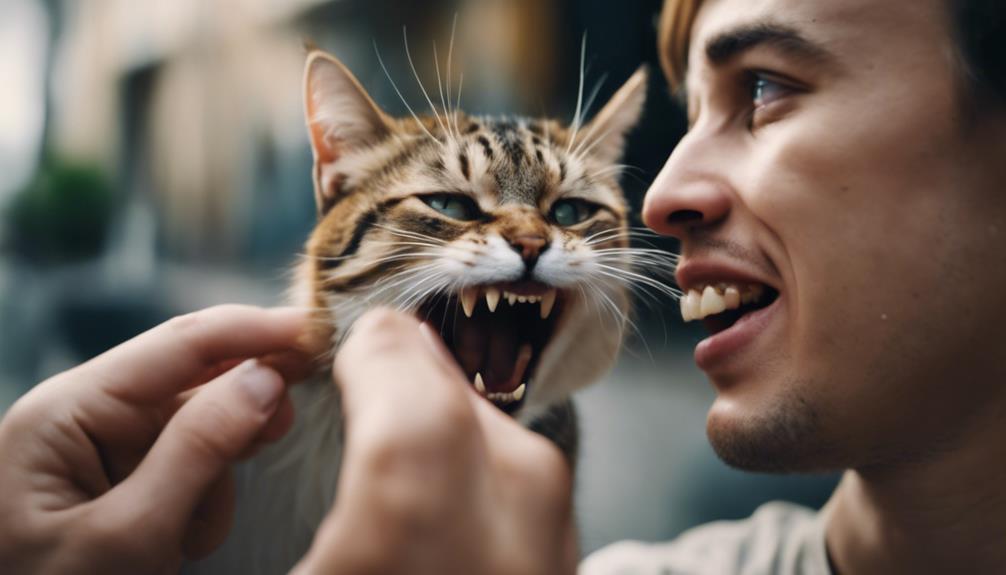
Finger chewing behavior in cats can be indicative of underlying health issues that warrant attention and investigation. Dental problems like gingivitis or tooth decay, nutritional deficiencies, oral pain from ulcers or infections, gastrointestinal issues such as inflammatory bowel disease, and parasites like fleas or mites can lead to cats chewing on fingers.
A balanced diet and prompt veterinary evaluation are essential in addressing these potential health concerns.
Redirecting Finger Chewing Behavior
To effectively redirect finger chewing behavior in cats, it is essential to provide them with appropriate chew toys as an alternative to fingers.
Interactive toys with different textures and scents can help shift their focus from nibbling on fingers.
Supervising their behavior and offering suitable outlets for chewing can discourage this habit and promote healthier interactions.
Training to Stop
Training your cat to stop chewing on fingers involves redirecting this behavior towards appropriate chew toys. Using positive reinforcement techniques, consistency, and supervision during playtime are essential. Positive reinforcement can help train your cat to stop the behavior, while providing alternatives like chew toys.
Consistently redirecting the behavior and engaging with your cat can effectively deter finger chewing habits. Teaching boundaries and using gentle corrections also play an important role in stopping finger chewing.
Offer Chew Toys
Introducing a range of stimulating and safe chew toys is a strategic approach to redirecting your cat's propensity for finger chewing.
- Provide chew toys with different textures, scents, and sounds.
- Supervise playtime and encourage appropriate chew toy use.
- Offer soft rubber teething toys for teething kittens.
Distract With Play
Engage your cat with interactive toys featuring diverse textures and scents to effectively redirect their finger chewing behavior. During a play session, supervise and redirect their focus onto these toys. Offering a variety of options can keep your cat mentally stimulated and discourage finger chewing.
Soft toys are ideal for teething kittens, providing gum relief and preventing finger chewing habits. Consistent redirection and positive reinforcement help in shaping appropriate chewing behavior.
Is My Cat’s Fast Eating Habit Related to its Chewing on My Fingers?
It’s common for cats with fast eating habits to also chew on fingers. This behavior could be related to your cat’s understanding cat eating habits. Some cats may exhibit this behavior out of excitement or as a means of play, while others may do it as a sign of affection.
Is My Cat Chasing Me a Sign of Playful Behavior or Aggression?
When it comes to understanding cat chasing behavior, it’s important to pay attention to cues. If your cat’s pursuit is accompanied by a relaxed body posture and playful demeanor, it’s likely a sign of playful behavior. However, if the pursuit appears intense or aggressive, it may indicate a different intention.
Tips to Prevent Finger Chewing
To deter finger chewing behavior in cats, providing appropriate chew toys with various textures is an effective method.
- Introduce interactive toys to engage your cat during playtime.
- Use positive reinforcement when your cat chooses toys over fingers.
- Offer teething toys for kittens to alleviate discomfort and discourage finger nibbling.