
Cats may knock over water bowls out of boredom or to seek attention. They might view the bowl as a toy, leading to spills. Factors like water freshness, bowl size, and location can contribute to this behavior. Providing fresh water daily and using wide, shallow bowls can help prevent spills. Understanding common feline behaviors like paw drinking and whisker sensitivity can aid in choosing suitable water bowls. Cats are attracted to running water due to their hunting instincts, leading to playful behavior. Addressing these reasons can assist in effectively preventing water bowl spills. Additional insights can guide you in catering to your cat's hydration needs better.
Reasons for Water Bowl Spills
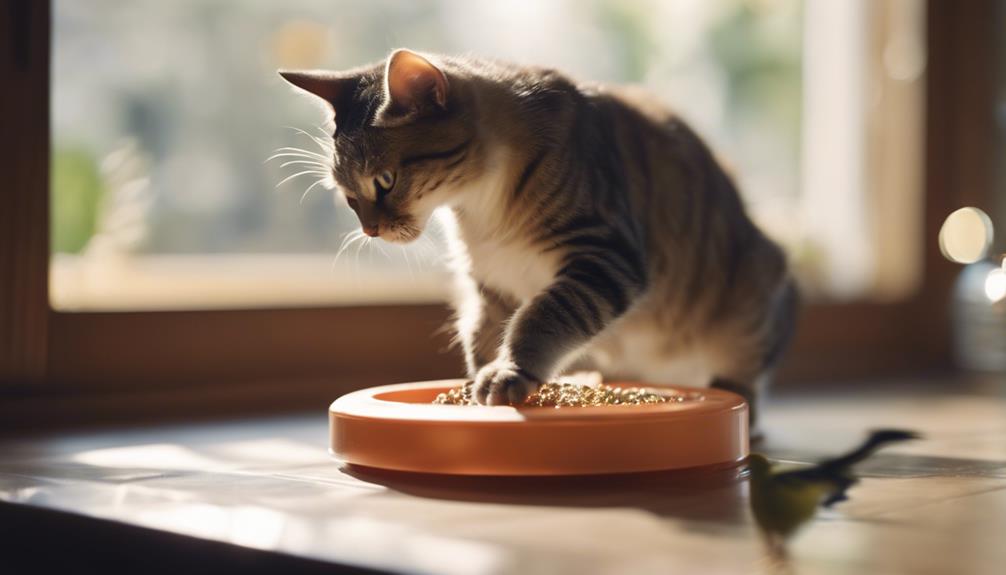
Frequently, cats may knock over water bowls for various reasons, such as boredom, attention-seeking behavior, or a perception of the bowl as a toy. Factors like water freshness, bowl size, shape, and location play a role in a cat's interaction with the water bowl.
Providing fresh water daily and using a wide, shallow bowl with a solid base can help prevent spills, addressing these common feline behaviors.
Preference for Running Water
Cats' attraction to running water stems from their natural hunting instincts and the stimulation it provides. The movement and freshness of running water can mimic prey and trigger playful behavior in cats.
Understanding this preference can help pet owners provide more engaging water sources for their feline companions, potentially reducing water bowl spills and keeping cats hydrated.
Running Water Attraction
In the world of feline hydration preferences, the allure of running water stands out as a significant factor influencing a cat's drinking habits. Cats are naturally drawn to running water as it is often fresher, mimicking the streams or rivers where they feel safe to drink. The movement and sound of running water also attract cats, making it easier for some to drink compared to stagnant bowl water.
| Running Water Attraction | |
|---|---|
| – Fresher water | – Mimics natural streams |
| – Sound attracts cats | – Easier to drink from |
Natural Hunting Instinct
Exhibiting a primal inclination rooted in their hunting ancestry, felines inherently gravitate towards running water as a preferred source of hydration.
The sound and movement of water mimic natural streams or rivers where cats would drink, appealing to their instinctual drive for survival.
This preference explains why a cat keeps playing with the water and why providing a water source that mimics running water can satisfy their natural hunting instinct while encouraging hydration.
Playful Behavior Motivation
Evidenced by their tendency to prefer running water over stagnant sources, felines' inclination towards playful behavior is notably motivated by their instinctual yearning for dynamic hydration options.
Cats' preference for interacting with running water leads them to play with water sources, including tipping over still water bowls. Providing a water fountain mimics their natural attraction to flowing water, reducing the likelihood of cats knocking over stagnant water bowls.
Reflections and Whisker Sensitivity
Revealed through their behavior, cats may knock over water bowls due to a combination of factors such as reflections and whisker sensitivity.
Cats, mistaking their reflections for other felines, might react by toppling the water bowl. Additionally, the sensitivity of their whiskers can cause discomfort when they touch the bowl's edges.
Understanding these aspects can help in selecting suitable bowl designs to prevent whisker stress and spills.
Paw Drinking Behavior
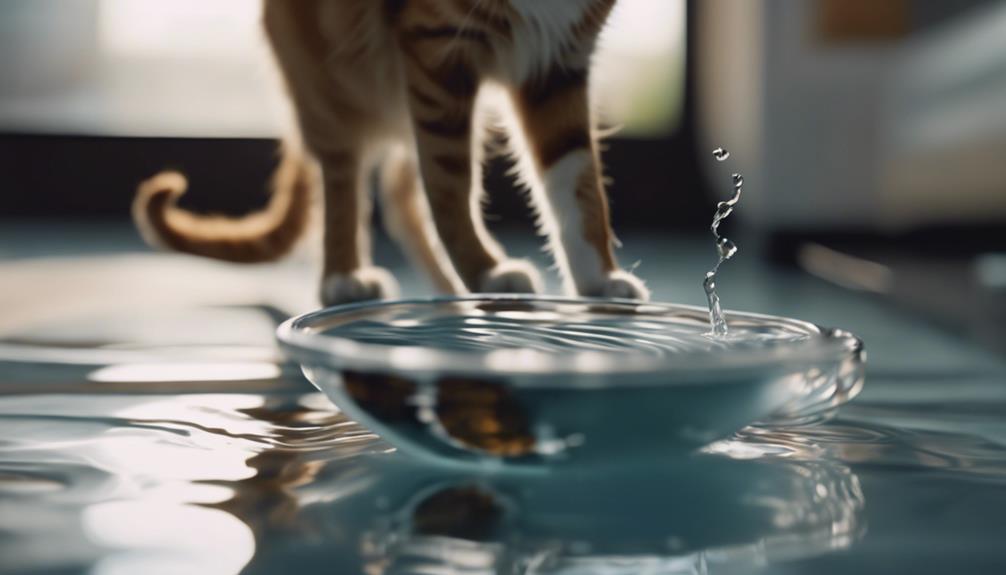
Paw drinking behavior in cats involves dipping their paws into the water before consuming it, often seen in cats averse to putting their faces directly into water. This habit can be a way for cats to assess the water level in the bowl or to prevent whisker stress, especially in cats with sensitive whiskers. This quirky behavior may also stem from a cat’s natural curiosity or playfulness, as they instinctively interact with their environment through touch. Additionally, the movement caused by their paw in the water could mimic the appearance of running water, which some cats find more enticing to drink. Understanding why cats paw at water can provide insight into their preferences and help owners adapt their pet’s drinking setup for comfort and ease.
Additionally, some cats exhibit playful splashing behavior with their paws as they engage with the water surface, indicating a preference for interaction when drinking.
Paw Dipping Habit
One of the intriguing behaviors exhibited by cats when it comes to water consumption is their natural inclination to use their paws as a means of testing water depth or even drinking.
- Paw dipping is a natural behavior where cats use their paws to test water depth or to drink.
- Cats may paw the water to create ripples, making it easier for them to see and drink.
- Paw drinking behavior is more common in cats that prefer running water sources.
- Some cats develop a preference for paw drinking due to whisker sensitivity or discomfort with traditional drinking methods.
- Understanding paw dipping habits can help in selecting suitable water bowl designs to accommodate this behavior.
Water Surface Attraction
Cats' attraction to the surface of water, particularly their habit of using their paws to drink, sheds light on their unique approach to hydration and preference for interactive drinking experiences.
Some cats exhibit paw drinking behavior, scooping up fresh water from a water dish to control flow and meet preferences for temperature or texture. This behavior may indicate a desire for a more engaging way to hydrate, seeking stimulation through interactive drinking.
Playful Splashing Behavior
Engaging in a playful splashing behavior, some felines exhibit a unique drinking habit that involves dipping their paws into the water bowl and subsequently licking the water off.
- Paw drinking behavior resembles playful splashing.
- This behavior is common in cats with sensitive whiskers.
- Paw drinking can be interactive for cats.
- Cats create ripples for visual stimulation.
- Interactive water features cater to this behavior.
Difficulty Locating Water Surface
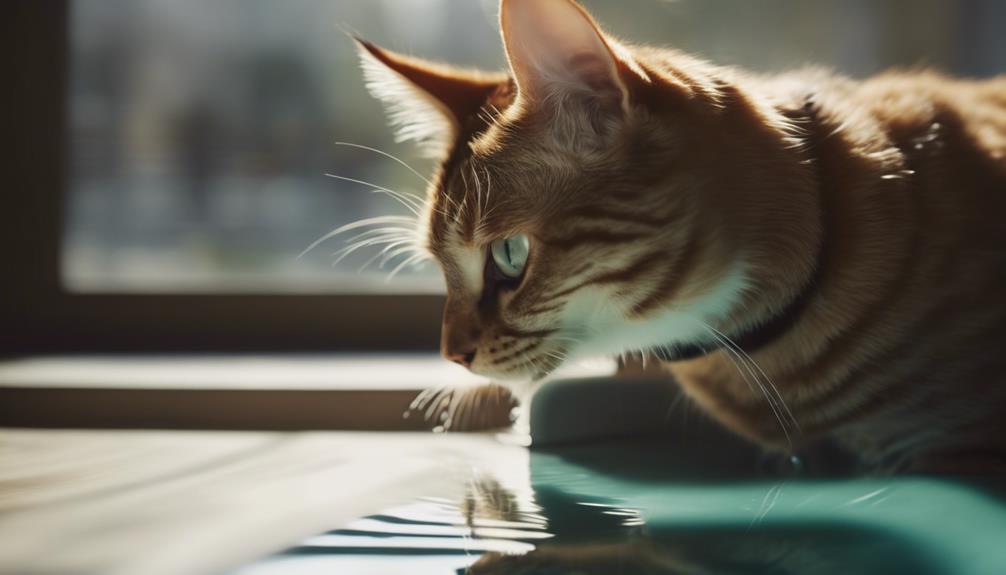
Having trouble locating the water surface is a common issue that can lead cats to knock over their water bowls. Cats may struggle with deep or narrow bowls, making it challenging to reach the water or causing spills. Reflections or ripples on the surface can confuse them, increasing the likelihood of accidental spills.
Using wide, shallow bowls or adding a floating ball can help cats visually identify the water level and prevent tipping over the bowl.
Preventing Spills With Alternative Options
To address the challenge of cats knocking over water bowls, implementing alternative options can effectively prevent spills and provide a more stable drinking experience for feline companions.
- Using a water fountain for continuous flow
- Placing a rubber mat under the bowl
- Opting for a wide, shallow bowl
- Adding ice cubes or chilled water
- Providing multiple water sources in different areas
Solutions to Avoid Water Bowl Spills
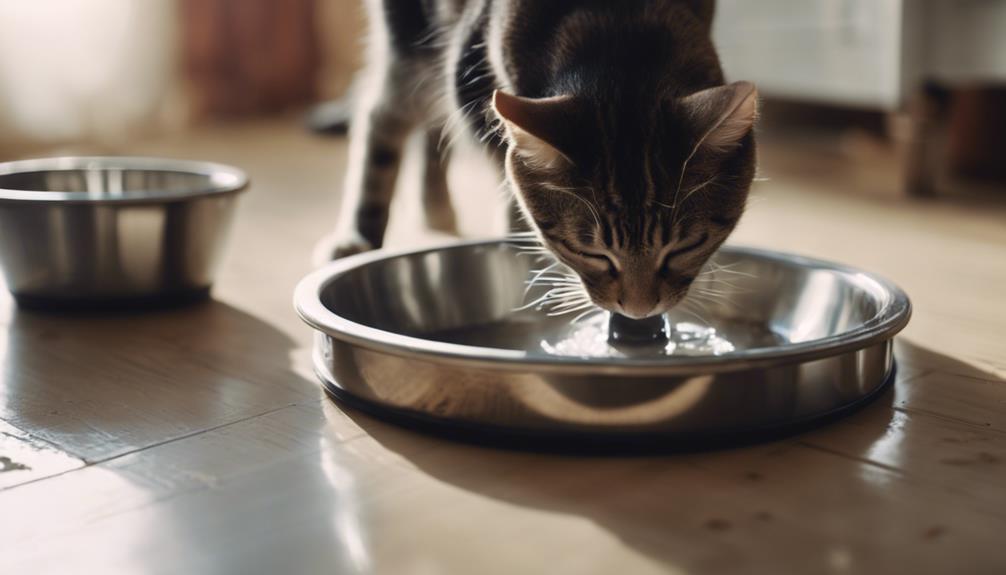
Implementing strategic measures can effectively mitigate the issue of water bowl spills caused by cats' behavior.
Use heavy, stable bowls or attach them to the floor to prevent tipping.
Provide mental stimulation with interactive toys to reduce boredom.
Place water bowls in quiet, safe locations to avoid stress triggers.
Consider wide, shallow bowls with solid bases to deter tipping.
Avoid reinforcing the behavior by not responding to incidents and focus on positive attention-seeking activities.