
Cats stare at their owners as a way to communicate messages, emotions, and needs. It can be a form of seeking attention, expressing affection, or indicating curiosity. Through intense gazing, cats convey their emotional states, rooted in their hunting instincts. They use stares to reflect their feelings of fondness, security, and desire for interaction. By understanding a cat's body language and responding to their intense gaze, owners can strengthen their bond with their feline companions. Each stare holds a deeper meaning, showcasing the intricate ways cats express themselves.
Reasons Cats Stare at Humans
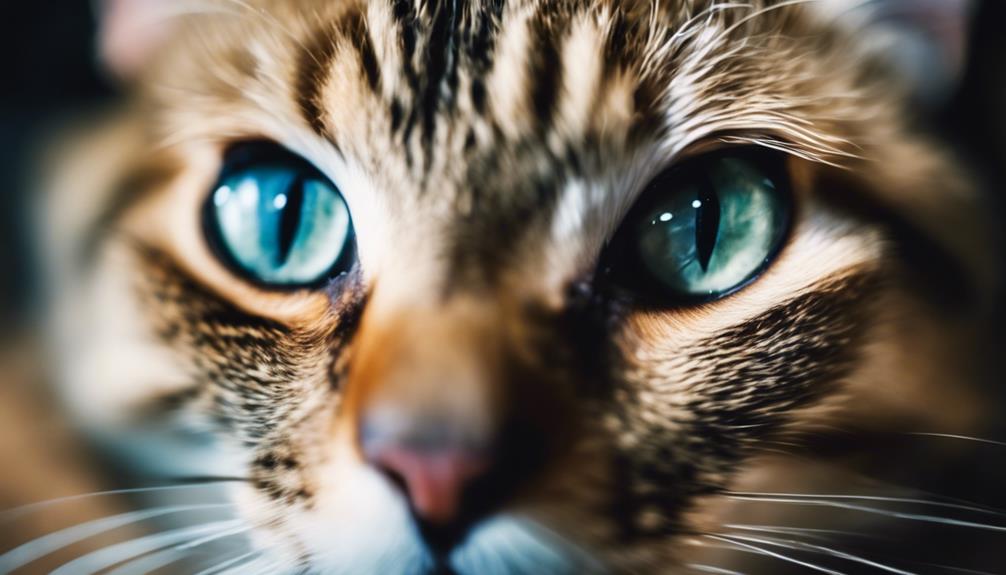
Cats frequently engage in prolonged gazes towards humans as a means of conveying various messages and emotions. Staring is a common behavior in cats, used to communicate needs, seek attention, or express affection. In addition to staring, cats also exhibit other forms of non-verbal communication such as vocalizations, body language, and physical affection. Understanding and recognizing these signals can help strengthen the bond between cats and their human companions. Another key aspect of cat behavior during sleep is their preference for safe and secluded spaces, reflecting their instinct for security and rest. Cats often seek out quiet, enclosed areas to nap, such as under furniture or in cozy nooks. This behavior stems from their need for a sense of security, and providing comfortable sleeping spots can help cats feel more at ease in their environment.
It can also signify a desire to play, request food, show fear or anxiety, establish a bond, seek comfort, or indicate their emotional state. Understanding cat body language and staring behavior is essential for interpreting their intentions accurately.
Seeking Attention Through Staring
When cats engage in prolonged gazes towards humans, it is often a way for them to seek attention and interaction. This behavior is a form of communication where cats express their desire for engagement, whether it be playtime, petting, or affection. By understanding and responding to your cat's stares, you can strengthen the bond between you and your pet.
| Cat Stares | Seeking Attention |
|---|---|
| Communication | Playtime |
| Interaction | Petting |
| Engagement | Affection |
| Bond Strengthening |
Curiosity and Cat Stares
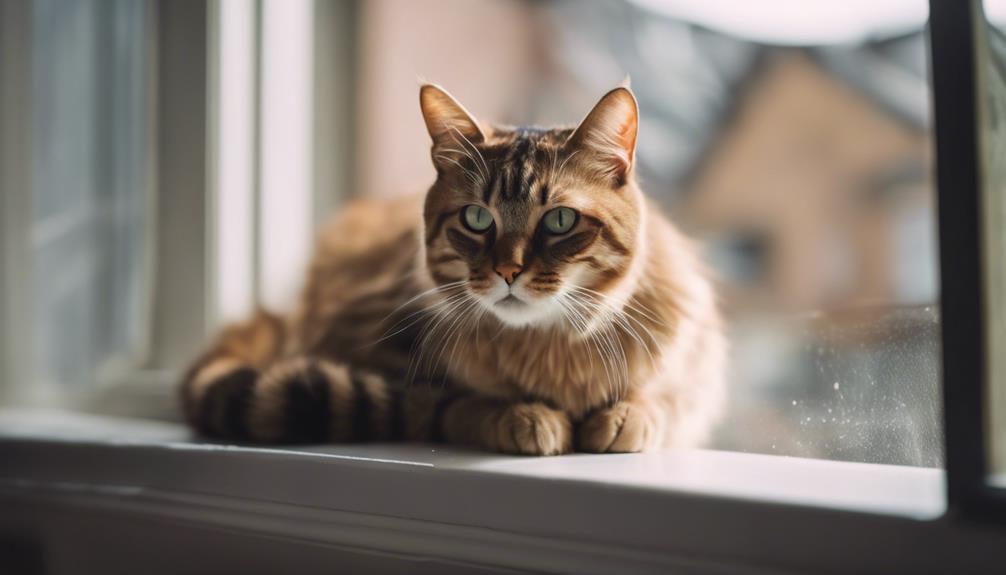
Cats' curiosity often manifests through their intense stares, as they focus on observing human movements and behaviors. This behavior allows cats to gather information about their environment and the actions of their owners.
Feline Gaze Communication
The way felines gaze at their human companions serves as a key aspect of their communication method, reflecting their curiosity and emotional expressions. Cats use staring and eye contact to connect with their owners, express affection, seek attention, or indicate a desire for playtime. Understanding these subtle cues can help decipher a feline friend's intentions and emotional state effectively.
| Staring | Eye Contact | Feline Friend |
|---|---|---|
| Curiosity | Communication | Emotions |
Seeking Attention or Affection
A common behavior exhibited by felines towards their human companions is the act of staring, often signaling a desire for attention or affection.
Reasons for Cat Stares:
- Seeking attention through meowing and slow blinking.
- Showing affection by indicating comfort and safety.
- Curiosity-driven behavior, observing human activities with interest.
Communication Through Intense Gaze
Engaging in silent dialogue, cats convey their emotions and intentions through the intensity of their gaze. Cat staring can signify various emotional states, including affection or stress.
This behavior is rooted in their hunting instincts, aiding in tracking prey and evaluating surroundings. Understanding the reasons behind cat staring helps interpret their needs and desires more effectively, enhancing communication between cats and their owners.
Affection Displayed by Cat Staring
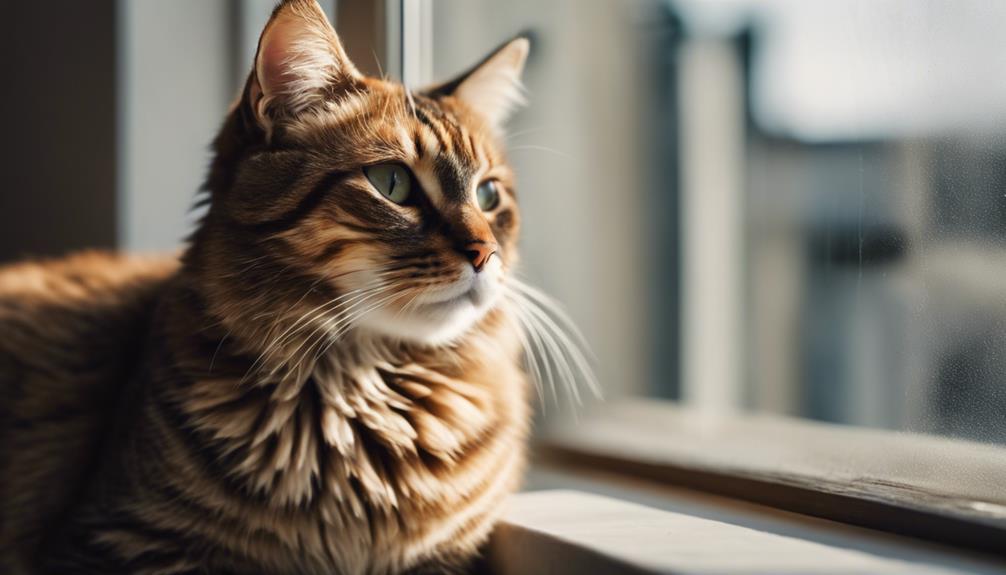
Expressing fondness and security, cats demonstrate affection through their gentle gazes and deliberate blinks.
Key Points:
- Cats body language includes soft eye contact and slow blinks.
- Affectionate staring signifies feeling safe, comfortable, and bonded.
- Staring conveys the need for attention and closeness through non-verbal communication.
Understanding Cat's Body Language
Interpreting a cat's behavior through its body language provides valuable insights into its emotional state and intentions. Tail position, ear movement, and eye contact are key indicators.
Purring may signal contentment or a desire for attention, while dilated pupils could suggest excitement, fear, or aggression. Slow blinking indicates trust and relaxation.
Understanding these cues is a good idea for grasping a cat's emotions and intentions accurately.
Deciphering Cat's Staring Behavior
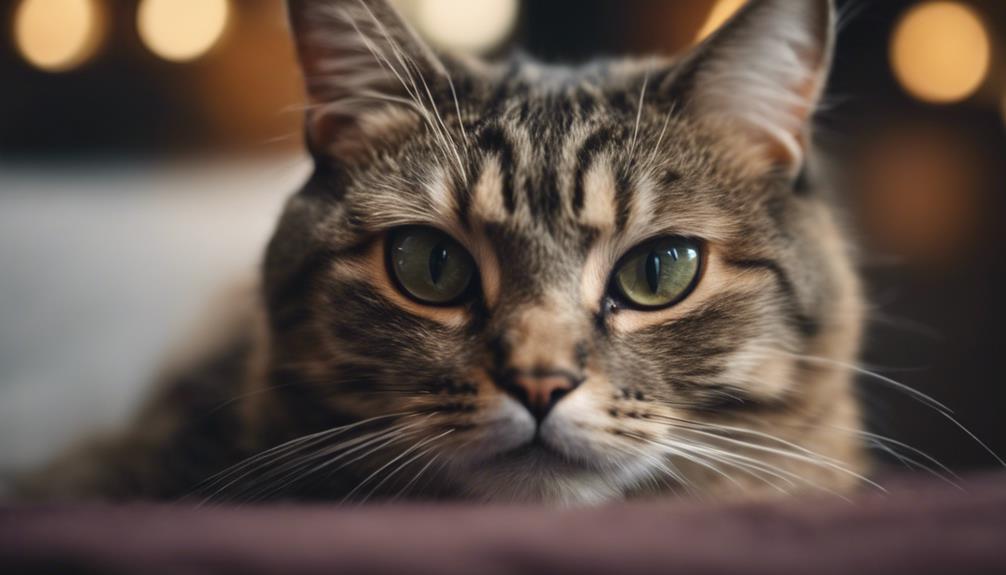
Cat's staring behavior serves as a significant indicator of their emotional state and needs, reflecting a range of sentiments from affection to aggression.
- Your cat is relaxed when staring with slow blinks or half-closed eyelids.
- Reasons why your cat engages in a staring contest include seeking attention, play, food, fear, affection, or aggression.
- Understanding your cat's body language while staring is vital for accurate interpretation.
Responding to Cat's Intense Gaze
When faced with your cat's intense gaze, it's important to respond appropriately to maintain a positive relationship. Understanding the nuances of cat communication through their eyes and body language is key.
Cat's Communication Through Eyes
Utilizing eye contact, cats effectively communicate their emotions and intentions to both owners and other felines.
Key Points:
- Cats staring can convey a range of emotions and needs.
- Responding with soft eye contact can build trust.
- Intense gaze may signal a desire for attention or connection.
Understanding Body Language Cues
Interpreting a cat's intense gaze, especially when accompanied by dilated pupils, provides valuable insights into the feline's current emotional state and intentions. The body posture, tail position, and the intensity of the stare all play a role in understanding a cat's mood or intention. Additionally, responding with a slow blink can communicate trust and affection in cat language, strengthening the bond between you and your feline friend.
| Body Posture | Intense Cat Gaze | Slow Blinking |
|---|---|---|
| Tail position and stance offer clues about mood | Understanding emotions like fear, stress, or playfulness | Sign of trust and affection in feline communication |
Building Trust With Cat
In responding to a cat's intense gaze, utilizing slow blinks can convey trust and affection, fostering a stronger bond between you and your feline companion.
Understanding your cat's body language is essential in responding appropriately to their intense stare.
Avoid staring directly back at your cat, especially if they seem annoyed or frightened.
Maintain a calm and relaxed demeanor when responding to your cat's intense stare.
Strengthening Bond Through Cat Stares
Strengthening the bond between cats and their owners can be facilitated through the non-verbal communication of cat stares. Mutual understanding is established when cats exhibit slow blinks and relaxed body language, indicating affection and trust.
Engaging in eye contact with cats can deepen the emotional connection and provide a sense of security. Responding positively to cat stares, whether seeking comfort or expressing affection, fosters a deeper relationship and enhances mutual understanding.