
Cat hiding after a move to a new home is common. It stems from insecurity in an unfamiliar environment. To help, create safe spaces with hiding spots like cat trees. Understanding their need for security is vital. Cats might feel stressed and anxious due to changes in routine, scents, and noises. Providing familiar resources like litter boxes is comforting. Let cats adjust naturally by giving them quiet rooms with familiar items. Loud noises can amplify stress. Offering patience and support is key. By addressing these factors, cats can shift smoothly. Additional insights await on ways to further support your feline friend.
Reasons for Cat Hiding Behavior
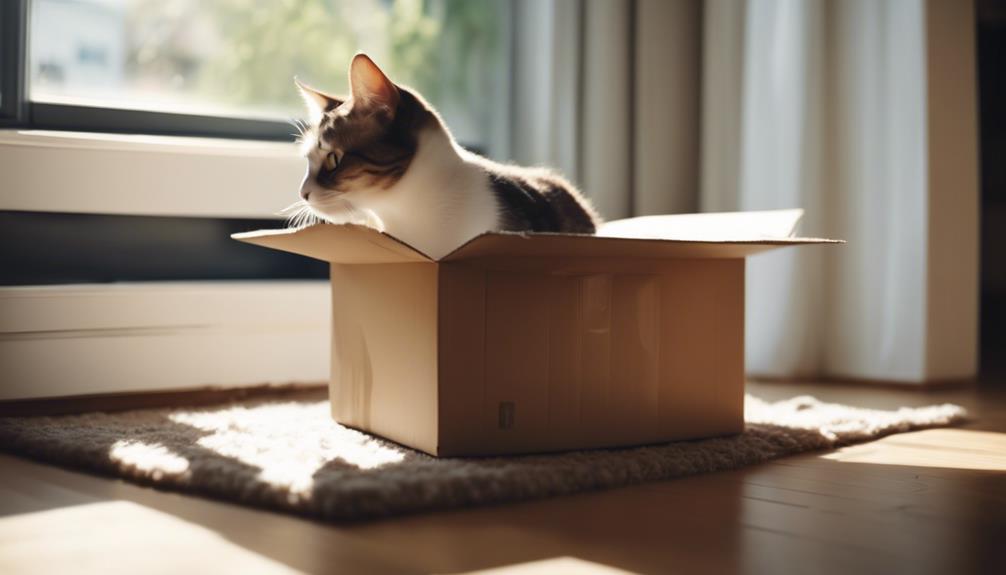
Cats often exhibit hiding behavior after moving to a new home primarily due to feelings of insecurity in an unfamiliar environment.
Creating a safe space can help your cat adjust to their new surroundings. Providing hiding spots, such as cat trees or cozy blankets, allows cats to feel safe as they explore and acclimate to their new territory.
Understanding and respecting your cat's need for a secure environment is vital in helping them adapt smoothly.
Understanding Cat Stress and Anxiety
Cat stress and anxiety are common reactions in cats when faced with a new environment. Changes in routine, unfamiliar scents, and noises can all contribute to their stress levels.
Understanding these triggers and how cats cope is essential in helping them adjust smoothly.
Cat's New Environment
Upon moving to a new home, felines may exhibit behaviors such as hiding, which often stem from stress and anxiety induced by the unfamiliar surroundings. Understanding cat stress and anxiety is vital in helping new cats feel at home.
Providing a safe place with essential resources can help them adjust and feel secure. Allowing them to explore at their own pace rather than coaxing them out of hiding promotes a smoother adjustment period.
Coping Mechanisms for Cats
After relocating to a new home, felines may need specific coping mechanisms to address stress and anxiety associated with adjusting to unfamiliar surroundings.
Make sure to provide a hiding place for your cat to feel secure. Guarantee access to water and litter boxes to help your new cat adjust.
Never force interactions; let your cat feel safe enough to come out on their own terms.
Importance of Familiar Resources for Cats
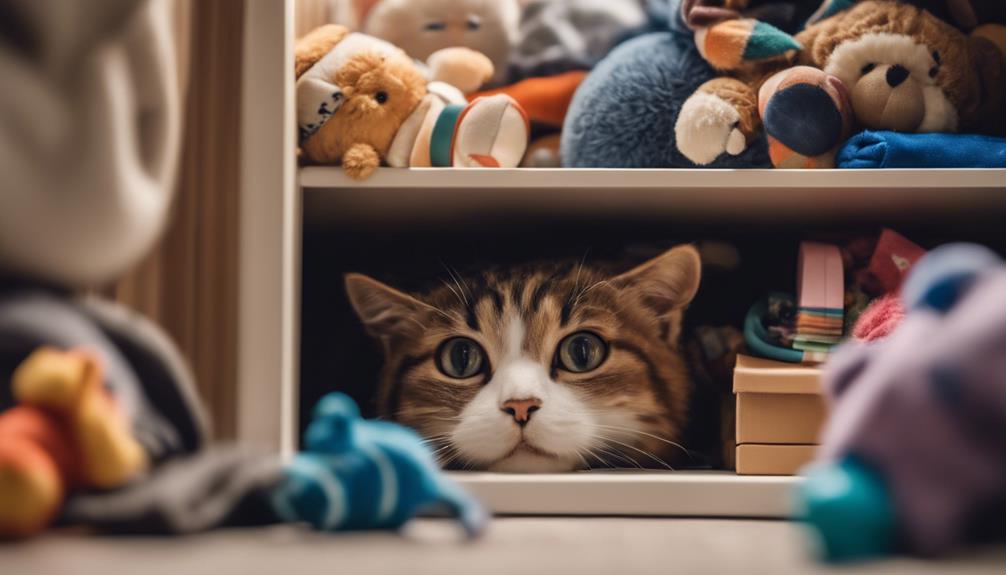
The importance of familiar resources for feline companions adjusting to a new residence cannot be overstated. Cats rely on familiar resources like litter boxes for comfort, helping them feel safe and secure in their new home. Providing these essentials reduces stress, allowing cats to explore more and hide less.
Familiar resources act as anchors, promoting stability and confidence, aiding cats in establishing a routine and feeling at ease in their new surroundings.
Allowing Cats to Adjust Naturally
Allowing cats the freedom to adapt naturally to their new environment is essential for their well-being and comfort.
Allow your cat to hide if needed in a quiet room with familiar items. This helps the cat feel more comfortable and secure during the adjustment period.
Keeping an eye on your cat's behavior and providing patience and understanding will aid in helping your cat settle into the new home smoothly.
Impact of Loud Noises on Cats
When exposed to loud noises, cats may experience heightened stress and anxiety, prompting them to seek refuge and security by hiding.
- Cats have sensitive hearing, making them more susceptible to the effects of loud noises.
- Loud noises trigger a cat's natural instinct to find a hiding spot.
- Prolonged exposure to loud noises can result in increased stress and anxiety levels in cats.
Changes in Cats' Environment
Following their relocation to a new home, cats often exhibit behavioral changes as they navigate the unfamiliar environment and territory. Cats may hide due to feeling uncomfortable and uncertain in the new setting. It is essential to provide a quiet space with necessary resources like food, water, and litter trays to help them acclimate. Rushing or coaxing the cat out of hiding can hinder their adjustment process after a move. Understanding your cat’s behavior and allowing them to explore and adjust at their own pace will help them feel more secure in their new surroundings. It’s also important to give them plenty of space and gentle reassurance, as well as maintaining a consistent routine to help them feel more at ease. By being patient and observant of your cat’s body language and reactions, you can better understand their needs during this transition period.
| Cats' Environment Changes |
|---|
| Unfamiliar surroundings |
| Hiding behavior |
| Adjusting to new home |
| Essential resources |
Helping Cats Overcome Moving Stress
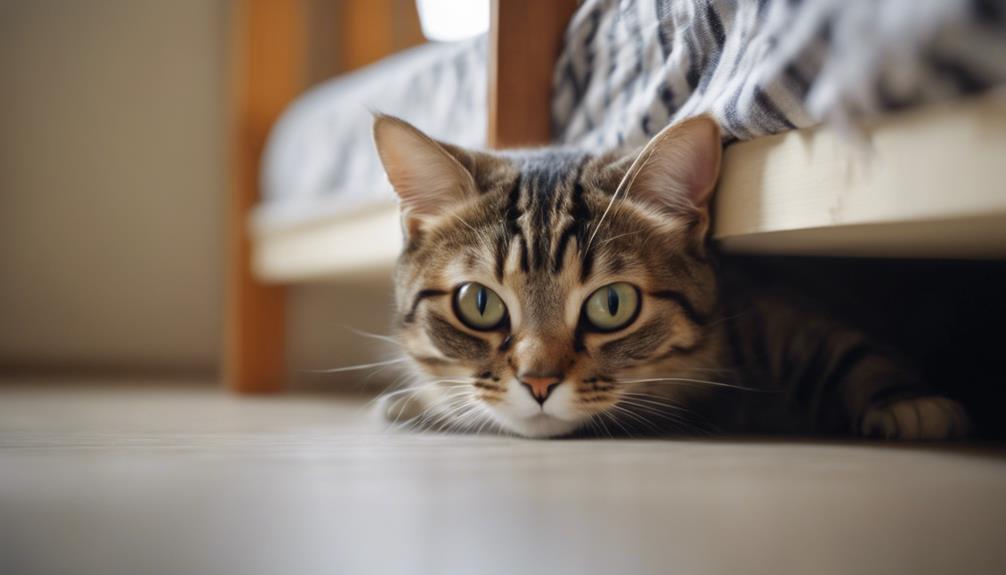
To assist cats in overcoming moving stress, implementing strategies that promote familiarity and comfort in the new environment is essential.
- Conduct pre-move scent transfer to help your cat adjust.
- Create a safe room with familiar items.
- Utilize hiding spots to reduce stress during the adjustment period.
Patience and Support for Hiding Cats
With the relocation to a new home, providing patience and unwavering support for hiding cats is crucial in easing their adjustment and ensuring their well-being.
During this adjustment period, a hiding cat might feel more comfortable in quiet and safe spaces. It's important to respect their need for solitude, provide hiding spots, and guarantee easy accessibility to food, water, and a litter tray to reduce stress and promote comfort.