
Russian Blue cats are often considered hypoallergenic due to their lower levels of the allergen Fel d 1. This makes them a potential choice for individuals with cat allergies. Russian Blues, along with breeds like Burmese and Siamese, are nearly hypoallergenic. Despite similarities to Russian Blues, cats like Korat and British Blue may produce Fel d 1. These cats have a gentler temperament and are known for their lower allergen levels. If you're looking for a cat that may be more suitable for allergies, considering Russian Blues could be a good starting point.
Understanding Cat Allergies

Understanding cat allergies is vital for individuals who may experience allergic reactions when exposed to cats. Certain cat breeds, such as Russian Blue, produce lower levels of the allergen Fel d 1 due to their genetic makeup. This reduced production of Fel d 1 makes Russian Blues and other nearly hypoallergenic breeds like Burmese, Siamese, Bengal, Siberian, and Javanese potentially more suitable for individuals with cat allergies.
However, allergic reactions can still vary among breeds due to genetic traits and differing levels of allergen production. Cats like Korat, British Blue, and Nebelung may exhibit similarities to Russian Blues but could still produce Fel d 1, causing allergic responses in sensitive individuals. Understanding the specific allergens produced by different cat breeds is important for effectively managing cat allergies.
Common Cat Allergens
Cat allergens, mainly the protein Fel d1, are commonly found in cat saliva and skin. These allergens can cause allergic reactions in sensitive individuals when in contact with cats. Understanding common cat allergens is essential for managing allergies effectively.
Here are some key points to keep in mind:
- Fel d1 Allergen: Found in cat saliva and skin, it is the primary protein triggering allergic reactions.
- Transfer Mechanism: Fel d1 is transferred to a cat's coat through grooming, leading to airborne allergens.
- Allergic Reactions: Cat allergens can cause mild to severe allergic reactions in sensitive individuals.
- Management Importance: Understanding cat allergens is crucial for effectively managing allergies, regardless of the cat breed, including Russian Blue Cats.
What Makes Russian Blues Unique?
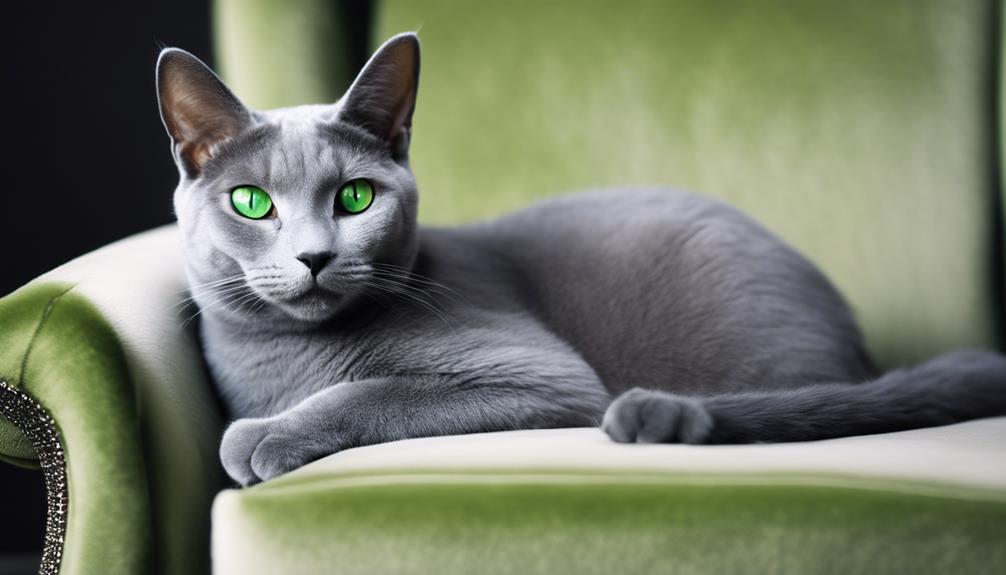
Russian Blue cats stand out due to their unique genetic makeup, particularly in relation to lower levels of the allergen Fel d 1. This characteristic makes them one of the breeds considered more hypoallergenic for individuals prone to cat allergies.
In addition to their hypoallergenic qualities, Russian Blues have a distinctive physical appearance. Their double coat covers a slender, muscular body, and they are known for their striking vivid green eyes, which change from yellow in their kitten stage.
Beyond their physical traits, Russian Blues are beloved for their gentle and sweet temperament, making them popular companions. Originating from northern Russia, these cats have a storied history, with some even believed to have royal connections, adding to their allure among cat lovers.
Managing Allergies With Russian Blues
When considering potential pet allergies, individuals may find that managing allergic reactions can be more manageable with Russian Blue cats due to their lower levels of the allergen Fel d 1. Russian Blue cats are considered hypoallergenic for some people due to their unique characteristics.
Here are some tips for managing allergies with Russian Blues:
- Monitor your allergic reactions when spending time with a Russian Blue cat.
- Keep your living space clean to minimize allergen exposure.
- Consider using air purifiers or HEPA filters to reduce allergens in the air.
- Consult with an allergist to develop a personalized allergy management plan.
Tips for Allergy Sufferers
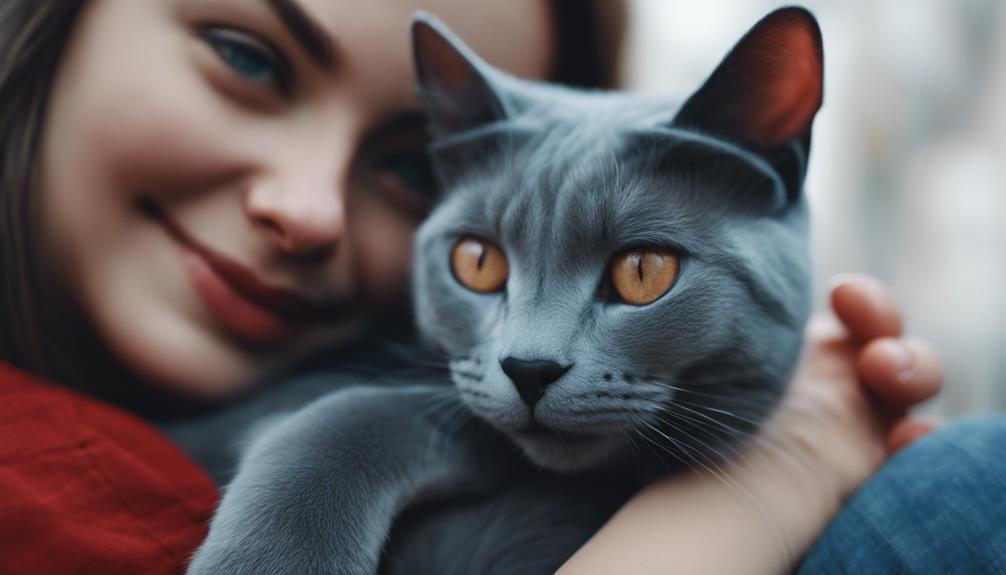
For allergy sufferers considering owning a cat, it's important to be aware of breeds like Russian Blue cats that produce lower levels of the allergen Fel d 1. Managing cat allergens involves regular grooming, vacuuming, and creating designated cat-free areas in the home.
To create a hypoallergenic environment, investing in air purifiers, using allergen-reducing bedding, and washing hands after handling cats can help minimize allergic reactions.
Allergy-Friendly Cat Breeds
Among the various cat breeds known for their hypoallergenic qualities, some are particularly more allergy-friendly for individuals sensitive to cat allergens. Here are some allergy-friendly cat breeds:
- Russian Blue cats: Produce lower levels of the allergen Fel d 1, making them suitable for allergy sufferers.
- Sphynx: Known for minimal shedding and less hair, reducing allergens in the environment.
- Cornish Rex: Another breed with minimal shedding and lower allergen production, suitable for those with allergies.
- Devon Rex, Oriental, and Balinese: These breeds also shed less and have minimal hair, making them good choices for individuals with mild cat allergies.
Considering these breeds can help allergy sufferers find a cat that they can coexist with comfortably.
Managing Cat Allergens
Implementing effective strategies to manage cat allergens is essential for individuals sensitive to allergens, especially when considering Russian Blue cats. These felines produce lower levels of the allergen Fel d 1, potentially making them suitable for allergy sufferers.
Regular grooming of the Russian Blue cat and establishing a structured mealtime routine can help minimize allergens and manage allergic reactions. Environmental measures such as using HEPA filters and dust-free cat litter in the home can reduce airborne allergens.
Providing a high-protein diet rich in Omega-3 fatty acids and vitamin E can promote healthy skin in the cat, further minimizing allergic responses. Before adopting a Russian Blue cat, testing your allergic sensitivity is advisable to assess potential reactions accurately.
Creating Hypoallergenic Home
To foster an allergen-free living environment conducive to individuals with sensitivities, employing practical measures and lifestyle adjustments can greatly aid in creating a hypoallergenic home. Here are some tips for allergy sufferers:
- Use HEPA filters and vacuum with HEPA machines to reduce airborne allergens.
- Opt for dust-free cat litter and cover furniture during shedding seasons to minimize allergens.
- Avoid ceiling fans in areas frequented by Russian Blue cats during shedding periods to reduce allergens.
- Keep the house free of dust-collecting items like toys and wall hangings to minimize allergen exposure.
Testing Your Allergy Response
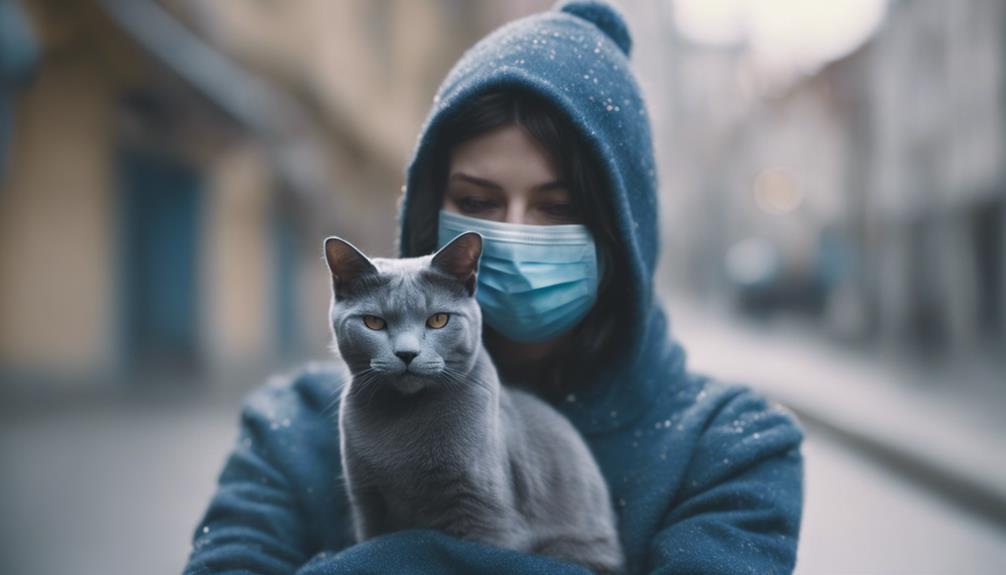
Evaluating your allergic reaction to Russian Blue cats before adoption can help determine your compatibility with this breed. Consider spending time with a Russian Blue cat to monitor reactions carefully.
Consult a physician to test your allergic sensitivity to cats, and have allergy medication on hand as a precaution. By observing how your body responds during interactions with Russian Blues, you can assess your tolerance level.
Evaluate any symptoms that arise to make an informed decision about coexisting with this breed. Taking these steps can provide valuable insights into whether Russian Blue cats are a suitable choice for you, ensuring a harmonious living environment for both you and your potential feline companion.
Hypoallergenic Myths Debunked
Are the purported hypoallergenic qualities of Russian Blue cats truly supported by scientific evidence?
While Russian Blue cats do produce less of the allergen Fel d 1 compared to other breeds, they are not completely guaranteed to be hypoallergenic. Individuals with minor cat allergies may find that they can tolerate being around Russian Blues, as these cats may cause fewer allergic reactions.
However, severe cat allergy sufferers should exercise caution and avoid owning pet cats, including Russian Blues. It is advisable to test allergic sensitivity before adopting a Russian Blue cat to confirm compatibility.
Despite popular beliefs, it is essential to understand that no cat breed is completely foolproof against allergies.
Living With a Russian Blue
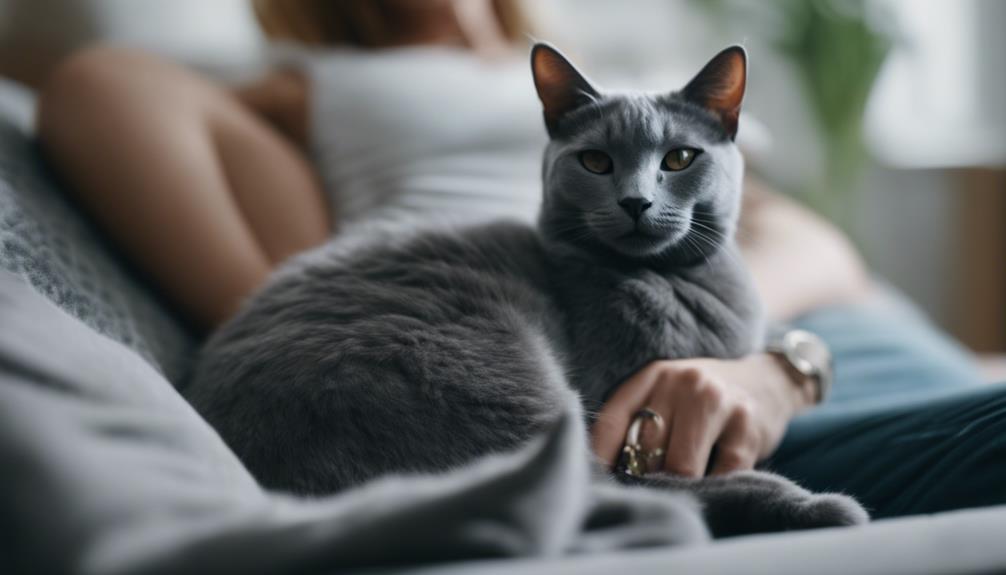
Living with a Russian Blue involves understanding their need for regular grooming to maintain their coat's health and minimize shedding. These cats are known for their calm and gentle demeanor, making them great companions for individuals seeking a quiet pet.
Taking the time to learn about the Russian Blue's behavioral traits can help create a harmonious living environment for both the cat and its owner.
Care and Grooming
Maintaining the luxurious appearance of a Russian Blue cat's silky blue-silver fur coat is easily achieved through regular grooming practices using a medium-tooth comb. Here are some essential care and grooming tips for living with a Russian Blue:
- Limited Shedding: Russian Blues have minimal shedding, reducing the need for extensive brushing.
- Occasional Baths: Due to their clean nature, baths are rarely needed, making grooming simpler.
- Nail Trimming: Regular nail trims are necessary to prevent overgrowth and maintain their elegant look.
- Ear Cleaning: Periodic ear checks and gentle cleaning help prevent wax buildup and maintain ear health.
Behavioral Traits
Russian Blue cats exhibit a distinctive combination of gentle temperament and engaging social behavior that makes them ideal companions for both families and individuals. These cats are known for their loyalty, sweetness, and independence, enjoying interactions with their owners while also being content entertaining themselves.
Russian Blues are vocal communicators, expressing their needs through meows and purrs. They prefer a calm and stable environment, disliking changes and large gatherings. Due to their strong hunting instinct, they showcase intelligence and agility during play.
Understanding these behavioral traits can help individuals provide a suitable environment for their Russian Blue cats, minimizing potential stressors and ensuring a harmonious living situation for both the cat and its owners.
Do Siberian Cats Also Trigger Allergies Like Russian Blue Cats?
Yes, Siberian cats are also hypoallergenic like Russian Blue cats. Their lower levels of Fel d 1 protein can make them a good choice for people with allergies. This hypoallergenic article discusses the unique qualities of Siberian cats and their potential to coexist with allergy sufferers.
Final Thoughts on Allergies and Russian Blues
When wrapping up thoughts on allergies and Russian Blue cats, it is important to emphasize their hypoallergenic nature for potential pet owners with sensitivities. Here are some final considerations to keep in mind:
- Russian Blue cats produce lower levels of the allergen Fel d 1, making them a better choice for allergy sufferers.
- They shed less than other breeds, reducing the spread of allergens in the environment.
- Their dense double coat and unique skin properties contribute to their hypoallergenic qualities.
- Russian Blues are less likely to cause allergic reactions compared to high Fel d 1-producing breeds like Maine Coons and Persians.
Considering these factors, spending time with a Russian Blue cat before adoption can help individuals gauge their allergic response to this breed.