
Siamese cats are considered hypoallergenic due to their lower production of the Fel d 1 protein. This feature makes them a suitable option for individuals prone to allergic reactions. Siamese cats are known for shedding less, which helps reduce allergen levels in their environment. Their minimal dander and allergen production contribute to their reputation as being allergy-friendly. If you are curious about other allergy-friendly cat breeds or effective strategies for managing allergies with cats, there is more detailed information available to explore.
Siamese Cats and Allergies
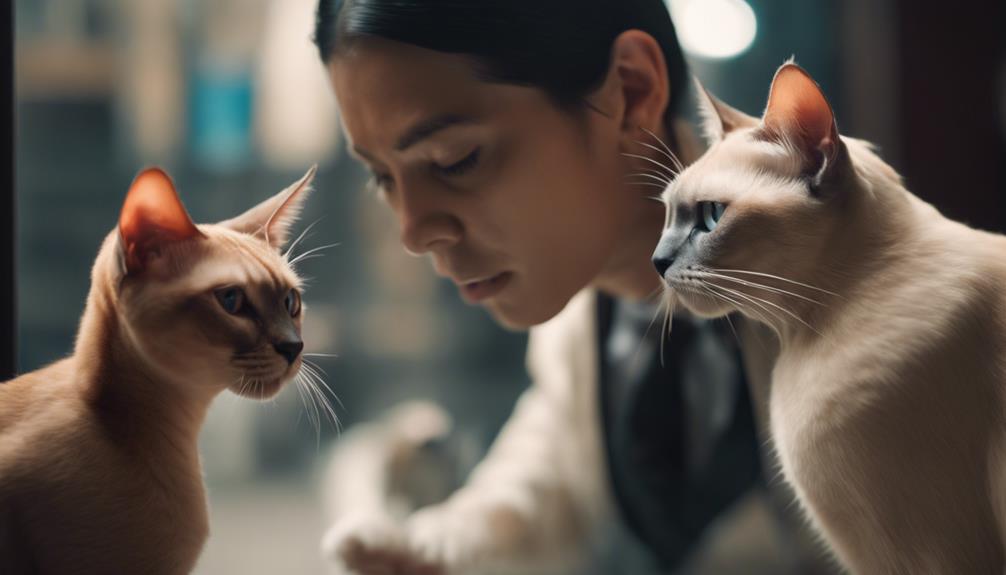
While many cat breeds can trigger allergies due to proteins in their bodily fluids and dander, Siamese cats stand out as a potentially hypoallergenic option for individuals sensitive to feline allergens. These elegant cats shed less than other breeds, reducing the spread of allergens in the environment.
One key factor is their lower production of the Fel d 1 protein, a common allergen found in cat saliva and sebaceous glands. As 80%-95% of people with cat allergies react to Fel d 1, the reduced levels in Siamese cats make them a suitable choice for those prone to allergic reactions.
Their minimal shedding and allergen production contribute to their reputation as one of the more hypoallergenic cat breeds, offering a potential solution for individuals seeking a feline companion without triggering severe allergic responses.
Managing Allergies With Siamese Cats
Managing allergies with Siamese cats involves implementing proactive measures to minimize exposure to allergens and create a comfortable environment for both the cat owner and the feline companion. Siamese cats are considered close to hypoallergenic due to their reduced shedding and lower production of the Fel d 1 protein, which is responsible for triggering cat allergies. To effectively manage allergies with Siamese cats, regular grooming sessions outdoors can help reduce dander, washing fabrics frequently can eliminate allergens, and creating cat-free zones in the house can provide allergy-free spaces. These strategies aim to minimize allergen spread and create a more allergy-friendly environment for individuals prone to cat allergies.
| Management Strategies | Description | Benefits |
|---|---|---|
| Regular Grooming | Outdoor grooming sessions | Reduces dander and allergen production |
| Cat-Free Zones | Designated allergy-free areas | Minimizes allergen exposure |
| Washing Fabrics | Frequent washing of fabrics | Eliminates allergens from the environment |
Allergy-Friendly Cat Breeds Comparison
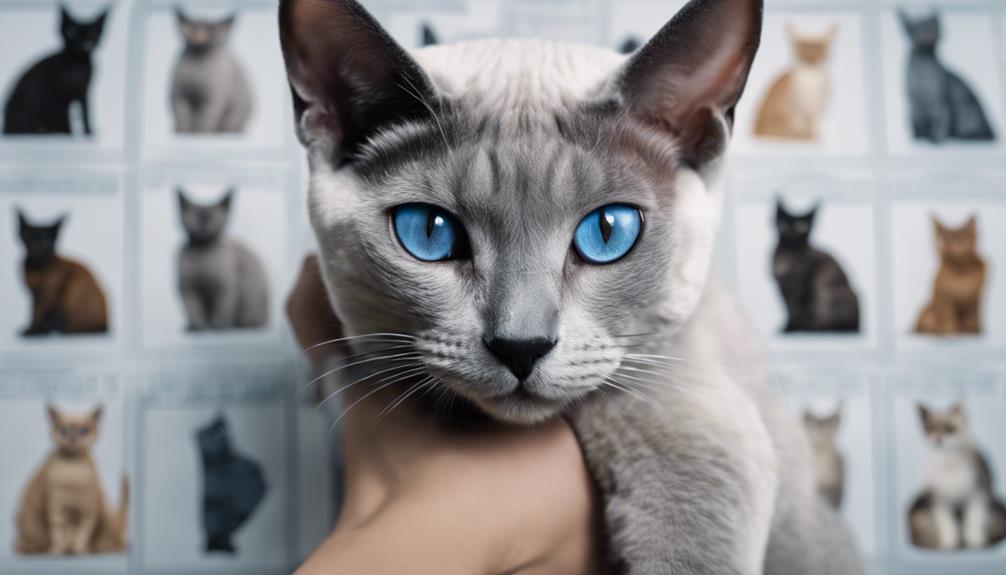
To provide a thorough understanding of hypoallergenic cat breeds, an examination of the characteristics and suitability of various breeds, including Siamese, Sphynx, Balinese-Javanese, Siberian, and Devon Rex cats, is essential.
- Siamese cats are considered hypoallergenic due to shedding less and producing lower levels of the Fel d 1 protein.
- Other hypoallergenic breeds like Sphynx, Balinese-Javanese, Siberian, and Devon Rex cats offer unique characteristics.
- Siamese cats are suitable for most allergy sufferers due to their reduced allergen production and minimal dander.
- Allergy sufferers often find relief with Siamese cats, known for their sleek coats and being an allergy-friendly feline companion.
Tips for Allergy Sufferers With Cats
For individuals with cat allergies, implementing specific strategies can help minimize allergic reactions and maintain a comfortable environment when living with cats, particularly hypoallergenic breeds like Siamese cats. Siamese cats are considered hypoallergenic due to their minimal shedding and lower production of the Fel d 1 allergen, making them suitable for allergy sufferers.
Regular grooming of Siamese cats can further reduce allergens, while creating cat-free zones in the home, such as bedrooms, can help allergy sufferers coexist comfortably with these cats. While no cat breed is completely hypoallergenic, Siamese cats are generally well-tolerated by individuals with cat allergies due to their unique characteristics.
Can Sphynx Cats Cause Less Allergic Reactions Than Siamese Cats?
Yes, sphynx cats are considered one of the hypoallergenic breeds. Their lack of fur can make them less likely to trigger allergic reactions compared to other breeds, such as Siamese cats. If you suffer from allergies but still want a feline friend, consider adopting a sphynx cat.
Understanding Cat Allergens
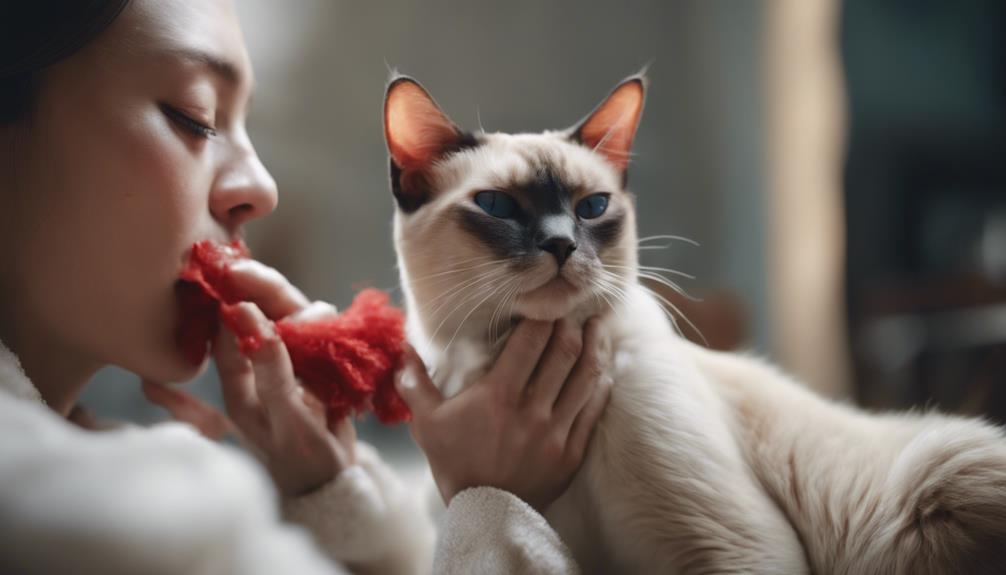
Understanding cat allergens is essential for individuals with cat allergies to effectively manage their symptoms and create a comfortable living environment with their feline companions, particularly hypoallergenic breeds like Siamese cats.
- Siamese cats are considered hypoallergenic due to lower levels of the Fel d 1 protein.
- Cat allergies are triggered by proteins in cat urine, saliva, tears, mucous, skin, and dander.
- Approximately 80%-95% of individuals with cat allergies react to the Fel d 1 protein.
- Siamese cats shed less compared to other breeds, reducing allergen levels and allergic reactions in pet owners.
Understanding these allergens and their impact on pet owners can help in choosing the right breed and implementing grooming practices to minimize allergic reactions.