
Certain succulents can be toxic to cats, such as Aloe Vera, Crassula (Jade), and Euphorbia. Ingesting these plants can lead to symptoms like drooling, weakness, and difficulty breathing. It's important for cat owners to be cautious with toxic succulents to prevent issues like vomiting and diarrhea in their pets. On the other hand, there are non-toxic succulents like Chinese Money plant and Bunny Ear cactus that are safe for cats. Understanding which succulents are harmful and keeping them away from cats can create a secure environment. Guarding against succulent toxicity is vital for the well-being of feline friends.
Toxic Succulents for Cats
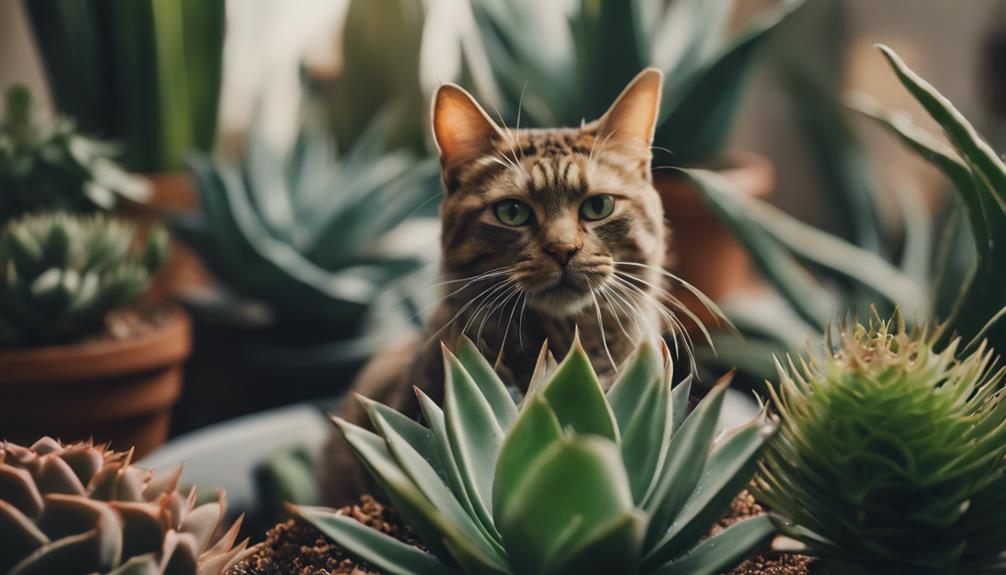
Vital succulents for cats, such as Aloe Vera, Crassula (Jade), Euphorbia, Kalanchoe, and Sansevieria (Snake Plant), pose a significant risk to feline health if ingested. Cats are curious animals that may nibble on plants, inadvertently exposing themselves to potential poisoning.
Among these toxic succulents, the Jade plant, scientifically known as Crassula ovata, contains compounds that can be harmful to cats if consumed. Poisonous substances within these succulents can lead to various health issues, ranging from gastrointestinal upset to more severe symptoms. Understanding which plants are safe and which are toxic is vital for cat owners to create a safe environment for their pets.
Keeping toxic plants out of reach and opting for cat-friendly alternatives can help prevent accidental poisoning incidents.
Symptoms of Succulent Poisoning in Cats
Upon ingestion of toxic succulents, cats may exhibit a range of symptoms indicative of poisoning, including vomiting, diarrhea, and lethargy.
- Symptoms of Succulent Poisoning in Cats:
- Drooling
- Loss of appetite
- Weakness
Other potential signs of succulent poisoning in cats can include tremors and difficulty breathing. Recognizing these symptoms promptly is essential, as immediate veterinary attention is necessary to prevent complications and promote the well-being and recovery of the affected feline.
If you notice any of these symptoms or suspect that your cat has ingested a toxic succulent, it is vital to seek professional help without delay to provide the best chance for a positive outcome.
Non-Toxic Succulents for Cats
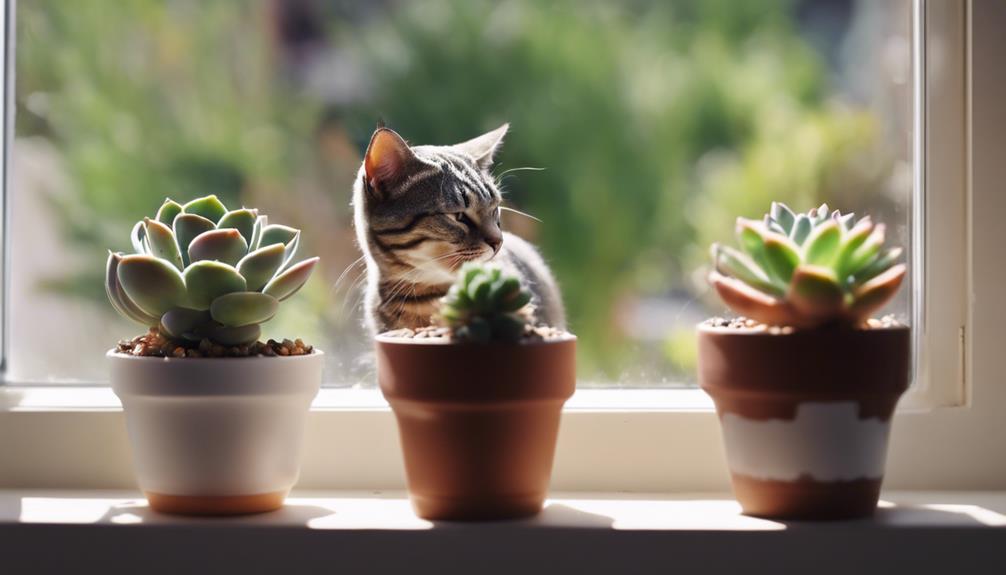
When considering the safety of succulents around cats, it is reassuring to know that there are several non-toxic options available for cat owners to enjoy in their homes.
Chinese Money plant (Pilea peperomiodes), Hens and Chicks (Sempervivum sp), Variegated Wax plant (Echeveria sp.), and Bunny Ear cactus (Opuntia microdasys) are among the non-toxic succulents that can coexist safely with cats. These plants provide a beautiful addition to your living space without posing a threat to your feline companions.
Risks of Toxic Succulents to Cats
The risks associated with toxic succulents to cats can pose serious health concerns. Symptoms of toxicity from these plants can include vomiting, diarrhea, lethargy, drooling, weakness, tremors, and difficulty breathing.
Identifying cat-safe succulent options and recognizing the signs of toxicity are essential in preventing harm to feline companions.
Cat-Safe Succulent Options
Cat-safe succulent options, such as Echeveria, Haworthia, Opuntia, Sedums, and Sempervivum, are non-toxic to cats, making them ideal choices for pet owners looking to beautify their homes without risking their feline companions' health.
- Echeveria: Known for their rosette-shaped, colorful leaves.
- Haworthia: Recognizable by their small, spiky rosettes and tolerance to low light.
- Sedums: Diverse plants with different shapes and colors, thriving in various conditions.
Choosing these cat-safe succulents not only adds beauty to your indoor garden but also provides a safe environment for your beloved cats to explore without the risk of toxicity.
Symptoms of Toxicity
Exposure to toxic succulents can pose serious risks to cats, potentially leading to symptoms of poisoning such as vomiting, diarrhea, and lethargy. Additional signs of succulent toxicity in cats include drooling, loss of appetite, weakness, tremors, and difficulty breathing.
It is vital to seek immediate veterinary attention if you suspect your cat has ingested a toxic succulent to prevent complications. Educating yourself on plant toxicity, keeping harmful succulents out of reach, monitoring your cat for any unusual behavior, and promptly contacting a veterinarian are essential steps in preventing and addressing succulent poisoning in cats.
Treatment for succulent poisoning may involve inducing vomiting and providing supportive care, including possible hospitalization for severe cases.
Identifying Toxic Succulents
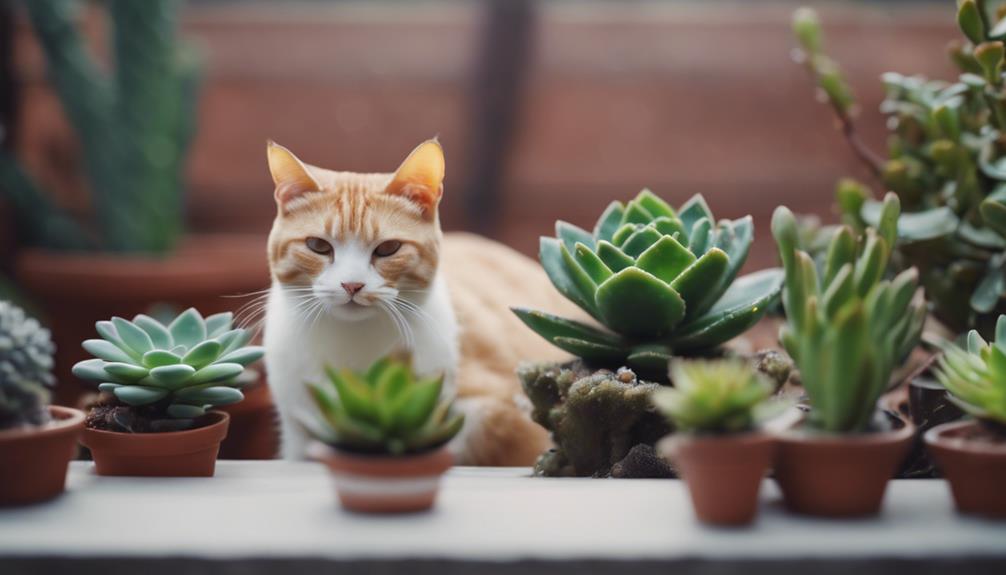
When considering the safety of succulents around cats, it is essential to be able to identify which varieties are toxic to felines. Some toxic succulents for cats include:
- Aloe Vera
- Euphorbia
- Crassula (Jade)
These plants, if ingested by cats, can lead to symptoms of succulent poisoning such as vomiting, diarrhea, lethargy, drooling, weakness, tremors, and difficulty breathing.
Among these, Sansevieria (Snake Plant) is another toxic succulent that cat owners need to be cautious about. Recognizing these potentially harmful succulents and understanding the associated symptoms is vital for maintaining the health and well-being of feline companions.
If a cat shows any signs of succulent poisoning, immediate veterinary attention is necessary to prevent further complications.
Safe Succulents for Cat Owners
When considering safe succulents for cat owners, options like Echeveria, Haworthia, Opuntia, Sedums, and Sempervivum stand out as pet-friendly choices. These succulents are non-toxic to cats, making them ideal for creating a cat-friendly environment without compromising on the beauty of indoor plants.
With their varied shapes and easy care requirements, these succulents offer a visually appealing and low-maintenance solution for plant lovers who are also cat owners.
Cat-Friendly Succulent Options
Several safe succulent options are available for cat owners looking to add greenery to their homes without risking their feline companions' health. These cat-friendly succulents include:
- Echeveria
- Haworthia
- Opuntia
These varieties, along with Sedums and Sempervivum, offer a visually appealing addition to your living space while ensuring the safety of your cats.
Choosing these safe succulents, such as Hens and Chicks, Bunny Ear Cactus, and Variegated Wax plant, can help prevent potential poisoning incidents and provide a pet-friendly option for adding greenery to your home.
Enjoy the beauty of these succulents without compromising the well-being of your beloved pets.
Non-Toxic Succulents for Cats
Non-toxic succulents provide a safe and pet-friendly option for cat owners seeking to introduce greenery into their homes while ensuring the well-being of their feline companions. Chinese Money plant, Hens and Chicks, Variegated Wax plant, and Bunny Ear cactus are all examples of safe succulents for cats.
These plants offer a pet-safe alternative for cat owners looking to enjoy the beauty of succulents without worrying about potential toxicity risks to their beloved pets. By choosing non-toxic succulents like these, cat owners can create a lush and inviting indoor environment while promoting a safe and harmonious living space for both their plants and their furry friends.
Pet-Safe Plant Choices
When selecting suitable plants for cat-friendly environments, cat owners can confidently opt for succulents such as Echeveria, Haworthia, Opuntia, Sedums, and Sempervivum that pose no toxicity risks to their feline companions.
These cat-safe succulents offer a decorative touch without jeopardizing your pets.
Choosing pet-friendly succulents guarantees a safe and harmonious living space for both cats and plants.
Opting for non-toxic options like Echeveria and Sedums can prevent potential health issues for your beloved feline friends.
Pet-Friendly Succulent Options
Among the various pet-friendly succulent options available, certain species such as Echeveria, Haworthia, Opuntia, Sedums, and Sempervivum stand out as safe choices for cat owners who seek both aesthetic appeal and feline safety in their indoor greenery.
These succulents are non-toxic to cats, ensuring that if ingested, they will not harm the pets. Opting for these safe succulents like Hens and Chicks and Zebra Plant can prevent accidental poisoning and provide peace of mind to pet owners.
Managing Toxic Succulents Around Cats

To guarantee the safety of cats in households with succulents, it is essential to implement effective strategies for managing toxic succulents around feline companions.
- Keep toxic succulents out of reach of cats to prevent accidental ingestion.
- Use cat deterrent sprays around succulents to discourage cats from exploring them.
- Monitor cat behavior closely for any signs of interest in or interaction with toxic succulents.
These steps are critical in preventing succulent poisoning in cats. Immediate veterinary attention is essential if ingestion occurs to ensure prompt treatment and avoid complications. By being proactive and vigilant, cat owners can create a safe environment for their feline friends amidst the presence of potentially harmful succulents.
Can Cats Safely Be Around Succulents If They Can Handle Snake Plants?
Yes, snake plants and cats can coexist safely. While snake plants can be toxic to cats if ingested, they are often avoided due to their bitter taste. As long as the cat can handle snake plants without harming themselves, having them around succulents should not be a problem.
Preventing Succulent Poisoning in Cats
With an increasing awareness of the risks succulents pose to cats, implementing preventive measures is essential in safeguarding feline health and well-being. To prevent succulent poisoning in cats, it is important to keep toxic succulents out of reach and consider using cat deterrent sprays. Being aware of the symptoms of succulent poisoning, such as vomiting, diarrhea, lethargy, drooling, weakness, tremors, and difficulty breathing, can aid in early detection and prompt action. Immediate veterinary attention is necessary in cases of suspected poisoning to prevent complications. Educating oneself on succulent toxicity, monitoring the cat's behavior around plants, and seeking veterinary help promptly in case of ingestion are critical steps in preventing harm to pets.
| Preventive Measures | Description |
|---|---|
| Keep toxic succulents out of reach | Place them on high shelves or in areas inaccessible to cats |
| Use cat deterrent sprays | Sprays can discourage cats from approaching succulents |