
In the US, there are more households with dogs than cats. Around 65.1 million households have dogs, while 46.5 million own cats. Dogs are the top choice for pets in America. They are more popular than cats, as seen from higher ownership numbers. Cats outnumber dogs by 2 million in total population, with individual households having more feline companions. The differences in pet ownership reveal various cultural and societal influences. Understanding these trends sheds light on the diverse preferences in American homes. Further details about pet ownership trends and preferences can offer deeper insights into this topic.
Pet Ownership Trends in the U.S
In the U.S., pet ownership trends reveal a preference for dogs over cats, with 65.1 million households owning dogs compared to 46.5 million households owning cats. This data solidifies dogs as the most popular choice among American pet owners.
The significant disparity in numbers highlights the strong bond between dogs and their human companions. Americans' love for dogs is reflected in their spending habits, with essential dog expenses averaging $1,533 annually.
Additionally, the pandemic has led to a surge in pet ownership, with 78% of pet owners acquiring pets during this period. Notably, millennials constitute the largest group of pet owners in the U.S. at 33%, followed by Gen X at 25% and baby boomers at 24%.
High-income households, earning over $100,000 annually, are more likely to own pets, indicating a correlation between income levels and pet ownership.
Household Preference for Cats Vs. Dogs
Pet ownership trends in the United States clearly indicate a prevalent preference for dogs over cats, as evidenced by the significantly higher number of households that own dogs compared to those that own cats.
- Dogs are owned by 44.6% of households, while only 2.5% own cats.
- Approximately 62 million U.S. households own dogs, surpassing the 37 million owning cats.
- On average, households have 1.46 dogs and 1.78 cats each.
This significant difference in ownership numbers showcases the strong inclination towards dogs as preferred pets in the U.S. The higher veterinary expenditure per household for dogs further highlights their popularity among pet owners.
Regional Disparities in Cat Vs. Dog Ownership
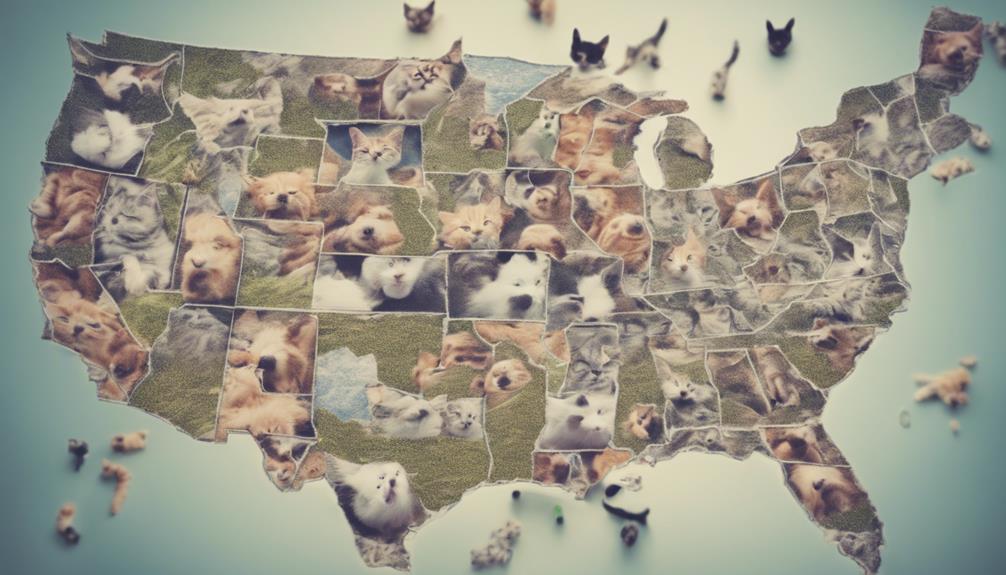
Regional disparities in cat versus dog ownership in the United States reveal varying pet preferences across different states. Northeastern states like Massachusetts and Maryland show a higher preference for cats, while Southern and Southwestern states like Arkansas and Texas lean towards dog ownership.
Vermont, Maine, and Connecticut also exhibit a preference for cats over dogs. Surprisingly, Pennsylvania and New York have a higher cat population compared to dogs. These regional trends indicate that pet preferences can differ considerably based on geographic location within the U.S.
Understanding these variations can provide insights into cultural differences, lifestyle choices, and societal norms influencing pet ownership patterns across the country.
Cats Vs. Dogs: Population Discrepancy
The disparities in pet preferences across different states in the United States extend to the population dynamics of cats and dogs, revealing intriguing insights into the household choices of Americans.
- Dogs are more prevalent in U.S. households compared to cats.
- Despite fewer households with cats, cats outnumber dogs by 2 million in terms of raw population.
- Cats' compact nature allows for more to be kept in a household compared to dogs.
This population gap between cats and dogs highlights the varying roles each pet plays in American homes. While dogs may be more widespread as pets, cats hold their own regarding overall population numbers, showcasing the diverse preferences of pet owners across the country.
Arkansas: A Dog-Friendly State

Arkansas boasts a dog-friendly environment with a notable dog-to-cat ratio of 1.35, showcasing a strong preference for canine companions in the state.
The higher population of dogs compared to cats in Arkansas highlights the prevalent dog-loving culture within households.
With dogs outnumbering cats, Arkansas stands out as a pet-friendly state that prioritizes its canine residents.
Canine Culture in Arkansas
With a notable dog-to-cat ratio of 1.35, the preference for dogs in this state is evident, fostering a vibrant canine culture. In Arkansas, dogs hold a special place in the hearts of many residents, shaping the state's pet-friendly environment. Here are three aspects that contribute to the strong canine culture in Arkansas:
- Dog-Friendly Establishments: Arkansas boasts numerous dog-friendly restaurants, parks, and hotels, encouraging owners to spend quality time with their furry companions.
- Community Events: The state organizes various dog-centric events like dog shows, fundraisers, and adoption drives, promoting a sense of community among dog lovers.
- Training and Services: Arkansas offers a range of dog training facilities and services, ensuring that dogs receive proper care and attention, further solidifying their importance in the state.
Pawsitively Dog-Loving Community
Evidencing a strong affinity for canines, Arkansas epitomizes a dog-loving community with its vibrant pet culture and numerous dog-friendly amenities. The state boasts a dog-to-cat ratio of 1.35, indicating a clear preference for dogs over cats.
Arkansas stands out for having a higher dog population, making it a dog-friendly state within the U.S. This preference is further highlighted by a larger number of households in Arkansas owning dogs compared to cats. The dog population in Arkansas surpasses that of cats, solidifying its reputation as a place where dogs are truly cherished.
With its emphasis on dog-friendly facilities and a higher number of dog owners, Arkansas exemplifies a pawsitively dog-loving environment that sets it apart from other states.
Northeast and Upper Midwest Cat Dominance
In the Northeast and Upper Midwest regions of the U.S., cats hold a dominant position over dogs in households, showcasing a clear preference for feline companions.
This regional cat dominance is reflected in the cat population distribution, where households tend to favor the compact and independent nature of cats.
Understanding the regional cat preferences and feline ownership statistics sheds light on the prevalence of cats in these areas compared to dogs.
Cat Population Distribution
The dominance of cats in the Northeast and Upper Midwest regions of the United States is evident through their outnumbering of dogs in households.
- Cat population concentration in Northeast and Upper Midwest.
- More households have cats than dogs in these regions.
- States like Massachusetts, Maryland, Maine, Vermont, and Connecticut show a higher preference for cats over dogs.
Regional Cat Preferences
Cat ownership in the Northeast and Upper Midwest regions of the United States surpasses that of dogs, highlighting a clear preference for feline companions in these areas. This regional trend indicates a higher demand for cats among buyers with pets in these specific parts of the country. Factors such as lifestyle, living arrangements, and cultural norms may contribute to the prevalence of cats over dogs in these regions.
While Arkansas stands out as the most dog-friendly state in the U.S., the Northeast and Upper Midwest exhibit a distinct leaning towards cats. Understanding these regional variations in pet preferences can provide valuable insights for pet industry professionals, animal shelters, and policymakers looking to cater to the needs and preferences of pet owners in different parts of the country.
Feline Ownership Statistics
Feline predominance in households across the Northeast and Upper Midwest regions of the United States underscores a notable shift towards cat ownership in these areas.
- Cats outnumber dogs in homes in the Northeast and Upper Midwest regions.
- Arkansas is recognized as the most dog-friendly state in the U.S.
- Cats' compact size allows for a higher number of them per household compared to dogs.
These feline ownership statistics reveal a preference for cats in these regions, contributing to the overall national trend where cats surpass dogs by 2 million in raw population data.
Cultural influences also play a significant role in determining pet ownership preferences, showcasing diverse preferences for cats or dogs across different parts of the country.
Popular Pet Choices Across the U.S
Among the diverse array of beloved animal companions in American households, dogs reign supreme as the most favored pets, with a staggering 65.1 million households sharing their homes with these loyal companions. Cats closely follow, with 46.5 million households having feline friends, while freshwater fish are also popular, with 11.1 million households opting for aquatic companions. Small animals and birds also rank high on the list of preferred pets across the U.S.
It is worth noting that dog ownership has seen a significant increase of 6.1 percentage points, while cat ownership has risen by 4 percentage points between 2016 and 2022. These trends emphasize the enduring appeal and widespread popularity of dogs as cherished members of American households.
The Impact of Household Size on Pet Preference

The selection of a household pet is often influenced by the size of the living space and the number of occupants.
- Larger households may prefer dogs for companionship and energy levels.
- Smaller households or apartments tend to favor cats for their independence and lower space requirements.
- Household size can impact the choice between an active dog or a low-maintenance cat.
Home buyers often consider these factors when choosing a pet that fits their living situation. Families with children might opt for dogs due to their playful nature, while singles or couples without kids may find cats more suitable for quieter living spaces.
Understanding the impact of household size on pet preference can help individuals make informed decisions when welcoming a new furry friend into their homes.
The Ever-Popular Dog in America
Dogs continue to hold the top spot as the most beloved pets in the United States, with 65.1 million households proudly owning these loyal companions. The Pet Industry in the U.S. reflects this preference, with Americans spending a substantial $136.8 billion on their pets in 2022. Essential dog expenses average around $1,533 per household annually, covering vital needs such as veterinary care and pet insurance.
The pandemic saw a surge in pet ownership, with 78% of pet owners acquiring pets during this time for companionship and care. Surprisingly, Gen X pet owners are less likely to have pets other than cats and dogs, indicating specific pet ownership trends across different generations.
The enduring popularity of dogs showcases their significant presence in American households and hearts.