
Cats do not smile like humans, but they show happiness through behaviors like slow blinking and head rubbing. These actions convey contentment and affection. Observing a cat's body language is key to understanding its emotions correctly. Cats use various facial expressions to communicate, with the Flehmen response sometimes resembling a smile. By interpreting these cues, a stronger bond can be formed with feline companions. Further exploration into feline expressions and behaviors will deepen your connection with cats and enhance your ability to communicate effectively with them.
Understanding Cat Smiles

Understanding Cat Smiles is vital for deciphering feline emotions and behaviors accurately. Unlike humans, cats do not smile in the same way visibly. Instead, they display happiness through subtle cues such as narrowed or partially shut eyes. A contented cat might exhibit behaviors like slow blinking, purring, and head butting to show their emotions.
While facial expressions can convey some emotions, it is essential to take into account the entirety of a cat's body language to interpret their happiness correctly. By observing their eyes, overall demeanor, and behaviors, cat owners can gain a better understanding of their feline companions' feelings.
This holistic approach to decoding cat smiles aids in forming a strong bond and improving communication with these enigmatic creatures.
Decoding Feline Facial Expressions
To gain insight into feline emotions and behaviors, interpreting the subtle facial expressions of cats is crucial, particularly in decoding their non-verbal communication. Cats can make various facial expressions to express happiness or contentment. They may appear happy to see you by narrowing their eyes or engaging in slow blinking.
Additionally, the 'Flehmen response' in cats can lead to curled lips and squinting eyes, resembling a smile. However, it's important to note that aggressive cats may bare their teeth in a grin-like expression, which differs from a genuine smile.
While cats do not smile in the same way humans do, they can convey contentment through behaviors like purring, slow-blinking, head-rubbing, paw-kneading, and tail-flicking. Understanding these facial cues can deepen our connection with our feline companions. These subtle gestures serve as a language of trust and affection, helping to bridge the communication gap between humans and their furry friends. For instance, behaviors like slow blinking or even why cats wink at humans often signal that they feel safe and comfortable in your presence. Recognizing these signs not only strengthens the bond but also enriches the shared experience of companionship.
Signs of a Happy Cat

Indicators of a cat's happiness can be discerned through various subtle behaviors and expressions. Cats smile by making facial expressions like slow blinking, a sign of trust and relaxation. Kneading, where they paw at a soft surface, is another indicator of a happy cat and is commonly seen when they bond with their owners, resembling how they knead their mom.
Additionally, head rubbing against objects or people shows affection and happiness. A relaxed tail position, not tightly wrapped, signifies a content feline. These behaviors suggest that cats experience similar emotions to humans and have the muscular ability to make expressions that may resemble a human smile.
Understanding these signs can help strengthen the bond with your cat.
Unveiling Cat Happiness
When exploring the domain of cat happiness, it becomes clear that feline contentment manifests through a repertoire of behaviors and expressions that reflect their emotional well-being. Understanding these cues is crucial in deciphering whether a cat is happy. Key indicators include making eye contact, a tail held upright, and engaging in slow blinking. While cats don't actually smile like humans, their facial expressions and body language can convey their happiness. Knowing your cat well enables you to interpret their signals accurately. By observing how your cat responds to interactions and their environment, you can gauge their level of contentment. Providing a nurturing environment and spending quality time with your feline friend are essential for their well-being.
| Cat Happiness Indicators | Description | Importance |
|---|---|---|
| Eye Contact | Connection with the cat | Understanding |
| Tail Upright | Sign of confidence | Contentment |
| Slow Blinking | Trust and relaxation | Emotional bond |
Do Cats Show Expressions of Happiness Like Smiling?
Yes, cats can sense sadness and often provide comfort to their owners during tough times. While they may not smile in the same way humans do, they show happiness through purring, kneading, and relaxed body language. Pay attention to your cat’s subtle expressions of contentment and affection.
Cat Communication Cues
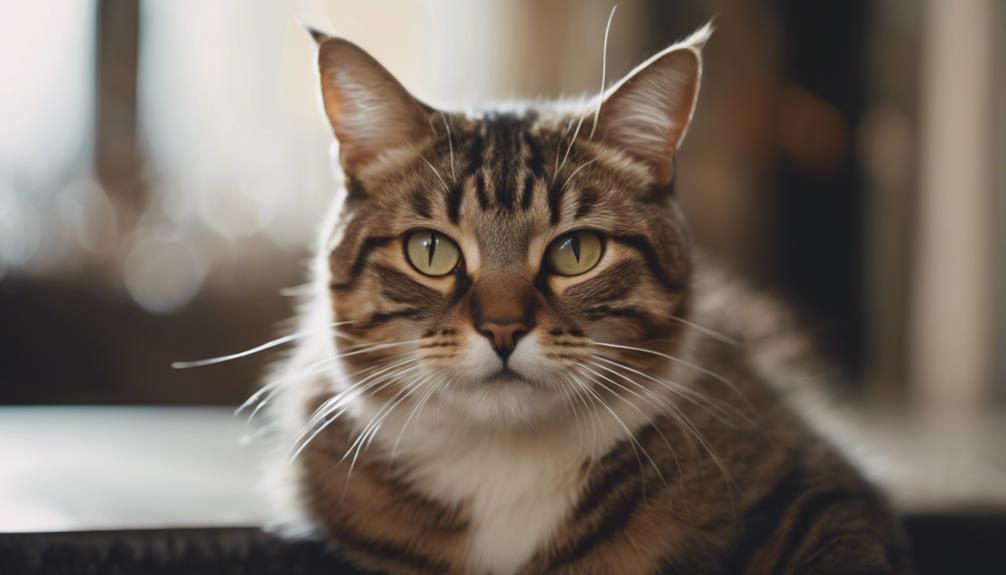
Cat communication cues can reveal a wealth of information about a feline's thoughts and emotions through subtle gestures and vocalizations. Studies have found that cats have the ability to make facial expressions that can resemble a smile, such as narrowing their eyes or partially shutting them.
Additionally, cats may bare their teeth, use their scent glands, or exhibit the Flehmen response, where they lift their lips to expose the Jacobson's organ in the roof of their mouth. Cat owners can also observe their pets' contentment through behaviors like slow blinking, purring, and chirping.
Understanding these facial expressions and body language, as well as paying attention to vocal cues, is essential for interpreting and responding to a cat’s communication effectively. While cats may not be able to speak like humans, they can communicate with us in a variety of ways. By observing their behavior and being attuned to their nonverbal cues, we can develop a better understanding of their needs and moods. Overall, being receptive to their forms of communication can enhance the bond between cats and humans. Can cats communicate with humans through vocalizations, body language, and other behaviors? This is a question that researchers continue to explore in order to fully understand the depth of feline communication.