
Lost cats can find their way home due to remarkable essential homing instincts. These felines show exceptional determination and resilience, often traveling significant distances. Outdoor-access cats typically cover about 344 yards when lost, with some journeying up to 80 miles. Using their keen sense of smell and sensitivity to magnetic fields, they navigate familiar areas. Pet owners can aid in their return by microchipping, ensuring updated identification, and understanding their homing abilities. Taking preventive steps increases the chances of reuniting with lost cats. Remember, these instincts play an important role in reuniting with your furry friend.
Remarkable Abilities of Lost Cats

Lost cats exhibit extraordinary abilities that continue to captivate researchers and pet owners alike. Their homing behavior is truly remarkable, with lost cats showcasing exceptional determination to find their way home. These feline companions have displayed impressive resilience, ranging from a mere 8 hours to an astonishing 2.5 years before reuniting with their owners.
Outdoor-access lost cats, in particular, demonstrate a unique ability to navigate and locate their homes, with a median distance traveled of approximately 344 yards. This showcases their incredible skill in orienting themselves in unfamiliar territories. Through their remarkable abilities and unwavering determination, lost cats exemplify their innate instinct to return to familiar surroundings, highlighting the strong bond between cats and their homes.
Distance Traveled by Lost Cats
Researchers have observed that outdoor-access cats, when displaced from their familiar environments, typically cover a median distance of approximately 344 yards in their efforts to find their way back home. The average distance traveled by lost cats ranges between 2 and 4 miles, with some cats venturing up to 80 miles away from home.
Despite these distances, 90% of lost cats are found after being missing for an average of 5 to 7.5 days. Cats that travel significant distances often do so due to getting lost during a move or vet visit. Understanding the direction these cats may have taken can be vital in locating them and bringing them back home safely.
Essential Steps for Pet Owners
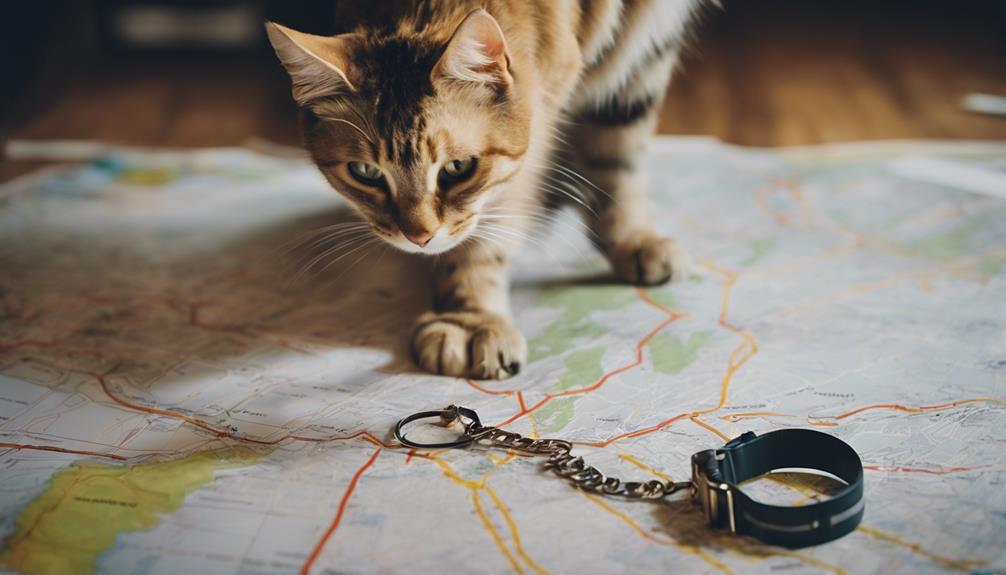
To increase the chances of reuniting with your lost cat, essential steps for pet owners include:
- Ensuring your cat is microchipped with updated registration details for easy identification.
- Having a collar with an ID tag containing your contact information.
Research indicates that lost outdoor-access cats typically travel around 344 yards, with longer distances often associated with moves or vet visits.
Taking these preventive measures greatly enhances the likelihood of your lost cat finding its way back home.
Microchipping for Identification
Microchipping your cat is an important step in ensuring their identification and increasing the likelihood of a swift reunion if they ever go missing. A microchip, a tiny device implanted under your cat's skin, holds registration information essential for reuniting you with your lost pet. To facilitate a quick reunion, make sure this information is always up to date. Statistics show that microchipped cats have a higher chance of being returned home, with a 52.2% success rate even if they wander far. This proactive measure greatly enhances the chances of a successful recovery, making it a crucial step for all pet owners. Consider the following table to understand the importance of microchipping:
| Microchipping Benefits | Percentage (%) |
|---|---|
| Increased Reunification Rate | 52.2 |
| Greater Pet Identification | High |
| Proactive Identification | Yes |
| Swift Reunion | Likely |
Lost Pet Posters
When faced with the distressing situation of a missing pet, one important step pet owners can take is to create and distribute lost pet posters as part of their search efforts.
These posters should include a clear photo of the lost cat, along with contact information for people to report sightings. It's vital to mention distinguishing features, the pet's name, and where it was last seen.
To maximize visibility, distribute these posters in high-traffic areas, local businesses, vet clinics, and community bulletin boards. Regularly updating and replacing the posters guarantees they remain relevant in the search effort.
Science Behind Cats' Homing Instinct
Utilizing their keen senses and innate instincts, cats demonstrate remarkable abilities in homing navigation over considerable distances. Cats' homing instinct, coupled with their exceptional sense of smell and sensitivity to Earth's magnetic fields, enables them to navigate and find their way back home when they are lost.
With around 200 million odor sensors, cats can detect familiar scents up to 4 miles away, aiding them in recognizing their home territory. Additionally, cats rely on a mental map of familiar areas to guide them back to safety.
Understanding the science behind cats' homing abilities is essential in assisting lost cats in returning home, as it sheds light on the impressive natural mechanisms these animals possess for navigation.
How Far Can a Lost Cat Travel?

Lost cats can cover distances ranging from 0.2 to 80 miles when trying to find their way back home, showcasing their remarkable navigation skills.
Their median travel distance is around 344 yards, emphasizing their ability to navigate familiar territories effectively.
Understanding how far lost cats can travel sheds light on their determination and homing instincts when attempting to reunite with their owners.
Lost Cat's Homing Instinct
Cats that wander from home can cover distances varying from a mere 0.2 miles to an impressive 80 miles, showcasing their remarkable homing instincts. The median distance traveled by lost outdoor-access cats is around 344 yards, but some adventurous felines can trek much farther.
Cats covering great distances are often lost during moves or vet visits, emphasizing the importance of preventive measures. On average, lost cats are missing for 5 to 7.5 days before finding their way back home.
To increase the chances of a lost cat being reunited with its owner, microchipping and proper identification are essential. These measures play a significant role in ensuring lost cats find their way back home safely.
Cat's Roaming Territory
When stray, a cat's roaming territory can extend unexpectedly far as they navigate their surroundings in search of familiar scents and landmarks to guide them back home. While cats have been known to travel distances of up to 80 miles when attempting to find their way back, the average distance a lost cat covers is typically between 2 and 4 miles from their initial location.
Most lost cats are found within a 5-mile radius, emphasizing their tendency to stay relatively close to home. However, the median distance traveled by lost outdoor-access cats is around 344 yards, indicating that some cats may not venture as far. Cats that cover great distances often do so due to instances like getting lost during a move or a vet visit.
Tracking Lost Felines
How extensive can a lost cat's journey be when trying to find its way back home? Lost cats can cover a wide range of travel distances in their search to return home. Understanding the potential distances they can travel is essential when implementing effective search and recovery strategies. Here is a breakdown of the travel distances typically observed in lost felines:
| Travel Distance | Range |
|---|---|
| Shortest | 0.2 miles |
| Longest | 80 miles |
| Median | 344 yards |
Despite the ability of lost cats to cover significant distances, most of them are found or return home within 5 to 7. 5 days. By tracking lost outdoor-access cats and recognizing their potential travel range, efforts can be focused on aiding their safe journey back home. It is important to understand the behavior of lost cats in order to effectively assist in their return home. Cats often hide after moving because they are trying to acclimate to their new surroundings and feel safe. By knowing why cats hide after moving, search efforts can be focused on areas where a cat is likely to seek shelter, increasing the chances of a successful reunion with their owners. Additionally, offering a familiar scent or sound near potential hiding spots can encourage a lost cat to come out and be safely returned home.
If I Surrendered a Cat, Can I Still Find My Lost Cat and Bring It Home?
If you have surrendered a cat, there is still a chance to find your lost cat and bring it back home. Although the process can be challenging, you can increase the odds by putting up posters, searching local shelters, and using social media platforms. Additionally, considering adopting after surrendering a cat may be a great way to provide a loving home for another feline in need.
Tips for Finding a Lost Cat
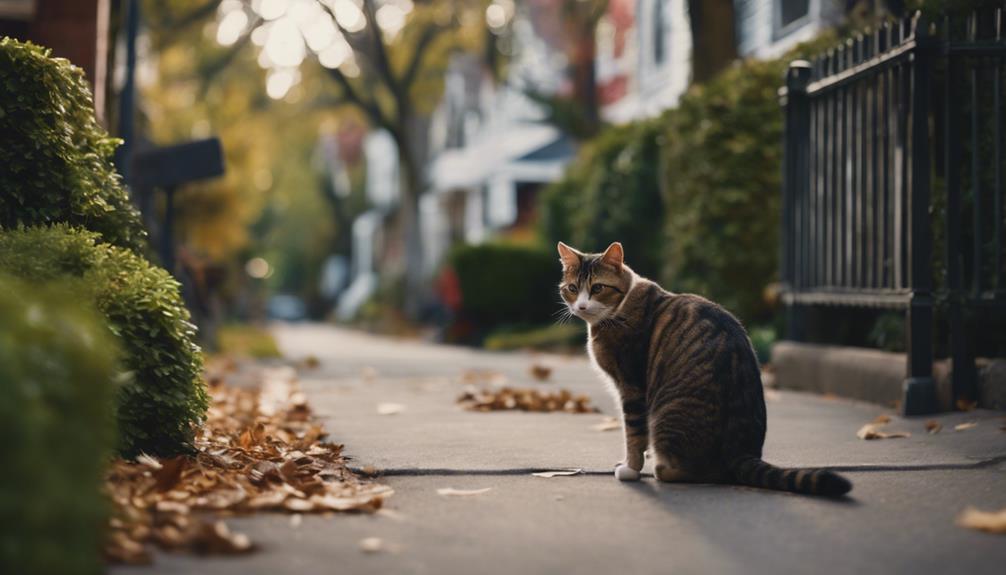
To enhance the chances of finding a lost cat, implementing proactive measures such as placing familiar scents like litter boxes outside can serve as a guiding beacon back home.
Here are three additional tips for finding a lost cat:
- Post Clear Flyers: Create and post flyers with clear photos and contact information in the local area to spread the word about the missing cat effectively.
- Utilize Online Resources: Utilize social media platforms and online lost pet resources to reach a broader audience in the search for the lost cat.
- Check Hiding Spots: Thoroughly check common hiding spots around the home and neighborhood, as cats tend to seek shelter in familiar or secluded areas when lost.