
Cats can understand human meows as forms of social interaction. They learn to meow by observing humans and associate specific meows with desired responses. Cats use meows to communicate needs and desires, more so with human interaction. While they lack linguistic comprehension, cats interpret human meows for engagement. Non-verbal cues like body language are vital in enhancing understanding. Vocal communication, in an upbeat tone, strengthens mutual understanding. Factors like relationship and personality influence cats' responses to meows. Understanding these aspects deepens the bond with cats, fostering harmonious relationships. Further insights can uncover the depth of feline-human communication.
Understanding Feline Communication Cues
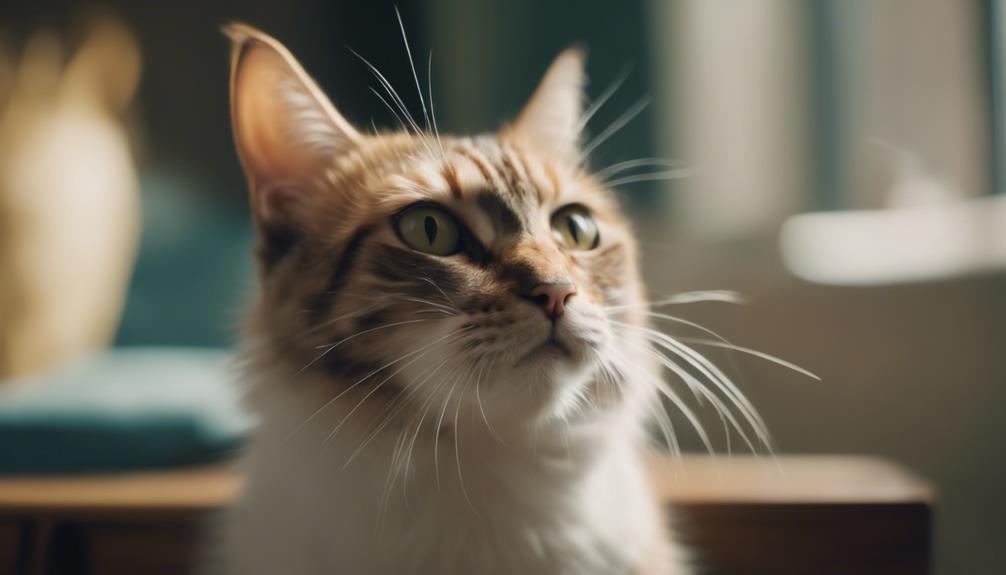
Feline communication cues play a crucial role in understanding the interactions between cats and humans. Cats primarily use meows to communicate their desires, rather than to interpret human meows.
Domestic cats meow more frequently than feral cats when engaging with humans. This behavior is learned by observing and imitating human actions. Cats view human meows as a signal for interaction.
Meowing serves as a manipulative tool for cats to convey their needs to humans effectively. Understanding these communication cues is essential for pet owners to comprehend their cat's intentions and establish a strong human-feline bond.
Emotional Responses to Human Meows
When cats hear human meows, they may display a range of emotional responses through their body language, vocalizations, and bonding behaviors.
Observing a cat's body language, such as ear twitching or eye contact, can provide insights into their emotional state when hearing human meows.
Strengthening the bond between cats and their owners can be facilitated through understanding and responding to these emotional cues exhibited by cats in response to human meows.
Cat's Body Language
In response to human meows, cats demonstrate various emotional responses through their body language. Cats may exhibit curiosity or confusion, shown through ear movements or head tilting, as they try to understand meowing. Signs of excitement or anticipation, like tail flicking or raised whiskers, can indicate a positive interpretation of human language.
When familiar with the human meows, cats might display relaxation or comfort, seen through behaviors such as purring or kneading. On the other hand, fear or anxiety could lead to hiding or avoiding interaction, reflecting a negative emotional response. Aggression or irritation may be expressed through hissing or swatting, especially in response to loud or forceful human meows.
Understanding a cat's body language can provide valuable insights into their emotional state when exposed to human meows.
Vocalization Patterns
Cats' responses to human meows reflect their emotional states and interpersonal dynamics, showcasing a range of reactions from curiosity to annoyance. Cats understand and may meow back in response, using their cognitive skills to interpret the situation.
When humans meow at cats, the feline's vocalization patterns vary depending on their mood and past experiences. Some cats may show interest or engagement when humans initiate meows, indicating a level of connection or curiosity.
Understanding a cat's emotional responses to human meows can provide insight into their feelings and improve communication between the cat and its human companion. By paying attention to these vocal cues and responses, individuals can strengthen their bond with their feline friends and enhance their overall relationship.
Bonding Through Meows
Emotional responses to human meows in cats can provide valuable insights into the depth of their bond with their human companions. Cats may respond emotionally to human meows based on their bond with the person, as well as their personality and past experiences.
Some cats find comfort and reassurance in human meows, strengthening the bond between human and feline. They may perceive human meows as a form of social interaction, responding with affection or curiosity.
These emotional responses can deepen the connection and communication between cats and their owners, enhancing the overall relationship between the two.
Interpretation of Human Meows by Cats
When human meows are consistently paired with specific actions or responses, cats can develop a nuanced understanding of the intended meaning behind these vocalizations. Cats understand human meows as cues for engagement and interaction.
Through learned behavior from human interactions, domestic cats meow more frequently than feral cats. They learn to associate particular meows with desired responses like hunger, thirst, or attention.
Meowing back at cats can strengthen the human-cat bond, as cats are likely to reciprocate. Consistent meowing helps condition cats to interpret the meaning behind human meows and anticipate the desired outcomes.
This mutual communication between humans and cats showcases the ability of felines to develop skills to interpret human vocalizations for effective interaction.
Factors Influencing Cat's Response to Meows

Factors influencing a cat's response to human meows can vary depending on the individual cat's personality and past experiences with the person making the vocalizations. Cats may respond differently based on their unique traits and history with the individual. Here are some key points to take into account:
- Cats primarily respond to human meows based on their relationship with the person.
- Cats may associate human meows with past experiences or desired outcomes.
- Meowing back to a cat can either strengthen the bond or cause annoyance, depending on the cat's preferences.
- Individual personality traits of cats play a significant role in how they respond to human meows.
- Meowing back to a cat can serve as a form of communication but may not be fully understood by the cat.
Communication Patterns in Cat-Human Relationships
Communication in cat-human relationships is primarily characterized by cats using meows as a means to interact with humans rather than to comprehend human vocalizations. Cats lack the cognitive ability to understand human meows on a linguistic level. Instead, they interpret human meows as a form of engagement and respond accordingly.
Domestic cats have learned to meow by observing human behavior and have adapted this vocalization as a way to communicate their desires and needs to their human companions. Feral cats, on the other hand, meow less frequently, indicating a difference in communication patterns based on their environment and interactions with humans.
When you meow at your cat, it is more about initiating communication from your end rather than expecting them to understand your vocalizations on a linguistic level.
Vocalization Differences Between Cats and Humans

In exploring the vocalization differences between cats and humans, it becomes evident that cats primarily utilize meows as a means of communication with humans, while human meows serve more as a form of playful interaction.
- Cats comprehend human language through association and conditioning.
- Cats lack the cognitive skills to understand human meows as direct communication.
- Human meows trigger a change in behavior in cats, encouraging engagement.
- Cats interpret human meows as a signal for interaction, strengthening the bond.
- Replicating meows can be a valuable tool for building a positive relationship with cats.
Behavioral Reactions to Human Meows
Upon hearing human meows, cats may exhibit a range of behavioral reactions that reflect their individual personalities and past interactions with humans. Some cats may show curiosity, tilting their heads or approaching the person making the sounds.
Others might display confusion, trying to locate the source of the unfamiliar meowing. Additionally, certain cats may respond with a desire for engagement, vocalizing back or showing interest in the interaction.
Cats' reactions to human meows can vary based on their unique personality traits, past experiences, and relationship with the individual. They may perceive human meows as an attempt to communicate or connect, leading to different responses.
The effectiveness of using human meows to communicate with cats depends on the individual cat's preferences and level of understanding.
Social Bonding Through Meowing
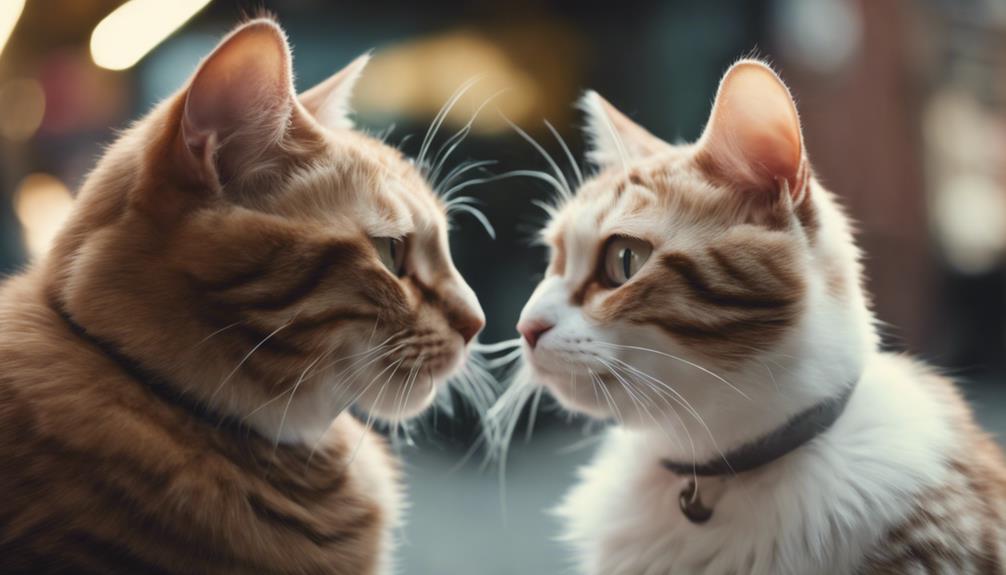
Cats utilize meows as a means of establishing and strengthening social bonds with humans. When cats meow at humans, they are engaging in a form of communication that goes beyond basic needs. This behavior serves to create a deeper connection and understanding between the human and the feline companion. The social bonding through meowing can lead to increased trust and companionship in the relationship. By responding to a cat's meows, humans can show attentiveness and care, which further reinforces the bond between them. Consistent meowing interactions build a shared language between cats and humans, enhancing the quality of their relationship.
- Meowing fosters communication beyond basic needs.
- It creates a deeper connection and understanding.
- Meowing leads to increased trust and companionship.
- Responding to meows shows attentiveness and care.
- Consistent meowing interactions build a shared language.
Importance of Non-Verbal Communication With Cats
When establishing a strong bond with cats, understanding their non-verbal communication cues, such as body language, facial expressions, and gestures, plays a crucial role in fostering effective interaction and connection.
Cats recognize and respond to human body language, interpreting our gestures and expressions to gauge our intentions and emotions. By being attentive to a cat's non-verbal signals, we can reinforce the bond and trust between us.
Body language, such as a relaxed posture or a twitching tail, can indicate a cat's mood and comfort level. Responding appropriately to these cues can enhance communication and mutual understanding.
Paying close attention to how cats communicate non-verbally is key to building a harmonious relationship based on trust and respect.
Do Cats Understand Human Meows as a Form of Communication?
Cats may not understand human meows as a form of communication. While cats communicate with each other through various vocalizations, they may not interpret human meows in the same way. However, the complete guide to caring for cats includes understanding their unique communication signals and forming a strong bond with your feline friend.
Enhancing Mutual Understanding With Your Cat
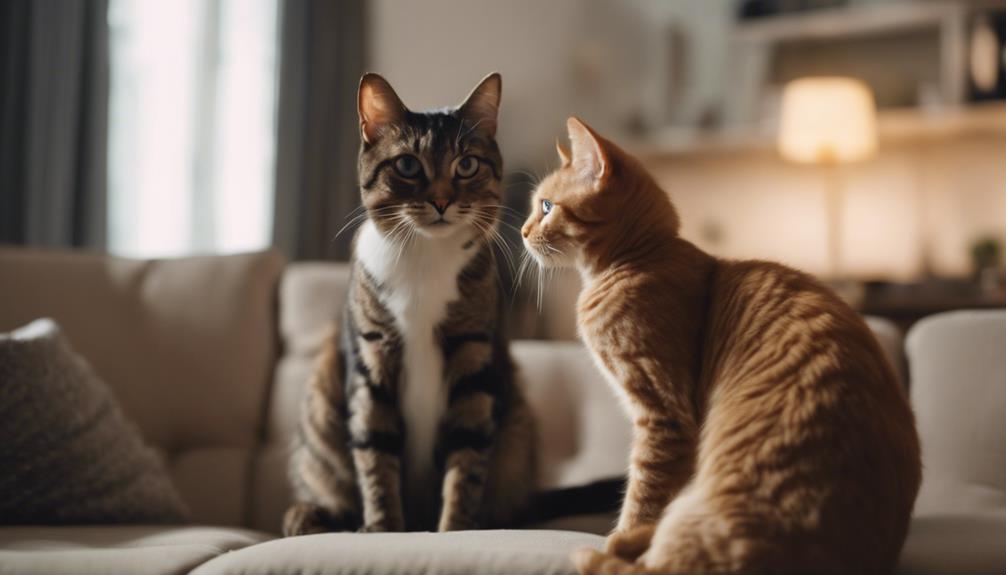
Understanding your cat's body language is crucial. Incorporating vocal communication tips is also important. Engaging in interactive activities with your feline companion can enhance mutual understanding.
Cat Body Language
Enhancing mutual understanding with your cat involves deciphering their body language, including subtle cues like tail position, ear orientation, and eye contact. Reading and understanding your cat's body language can greatly improve communication between you and your feline companion.
Here are some key points to keep in mind:
- Purring can indicate contentment, while hissing may signal fear or aggression.
- Slow blinking from a cat is a sign of trust and relaxation.
- Observing subtle cues like body posture can help interpret your cat's emotions.
- Pay attention to the position of their ears as it can reflect their mood.
- The movement of their head can also provide insights into what your cat is feeling.
Vocal Communication Tips
Deciphering and responding to your cat's vocal cues is an integral aspect of fostering effective communication and understanding with your feline companion. Cats generally use a variety of meows and sounds to express their needs or emotions.
When interacting vocally with your cat, speaking in an upbeat and positive tone can help convey your intentions clearly. Additionally, paying attention to your cat's body movement and head movement while vocalizing can provide valuable insights into their feelings.
Cats respond well to familiar sounds and positive vocalizations from their owners, enhancing the bond between them. By incorporating these vocal communication tips into your interactions, you can strengthen mutual understanding and communication with your cat.
Bonding Through Interaction
How can positive interactions and attentive observation of your cat's behavior contribute to strengthening the bond between you and your feline companion?
Cats know how to speak the same language as humans through nonverbal cues and responses to vocal interactions. Bonding through interaction involves more than just words; it's about understanding your cat's unique way of communicating. To enhance mutual understanding with your cat, consider the following:
- Observe Their Body Language: Cats often convey their feelings through subtle gestures and postures.
- Engage in Playtime: Interactive play sessions can help build trust and create a positive bond.
- Provide Affection: Show your cat love and attention through gentle petting and cuddling.
- Respect Their Boundaries: Recognize when your cat needs space and time alone.
- Use Positive Reinforcement: Reward good behavior with treats or praise to reinforce your bond.