
Air purifiers are effective in reducing cat allergy symptoms by removing allergens like cat dander from the air. HEPA filters, which capture tiny particles, are particularly beneficial for trapping allergens. Air purifiers with activated carbon filters also help combat pet odors associated with allergens. By preventing the recirculation of allergens in the air, air purifiers play a vital role in minimizing cat allergy symptoms. Their use can lead to improved air quality and create a more comfortable living space for individuals with allergies. Consider using air purifiers to alleviate cat allergy symptoms and enhance indoor air quality.
Understanding Cat Allergies

Understanding the root cause of cat allergies is essential for effectively managing symptoms and creating a healthier living environment for those affected. Cat allergens, such as Fel d 1 found in cat saliva, sweat, and dander, are the primary triggers for these allergies. These allergens can linger in the air for prolonged periods, causing allergic reactions when inhaled.
Cat dander, another common allergen, can lead to symptoms like sneezing, watery eyes, and skin rashes. Additionally, interactions with cats can transfer these allergens to individuals, further exacerbating allergic responses. Recognizing the presence of these allergens and their sources is vital in devising strategies to minimize exposure and alleviate symptoms in individuals sensitive to cat allergens.
How Air Purifiers Reduce Allergens
Air purifiers reduce allergens by utilizing HEPA filters that capture tiny particles, including cat allergens like Fel d 1. These devices effectively remove cat dander, saliva, and fur particles from the air, enhancing indoor air quality.
Additionally, activated carbon filters in air purifiers help combat pet odors linked to cat allergens, providing thorough allergen filtration.
Allergen Filtration Process
Utilizing advanced HEPA filters, air purifiers efficiently capture and reduce allergens like Fel d 1 from cats, effectively minimizing allergic reactions in individuals sensitive to pet dander.
- HEPA filters trap 99.97% of particles as small as 0.3 microns, including pet allergens.
- Activated carbon filters in air purifiers help eliminate pet odors associated with cat allergens.
- Air purifiers prevent recirculation of allergens in the air, creating a cleaner indoor environment.
- Removing airborne allergens, air purifiers play an essential role in reducing cat allergy symptoms and improving indoor air quality.
Air Quality Improvement
Enhancing indoor air quality is achieved through the efficient filtration process of air purifiers. This process greatly reduces cat allergens like Fel d 1, improving the overall environment for individuals sensitive to pet dander. HEPA filters, commonly found in air purifiers, play an important role in trapping 99.97% of particles as small as 0.3 microns, including airborne allergens from cats such as saliva, dander, and urine.
By effectively capturing these allergens, air purifiers help alleviate allergic reactions triggered by pet dander. Additionally, activated carbon filters in air purifiers aid in addressing pet odors associated with cat allergens, ensuring a cleaner indoor environment.
This thorough filtration process ensures that the air remains free from harmful pet allergens, promoting a healthier living space for allergy sufferers.
Benefits of HEPA Filtration Technology

With its exceptional capability to capture particles as small as 0.3 microns, HEPA filtration technology stands out as a highly effective method for reducing cat allergens in indoor environments.
- HEPA filters can trap 99.97% of particles, including cat allergens like Fel d 1.
- They efficiently capture pet dander, saliva, and fur particles, improving indoor air quality.
- Air purifiers equipped with HEPA filters help alleviate cat allergy symptoms by removing allergens from the air.
- Using HEPA filtration is recommended for households with cats to enhance indoor air quality and decrease allergen exposure.
Choosing the Right Air Purifier
When selecting the appropriate air purifier for cat allergies, it's important to take into account the filter type options, such as HEPA and activated carbon filters, for effective removal of allergens.
Room size is another vital factor to keep in mind to guarantee that the air purifier can adequately cover the space for efficient filtration.
Additionally, having control over noise levels and adjustable fan speeds can improve personal comfort and usability when dealing with cat allergens in the air.
Filter Type Options
Selecting the appropriate air purifier filter type is essential when aiming to effectively reduce cat allergens in your living space. When considering filter type options for cat allergies, keep in mind the following:
- HEPA filters: These are highly efficient at trapping cat allergens like Fel d 1, with a filtration rate of 99.97%.
- Activated carbon filters: They help combat pet odors linked to cat allergens, contributing to improved air quality.
- Combined filters: Opt for air purifiers featuring both HEPA and activated carbon filters for thorough cat allergen removal.
- Adjustable fan speeds: Choose a purifier with this feature to tailor the air purification process to your specific requirements.
Ensuring you follow the manufacturer's maintenance guidelines and replace filters as recommended is essential for effective performance in reducing cat allergens.
Room Size Considerations
Select an air purifier that suits the size of the room you plan to purify in order to optimize its efficiency in managing cat allergies. The coverage area of the air purifier is essential to guarantee it can effectively clean the air in the room. Look for models that incorporate HEPA and activated carbon filters as they are effective in capturing cat allergens and odors. To help you make an informed decision, consider the table below showcasing some popular air purifiers with their coverage area:
| Air Purifier Model | Coverage Area |
|---|---|
| Model X | 300 sq ft |
| Model Y | 500 sq ft |
| Model Z | 700 sq ft |
Choosing the right air purifier with the appropriate coverage area can greatly improve its performance in reducing cat allergies.
Noise Level Control
To optimize comfort levels in indoor environments, contemplate air purifiers equipped with adjustable fan speeds for controlling noise output effectively. When choosing the right air purifier, prioritize noise reduction features to guarantee a peaceful atmosphere. Here are some key points to ponder:
- Look for models with noise levels below 55 decibels for quieter operation.
- Opt for air purifiers offering silent modes for minimal nighttime disturbance.
- Choose purifiers with noise-reducing features such as insulated filters and sound-dampening technology.
- Check product specifications for dB ratings to select an air purifier that aligns with your noise tolerance levels.
Maintenance Tips for Optimal Performance
For air purifiers to effectively reduce cat allergens, regular maintenance is essential. This includes replacing HEPA filters periodically to guarantee peak performance in capturing allergens.
Cleaning pre-filters and carbon filters can also help maintain the efficiency of air purifiers specifically designed for cat allergies. Following the manufacturer's guidelines for maintenance is vital to make sure that the air purifier continues to effectively capture cat allergens over time.
Additionally, vacuuming or wiping down the exterior of the air purifier can prevent dust buildup and prolong its functionality for cat allergy relief. Keeping the air purifier in a well-ventilated area, away from obstacles, can further enhance its performance in managing cat allergens indoors.
Creating an Allergy-Friendly Indoor Environment
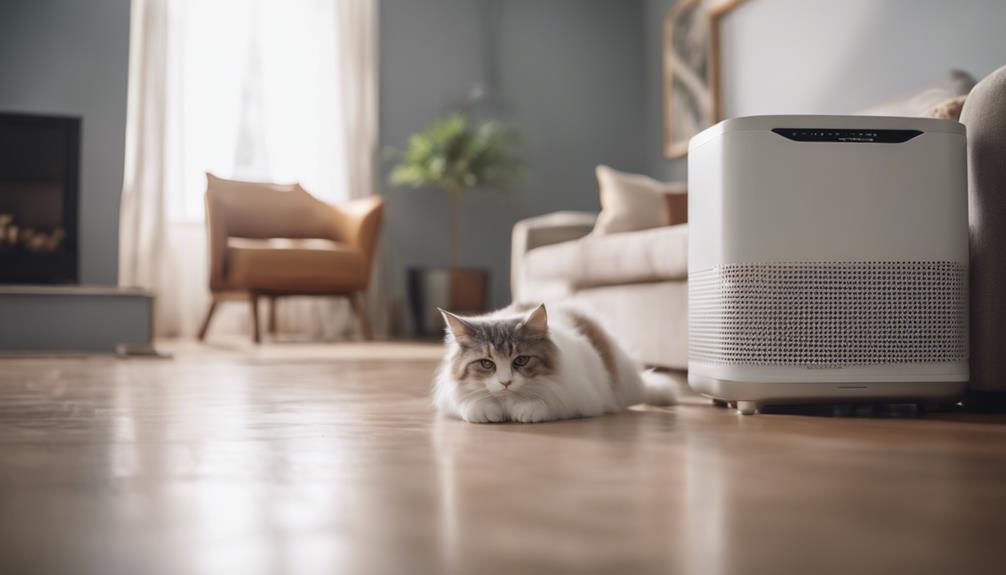
Creating an allergy-friendly indoor environment involves implementing strategies to minimize the presence of cat allergens and create a comfortable living space for individuals sensitive to these allergens.
- Use air purifiers for pet: Invest in air purifiers equipped with HEPA filters to effectively capture cat allergens like Fel d 1.
- Remove pet allergens: Regularly clean surfaces and vacuum carpets to reduce the buildup of cat dander and saliva.
- Consider allergen reduction: Limit your cat's access to certain areas in the house to minimize the spread of allergens.
- Improve air quality: Utilize air purifiers with activated carbon filters to help eliminate cat odors that could trigger allergic reactions.