
Cats can help keep roaches away by using their natural predatory instincts to hunt and deter these pests. Their keen senses enable them to detect roaches and impact their movement patterns. However, the effectiveness of cat hunting can be limited by factors like the cat's individual preferences and the size of the roach infestation. Additionally, cats may not hunt if they are well-fed. While cats can play a role in controlling roaches, it's important to explore other pest control methods for thorough management. Understanding cat behavior towards roaches and monitoring their interactions is essential for effective pest prevention strategies.
Cats as Roach Predators
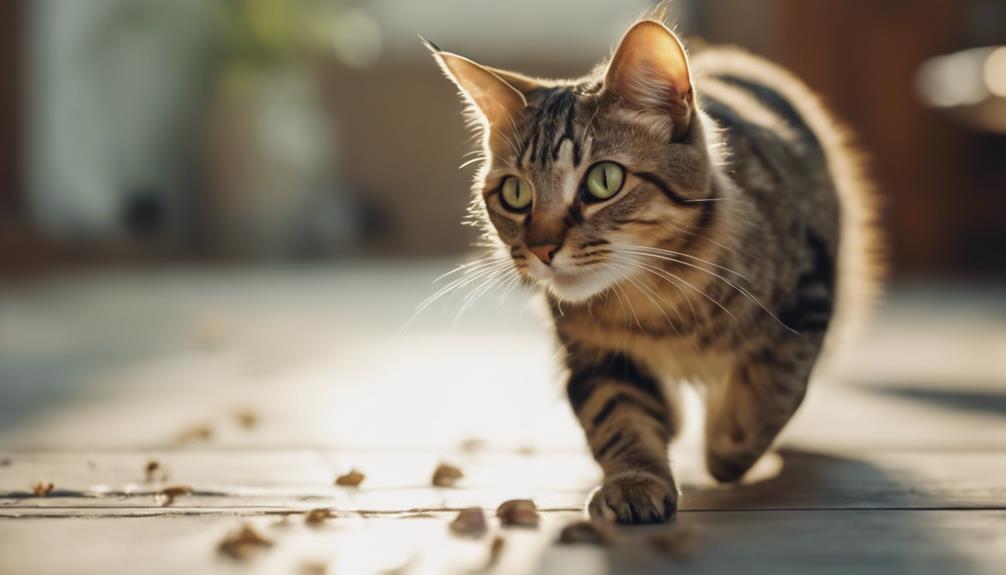
Cats demonstrate innate predatory behaviors that make them effective hunters of roaches within households, aiding in pest control. Their keen senses detect roaches' movements, enabling successful hunts. While cats may not entirely eradicate roach infestations alone, they play a significant role in controlling the population.
Individual preferences and experiences influence cats' hunting behaviors towards roaches, showcasing their natural prowess as pest predators in domestic settings.
Limitations of Cat Hunting
Despite their natural hunting instincts and abilities, there are limitations to relying solely on cats for controlling roach infestations within households.
- Cats may not consistently control roaches if well-fed, reducing their motivation to hunt.
- The size of the roach infestation can overwhelm a cat's hunting capabilities, especially with large populations.
- Cats consuming roaches risk health issues from toxins and hard-to-digest exoskeletons.
Roach Behavior Around Cats

Roaches exhibit various responses to the presence of cats, often fleeing or freezing when encountering these feline predators. This reaction may stem from cats' innate hunting abilities that pose a threat to roaches within a shared environment.
As cats actively hunt roaches, the insects may instinctively avoid areas where feline activity is prevalent, impacting their behavior and movement patterns.
Roaches Flee From Cats
In the presence of feline predators, roaches display instinctual avoidance behaviors as a defense mechanism against the imminent risk of predation.
Roach Behavior Around Cats:
- Cats' hunting instincts and movements can cause roaches to flee or hide.
- Roaches fear being caught by cats, leading them to seek shelter in inaccessible areas.
- Roaches avoid areas with active predators like cats to minimize capture risk.
Cats Hunt Roaches
Hunting with stealth and precision, cats demonstrate an innate ability to track and capture roaches in their surroundings. Cats are skilled hunters that can sense roaches through movement and vibrations, aiding in effective hunting. Roaches may react by fleeing or freezing in the presence of cats. The table below illustrates how cats' hunting behaviors help control roach populations.
| Cat Behavior | Impact on Roaches |
|---|---|
| Effective tracking | Increases catch success rate |
| Quick reflexes | Prevents roach escape |
| Hunting instincts | Controls roach populations |
| Stealthy approach | Roaches may freeze in fear |
| Raised by hunting moms | Exhibits proficient hunting skills |
Cat Health Concerns
Cat owners should be aware of potential health concerns associated with cats consuming roaches. These concerns include gastrointestinal issues, exposure to toxins and bacteria, as well as the difficulty in digesting roach exoskeletons.
Regular veterinary check-ups are essential to monitor and manage any health risks that may arise from cats interacting with roaches.
Cat and Pest Control
When considering the use of cats for pest control, it is imperative to acknowledge the potential health concerns that may arise, particularly regarding the ingestion of cockroaches.
- Cats may consume cockroaches to control roach problems.
- Cockroaches can carry harmful toxins impacting cat health.
- Cats' effectiveness varies based on hunger levels and infestation size.
Risks of Roach Infestation
Exposure to roaches presents significant health risks for feline companions, particularly through the potential transmission of diseases and tapeworm infestations. Cats consuming roaches can contract tapeworms, while roaches can transmit diseases to cats upon ingestion.
Regular veterinary check-ups are essential to monitor cat health in cases of roach infestation. Indoor cats may face fewer health issues from roaches, but monitoring and managing cat interactions with roaches are vital for all feline companions.
Risks of Roach Pesticides
The potential risks associated with roach pesticides in households where cats reside should not be underestimated.
- Cats may ingest pesticides by grooming contaminated fur or surfaces.
- Direct ingestion of roach pesticides can be toxic to cats, leading to health issues.
- Symptoms of pesticide poisoning in cats include vomiting, drooling, lethargy, and difficulty breathing.
Managing Cat-Roach Interactions
When managing cat-roach interactions in your home, it is crucial to take into account cat behavior towards roaches.
Implement effective roach prevention methods and opt for cat-safe pest control options.
Understanding how cats interact with roaches can help in utilizing their hunting instincts to deter these pests.
Cat Behavior Towards Roaches
In understanding the dynamics of cat behavior towards roaches, pet owners can effectively manage interactions to address potential pest control concerns.
- Cats may exhibit behaviors like hunting, playing, or ignoring roaches.
- Some cats actively chase and catch roaches, while others show curiosity.
- Cats sense roaches through movement, reacting based on their hunting instincts.
Roach Prevention Methods
Implementing effective strategies to prevent roach infestations in homes with cats involves a combination of understanding roach behavior, maintaining cleanliness, and harnessing cats' natural hunting instincts. Roaches are attracted to food, water, and shelter, making cleanliness vital.
Cats' hunting activities can help control roach populations, but professional pest control services may be needed for persistent infestations. Addressing roaches rather than relying solely on cats is imperative.
Cat-Safe Pest Control
To guarantee safe and effective pest control in homes with cats, understanding and managing interactions between cats and roaches is essential.
Tips for cat owners:
- Monitor cat-roach interactions to prevent health risks.
- Combine cat hunting with other pest control methods.
- Implement additional prevention measures to manage roach infestations effectively.
Effective Roach Control Methods
Professional pest control services provide thorough treatments and expert advice essential for effectively eliminating roaches.
Sealing entry points and implementing crucial measures play an important role in professional roach control methods.
Combining professional intervention with regular maintenance is key to preventing roach reinfestations.
Effective roach control strategies encompass holistic approaches beyond relying solely on cats for hunting.
Professional exterminators possess the expertise and tools necessary to comprehensively address persistent roach issues.
Understanding Cat Eating Habits
Cats, as obligate carnivores with instinctual hunting tendencies, demonstrate behaviors that extend beyond simply consuming cockroaches. When understanding cat eating habits, make sure to take into account:
- Cats' nutritional needs: They require a diet high in animal proteins.
- Individual preferences: Some cats may not show interest in eating cockroaches.
- Monitoring consumption: Essential for preventing health risks related to toxins and hard-to-digest exoskeletons.
Cat and Roach Coexistence
Cat owners may find that the coexistence of felines and roaches in a household can lead to intriguing dynamics influenced by the animals' natural behaviors.
While cats' hunting instincts may deter roaches from freely roaming, these unwanted pests are primarily attracted to food and warmth.
Although cats can catch roaches, they may not fully control roach populations on their own.
Understanding these dynamics can help manage both cats and roaches in a household.
Can Orange Peels Also Act as a Natural Roach Repellent for Cats?
Yes, orange peels for cat repellent can also act as a natural roach repellent. The strong scent of the orange peels is offensive to roaches and cats alike. Simply place the peels in strategic areas to keep both pests at bay.
Seeking Professional Pest Control
In addressing persistent roach issues, engaging with expert pest control services proves essential for effective and lasting eradication.
Benefits of Professional Pest Control:
- Expertise in roach elimination
- Utilization of specialized tools and solutions
- Targeted treatments, entry point sealing, and long-term preventive advice