
Female cats can spray, typically driven by scent marking for territorial reasons or due to stressors like reproductive needs. While they may spray less than males, it's important to understand this behavior for effective management. Causes include hormonal changes, stress, medical issues, and territorial instincts. Hormones, especially during heat cycles, influence spraying tendencies which can be regulated by spaying. Triggers like new stimuli or household changes can induce spraying. Understanding these factors aids in preventing and addressing this behavior. To explore further into managing female cat spraying and associated health risks, a thorough approach involving veterinary consultation and behavioral modifications is beneficial.
Female Cat Spraying Behavior

Female Cat Spraying Behavior is a natural feline communication method involving scent marking and territorial assertion through urine spraying. Reasons for spraying can include reproductive needs and stressors. Spaying greatly reduces this behavior.
Female cats may spray less than males. Understanding this territorial behavior is important for management and prevention. By recognizing the communication through scent, owners can take steps to minimize spraying in their female cats.
Causes of Female Cat Spraying
Understanding the underlying reasons behind the behavior of spraying in female cats is essential for effective management and prevention strategies.
- Female cats spray to communicate and mark territory.
- Stress, such as environmental changes, can trigger spraying.
- In heat, females spray to attract males.
- Environmental stressors like new pets can induce spraying.
- Spaying markedly reduces female cat spraying, with early spaying recommended.
Hormonal Influences on Female Spraying

Hormones play a significant role in influencing female cat spraying behavior, particularly during their estrus cycle.
The fluctuations in hormonal levels can prompt female cats to spray as a way to attract potential mates.
Understanding how these hormonal influences impact spraying can help in implementing effective strategies to manage and address this behavior.
Hormones and Spraying
During heat cycles, hormonal changes greatly impact the spraying behavior of female cats.
- Estrogen and progesterone levels influence spraying tendencies.
- Spaying can help regulate hormone imbalances and reduce spraying.
- Hormonal fluctuations in intact females may trigger spraying to attract males.
- Understanding these hormonal influences aids in preventing spraying issues effectively.
Estrus Cycle Impact
The estrus cycle plays a significant role in influencing the spraying behavior of female cats.
Hormonal influences during this cycle can lead female cats to spray urine, serving as a communication tool to attract male cats.
This behavior is deeply rooted in their reproductive instincts, where the scent of sprayed urine signals their readiness to mate.
Understanding these hormonal impacts is vital for managing and addressing female cat spraying behavior.
Female Cat Spraying Triggers
When faced with specific stressors or changes in their environment, female cats may exhibit spraying behavior as a way to communicate and establish territorial boundaries with other cats.
- Introducing new people or animals
- Heat cycles
- Environmental disruptions
- Changes in the household
- Spaying
These triggers can lead female cats to spray, emphasizing the importance of understanding and addressing their needs.
Addressing Female Cat Spraying

When addressing female cat spraying, it is essential to understand the causes of this behavior, including territorial marking and stress-related triggers.
Behavioral adjustments and prevention strategies play a key role in managing female cat spraying, with spaying being a significant factor in reducing this behavior.
Causes of Spraying
What triggers the spraying behavior in female cats?
- Female cats spray for communication and marking purposes.
- Changes in their environment or stressors can induce spraying.
- During heat cycles, females may spray to attract males for mating.
- Spaying greatly reduces the likelihood of female cats spraying.
- Providing a stress-free environment and addressing underlying issues can help prevent female cat spraying.
Behavioral Triggers
Addressing the behavioral triggers that prompt female cats to spray is essential for effectively managing this behavior. These triggers can include stressors like changes in routine or territory, mating instincts during heat cycles, and environmental factors. By understanding these behavioral triggers, cat owners can take steps to reduce spraying behavior and create a harmonious environment for their feline companions.
| Behavioral Triggers | Examples |
|---|---|
| Changes in routine | New people or animals |
| Territory | Marking territory |
| Mating instincts | Heat cycles |
Prevention Tips
To effectively manage and reduce female cat spraying behavior, implementing preventive measures such as spaying and environmental adjustments is essential.
- Spaying or Neutering: Early spaying greatly reduces the likelihood of female cat spraying.
- Environmental Adjustments: Modifying the cat's environment can help prevent spraying.
- Stress-Free Environment: Providing a calm and stress-free environment is vital in addressing female cat spraying.
- Regular Vet Check-ups: Ensuring the cat's health is important to reducing spraying behavior.
- Positive Reinforcement: Rewarding good behavior can discourage spraying in female cats.
Preventing Female Cat Spraying
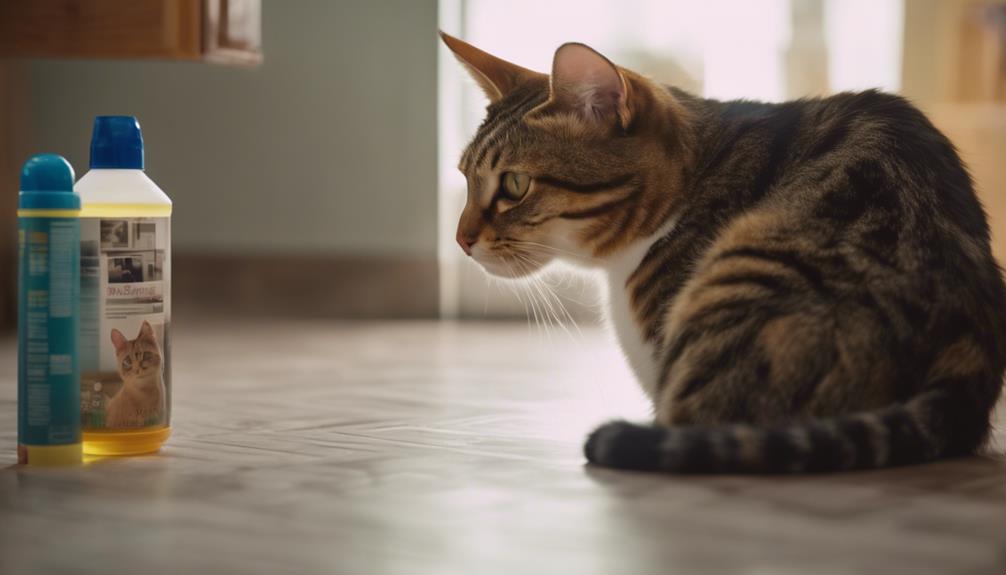
One effective method for preventing female cat spraying is through spaying, which greatly reduces the likelihood of this behavior.
| Preventive Methods | Benefits |
|---|---|
| Spaying early | Reduces spraying urge |
| Environmental adjustments | Creates stress-free environment |
| Stress management | Helps deter female cats from spraying |
Female Cat Spraying Myths
Contrary to common misconceptions, female cats are also capable of spraying to communicate and mark their territory.
- Female cats have scent glands for spraying, similar to male cats.
- They may spray less frequently and in smaller volumes compared to males.
- Spaying greatly reduces spraying behavior in females.
- Understanding reasons behind spraying, like stress or reproductive signaling, is important.
- Not all intact cats, regardless of gender, will exhibit spraying behavior.
Spaying Female Cats Effectively

Spaying female cats is a highly effective method to reduce urine spraying behavior.
This procedure, when done early, helps in preventing female cats from developing the habit of spraying.
Benefits of Spaying
Spaying female cats is an essential method for reducing spraying behavior in felines.
- Stabilizes hormonal balance
- Decreases urge to spray
- Prevents spraying behavior
- Environmental adjustments enhance effectiveness
- Stress-free environment vital
Spaying Process Overview
The surgical procedure for spaying female cats involves the removal of the ovaries and uterus, effectively preventing reproduction and reducing spraying behavior. This routine and safe process helps stabilize hormonal balance, decreasing territorial marking tendencies.
Early spaying, ideally before the first heat cycle, is recommended to prevent spraying behavior.
Spaying female cats is a reliable method to manage territorial spraying, fostering a stress-free environment for both the cat and its owner.
Behavioral Insights on Female Spraying
When examining the behavioral insights related to female cat spraying, it becomes evident that understanding their natural communication methods is essential.
- Female cats spray to mark territory and communicate using scent glands.
- Spaying greatly reduces spraying behavior.
- Spraying is more common during the heat cycle.
- Environmental adjustments and stress reduction help prevent spraying.
- Understanding reasons behind spraying aids in effective prevention.
Can Neutering Prevent Female Cats from Spraying?
Yes, neutering can prevent female cats from spraying. Neutered cats spray prevention is a common benefit of the procedure. By spaying your female cat, you can reduce the likelihood of her marking territory with urine. This can help keep your home free from unwanted odors and messes.
Managing Female Cat Spraying

Understanding the management strategies for female cat spraying is key to maintaining a harmonious living environment for both feline companions and their owners. Spaying greatly reduces the likelihood of this behavior, with early spaying being particularly recommended.
Environmental adjustments and providing a stress-free environment are vital in preventing female cats from spraying. They may spray less frequently and in smaller volumes compared to male cats, making management strategies essential.