
Cats do not understand human smiles in the same way we do. While they may pick up on our positive emotions, they interpret facial expressions based on their own instincts and behaviors. Cats show affection and contentment through slow blinking, purring, and other gestures rather than smiles. Understanding feline communication cues, body language, and vocalizations is key to deciphering their emotions accurately. Observing their behavior closely can reveal a lot about how they feel and what they need. Decoding cat behavior is a fascinating journey that can deepen your bond with your feline companion.
Misconception About Cat Smiles
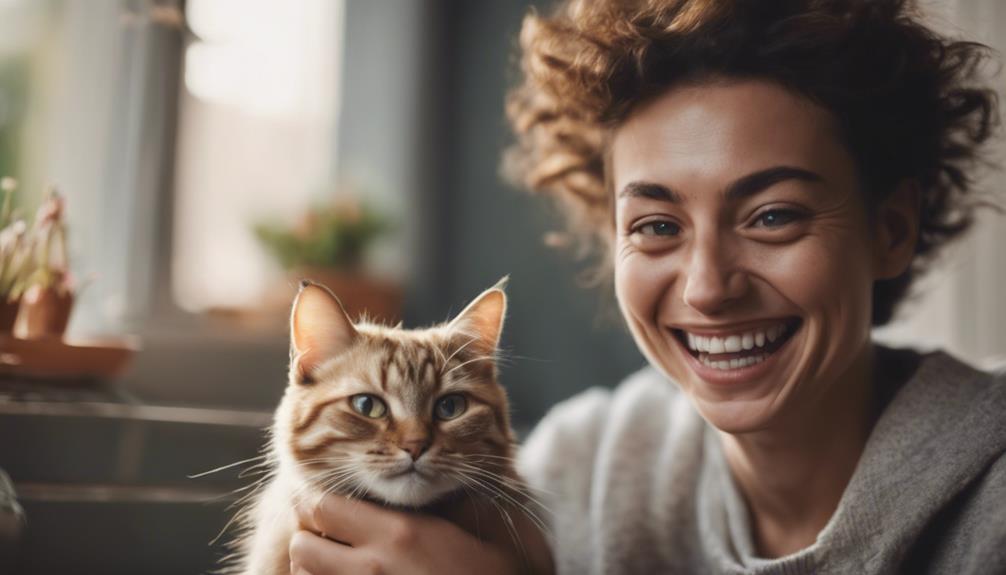
The misconception about cat smiles often arises from misinterpreting feline facial expressions, leading to a misunderstanding of their emotional cues. Cats may exhibit behaviors like slow-blinking that resemble a smile, but it doesn't always indicate happiness.
Understanding feline behavior is essential in deciphering their emotions accurately. Smiling is not a common expression in cats, and interpreting their overall body language and vocalizations provides a more accurate insight into their feelings.
Feline Facial Expressions Decoded
Deciphering feline facial expressions provides valuable insights into cats' emotional states and communication cues. Cats exhibit happiness through slow blinking, purring, and tail flicking. These expressions convey emotions like contentment, affection, and relaxation.
While cats may not interpret human smiles, they understand gestures like the slow blink as signs of affection. Observing a cat's facial cues helps in understanding their emotional well-being and building a stronger bond.
Understanding Cat Body Language

Understanding Cat Body Language involves interpreting various subtle cues that cats use to communicate their emotions and intentions. Cats convey emotions through tail position, ear movement, and eye contact.
Affection is shown through head bunting, kneading, and slow blinking. Observing a cat's body language can reveal their emotional state and intentions, while vocalizations like meowing, purring, hissing, and growling are additional forms of communication.
Cats also mark their scent and territory by rubbing against objects or people.
Interpreting Cat Communication Cues
Interpreting the subtle cues of cat communication involves observing their meowing, purring, and body language to understand their emotions and intentions.
Cats exhibit positive interactions through behaviors like head bunting, kneading, and slow blinking.
Understanding a cat's body language, tail position, ear movement, and eye contact is vital in interpreting their feelings.
Decoding Slow Blinks in Cats

Cats often communicate feelings of contentment and affection through the subtle gesture of slow blinking. When a cat narrows its eyes almost to slits, it indicates a sense of comfort and trust.
Responding with a slow blink back can reinforce the bond between you and your cat. This simple act can help your cat feel secure and happy in its surroundings, ultimately strengthening your relationship.
Can Overstimulation Lead to Misinterpretation of Smiles by Cats?
Cats are complex creatures, and it can be challenging to tell if cat overstimulated, especially when it comes to interpreting their smiles. Overstimulation can cause a cat to display stress signals, which may be misinterpreted as a smile. It’s important to observe their body language and behavior carefully to understand their emotions accurately.
Significance of Cat Behavior Analysis
Studying cat behavior is essential for understanding their emotions and intentions. By observing body language, vocalizations, and interactions, one can decode the subtle cues cats use to communicate.
This analysis is vital for fostering better communication and strengthening the bond between cats and their owners.
Body Language Cues
Understanding the significance of body language cues in cat behavior analysis is essential for pet owners to effectively interpret their feline companions' emotions and intentions.
- Cats convey messages through tail position, ear movement, and eye contact.
- Signs like head bunting, kneading, and slow blinking indicate affection.
- Behaviors such as rubbing against objects reveal scent marking.
- Observing feline body language helps interpret their feelings and moods.
Communication Through Behavior
Interpreting a cat's behavior provides valuable insights into their emotions and intentions, enhancing the bond between pet owners and their feline companions. By paying attention to cues like meowing, purring, and body language, one can better understand a cat's feelings. Observing actions such as head bunting, kneading, and slow blinking also helps decipher their communication. Recognizing subtle signals like tail position, ear movement, and eye contact is key in building a strong relationship.
| Cat Behavior Cues | Description | Importance |
|---|---|---|
| Meowing | Vocal communication | Expressing needs or wants |
| Purring | Contentment | Indicates comfort |
| Hissing | Aggression or fear | Warns of discomfort |
| Head bunting | Affectionate gesture | Shows love and trust |
| Slow blinking | Sign of relaxation | Demonstrates calmness |