
The duration for brushing your cat varies based on breed and fur length. Long-haired cats may require daily brushing, while short-haired breeds could benefit from grooming several times a week. Understanding your cat's coat type is crucial to determine the best brushing time. Factors like grooming needs and shedding tendencies play a role in how long you should brush your cat. Differentiate between short and long-haired cats for effective brushing techniques. To maintain your cat's coat health and well-being, make sure you tailor grooming sessions to their specific needs. For more in-depth insights, explore the significance of brushing frequency and its bonding benefits.
Importance of Brushing Your Cat
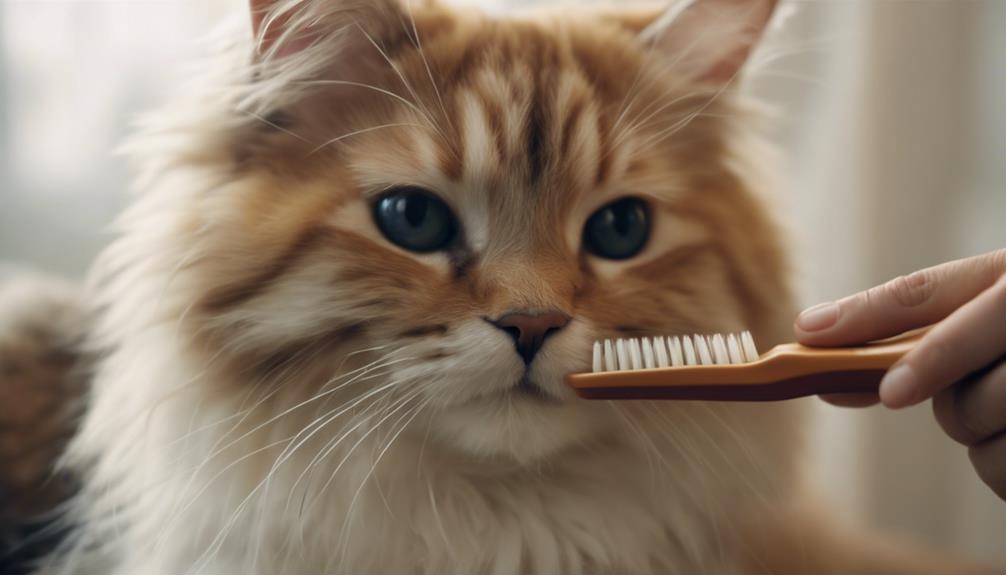
Regular grooming through brushing your cat is vital for maintaining their health and well-being. Brushing helps prevent matting and reduces hairballs, promoting a clean and healthy coat.
It also fosters bonding between you and your cat during grooming sessions. By controlling shedding and spotting fleas early, regular brushing plays an important role in ensuring the overall health of your feline companion.
Optimal Frequency for Brushing Cats
Determining the best frequency for brushing your cat depends on its breed and fur length. Long-haired cats like Persians may require daily brushing to prevent tangles, while short-haired breeds could benefit from grooming several times a week to manage shedding.
Understanding your cat's specific grooming needs is essential in establishing a brushing schedule that maintains a healthy coat and prevents skin irritation.
Brushing Schedule Importance
Establishing a consistent brushing routine is essential for maintaining the health and appearance of your cat's coat, tailored to their individual needs based on coat length and shedding tendencies.
Long-haired cats may require daily brushing to prevent matting, while short-haired cats can benefit from brushing a few times a week for maintenance.
Regular brushing helps distribute natural oils, prevents hairballs, and contributes to overall coat health.
Benefits of Regular Brushing
Consistent grooming practices play an essential role in maintaining the health and appearance of your cat's coat, with ideal brushing frequency tailored to their specific grooming needs and breed characteristics.
Regular brushing helps reduce the amount of loose hairs, preventing hairballs and matting issues. It also promotes bonding with your cat, controls shedding, and aids in early detection of potential health issues like fleas.
Recommended Brushing Techniques
Regular grooming practices tailored to your cat's specific needs are crucial for maintaining a healthy and tidy coat. To guarantee proper grooming and health maintenance, follow these recommendations when brushing your cat:
- Short-haired cats: Brush once or twice a week.
- Long-haired cats: Daily brushing is ideal.
- Bonding: Regular brushing improves the bond with your cat.
- Health benefits: Helps control shedding and spot fleas early, particularly beneficial for older cats.
Factors Influencing Brushing Duration
The length and grooming requirements of a cat's coat play a significant role in determining the duration needed for brushing sessions. Short-haired cats may need a few minutes once or twice a week, while long-haired cats could require daily 5-10 minute sessions to prevent matting. Intense grooming sessions for long-haired cats might last 30 minutes to an hour. Consistency in a brushing routine is essential for maintaining a healthy coat.
| Factors | Time Needed |
|---|---|
| Short-Haired Cats | Few minutes once or twice a week |
| Long-Haired Cats | 5-10 minutes daily to prevent matting |
| Intense Grooming | 30 minutes to an hour for long-haired cats |
Understanding Your Cat's Coat Type
Different cat breeds have varying coat types that require specific grooming techniques. Short-haired cats typically need quick brushing sessions following the direction of fur growth.
On the other hand, long-haired cats may require more thorough brushing, starting from the legs and abdomen to prevent matting and knots.
Cat Coat Types
Understanding the unique coat types of cats is essential for tailoring grooming practices to suit their specific needs.
- Differentiate between short-haired and long-haired cat coats for grooming.
- Short-haired cats need quick brushing in the direction of fur growth.
- Long-haired cats require methodical brushing starting from legs and abdomen.
- Use mat splitters for stubborn knots in long-haired cats.
Grooming Needs
To effectively care for your cat's coat, it is essential to comprehend the specific grooming needs dictated by their unique coat type. Differentiate between short-haired and long-haired cats to tailor brushing techniques accordingly.
Brush short-haired cats quickly in the direction of fur growth for a tidy coat. For long-haired cats, start brushing methodically from legs and abdomen to prevent tangles. Use mat splitters for stubborn knots and adapt brushing frequency based on your cat's coat type.
Coat Care Tips
When caring for your cat's coat, it is imperative to tailor your grooming techniques to their specific fur type to maintain a healthy and tangle-free coat.
Differentiate between grooming short-haired and long-haired cats for effective coat care.
Adapt brushing techniques based on your cat's fur type to prevent matting and tangles.
Use specific tools like metal combs or wire-bristle brushes for short-haired cats.
Employ comb with coarse and fine teeth for long-haired cats to maintain their coat.
Tools Required for Cat Brushing

For effective cat grooming, selecting the appropriate tools tailored to your cat's fur type is essential to guarantee thorough removal of dead fur and prevention of matting.
Experiment with different brushes like a metal comb for detangling, a rubber brush for removing loose fur, or a grooming mitt for a gentle massage while grooming.
Clean tools between uses to maintain hygiene and prevent the spread of bacteria.
Effective Techniques for Brushing Cats
To guarantee your cat's grooming routine is successful, mastering the appropriate techniques for brushing cats based on their fur length is essential.
- Differentiate between grooming short-haired and long-haired cats.
- Use a quick brushing method for short-haired cats.
- Methodically brush long-haired cats, starting from legs and abdomen.
- Utilize mat splitters for stubborn knots in long-haired cats' fur.
Signs of Over-Grooming in Cats
Excessive grooming in cats can result in visible bald patches on their skin, indicating a potential underlying health concern such as allergies or anxiety. Signs of over-grooming include red, irritated skin and constant licking or biting.
Cats may over-groom due to stress, boredom, or skin irritation. Monitoring grooming habits is vital to identifying any potential health issues early on. Regular observation can help prevent severe consequences of over-grooming.
Recommended Brushing Time for Different Breeds
Regular grooming sessions are essential for maintaining the coat health of different cat breeds. This varies from daily brushing for long-haired cats like Persians to several times a week for short-haired breeds like American Shorthairs.
- Long-haired breeds like Persians require daily brushing to prevent matting.
- Medium-haired cats may need grooming several times a week for coat health.
- Short-haired breeds benefit from grooming sessions several times a week.
- Excessive brushing can lead to skin irritation for all cat breeds.
Can Brushing My Cat Help with CBD Absorption and Effectiveness?
Brushing your cat can indeed help with cbd effects in cats. Regular grooming can improve blood circulation and skin health, which can enhance the absorption and effectiveness of CBD products. Additionally, the bonding experience of brushing can reduce stress in cats, further supporting the positive effects of CBD.
How Brushing Enhances Bonding With Cats

Enhancing the bond with your cat can be achieved through the act of brushing, fostering a deeper connection and understanding between you and your feline companion.
Brushing provides physical contact and bonding time, strengthening the relationship and communication between you both.
This regular grooming routine not only enhances trust but also allows for the opportunity to check your cat's skin and fur for any abnormalities, promoting overall health and well-being.