
To determine the right playtime for your cat, consider factors like age, health, and preferences. Kittens benefit from short, frequent sessions with engaging toys. Adult cats enjoy multiple 10-15 minute play sessions daily for mental and physical stimulation. Senior cats need adjusted activities due to reduced mobility. Watch for cues like dilated pupils and tail behavior during play. Tailor interactions to guarantee a positive experience for your pet. Understanding your cat's needs improves the quality of playtime and fosters a strong bond between you both. More insights on this topic can offer a deeper understanding of how to interact effectively with your feline companion.
Factors to Consider for Playtime Duration
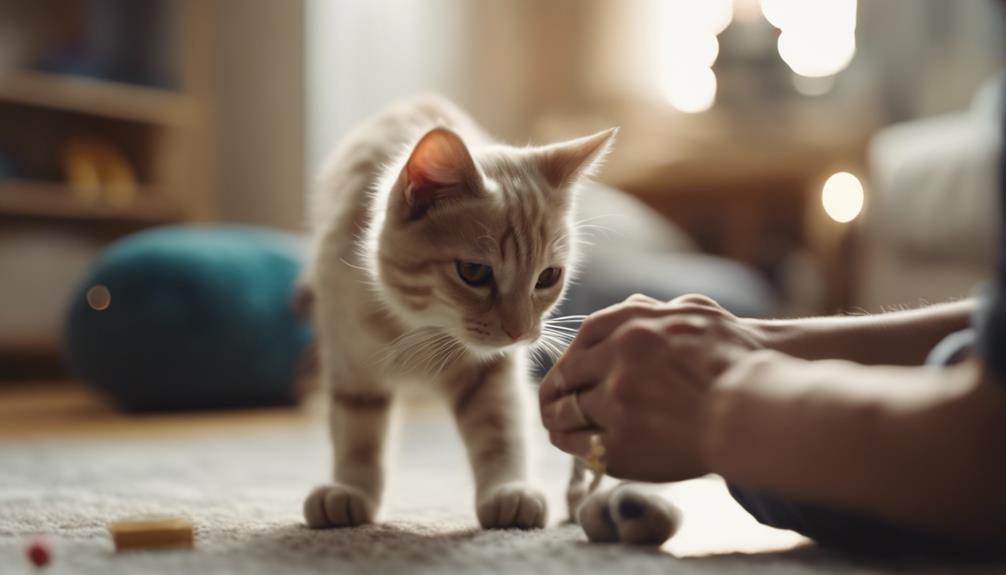
Determining the appropriate duration for playtime with your cat involves considering various factors that impact their engagement and well-being. Factors such as age, health, stamina, and individual needs play an important role in determining the ideal playtime duration.
Consistency in scheduled interactive play sessions is essential for maintaining your cat's health and happiness. Tailoring playtime duration to meet your cat's preferences guarantees maximum engagement and enjoyment.
Playtime Recommendations for Kittens
When considering playtime recommendations for kittens, it is important to prioritize short, frequent interactive sessions to support their developmental needs. Engage kittens in play to enhance coordination, social skills, and mental growth. Use age-appropriate toys like feather wands and crinkle balls to stimulate their predatory instincts. Supervision during playtime is vital to guarantee the safety of kittens and prevent any accidents or ingestion of small toy parts.
| Aspect | Details |
|---|---|
| Playtime Duration | 15-20 minutes per session |
| Toys | Feather wands, crinkle balls |
| Supervision | Vital for safety |
Ideal Playtime for Adult Cats

For adult cats, incorporating 10-15 minute play sessions multiple times a day is beneficial for their overall well-being and health.
- Regular play sessions provide mental and physical stimulation.
- Short play sessions suit their attention spans.
- Helps maintain a healthy weight.
- Fulfills their natural behavior needs in your daily schedule.
Adjusting Playtime for Senior Cats
When catering to senior cats during playtime, it's crucial to take into account their specific needs and limitations. Tailoring activities to accommodate reduced mobility and cognitive function can help keep senior cats engaged and mentally sharp.
Offering gentle play options and interactive toys designed for seniors can make playtime enjoyable and comfortable for aging felines.
Senior Cat Playtime Needs
Adjusting playtime for senior cats involves tailoring activities to their decreased energy levels and potential mobility issues, ensuring gentle and engaging interactions that promote their well-being.
- Use slow-moving toys to accommodate mobility issues.
- Offer puzzle feeders for mental stimulation.
- Monitor closely for overexertion.
- Opt for shorter, gentle play sessions to prevent strain on arthritic joints.
Tailor Activities for Seniors
As senior cats require tailored playtime activities due to their decreased energy levels and potential mobility issues, it is crucial to adjust the duration and type of interactions to guarantee their well-being.
Shorter play sessions of 5-10 minutes are ideal to prevent fatigue. Use slower-paced toys suitable for their reduced energy levels. Introduce brain-teaser toys to keep senior cats mentally stimulated. Monitor toys closely to safeguard their safety during playtime.
Gentle Play Options
Senior cats benefit greatly from incorporating gentler play options into their routine to safeguard their well-being and prevent any potential overexertion or joint strain.
- Opt for shorter sessions to prevent exhaustion.
- Engage in slower-paced games to match their energy levels.
- Introduce brain teasers and puzzle toys for mental stimulation.
- Always supervise to avoid choking hazards and regularly monitor toys for wear and tear.
Observing Cat Behavior During Play
Observing your cat's behavior during play is essential in understanding their needs and preferences.
Cat play patterns can vary, and reading your cat's signals is key to ensuring a positive interaction.
Cat Play Patterns
During interactive play sessions, cats exhibit a variety of distinct behaviors that reflect their innate instincts and playful nature.
- Pouncing: Cats often leap forward suddenly to catch toys or simulate hunting.
- Chasing: Cats enjoy pursuing moving objects, showcasing their agility.
- Batting: They use their paws to swipe at toys or prey-like items.
- Mock hunting behaviors: Cats engage in pretend hunting, mimicking their natural instincts.
Reading Cat Signals
When engaging in interactive play sessions with your cat, it is essential to pay close attention to their behavioral cues to guarantee a positive and enjoyable experience for both of you. Watch for dilated pupils, flattened ears, and low body posture as signs of overstimulation.
Tail twitching, swishing, or thumping can indicate excitement or frustration. Hissing, growling, or sudden aggression signals a need to end the play session immediately. Vocalizations convey different emotions during playtime interactions.
Can Playing with My Cat Help Reduce its Fear and Hiding Behavior?
Playing with your cat can be a beneficial way to reduce feline fear behavior patterns and hiding. Engaging in interactive playtime can help build trust and confidence, leading to a decrease in fearful behaviors. Providing a positive and fun environment can help your cat feel more secure and relaxed.
Ensuring Engagement and Satisfaction
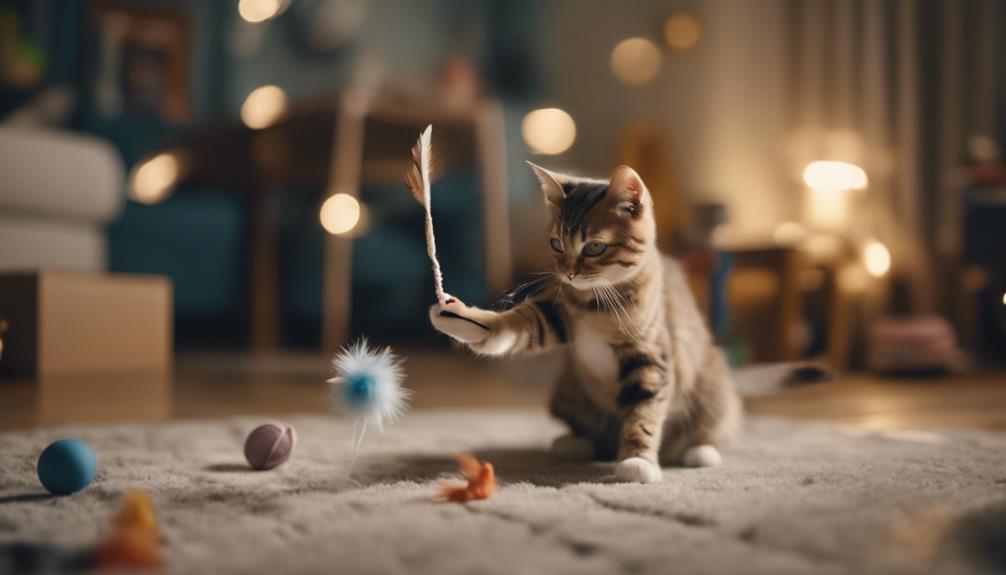
To guarantee peak engagement and satisfaction during playtime with your cat, customize the duration and activities to match your feline companion's preferences and energy levels.
- Be Mindful of Time: Opt for 10-15 minute play sessions.
- Adapt to Your Cat: Tailor playtime based on their preferences and energy levels.
- End Appropriately: Slow down toy movements to signal the end smoothly.
- Watch for Cues: Adjust based on your cat's behavior cues for continued satisfaction.