
To brush a cat that resists grooming, start by introducing the brush gradually during calm moments, allowing the cat to investigate at their own pace. Use positive reinforcement like treats or gentle strokes. Employ gentle brushing techniques with soft-bristled brushes, starting with small areas before progressing. If faced with resistance, be patient, start with the back, and employ soft words. Make grooming positive by using treats, praise, and calming sprays. Over time, build trust by gradually increasing grooming durations with consistency. Creating a positive experience fosters a strong bond between you and your cat.
Introducing the Brush Gradually
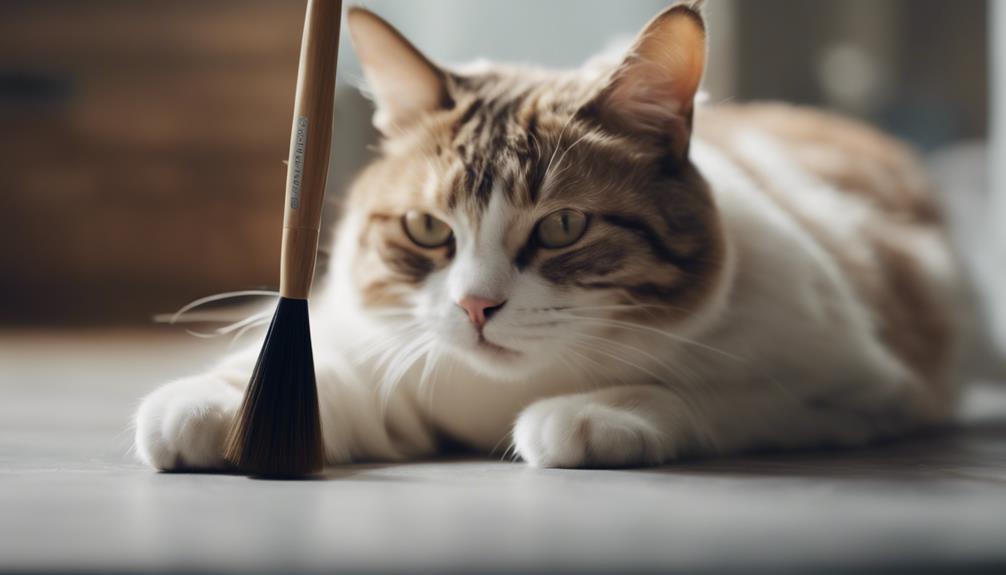
To familiarize a reluctant cat with the brush, introduce it gradually during calm moments, allowing the cat to investigate at their own pace. Use positive reinforcement like treats or gentle strokes when the cat shows interest.
Incorporate the brush into petting sessions to create a positive association. Respect the cat's boundaries, progressing slowly to make them comfortable with the grooming process.
Using Gentle Brushing Techniques
When grooming a cat, it is important to use gentle brushing techniques to guarantee their comfort and cooperation. Choose a brush with soft bristles or a rubber glove brush to prevent discomfort.
Introduce the brush gradually, allowing the cat to sniff and rub against it. Start with small areas before moving to sensitive spots.
Seek professional help for severe matting in long-haired cats to safeguard their well-being.
Handling Resistance With Patience
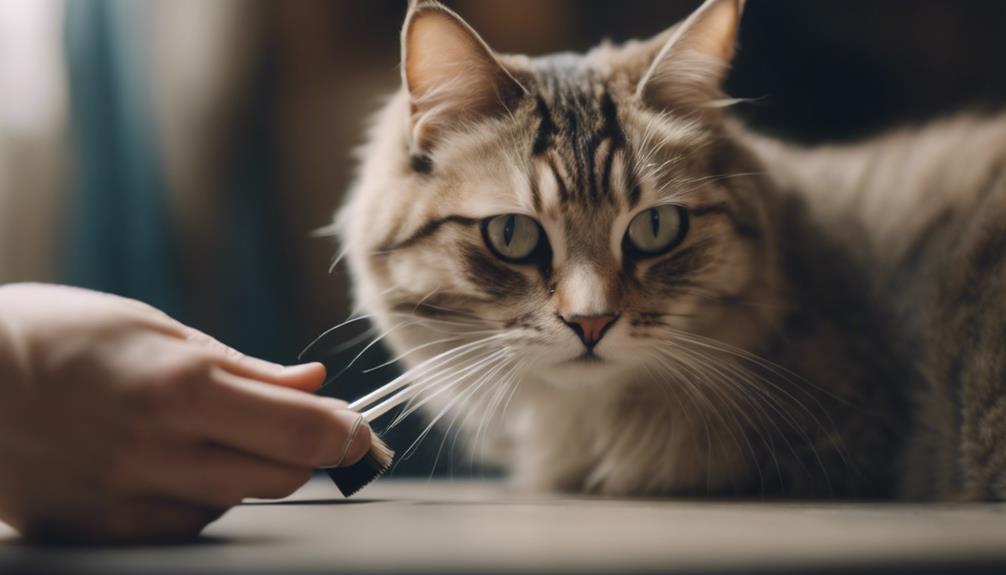
When faced with a cat exhibiting resistance during grooming sessions, employing patience and gentle techniques is paramount to ensuring a successful brushing experience.
- Use a soft-bristled brush for a gentle approach.
- Begin brushing small areas like the back first.
- Speak softly to create a positive association.
Remember to seek professional help for severe matting and take breaks if needed.
Making Grooming a Positive Experience
In establishing a positive grooming experience for your cat, employing positive reinforcement techniques and gradual introduction of grooming tools is essential. Use treats during grooming sessions, offer praise, and use calming pheromone sprays to reduce anxiety. Ensure gentle sessions, take breaks if needed, and resume when calm. This approach helps build trust and creates a positive experience for your feline friend.
| Positive Reinforcement | Gentle Sessions | Calming Pheromone Sprays |
|---|---|---|
| Use treats or toys | Introduce tools slowly | Relax the cat |
| Offer praise | Be gentle and patient | Reduce anxiety |
| Build trust | Take breaks if needed | Create a calm environment |
Why is it Important to Brush a Cat That Doesn’t Want to Be Brushed?
Brushing your cat regularly is essential for their grooming and overall health. A cleaning a cat brush tutorial can provide helpful tips for dealing with reluctant felines. Despite their resistance, brushing helps prevent matting, reduces shedding, and promotes a healthy coat. Patience and gentle techniques can make the process easier for both you and your cat.
Building Trust Over Time
To establish a strong bond with a reluctant cat during grooming, gradually building trust over time is fundamental in ensuring a positive and stress-free experience for both the cat and the owner.
- Introduce different brushes slowly.
- Begin brushing in short, positive sessions.
- Use consistency and patience to increase brushing duration gradually, incorporating positive reinforcement techniques.