
To brush your cat's teeth, use a soft-bristled cat toothbrush and cat-specific toothpaste. Start by getting your cat comfortable with the process by touching their gums. Gently brush in circular motions, focusing on the gum line where plaque accumulates. Aim for daily brushing to prevent dental issues. Provide tasty treats or toys for positive reinforcement. It's important to establish a routine early and guarantee a stress-free experience for your cat's oral health. Proper dental care is critical for preventing periodontal disease and supporting their overall well-being. Mastering this skill is crucial for your feline friend's long-term health.
Importance of Cat Dental Care
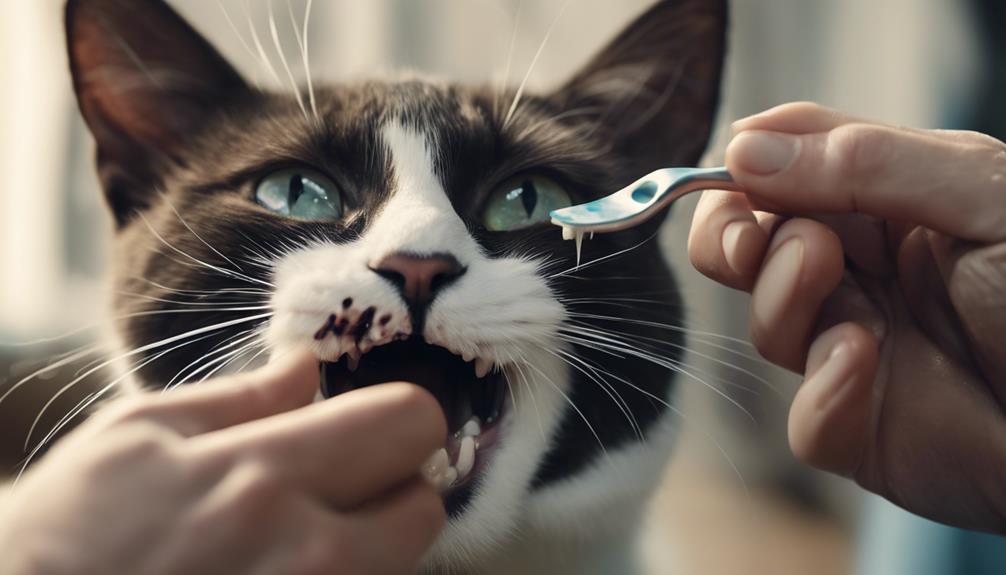
Ensuring proper dental care for cats is essential in maintaining their overall health and well-being. Periodontal disease affects 50-80% of cats over 4 years old, often stemming from plaque buildup.
Daily brushing can prevent plaque accumulation, reducing the risk of dental issues. Starting brushing routines early and following professional cleanings can lead to improved long-term oral health for cats, preventing painful conditions associated with poor dental care.
Brushing Frequency Recommendations
Maintaining peak oral health for your cat involves adhering to recommended brushing frequencies and incorporating regular professional dental cleanings.
- Daily brushing maximally maintains oral health.
- Annual professional dental cleanings complement daily brushing.
- Brushing prevents plaque, tartar, gingivitis, and periodontal disease.
- Consistent dental care prevents painful dental issues and systemic health problems, ensuring your cat's longevity and overall well-being.
Essential Tools for Brushing
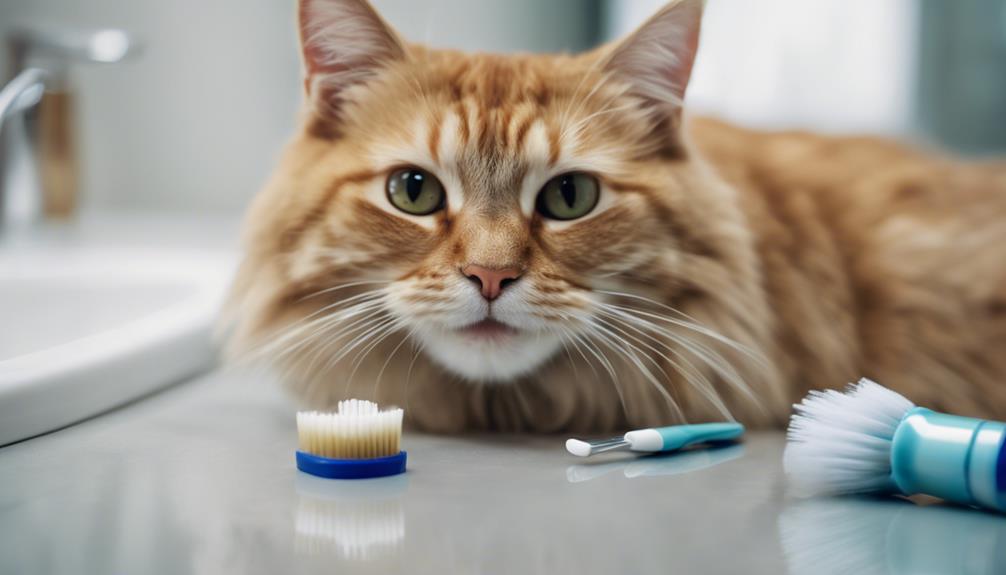
To effectively brush your cat's teeth, it is essential to have the necessary tools specifically designed for feline dental care. Essential tools include a cat toothbrush with soft bristles and small heads for gentle cleaning, kitten toothpaste free of harmful ingredients, cat-specific toothpaste with appealing flavors, treats for positive reinforcement, and toys to make brushing more enjoyable. These tools are vital for proper dental hygiene practices.
| Tools | Description |
|---|---|
| Cat Toothbrush | Soft bristles, small heads for gentle cleaning |
| Kitten Toothpaste | Free of harmful ingredients, appealing flavors like poultry and fish |
| Cat-Specific Paste | Safe to swallow, preferred taste by cats |
Step-by-Step Brushing Guide
When it comes to brushing your cat's teeth, understanding the equipment needed, employing the proper brushing technique, and establishing the correct frequency of brushing are key points to focus on.
By having the right tools, using the correct method, and maintaining a consistent schedule, you can guarantee your cat's oral health is well taken care of.
Following these points diligently will help make the tooth-brushing experience more effective and stress-free for both you and your feline companion.
Equipment Needed
For effective teeth cleaning, it is essential to have the appropriate equipment ready before you start brushing your cat's teeth.
- Small toothbrush with soft bristles designed for cats.
- Consider specialty cat toothbrushes or sponge toothbrushes.
- Pet toothpaste in appealing flavors like poultry or fish.
- Clean washcloth or gauze for cats that dislike brushes.
Proper Brushing Technique
Utilize a gentle approach when lifting your cat's lips to access the teeth and gums for effective brushing. Apply a small amount of pet toothpaste on a soft-bristled toothbrush designed for cats.
Start by brushing the large cheek teeth and canine teeth, focusing on the outer surfaces where plaque accumulates. Gradually progress to brushing all teeth over several days, spending around 30 seconds per side.
Use circular motions and positive reinforcement for a pleasant experience.
Frequency of Brushing
To maintain excellent oral health for your cat, it is recommended to brush their teeth every day to prevent tartar buildup and periodontal disease.
- Plaque builds up quickly on teeth without regular brushing.
- Consistent brushing helps prevent tartar buildup.
- Yearly dental cleanings are essential for thorough oral care.
- Regular brushing reduces the risk of gum disease and tooth sensitivity.
Dental Treats for Oral Health
Dental treats play an important role in maintaining your cat's oral health by effectively removing plaque and tartar buildup. Look for treats with the VOHC Seal of Acceptance for assurance of quality. Most cats develop dental disease by age three, making these treats essential. Regular use can prevent medical conditions and promote longevity. Incorporating them into your cat's routine aids in maintaining oral hygiene between brushings.
| Benefits | Importance |
|---|---|
| Plaque Removal | Essential |
| Tartar Prevention | Vital |
| Oral Health Support | Critical |
| VOHC Approved | Effective |
Starting Dental Care for Kittens
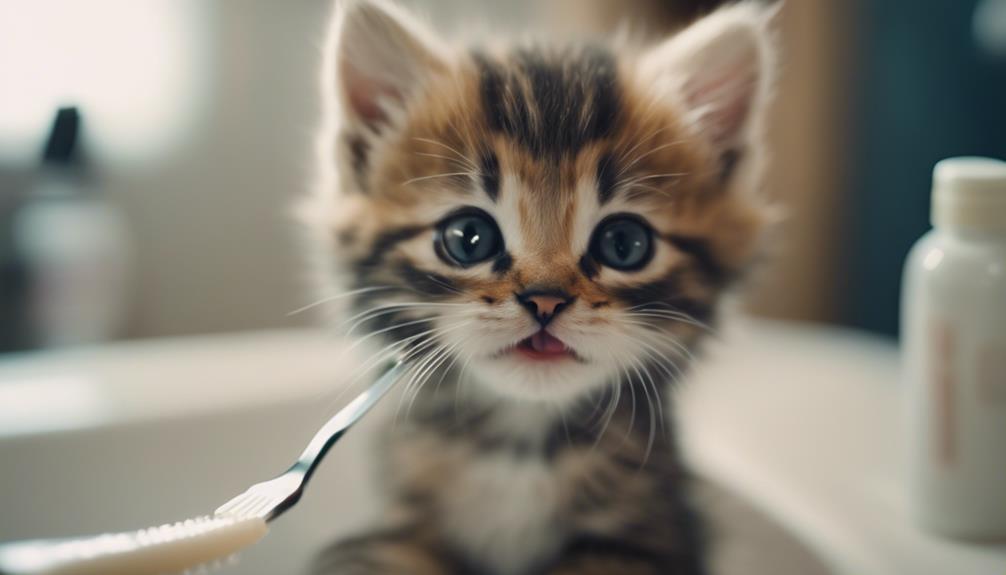
When it comes to dental care for kittens, starting early is key. Around 8-10 weeks old, begin by gently rubbing their gums to get them accustomed to the sensation.
Introduce toothpaste with flavors like poultry or fish to make the process positive for your kitten.
Kitten Dental Care Basics
Beginning dental care early in a kitten's life is crucial for maintaining their oral health and preventing future issues. To guarantee proper dental care for kittens, follow these steps:
- Introduce tooth brushing gradually for a positive experience.
- Use kitten-specific toothbrushes with soft bristles.
- Start by gently rubbing a cotton swab along the gums.
- Establish a consistent dental care routine to support their oral health.
Choosing Kitten Toothpaste
To ensure excellent oral health for your kitten, the selection of appropriate kitten toothpaste plays a critical role in starting their dental care routine.
Kitten toothpaste comes in flavors like poultry or fish, enticing kittens to accept dental care.
These toothpastes are free of harmful ingredients like fluoride and xylitol, ensuring the safety of your kitten.
Introducing kitten toothpaste early helps them get accustomed to the taste, setting a positive foundation for oral hygiene habits.
Introducing Toothbrush Gradually
Introducing the toothbrush gradually is an essential step in initiating dental care for kittens, promoting a positive and comfortable experience as they begin their oral hygiene routine.
- Start using a soft, small kitten toothbrush.
- Allow kittens to investigate and play with the toothbrush.
- Let kittens lick toothpaste off the brush initially.
- Progress to gently brushing motions to accustom kittens to the sensation.
Time Allocation for Brushing

When brushing your cat's teeth, aim to allocate approximately 30 seconds of brushing time to each side of the mouth. Divide this time equally between the left and right sides to guarantee all teeth surfaces are cleaned.
Consistency in timing is vital to establishing a routine for your cat. Gradually increase the time spent brushing if your cat becomes more comfortable with the process, ensuring thorough oral care.
Is it necessary to brush my cat’s teeth if I keep their environment, like the cat tree, clean?
Yes, it’s still necessary to brush your cat’s teeth even if you keep their environment, like the cat tree, clean. Regular brushing helps prevent dental issues and maintain overall health. For more tips on maintaining a clean environment for your cat, check out our helpful cleaning your cat tree tutorial.
Troubleshooting and Tips
Having established a consistent brushing routine for your cat's teeth, troubleshooting and implementing effective tips can help address any challenges encountered during the oral care process.
- Start by gently touching your cat's mouth to introduce the toothbrush gradually.
- Use positive reinforcement such as treats or praise to create a positive association.
- Consider using dental wipes or dental gels as alternatives if your cat resists brushing.
- Seek guidance from a veterinarian for persistent challenges.