
To calm your cat for a bath, notice signs of anxiety like hiding or dilated pupils, preparing a soothing environment with a non-slip mat and calming scents, and using gentle handling techniques. Choose cat-friendly supplies such as shampoo with proper pH and soft towels. Wet your cat's fur with lukewarm water, apply shampoo carefully, avoiding sensitive areas, and rinse thoroughly. Employ positive reinforcement and seek professional advice if needed for a stress-free experience. Remember, understanding your cat's needs and taking appropriate steps can make bath time more manageable and less distressing for your furry companion.
Understanding Cat Bath Anxiety
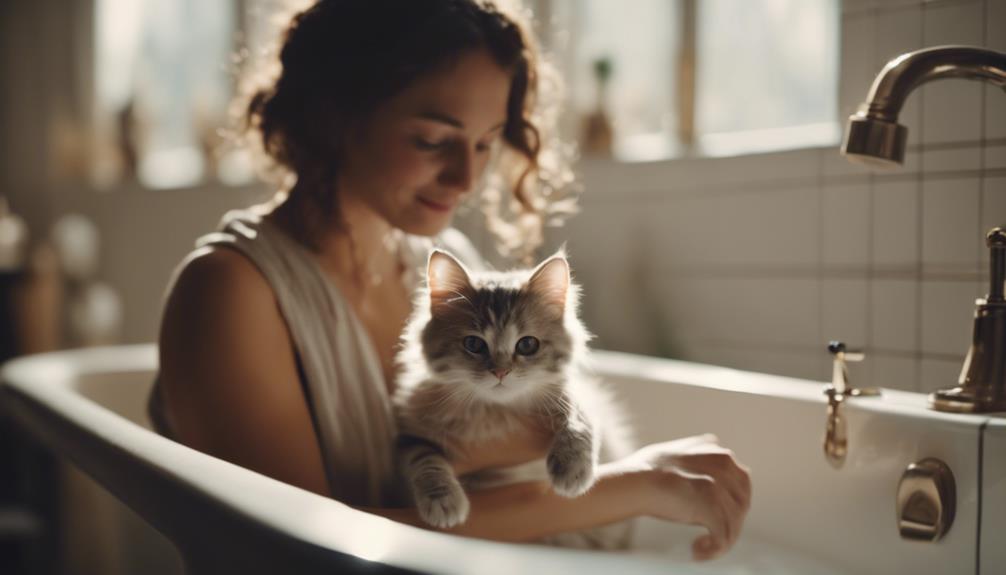
Cats often display anxiety, fear, or stress when faced with the prospect of a bath, primarily due to their unfamiliarity with water and the bathing process. Understanding signs of cat bath anxiety, such as hiding or hissing, is essential.
Calming techniques like gradual water introduction, positive reinforcement, and soothing environments can help alleviate this anxiety. Past negative experiences or lack of water exposure may contribute to a cat's fear.
Setting up a Relaxing Bath Environment
To create a tranquil setting conducive to bathing, it is critical to establish a safe and soothing environment for your feline companion.
- Use a non-slip mat and lukewarm water to guarantee safety and comfort during the bath.
- Introduce calming essential oils like lavender or pheromones such as Feliway to help relax your cat.
- Play soft classical music or white noise to create a calming atmosphere for your cat during bath time.
Using Calming Techniques Before Bathing
Creating a calming atmosphere before bathing is essential to help your cat relax and make the bathing experience more pleasant for both of you. Consider introducing essential oils like lavender or chamomile, playing soft music, using white noise, giving anxiety relief supplements containing L-theanine, scheduling a play session before bathing, and consulting with a veterinarian for tailored calming techniques. These methods can help your cat stay calm and cooperative during the bathing process.
| Calming Techniques | Benefits |
|---|---|
| Essential oils | Create a soothing environment |
| Soft music/white noise | Promote relaxation |
| Anxiety relief supplements | Provide calming effect |
| Play session scheduling | Helps tire out cat |
| Veterinary consultation | Tailored calming advice |
Choosing the Right Bathing Supplies
When it comes to choosing the right bathing supplies for your cat, it is essential to select a cat-specific shampoo that maintains the proper pH balance for feline skin.
Additionally, consider incorporating calming scents such as lavender or chamomile to help relax your cat during the bath.
Opting for non-slip mats in the bathing area can also provide a sense of security for your feline friend.
Selecting Proper Shampoo
Selecting the appropriate cat-specific shampoo with a balanced pH level is essential to prevent skin irritation during bath time. When choosing a shampoo for your cat, consider the following:
- Opt for shampoos with natural ingredients to protect your cat's skin and coat.
- Avoid harsh chemicals found in human shampoos or dish soaps.
- If your cat has skin allergies, go for hypoallergenic shampoos to prevent reactions.
Finding Gentle Brushes
To guarantee a gentle and effective grooming experience for your cat during bath time, prioritize acquiring brushes with soft bristles and ergonomic handles for best skin care and control.
Look for brushes designed specifically for cats, featuring flexible bristles to detangle knots without causing discomfort. Avoid sharp or rigid bristles that could harm the cat's skin.
These brushes provide a safe and pleasant grooming session without causing unnecessary stress.
Picking Suitable Towels
Choosing the appropriate towels for your cat's bath involves selecting soft, absorbent materials such as microfiber or cotton to guarantee maximum comfort and care.
- Opt for pet-specific towels for durability and gentleness.
- Choose towels with a larger surface area for quick drying.
- Maintain easy cleaning and upkeep to uphold hygiene.
Step-by-Step Bathing Process for Cats
When bathing your cat, start by wetting their fur with lukewarm water to avoid startling them.
Gently massage cat-specific shampoo into their coat, making sure to avoid their face and ears.
This step-by-step process will help you effectively clean your cat while keeping them as calm as possible during the bath.
Wetting the Cat
Thoroughly wetting the cat's fur with lukewarm water is a crucial initial step in the bathing process, guaranteeing effective shampoo application and overall cleanliness.
- Use a gentle stream of lukewarm water to wet the cat's fur evenly.
- Speak to the cat in a soothing manner to keep them calm.
- Make sure all parts of the cat's body are adequately wet before proceeding.
Shampoo Application
After confirming the cat's fur is adequately wet, the next step in the bathing process involves the meticulous application of cat-specific shampoo to maintain your pet's cleanliness and skin health. Remember to dilute the shampoo with warm water for easier application and rinse it thoroughly to prevent skin irritation. Gently massage the shampoo into your cat's fur, avoiding sensitive areas like eyes, ears, and nose. Use a neutral pH shampoo to guarantee your cat's skin health.
| Shampoo Application | Instructions |
|---|---|
| Step 1 | Dilute shampoo with warm water |
| Step 2 | Gently massage into cat's fur |
| Step 3 | Avoid eyes, ears, and nose |
| Step 4 | Rinse thoroughly for no residue |
| Step 5 | Use neutral pH shampoo |
Tips for Handling Anxious Cats During Bath
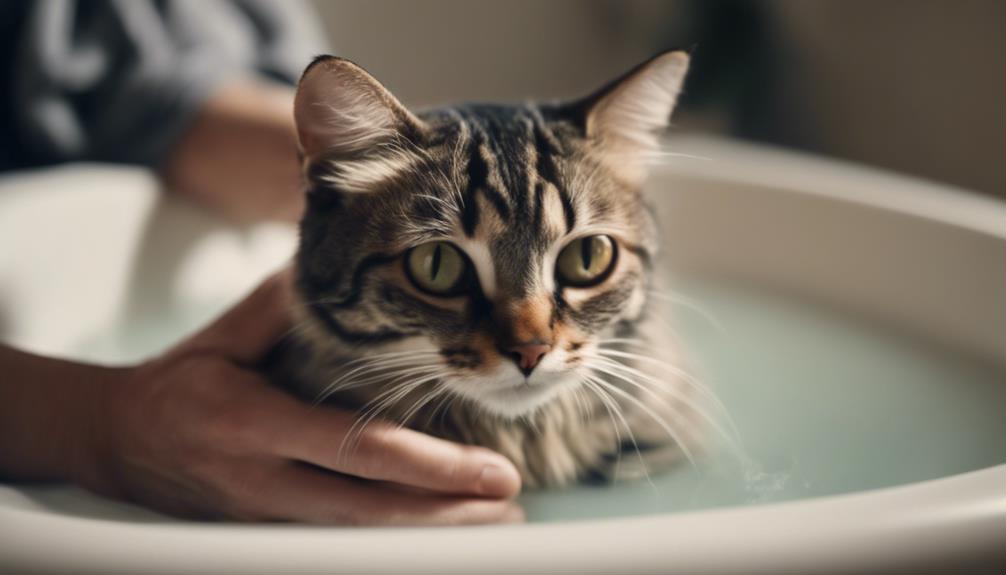
Implementing strategies to soothe anxious felines during baths can greatly enhance the overall bathing experience for both you and your cat.
- Introduce your cat to water gradually
- Use essential oils like lavender
- Play soft music or white noise
Importance of Positive Reinforcement
Positive reinforcement plays an essential role in fostering a calm and positive bath experience for cats. By using treats, praise, and affection, owners can reward desired behavior and encourage their feline companions to remain calm before and during baths.
This technique helps reduce stress and anxiety, creating a positive association with bath time. Consistent use of positive reinforcement can help cats learn to tolerate baths and strengthen the bond between cats and their owners.
After-Bath Care for Cats
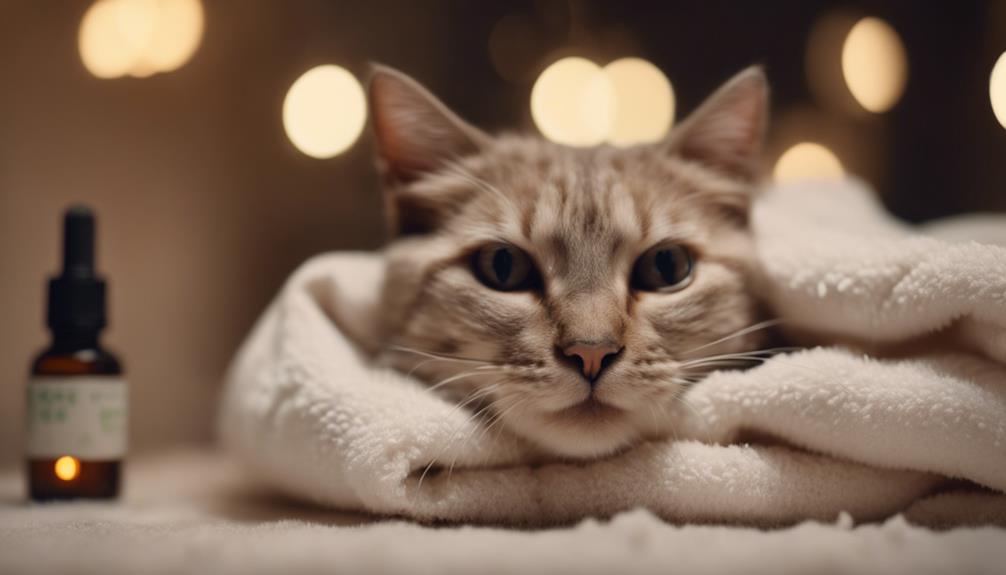
Ensuring proper after-bath care for your cat is essential in maintaining their comfort and well-being post-grooming.
- Use a towel to gently dry your cat after the bath
- Avoid using a hairdryer on high heat settings
- Provide a warm, draft-free environment for your cat to air dry comfortably
Can the Techniques for Calming a Cat in Heat Also Be Used for Bath Time?
When it comes to calming a cat in heat, the same techniques can often be useful for bath time. Using gentle and soothing movements, providing a quiet and relaxed environment, and offering treats or rewards can help to make both experiences more tolerable for your feline friend.
Seeking Professional Help if Needed
If your cat continues to exhibit distress or anxiety during baths despite following proper after-bath care techniques, seeking professional guidance from a veterinarian or groomer can provide tailored solutions to help calm your feline companion.
Consult a professional for advice on calming techniques, behavior modification, and potential natural remedies or medications.
Professionals offer expertise in handling cats during baths and may recommend training to improve your cat's comfort.