
To clean cat hair off a couch, try using rubber gloves to gather the hair with static charge efficiently. Dampening gloves can boost their hair-picking abilities. Another method is using lint rollers, as their sticky surfaces effectively lift off hair when rolled in one direction. Utilize vacuums with pet hair attachments that are designed to suction away embedded hair with rubber bristles. Different fabrics require specific cleaning: velvet needs a lint roller or vacuum with a brush, microfiber a soft-bristled brush or pet hair attachment, and leather a damp cloth with conditioner. Explore more techniques for maintaining a fur-free furniture surface.
Rubber Gloves Method
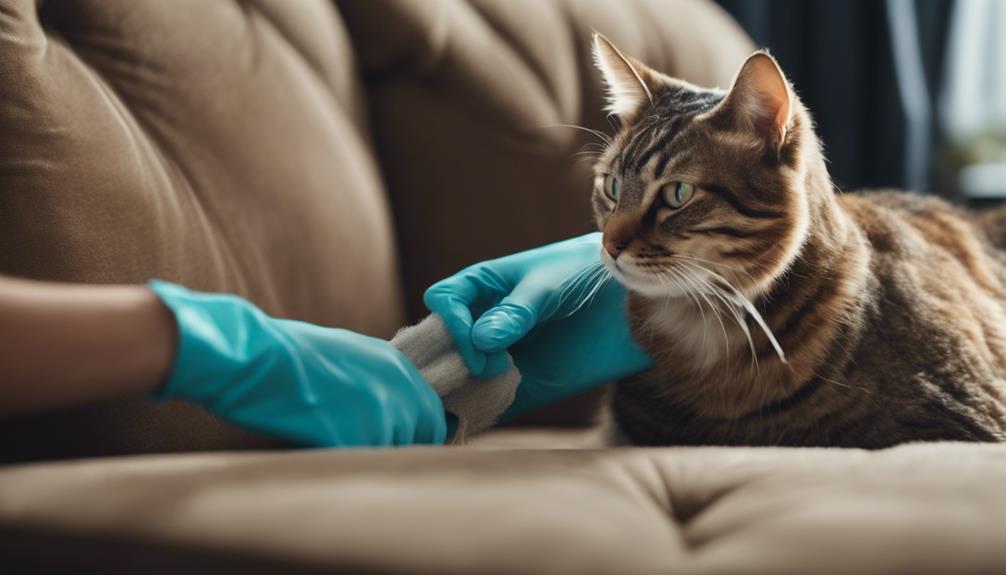
When it comes to removing cat hair from couches and furniture surfaces, the Rubber Gloves Method stands out as a simple yet highly effective technique.
Rubber gloves with a static charge easily gather cat hair, making removal a breeze.
Dampening the gloves beforehand can enhance their hair-picking capabilities.
This affordable method is suitable for various cat hair types and furniture fabrics, providing a convenient solution for pet owners.
Lint Roller Technique
Lint rollers are handy tools equipped with sticky surfaces designed to efficiently remove cat hair from couches.
To effectively use a lint roller, roll it in one direction over the upholstery, pressing firmly to make certain all hair is lifted off.
This technique allows for quick and easy spot cleaning of couch cushions, armrests, and other fabric surfaces where cat hair accumulates.
Roll in One Direction
Efficiently removing cat hair from your couch can be achieved by utilizing the lint roller technique of rolling in one direction.
Lint rollers, designed to pick up and trap cat hair from furniture, are convenient tools for this task.
Start at one end of the couch and roll towards the other end to guarantee thorough cleaning.
Regular use of lint rollers helps maintain a hair-free surface on your furniture.
Press Firmly and Roll
Employing a firm and consistent rolling motion with a lint roller is a proven method for effectively removing cat hair from couches.
- Start by pressing the lint roller firmly onto the fabric.
- Roll the lint roller back and forth in short strokes.
- Apply extra pressure on areas with more stubborn pet hair.
- Peel off and dispose of the used sheets to reveal a hair-free couch surface.
Vacuum With Pet Hair Attachments

Utilize the specialized pet hair attachment on your vacuum to effectively eliminate cat hair from your couch. These attachments are designed to lift and suction away embedded hair from upholstery, helping to remove dander and allergens trapped in the fabric.
They often feature rubber bristles or brushes that agitate and loosen pet hair for easy removal. Regular vacuuming with a pet hair attachment is key to maintaining a clean and fur-free couch.
Fabric Type Considerations
Different types of sofa fabrics such as velvet, microfiber, or leather require specific cleaning methods tailored to their unique characteristics and maintenance needs.
- Velvet: Use a lint roller or vacuum with a brush attachment to gently remove pet hair.
- Microfiber: Brush with a soft-bristled brush or use a vacuum with a pet hair attachment.
- Leather: Wipe with a damp cloth and follow up with a leather conditioner to prevent damage.
- Check fabric care tags for specific instructions tailored to each fabric type.
Common Household Items
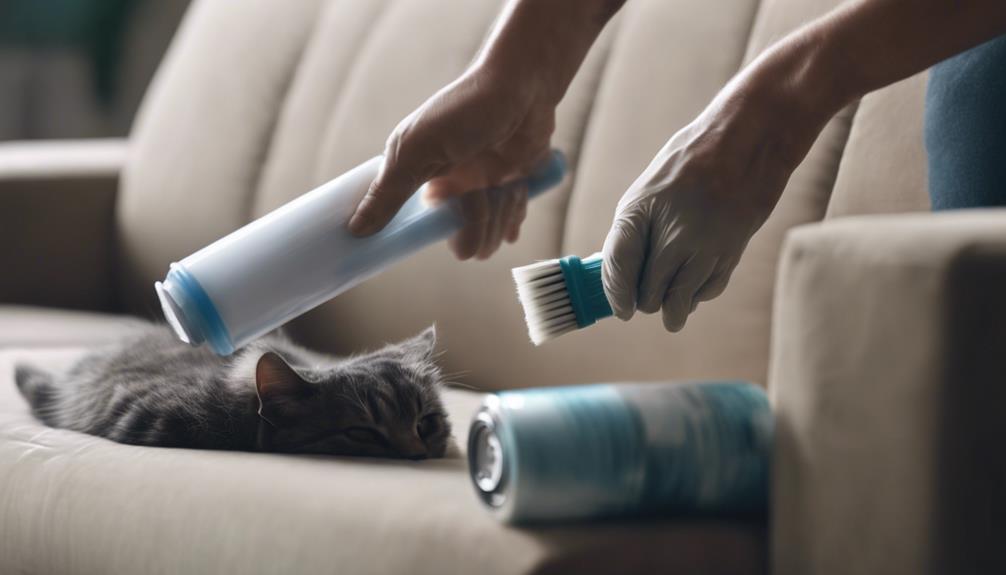
When dealing with cat hair on furniture, incorporating readily available household items can be a practical and effective solution. Rubber gloves and damp sponges attract and remove pet hair effectively. A mixture of water and fabric softener aids in removal from fabric surfaces. For wooden furniture, use a soft cloth with furniture polish. Storing a dry rubber glove under cushions allows for quick touch-ups. Mitigating static electricity prevents re-sticking of cat hair.
| Household Items | Usage |
|---|---|
| Rubber gloves | Attract pet hair |
| Damp sponges | Remove hair |
| Fabric softener | Aid in hair removal |
| Soft cloth | Polish wooden furniture |
| Dry rubber glove | Quick touch-ups |
Slipcovers and Throw Pillows
When dealing with cat hair on slipcovers and throw pillows, it's important to choose materials that are easy to clean and maintain. Slipcovers offer the advantage of being removable and washable, making it simpler to get rid of cat hair.
As for throw pillows, selecting designs with smooth fabrics can help prevent fur from clinging too stubbornly.
Slipcover Benefits
Slipcovers and throw pillows serve as practical and stylish additions to your furniture, offering a protective layer against stains, spills, and pet hair while also enhancing the overall aesthetic of your living space.
- Protects furniture from stains, spills, and pet hair.
- Convenient for easy cleaning.
- Available in various colors, patterns, and materials.
- Extends the lifespan of furniture and is a cost-effective alternative to reupholstering.
Pillow Selection Tips
To elevate the comfort and style of your living space further, strategic pillow selection is key when accessorizing with slipcovers and throw pillows.
When dealing with pet hair, specifically cat hair, opt for oversized sticky rollers or furniture brushes to effectively remove hair. Pre-treating with rubber gloves or damp sponges before washing can help.
Additionally, consider using in-wash products like hair catchers and laundry boosters such as white vinegar to tackle pet hair issues.
Grooming Tools for Cats
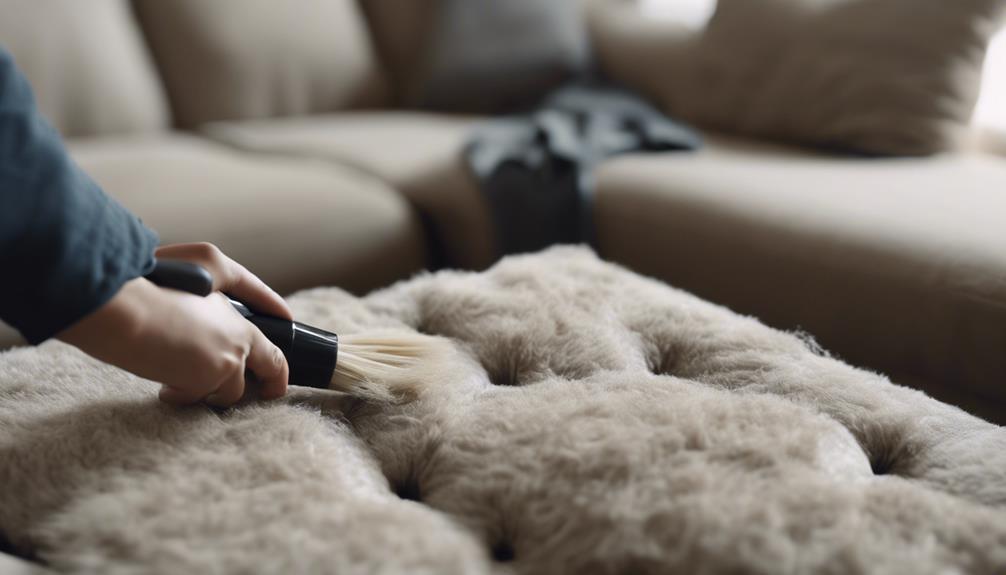
Utilizing specialized grooming tools is essential for maintaining a cat's coat health and appearance.
- Slicker brushes: Remove loose fur and prevent matting.
- Furminators: Deshedding tools that reach deep into the coat.
- Rubber grooming gloves: Massage cats, collect loose hair, reduce shedding.
- Dematting combs: Remove tangles and prevent mats in the fur.
Upholstery Cleaning Tips
When maintaining the cleanliness of your couch, it is important to check the cleaning code on your sofa's care tag to determine the most suitable cleaning method (W, S, SW, X).
To remove dog hair from upholstery, consider using a lint roller or a pet hair remover. These tools can effectively lift and collect pet hair, helping to keep your couch clean and free of fur.
Can Cleaning a Cat’s Ears Help Reduce the Amount of Hair on the Couch?
Regularly cleaning cat ears effectively can help reduce the amount of hair on the couch. By keeping your cat’s ears clean, you can prevent excessive shedding and hair buildup, leading to a cleaner living space. Proper ear care can also contribute to your cat’s overall health and well-being.
Maintenance and Prevention

Regularly grooming your cat and strategically placing coverings on the couch can effectively minimize cat hair buildup and simplify cleaning efforts.
To maintain a hair-free couch, consider using these methods:
- Brush your cat frequently to reduce shedding.
- Cover your couch with blankets or towels.
- Launder removable covers and throw blankets regularly.
- Utilize pet hair removal tools like lint rollers to combat electrically charged cat hair on the fabric.