
To guarantee your cat's paws, start by checking for any issues like redness, swelling, or cuts. Choose a quiet space and gather supplies like a damp cloth and gentle soap. Dip each paw in warm water, then wipe with a soft cloth, being thorough between the toes. Check for debris and foreign objects, keeping an eye out for injuries. Clean between the toes gently, make sure they are dry, and maintain paw hygiene regularly. By taking these steps, you can help prevent infections and keep your feline friend comfortable. For more tips on cat paw care, continue exploring ways to maintain their overall well-being.
Assessing Your Cat's Paw Health
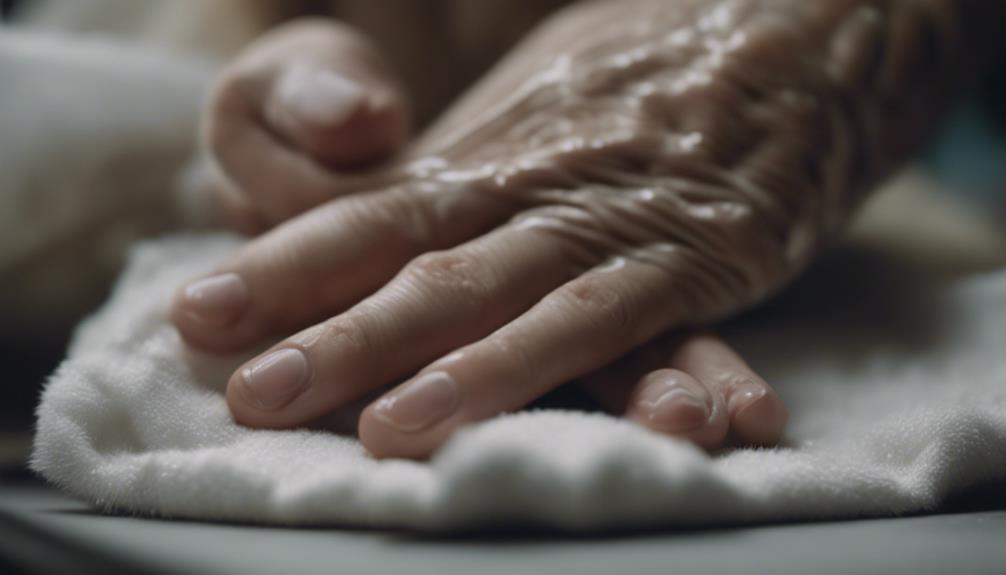
Evaluating the well-being of your cat's paws is essential to ensuring their overall comfort and health. Check for redness, swelling, or signs of infection on the paw pads. Look for cuts, sores, or foreign objects between the pads.
Monitor your cat's gait for any limping or favoring of a particular paw. Inspect the claws for overgrowth, damage, or signs of infection. Regularly cleaning and maintaining your cat's paws is important to prevent infections and discomfort.
Preparing for Paw Cleaning
Before initiating the paw cleaning process for your cat, gather essential supplies such as a damp cloth, cat wipes, and gentle soap to guarantee a smooth and effective cleaning routine.
- Choose a quiet and comfortable spot for cleaning.
- Have treats ready for cooperation.
- Maintain a firm but gentle grip on the paw.
- Approach cleaning with patience and consistency.
Rinsing Your Cat's Paws
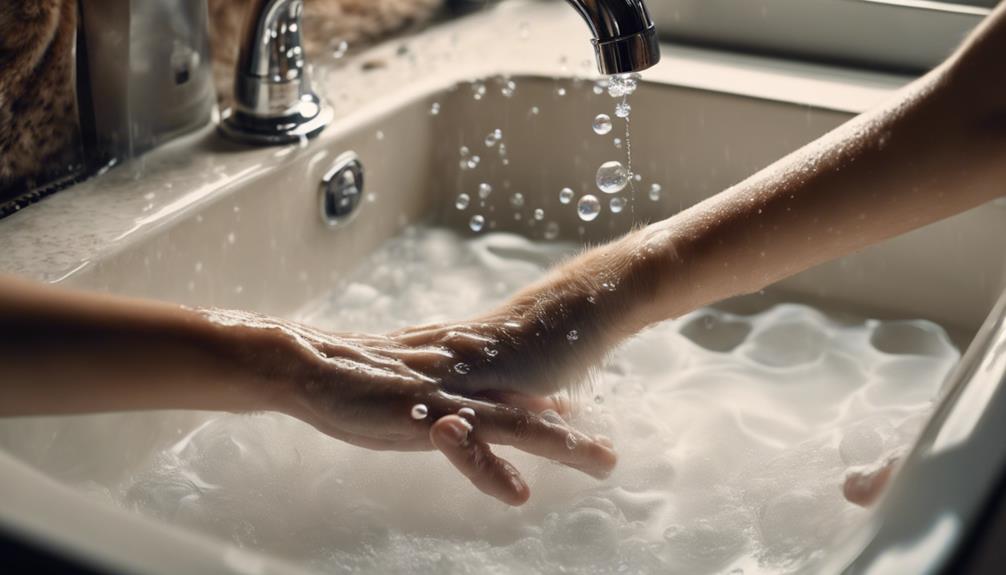
To guarantee thorough cleanliness and comfort for your feline companion, start the process of rinsing your cat's paws by preparing a bowl of warm water.
Gently hold each paw, dip it into the water to remove dirt and debris, then use a soft cloth to wipe the paw, ensuring you reach between the toes.
Avoid harsh chemicals, opt for gentle soap, rinse thoroughly, and dry the paws completely for your cat's hygiene.
Wiping Away Debris
Regularly wiping away debris from your cat's paws with a damp cloth is essential for maintaining their cleanliness and overall well-being.
- Use a damp cloth to remove dirt and debris daily.
- Check between the paw pads for foreign objects causing discomfort.
- Clean up spills promptly to prevent ingestion of harmful substances.
- Inspect paws for injuries or cuts to prevent infections.
Cleaning Between the Toes
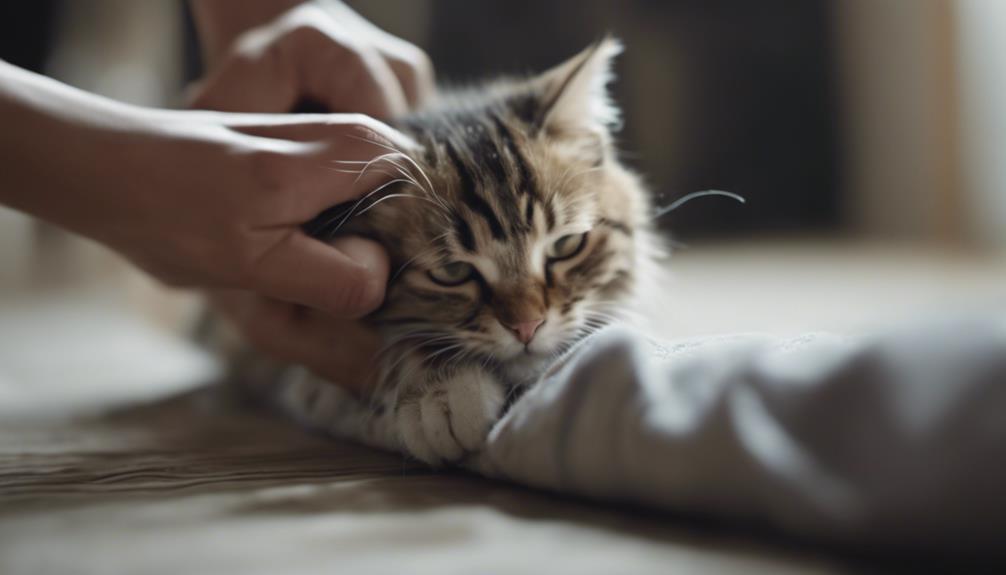
When cleaning between your cat's toes, it is essential to use a gentle touch to avoid causing any discomfort. Additionally, make sure to thoroughly dry the toes after cleaning to prevent moisture-related issues.
Regularly checking for and removing any debris between the toes is important for maintaining your cat's paw hygiene.
Gentle Toe Wipe
Gently wiping between your cat's toes with a damp cloth helps maintain paw hygiene by removing dirt and debris, reducing the risk of infections.
- Use a damp cloth to gently wipe between your cat's toes.
- Cleaning between the toes helps prevent bacteria build-up.
- Check for foreign objects or irritants between the paw pads.
- Regular cleaning between the toes is essential for paw hygiene.
Drying Toes Thoroughly
Properly ensuring thorough drying of your cat's toes post-cleaning is essential in preventing moisture-related infections. Moisture between the toes can lead to bacterial or fungal issues if not dried properly.
Use a clean towel to gently pat the paws dry, paying close attention to areas between the toes where dirt and debris can accumulate.
This practice helps maintain your cat's paw hygiene and prevents potential infections.
Check for Debris
Regularly examining your cat's paw pads for debris accumulation is crucial in maintaining their overall paw health and preventing potential discomfort or infections.
To guarantee your feline friend's paws stay clean and healthy, remember to check between the toes for any debris. Use a damp cloth or cat wipes to gently clean this area, removing any dirt or debris that may lead to issues like infections and discomfort.
Nail Care for Cats
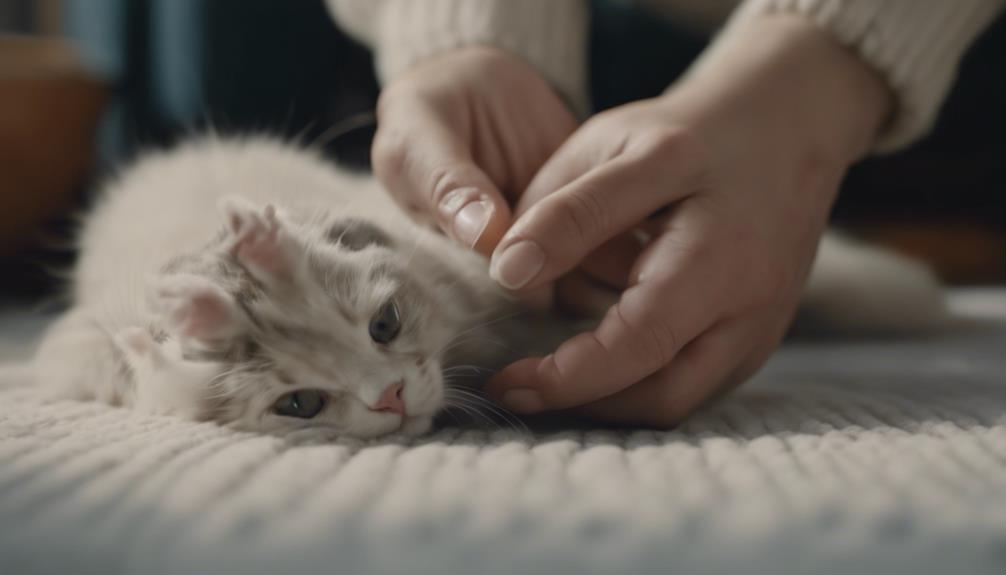
Proper nail care is essential for cats to maintain healthy claws and avoid potential issues. Regularly trimming your cat's nails can prevent them from becoming too long and causing discomfort during daily activities.
Additionally, providing scratching posts can help satisfy your cat's natural urge to scratch and keep their nails in good condition.
Trim Cat's Nails
To promote your cat's overall well-being, it is essential to trim their nails every few weeks using specialized cat nail trimmers.
- Use sharp nail trimmers designed for cats
- Trim only the translucent white part of the nail
- Offer treats and positive reinforcement for cooperation
- Seek vet help if unsure or if your cat resists trimming
Use Scratching Posts
Scratching posts play an essential role in maintaining the health and well-being of cats by providing them with a designated area to engage in natural scratching behavior. They help cats keep their claws healthy, promote good scratching behavior, prevent damage to furniture, and reduce the need for nail trims.
Regular use of scratching posts keeps cats mentally stimulated and offers a suitable surface for their scratching instincts.
Trimming Your Cat's Nails
When trimming your cat's nails, it is important to use sharp, cat-specific nail trimmers to guarantee a clean cut without splintering or crushing the nails. Remember to trim only the translucent white part of the nail, known as the 'quick', to prevent pain or bleeding.
Gradually work up to trimming all the nails, seek guidance from a veterinarian or professional groomer if needed, and maintain regular nail trimming for your cat's comfort and to prevent scratching issues.
Hydrating Paw Pads
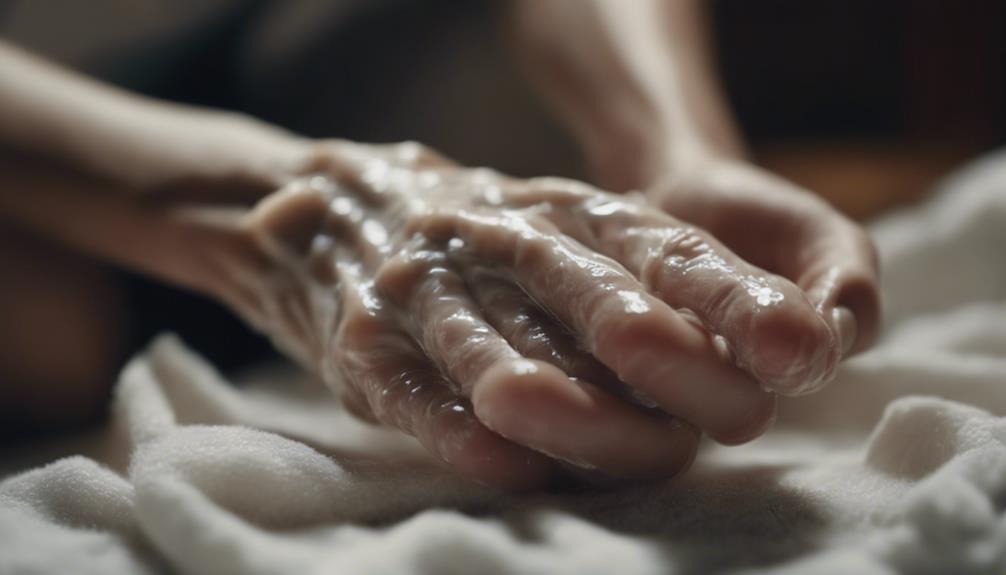
Maintaining your cat's foot health goes beyond just trimming their nails; ensuring hydrated paw pads is essential to prevent discomfort and cracking.
Dryness in cat paws can result in issues like pododermatitis, making regular moisturizing important. Using vet-approved paw butter or moisturizers can keep paw pads supple, especially in extreme weather conditions that can further dry them out.
Prioritizing hydration helps prevent discomfort and maintains overall foot health.
Is the Process for Cleaning a Cat’s Paws Similar to Cleaning Their Butt?
When it comes to cleaning a cat’s paws and cleaning a cat’s butt, the process is quite different. While cleaning a cat’s paws may involve wiping them with a damp cloth or using pet wipes, cleaning a cat’s butt requires more thorough and delicate cleaning to ensure their cleanliness and health.
Preventing Paw Problems
Regular inspection of your cat's paws for redness, sores, or signs of infection is crucial in preventing paw problems. To keep your feline friend's paws healthy, remember to:
- Keep their feet clean by wiping daily
- Trim their nails regularly
- Watch for limping or favoring of paws
- Maintain a safe environment to prevent injuries and infections.